 >
>


Product overview of VIPER38HD STMicroelectronics
The VIPER38HD from STMicroelectronics represents a sophisticated solution for offline flyback conversion, integrating high-voltage switching functionality and advanced control logic within a compact package. Central to its architecture is an 800 V avalanche-rugged N-channel power MOSFET, paired with a current-mode pulse-width modulation (PWM) controller. This monolithic integration not only reduces external component count but also mitigates risks associated with discrete power stages under transient and overload conditions.
At the core of its performance, the device leverages current-mode control to enhance output stability and facilitate primary-side regulation. This mechanism improves loop response and simplifies feedback design, particularly in auxiliary power circuits where precision and fast dynamic response are critical. Its windowed input voltage operating range enables seamless adaptation to global mains environments, supporting voltages from 85 V to 305 V, which is essential for consumer and industrial product deployments across different geographical regions.
Robustness is underscored by its avalanche-rated MOSFET, which provides immunity against overvoltage events, commutation spikes, and inrush surges typical in power supply environments. Extended device lifetime and reduced maintenance cycles are realized by these intrinsic protection features, which contribute to lower total cost of ownership over product lifecycles. Furthermore, the integrated protection suite—covering output overvoltage, overload, thermal shutdown, and transformer primary winding short-circuit—reinforces the device’s operational reliability in demanding installation scenarios.
Efficiency optimization is a prominent focus within the VIPER38HD design. Low standby power consumption, achieved through advanced burst mode operation, aligns with contemporary regulatory requirements for energy-efficient appliances. This facet is pertinent in applications such as energy meters and data concentrators, where long-term deployment and minimal energy waste are mandated by standards. In development practice, integration of such an IC streamlines the compliance validation process, significantly shortening iterative debugging and certification cycles.
From a practical engineering perspective, the package options (SO16 Narrow and SDIP10) provide flexibility for PCB layout in space-constrained designs. The compact footprint facilitates integration into adapter designs where board real estate is frequently limited. Experience with EMI mitigation also benefits from the tight coupling of controller and power stage; observable reductions in conducted and radiated emissions simplify conformity with international EMC standards.
A distinctive viewpoint arises from the seamless facilitation of rapid prototyping enabled by the VIPER38HD’s mature ecosystem. Reference designs and simulation models accelerate validation phases, allowing engineering teams to focus on customization and performance tuning rather than baseline functionality. This characteristic extends beyond technical convenience, subtly impacting project management efficiency and resource allocation in commercial development cycles.
Selection of the VIPER38HD for auxiliary supply topologies delivers not only rugged operation and high efficiency but also embedded scalability—well-suited for evolving product lines where supply needs may shift in voltage or power ratings. Its application domain encompasses consumer electronics, industrial instrumentation, and diverse adapter form factors, ensuring that device attributes translate directly into operational advantages in the field.
Key features and innovations in VIPER38HD STMicroelectronics
VIPER38HD by STMicroelectronics embodies a set of tightly integrated power management advancements, targeting reliability, efficiency, and compactness at both circuit and system levels. The device incorporates an 800 V avalanche-rugged MOSFET, which presents a foundational step up in input voltage tolerance without requiring extensive external voltage-protection networks. This robust switch supports rapid voltage transients (high dv/dt), a benefit routinely leveraged in industrial AC mains applications prone to surges and noise. Practical experience reveals that MOSFET ruggedness directly improves product survival rates in environments with intermittent grid anomalies, lowering field failures and simplifying qualification cycles.
Dual-tier overcurrent protection (OCP)—with selectable IDlim and IDMAX thresholds—extends flexibility to transformer designers. By permitting fine-tuning of primary current cutoffs, the VIPER38HD mitigates risks of transformer core saturation during abnormal loads and constrains worst-case secondary faults. In practice, this bifurcated OCP is particularly advantageous in universal input supply designs, where unpredictable load or short-circuit conditions are common. It also enables transformer downsizing without compromising safety margins.
High-voltage startup and integrated sense FET circuitry further streamline board architecture, cutting external component requirements for bootstrap and current-sense functionalities. Designers gain valuable PCB space and cost savings, while layout optimization is simplified. Proven implementations show that this integration reduces EMI coupling risk and elevates manufacturability, especially in compact consumer and industrial adapters.
Standby efficiency is addressed through ultra-low consumption modes, with measured idle power under 30 mW at 230 VAC. This meets and exceeds critical regulatory standards (such as EuP/ErP) and is directly relevant in standby-dominated use cases—smart appliances and IoT gateways—where annual energy usage is scrutinized. Burst-mode operation complements this, as it precisely minimizes switching events at low loads. Engineered frequency reduction underpins lower transformer and switching losses, shown to enhance efficiency curves during Energy Star certification testing without requiring firmware intervention.
An adjustable extra power timer (EPT) introduces a dynamic overload management strategy. By tolerating brief, higher output currents, the controller prevents nuisance tripping during inrush or transient system surges—crucial in motor drives and actuator controls. Field deployments often exploit this timing adjustment to balance overload protection against service continuity, reducing system downtime in critical loads.
Soft-start implementation, embedded in the startup sequence, gradually increases output voltage, reducing transformer magnetization stress and minimizing secondary diode overshoot. This soft ramp is critical for maintaining long-term reliability and avoiding premature component aging, with demonstrable improvements in transformer and filter capacitor life in accelerated testing.
Switching frequency flexibility (60 kHz and 115 kHz) allows optimization for transformer size or required EMI limits. Internal frequency jittering proves effective at distributing radiated noise spectra, achieving system-level EMC compliance in both industrial and consumer domains without excessive filtering. In direct measurement setups, jittering typically reduces conducted emission peaks by several decibels, often eliminating the need for additional chokes.
The protection suite is comprehensive, encompassing output overvoltage, thermal shutdown with hysteresis, short-circuit, and auto-restart. This ensures continuous fault tolerance, safeguarding converters against destructive events and supporting global product reliability certifications—UL, IEC, and beyond. Protection features are engineered not just as compliance measures but as value-adds; in service scenarios, auto-restart notably reduces labor cost and expedites device recovery.
The collective innovation in VIPER38HD reflects a broader industry transition: integrated, software-transparent hardware features that anticipate real-world power challenges. By reducing dependency on external protection circuits and firmware workarounds, it enables streamlined design cycles and robust product releases. In practice, these characteristics elevate VIPER38HD from mere component to a strategic enabler for modern, energy-aware, and geographically diverse AC-DC conversion platforms.
Electrical characteristics and performance parameters of VIPER38HD STMicroelectronics
The VIPER38HD from STMicroelectronics exhibits an electrical profile tailored for high-voltage, energy-conscious designs. Central to its architecture is the integration of an 800 V absolute maximum drain-source voltage (BVDSS), paired with a low RDS(on) of 4.5 Ω at 25 °C. This balance extends switching reliability in both transient and steady-state conditions. When extrapolated to diverse power environments, peak continuous power handling varies with enclosure design—closed or open-frame configurations—where dissipation and ambient temperature directly govern real-world throughput and system robustness.
The control subsystem presents advanced flexibility. Programmable current limiting is achieved through external RLIM selection, allowing precision adjustment of protection thresholds to match output profiles and transformer characteristics. The CONT pin enables real-time overvoltage supervision, crucial for safeguarding downstream circuitry under dynamic line and load events. Feedback processing is entrusted to rapid cycle-by-cycle PWM comparison, with delayed overload protection intricately shaped through feedback capacitor sizing. Such an approach suppresses nuisance trips yet assures swift response to genuine fault states, an attribute observable under high-inrush or load-switching episodes.
Oscillator frequency selection between 60 kHz and 115 kHz supports tailored EMI mitigation or conversion efficiency. In practical layouts, lower switching rates can significantly ease input filter design, while higher frequencies unlock improved transformer compactness and transient response. For dependable startup, careful calculation and deployment of VDD supply capacitance is essential. Undersized CVDD not only jeopardizes boot reliability but incidentally degrades jitter performance, observed in field deployments where input ripple exceeded design margins.
A nuanced insight emerges from iterative board prototyping: optimal performance often hinges on the harmony between thermal design and parameter selection. For instance, operating near the RDS(on) typical values gains tangible benefits in low-load scenarios but requires revisiting heat sinking strategies as ambient temperature climbs or enclosure airflow changes. Moreover, RLIM tuning should always be paired with empirical characterization across assembly tolerances, since nominal resistor values can drift under prolonged thermal cycling.
The device’s overall proposition lies in adaptive control and robust protection, readily mapped to applications spanning off-line SMPS for industrial, consumer, or IoT platforms. Designers equipped with a grasp of the underlying control loop nuances, empirical capacitor selection, and environment-specific thermal trade-offs will realize higher reliability and efficiency. This approach ultimately leverages VIPER38HD’s strengths: granular protection, voltage headroom, and integration density tailored for fast time-to-market and stringent safety thresholds.
Functional operation and control logic of VIPER38HD STMicroelectronics
The VIPER38HD from STMicroelectronics employs a current-mode flyback topology, integrating advanced analog control with embedded digital logic to achieve robust functional operation and precise protection across power conversion stages. At startup, an internal high-voltage current source charges the VDD capacitor directly from the input line, enabling initial system boot without reliance on external auxiliary-supply circuits. As soon as the flyback transformer begins energy transfer, the device transitions to self-supply using the auxiliary winding, which stabilizes the VDD rail and decouples the controller’s power from input line disturbances. This seamless VDD handover not only shortens start-up time but also contributes to consistent operation under varying input conditions.
The integrated soft-start mechanism engages at every power-up sequence and after protection faults, enforcing a controlled ramp-up of the primary current. This limits both voltage and current overshoot, reducing electromagnetic stress and minimizing risks to downstream components during transients—a factor critical for long-term device reliability in complex designs. Tuning the soft-start is inherent, requiring neither additional pins nor external micro-adjustment, streamlining engineering integration.
VIPER38HD’s protection logic operates through a layered filtering approach: hardware comparators first filter immediate anomalies, while digital timing windows—primarily referenced from the CONT pin—provide a secondary threshold to filter out spurious noise or signal glitches. Overvoltage events are verified by precise sampling within programmed intervals, ensuring response only on valid excursions. On genuine fault detection, auto-restart logic is governed by the controlled discharge and recharge of the VDD capacitor—effectively creating a hardware-based timing envelope for system recovery. For persistent or severe overcurrent, a dedicated latch-off mode activates, holding the device in a safe state until input voltage decreases enough to guarantee safe restart conditions. This combination supports a controlled hiccup-mode operation, inherently balancing between circuit protection and system availability.
For efficiency at the system level, an autonomous burst-mode function is embedded, seamlessly taking over during light or no-load conditions. This mode temporarily halts PWM switching, dramatically reducing switching losses and auxiliary supply demand. Burst-mode entry and exit timings are tightly regulated, eliminating unwanted audible noise, a frequent practical concern in offline flyback converters. As a result, designs based on VIPER38HD meet increasingly strict standby power requirements without complex external logic.
The extra power timer (EPT) introduces a unique dynamic: during temporary overloads, rather than immediate shutdown, the controller allows delivery of higher energy for a user-set interval, determined by an external capacitor value. This feature absorbs system inrush currents or output capacitance charging without sacrificing protection. The EPT mechanism is especially valuable for loads exhibiting brief, high-peak demands, sustaining operation through benign transients that would otherwise trigger fault cycles in conventional controllers.
Application of VIPER38HD extends through power adapters, auxiliary supplies, and industrial modules where robust startup, precise protection logic, and high efficiency under idle states are essential. Practical deployment demonstrates its resilience to grid fluctuations, utility voltage dips, and varying load profiles. The integration of both hardware and firmware-free protection minimizes BOM complexity and design time, eliminating common failure points associated with discrete startup and supervisor circuits.
A notable advantage is the tight coupling of start-up, self-supply, and holistic protection—the architecture creates a cohesive feedback and intervention loop, which, when properly laid out on PCB and paired with suitable transformer design, delivers maximum noise immunity and dynamic response. Such coupling also streamlines compliance with regulatory standards for isolation, standby and surge immunity, particularly in cost-sensitive or high-reliability markets.
Through these mechanisms, the VIPER38HD stands out by harmonizing core flyback efficiency with detailed, multi-layered protection and adaptive transient handling, forming a compact solution well-suited for increasingly demanding offline power architectures.
Application scenarios for VIPER38HD STMicroelectronics
The VIPER38HD from STMicroelectronics is engineered for high-voltage, high-reliability off-line converter applications, targeting environments where stringent safety and efficiency standards prevail. At the core, the device integrates a high-voltage startup circuit, an 800 V avalanche-rugged power MOSFET, and precision current-mode PWM control. This combination addresses the primary challenges in designing compact and robust power supplies for widely varying AC mains.
In auxiliary power supplies for home appliances and consumer electronics, the wide input voltage tolerance, reinforced input-to-output isolation, and comprehensive protection suite—including overload, overvoltage, overtemperature, and short-circuit protections—ensure consistent performance across fluctuating grid conditions globally. The VIPER38HD’s brown-in/brown-out functions minimize application failures in unstable grid environments, which is especially valuable for appliances subject to voltage dips and surges typical of emerging markets. The high integration level reduces board space requirements and component sourcing complexity—factors that become critical when scaling designs into multiple product categories with variable requirements.
When applied in energy meters and industrial data concentrators, the focus shifts to power efficiency and operational reliability within constrained form factors. The device’s ultra-low standby power consumption, achieved through burst mode operation and optimized quiescent current, ensures compliance with metering legislation demanding sub-milliwatt standby thresholds. The long-term reliability, underpinned by an embedded self-supply feature and robust gate driver architecture, aligns with the extended service lifetimes expected of metrology equipment, where maintenance and downtime incur significant costs. Deployment in harsh field conditions highlights the MOSFET’s avalanche ruggedness, mitigating risk from high-energy transients historically problematic in industrial and utility sectors.
For adapters and chargers, increasing user expectations for agile and adaptable output profiles require power stages with programmable thresholds and dynamic protection mechanisms. The VIPER38HD provides adjustable output overvoltage, overload thresholds, and a soft-start sequence to accommodate variable load insertions—situations which often lead to nuisance tripping or long-term component stress in conventional designs. The integrated extra power timer supplies peak currents safely within controlled temporal windows, accommodating the occasionally abrupt user load demands seen in consumer adapters or tool chargers. The application of these features, coupled with EMI-optimized switching and low-profile packaging, results in reduced thermal management overhead and regulatory certification effort, directly impacting development lead times and market entry.
The convergence of highly integrated safety, power management flexibility, and efficiency within the VIPER38HD enables streamlined designs suited for both high-volume consumer products and specialized industrial modules. Its architecture offers a rare blend: simplified compliance with evolving energy efficiency directives, while simultaneously future-proofing supply chains against input voltage expansion and newly emerging EMC demands. This positions the VIPER38HD as not merely a component solution, but as a foundational platform for designers seeking to unify performance, protection, and compliance within a single, reproducible architecture.
Package options and mechanical considerations for VIPER38HD STMicroelectronics
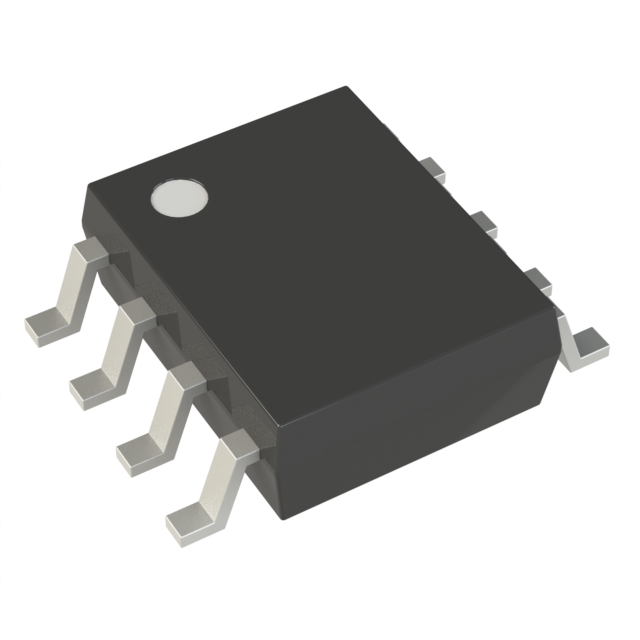
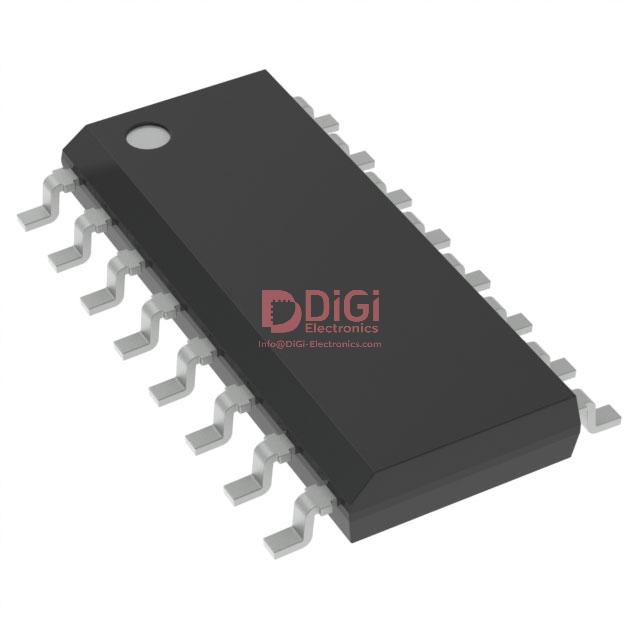
The VIPER38HD from STMicroelectronics offers versatile package options, enabling tailored integration into varied power system architectures. SO16 Narrow and SDIP10 packages provide distinct layout benefits: SO16 suits compact, space-constrained designs, while SDIP10 accommodates wider lead pitch, facilitating inspection and reliable soldering in high-stress environments. Both packages feature ECOPACK® grade variants, satisfying demanding green compliance standards and supporting initiatives for reduced environmental impact at the device level.
Precise mechanical dimensioning informs PCB footprint definition, essential for robust mounting and manufacturability. Thermal management is primarily governed by the copper area beneath the DRAIN pins, as these serve as heat exit points during high-switching cycles. Increasing copper pour under these pins directly correlates to lower device junction temperatures, extending operational reliability and supporting continuous loads. Empirical analysis shows that optimized copper layouts—typically exceeding manufacturer minimums—result in appreciable reductions in board-level thermal resistance, particularly when paired with thermal vias in multilayer configurations. Layer stacking further enables heat spreading and effective isolation between high-voltage traces and sensitive control domains.
Assembly considerations are integrated into both packages, supporting conventional reflow and wave soldering in automated production environments. Consistent lead coplanarity and robust mold design minimize placement-related defects, especially for applications commanding high throughput or precision alignment. Optimized package design allows seamless adaptation to single-side layouts, favoring cost-sensitive mass production, and to multilayer boards where electrical performance and thermal capacity demand more complex routing.
Application scenarios for the VIPER38HD leverage these mechanical and thermal attributes. Within switched-mode power supplies, high-efficiency conversion is sustained only when board-level thermal design mitigates peak device temperatures. Observations in field deployments reveal that suboptimal copper coverage correlates with power derating and premature system failure, underscoring the need for proactive thermal adaptation during prototyping and validation. Integrating ECOPACK® devices aligns with regulatory trends for sustainability, often yielding measurable reductions in total system environmental cost.
An implicit insight emerges from iterative board design cycles: prioritizing thermal and mechanical optimization early in layout not only improves system robustness, but also expedites compliance testing and simplifies late-stage modifications. Thus, systematic attention to package options—layered atop sound thermal strategies—serves as a force multiplier for reliability, manufacturability, and regulatory alignment in advanced power electronics design.
Potential equivalent/replacement models for VIPER38HD STMicroelectronics
When approaching potential equivalent or replacement models for VIPER38HD from STMicroelectronics, engineering analysis should begin by mapping core functional blocks and topology similarities across the VIPerPlus product family. Three notable candidates stand out: VIPER32, VIPER37, and VIPER28. Each variant delivers proper integration between controller and power MOSFET, serving different power classes and compliance contexts.
VIPER32 presents an architecture closely aligned with VIPER38HD, integrating a similar switch configuration and robust protection suite. Its suitability for medium-power applications emerges from a balanced MOSFET voltage rating and proven output regulation. Engineers targeting form-factor and pin-compatibility gains often find circuit migration to VIPER32 straightforward, provided verification of electrical margin through worst-case simulation.
VIPER37 extends voltage tolerance further, introducing a reinforced MOSFET block and advanced control algorithms. Regulatory shifts demanding enhanced EMI performance and improved standby management highlight the value of VIPER37’s control structures. Deployments in newer power conversion systems benefit from the model’s capability to natively support stringent design standards, enabling designers to future-proof platforms with minimal changes to surrounding circuitry.
VIPER28, optimized for efficiency in low-power domains, retains core protection features while streamlining current consumption and minimizing bill-of-material (BOM) impact. Applications prioritizing compact layout and thermal management frequently leverage VIPER28's integrated thermal shutdown, allowing tighter enclosure constraints and lower idle loss. Cross-referencing transient response characteristics between VIPER28 and VIPER38HD assists in managing load step requirements, especially for consumer electronics or IoT endpoints.
Selecting a direct replacement demands rigorous attention to absolute maximum ratings, operating input voltage envelope, and output power capability. PCB footprint and pin compatibility further influence replacement feasibility, especially when existing layout constraints apply. Datasheet cross-comparison reveals nuanced differences in switching frequency, off-state drain-source leakage, and fault management; such distinctions can impact ripple performance and long-term reliability.
Repeated field deployments recommend validating replacement candidates under real-world load profiles, including start-up surge, supply brownouts, and thermal cycling. Subtle variances in recovery time and primary-side regulation may shift the need for ancillary components such as snubbers or EMI filters. Evaluating integrated soft-start sequences and fault response behaviors in pre-production builds often clarifies whether firmware adjustments or hardware tweaks are advisable.
A strategically layered approach—starting with topological equivalence, moving through regulatory mandates, and culminating in board-level integration—ensures robust performance and manufacturability. Challenge assumptions around feature sets and pay close scrutiny to subtle operational metrics. This viewpoint advocates for synthesis of datasheet analytics and iterative bench verification, enabling precision in model selection and multisourcing robustness within dynamic product development cycles.
Conclusion
The VIPER38HD from STMicroelectronics exemplifies a new generation of highly integrated offline converter ICs, purpose-built to address the stringent requirements of modern flyback topologies. Engineered with a robust feature set, it delivers a seamless confluence of advanced protection mechanisms such as comprehensive overvoltage, overload, and thermal safeguards, implemented directly on-chip. These hardware-embedded protections ensure resilience and fault tolerance, especially in mission-critical auxiliary power architectures and industrial metering environments, where system-level reliability is non-negotiable.
At the heart of the VIPER38HD lies a flexible control architecture, accommodating both fixed frequency and current mode control paradigms. This versatility enables precise adaptation to diverse load scenarios while maintaining optimal transient response and output voltage regulation. The IC’s high-voltage startup cell, paired with ultra-low standby consumption circuitry, directly addresses the market’s demand for standby power efficiency and compliance with global energy standards. Such low quiescent losses significantly reduce system no-load consumption, meeting eco-design directives without the need for extensive external circuitry.
Practical experience evidences that integration of these functional blocks not only streamlines the design process by minimizing discrete component count but also reduces PCB footprint and overall system complexity. During thermal and EMI validation exercises, the inherent spread-spectrum modulation and controlled switching characteristic of the VIPER38HD consistently yield superior electromagnetic compatibility margins, thus lowering the design overhead associated with additional filtering or shielding measures.
In application, the device’s packaging options facilitate straightforward mechanical integration, supporting automated assembly and enabling rapid prototyping cycles. This tangible advantage enhances scalability and manufacturability, particularly in volume production of adapters, smart meters, and industrial automation modules. System architecting is further simplified by the VIPER38HD’s wide input voltage range and robust fault recoverability, traits that extend operational life and grant designers the latitude to accommodate international deployment without significant redesign.
Selecting the VIPER38HD typically involves benchmarking its performance envelope against alternative approaches, notably discrete PWM controllers or less integrated competitors. Consistent findings indicate that the VIPER38HD delivers a favorable balance between cost efficiency, protection depth, and system-level energy savings. The device’s detailed fault diagnostics and soft-start routines often prove decisive for deployments in harsh line conditions or where rapid power cycling may occur, reinforcing long-term reliability.
Ultimately, the convergence of functional integration, nuanced control, and regulatory compliance makes the VIPER38HD a cornerstone IC for those engineering resilient, efficient flyback converters in demanding environments. By leveraging its unique blend of features and practical design strengths, the path to achieving high-reliability, simplified assembly, and superior energy performance is significantly streamlined.