


 >
>


Product Overview: VIPER27LD STMicroelectronics
The VIPER27LD from STMicroelectronics exemplifies a highly integrated off-line flyback converter, engineered to address low and medium power conversion requirements within compact AC-DC and switch mode power supply (SMPS) applications. At its core, the device integrates an 800 V avalanche-rated power MOSFET, reinforcing its suitability for mains-connected designs where input line surges and voltage overstress must be handled reliably. This high-voltage tolerance, coupled with robust latch-up immunity, consolidates system protection layers, minimizing field failures even under harsh grid conditions.
The internal primary-side regulation engine simplifies feedback loop design by obviating the need for secondary-side optocouplers or reference ICs. The result is a reduction in external component count, accelerated design iterations, and enhanced long-term reliability by removing common points of failure. Integrated error amplifier and compensation circuitry allow precise output voltage control, mitigating line and load regulation concerns that traditionally burden isolated flyback topologies. This architecture ensures tight regulation metrics across input variations, a critical requirement for LED drivers, industrial auxiliaries, and household appliances.
Efficiency and system standby performance are advanced through dynamic power management schemes internal to the VIPER27LD. The device activates burst-mode operation under light load, drastically reducing switching losses and auxiliary consumption during idle periods. Engineers typically encounter stringent regulatory thresholds on standby input power; the embedded solution streamlines compliance with standards such as European ErP or DOE Level VI. Additionally, the on-chip start-up and bias management circuitry eliminate dissipative start-up resistors, further shrinking overall system losses and PC board footprint.
Comprehensive fault detection and protection features fortify resilience in diverse operating scenarios. Built-in overvoltage, overload, over-temperature, and short-circuit protection actions react autonomously, often necessitating minimal intervention from external supervisory logic. The VIPER27LD’s self-recovery modes and configurable latch enable granular fault response strategies, supporting uninterrupted operation, fast return-to-service, and safe shutdown paradigms in safety-critical designs.
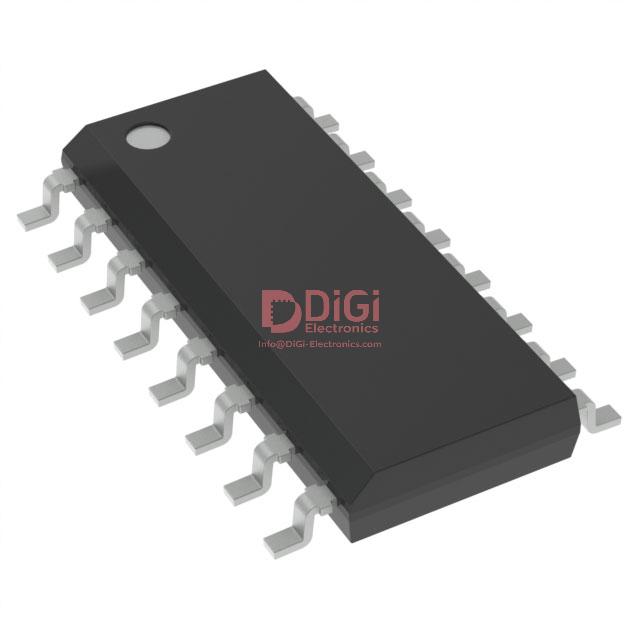
Incorporating the VIPER27LD into system topologies sheds significant time and cost from prototype cycles. Its SO16 narrow form factor optimizes board space utilization—a key parameter in increasingly miniaturized appliances and IoT endpoints. Thermal performance benefits from efficient die layout and package design, supporting high reliability across extended service intervals without the need for complex cooling provisions.
Selecting the VIPER27LD for modern AC-DC conversion addresses not only conventional cost and efficiency metrics but also system-level robustness, design simplicity, and regulatory compliance. By fusing primary regulation, high-voltage endurance, and active protection in a compact footprint, the device streamlines transition from design specification to mass production, particularly for applications where reliability under varying mains quality and minimal PCB real estate are prime concerns. The VIPER27LD exemplifies an emerging trend in converter integration—delivering not just power delivery, but holistic platform stability for forward-looking electronic systems.
Key Features of VIPER27LD
The VIPER27LD integrates a suite of robust features tailored for offline power supply topologies, facilitating both efficient energy conversion and comprehensive fault management. At its core, the device employs an embedded 800 V avalanche rugged MOSFET, enabling direct connection to the mains and tolerating transient events typically encountered in harsh grid environments. This feature not only streamlines circuit design by eliminating external high-voltage switches but also enhances long-term reliability under fluctuating line conditions.
The pulse-width modulation (PWM) mechanism operates at a fixed frequency, selectable between 60 kHz and 115 kHz (L and H variants respectively). Frequency jittering within these bands mitigates the harmonic content radiated from the converter, achieving considerable suppression of electromagnetic interference. This approach has found proven application in designs targeting stringent EMI standards, where layout optimization and secondary filtering alone may not suffice. The deterministic nature of the switching also simplifies control loop tuning, supporting predictable dynamic response.
Efficiency is further addressed through the device’s ultra-low standby power capabilities, holding consumption below 50 mW at 265 Vac. The integrated burst mode, combined with high-voltage start-up circuitry, allows the converter to maintain regulatory compliance with active energy legislations while ensuring a responsive wake-up from sleep states—critical for embedded systems prioritizing low power draw.
Key to system-level safety is the accessibility and precision of the overvoltage and overcurrent protection circuits, which are configured via dedicated pins on the device. This flexibility enables rapid adaptation during prototyping and practical field adjustments, streamlining validation across global input voltages and competing load scenarios. The implementation of a soft-start function guarantees a controlled ramp-up sequence, actively reducing component stress during initial power application, particularly beneficial in capacitive-loaded supplies.
The dual-level overcurrent protection, complemented by hiccup mode overload recovery, provides a layered defense against both sustained and transient faults. Hysteretic thermal shutdown further supports operational integrity, with automatic restart mechanisms offering a simplified approach to fault self-recovery, ideal in applications where external intervention is costly or logistically challenging.
The inclusion of brown-out protection ensures continuity and data integrity in systems exposed to unstable mains conditions, allowing converters to respond gracefully to undervoltage events without excessive cycling or control disruption. As seen in field deployments, this feature reduces downtime and mitigates wear in industrial automation and signal processing modules.
The architectural choices present in the VIPER27LD reflect a convergence of energy efficiency, fault tolerance, and design versatility. An implicit insight emerges: tightly integrated topologies with embedded protection and control functions not only reduce bill-of-materials cost but significantly enhance speed to market for differentiated power supply solutions. From rapid prototyping in consumer electronics to defense-grade instrumentation requiring high immunity to disturbances, leveraging such advanced integration can decisively shift the balance toward reliability and simplified life-cycle management.
Application Scenarios for VIPER27LD
The comprehensive integration and flexible topology support of the VIPER27LD enable its adoption across a diverse set of power conversion applications. At its core, the device combines a high-voltage power MOSFET with a current-mode control logic, yielding efficient single-stage converter designs suitable for both isolated and non-isolated supply architectures. This underlying integration reduces external component count, directly addressing volumetric constraints in dense PCB layouts characteristic of modern consumer electronics and home appliances.
In auxiliary power supplies for both consumer-grade and industrial systems, the VIPER27LD streamlines the design of housekeeping rails or microcontroller standby supplies. For example, its wide input voltage tolerance supports universal mains, which is critical in home appliances subjected to fluctuating power conditions or noisy electrical grids. The embedded protection features, such as output short-circuit, over-temperature, and over-voltage safeguards, enhance robustness—minimizing the likelihood of field failures and board-level rework.
Within ATX power architectures, the VIPER27LD is well suited for standby and auxiliary rails. These rails operate continuously and demand low power consumption during idle states. The device's high-efficiency burst-mode operation minimizes both no-load and light-load losses, ensuring compliance with tightening regulatory standards for standby power. Its compact solution size fits conveniently within the tight constraints of ATX daughterboards without compromising system reliability. In practical terms, cold-start reliability across varying global mains and fast recovery from brown-out conditions have consistently reduced system-level troubleshooting incidents.
For AC-DC adapters and compact desktop supplies—ranging from mobile phone charging bricks to low-wattage laptop adapters—the VIPER27LD enables cost-effective transformer designs by supporting flyback topologies with minimal external circuitry. Its optimized EMI performance reduces filtering component overhead, simplifying compliance with CISPR standards. The built-in jittering function actively mitigates conducted and radiated emissions, which is particularly beneficial when iterating product designs in short development cycles.
In switched-mode power supplies for set-top boxes, multimedia recorders, and major white goods, the device’s fast dynamic response and accurate current limiting are vital. These end systems must deliver reliable output power across a range of transient load conditions, such as motor start-up in washing machines or compressor cycling in refrigerators. Field experience shows that the VIPER27LD’s inherent fault tolerance minimizes RMA rates, especially in applications exposed to frequent surges or disruptive transients. The reduced BOM and design time further enable rapid prototyping and streamlined validation cycles, supporting high-volume manufacturing models.
In summary, the VIPER27LD effectively addresses the convergence of modern power supply challenges: maximizing efficiency, simplifying protection strategies, and shrinking form factors, all while maintaining compliance with regulatory and safety mandates. The device’s architecture reflects a prioritization of application resilience and engineering efficiency, offering a strategic advantage in cost-sensitive and high-reliability power system development.
Functional Operation and Block Architecture of VIPER27LD
The VIPER27LD integrates a current-mode PWM controller with a high-voltage power MOSFET, forming a compact solution for off-line power conversion. The current-mode control relies on the embedded sense FET for direct and efficient primary current sampling. This arrangement eliminates the need for external sense resistors and minimizes losses, contributing to enhanced conversion efficiency especially under light-load conditions. The primary current is monitored cycle-by-cycle, feeding back into the on-chip control loop to tightly regulate output and fortify protection against overload and short-circuit faults.
Oscillator functionality in the VIPER27LD is reinforced through frequency jittering, which dynamically modulates the switching period. This spectral spreading uniformly distributes electromagnetic emissions, reducing peak noise and lowering the complexity and cost of external EMI filtering. In practical switch-mode applications, the benefit of relaxed filter design enables higher power density and board-level integration without compromising regulatory compliance.
The startup sequence is orchestrated by a high-voltage circuit that autonomously charges the VDD capacitor via line input. This passive startup reduces component count and ensures that the controller achieves its operational threshold before activating the MOSFET. This startup arrangement, coupled with soft-start implementation, gradually ramps the current threshold—prolonging component lifespan and protecting vulnerable secondary circuits during initial power-up and after fault recovery. Designers frequently leverage these features to maintain consistent boot timing and system stability across wide input voltage variations, accommodating design margins in consumer and industrial power supplies.
PIN-level configurability, offered through CONT and other dedicated control pins, empowers precise adaptation of current limits, overvoltage cut-offs, and compensation profiles. By calibrating external networks connected to these pins, response characteristics can be tuned for different transformer topologies or load behaviors. Application-specific optimization here is critical for ensuring both transient performance and long-term reliability.
Layered system safeguards include built-in brown-out and thermal protection, internally monitored and autonomously managed without exogenous intervention. This self-contained approach enables fault-tolerant designs capable of rapid recovery and sustained operation under varying line and load conditions. Continuous field experience indicates that reliable startup and robust fault handling directly translate into reduced field returns and higher system uptime, notably in power adapters, LED drivers, and IoT infrastructure nodes.
The block architecture prioritizes integration and functional density, streamlining both layout and qualification in demanding environments. By directly coupling core control and high-voltage switching elements, design cycles are shortened and manufacturability is improved. The tightly-coupled current-sense and protection logic align with emerging expectations for efficiency and ruggedness in distributed power systems.
Electrical and Thermal Characteristics of VIPER27LD
Electrical and Thermal Characteristics of VIPER27LD are foundational to its integration within robust power conversion architectures. At its core, the device leverages a high-voltage MOSFET structure, supporting drain-source voltages up to 800 V (minimum). This capability enables direct connection to rectified mains, simplifying front-end design for off-line switching power supplies, and providing sufficient margin for transient events. The on-resistance, specified at approximately 7 Ω at 25°C, not only dictates conduction losses but also influences thermal dissipation dynamics during both continuous and switching events. This moderate R_DS(on) value aligns with the current demands in flyback topologies targeting low to moderate output power, supporting efficient energy transfer while balancing device heating.
The control circuitry within VIPER27LD is characterized by stable reference thresholds and supply rails, engineered to sustain operation across junction temperatures from −25°C to 125°C. Such wide tolerance addresses systems subject to ambient variability or constrained enclosure airflow where temperature excursions could otherwise compromise stability. From a layout perspective, heat dissipation is streamlined by utilizing the copper pad under the drain pins; leveraging standard FR4 PCB infrastructure minimizes additional mechanical complexity. Empirical data confirms that strategic copper pours and optimized trace width around the power pads are crucial for maximizing thermal pathways without exceeding PCB area constraints. Layered PCB design, with increased copper thickness at the drain node, demonstrably lowers the junction-to-ambient resistance, especially in single-sided assemblies where forced cooling is unavailable.
Thermal behavior is further regulated by a protective shutdown mechanism featuring hysteresis. When the junction temperature reaches critical thresholds, the shutdown feature initiates, but with sufficient hysteresis to forestall rapid cycling and associated electrical and mechanical stresses. This design prevents repeated transitions that can degrade both solder joints and silicon reliability over extended service intervals. In practical applications, system monitoring during thermal events reveals reduced instance of nuisance faults, leading to higher field uptime. Moreover, the hysteresis profile guards against false triggering due to temperature gradients or local hot spots, particularly in designs where thermal interface materials or passive cooling are suboptimal.
The low supply current profile underpins efficient standby operation. In standby modes, board-level measurements consistently reflect microampere-scale draw, limiting waste and facilitating regulatory compliance in energy-sensitive environments. This attribute allows downstream system designers to meet stringent efficiency specifications without ancillary switching or supervisory circuits.
Key insights from field deployment highlight that the VIPER27LD's integrated electrical and thermal resilience, when coupled with carefully engineered PCB layouts and system-level thermal management, substantially extends operational reliability and maintains efficiency over a broad spectrum of environmental conditions. The interplay between its device-level thermal controls and application-driven heat sinking strategies shapes the overall longevity and performance envelope, especially as miniaturization trends persist in modern power electronics.
Protection, Regulation, and Control Mechanisms in VIPER27LD
Core system protection, regulation, and control within the VIPER27LD are realized through tightly integrated hardware mechanisms that prioritize survivability and granularity of control, even under challenging electrical and environmental scenarios.
Overvoltage protection leverages a dedicated feedback loop via an auxiliary winding on the transformer, with sampling specifically synchronized to quiet intervals—this decisively reduces vulnerability to switching noise and transient disturbances. The output regulation point is finely tunable through resistor dividers, empowering design teams to tightly match the output to application-specific thresholds with high repeatability. This method bypasses limitations of optocoupler-based feedback loops, such as component aging or variable response times, thus assuring stable long-term operation.
Overcurrent defense operates on dual levels. The first threshold initiates immediate MOSFET shutdown at abnormal drain current surges, utilizing a sense resistor to deliver real-time, cycle-by-cycle feedback. This is especially effective in preventing transformer core saturation or shorted loads from propagating into destructive fault states. The second tier—the hiccup mode—systematically pulses the controller on and off, sampling the load at safe intervals. This drastically curtails RMS thermal loading on primary-side switches and the transformer, extending component lifespan and preventing board-level thermal runaway in scenarios of repeated fault.
Brown-out prevention is implemented using high-impedance sensing of the rectified input, separate from the primary power path. This topology allows independent setting of safe power-on and shutdown thresholds without introducing load-dependent bias or sensitivity to EMI. The result is a resilient start/stop sequence that remains robust even in installations with fluctuating mains or generator sources. Noise immunity in this configuration is notable, with the sensing circuit responding only to true power brown-out events, giving system designers additional headroom in noisy industrial environments.
Under minimal or no-load conditions, the burst-mode feature becomes instrumental in driving ultra-low standby power. By reducing the number and frequency of switching cycles and dynamically clamping peak primary current, the system maintains regulatory compliance without the need for auxiliary housekeeping circuits. This behavior minimizes switching and transformer losses, particularly in devices subject to strict standby consumption ceilings or operating in extended idle states.
Feedback and overload protection further reinforce operational reliability through a dual-threshold approach. The system distinguishes between harmless inrush events or load transients and persistent overloads likely to cause failure. Programmable delay and compensation networks imbue the design with adaptability—tuning response time and preventing nuisance trips during power-up or rapid load step events while maintaining guaranteed shutdown response under dangerous overloads. From a practical perspective, refining these settings during system validation can dramatically reduce field failures by aligning protection thresholds with real-world operating profiles.
Collectively, these protection and regulation schemes grant the VIPER27LD unusually high immunity to line perturbations, load irregularities, and transient conditions, positioning it as a robust power platform for high-reliability applications. The design balance—providing precise, programmable protection yet avoiding false trips—reflects an understanding that the practical operating environment is often more demanding than idealized laboratory conditions. The integrated multi-level protections, when thoughtfully calibrated, thus not only secure the converter, but also enhance the endurance and reliability of the end system.
Typical Circuit Implementations Using VIPER27LD
Typical circuit implementations with the VIPER27LD leverage its integrated PWM controller and 800V avalanche-rugged MOSFET, enabling robust and compact offline AC-DC converters. The architecture is inherently adaptable, supporting flyback topologies optimized for efficiency, cost, and component count. At its core, the controller's quasi-resonant operation minimizes switching losses and electromagnetic interference, directly influencing overall reliability and standby power performance. In resource-constrained designs, such as USB chargers and LED drivers, the minimalist flyback approach prioritizes a low external component count, with the VIPER27LD’s integrated protections ensuring necessary resilience without extensive circuitry.
For more demanding appliances, layering auxiliary functionalities—such as precise output voltage regulation and enhanced fault management—relies on careful configuration of the device’s feedback and protection networks. Application-specific tuning starts with transformer design, where turns ratio and core selection must balance voltage stress, dynamic response, and size constraints. Practical tuning of the startup capacitor (typically at a few microfarads) ensures reliable initial biasing with minimal input surge, while careful placement and value selection for snubber components on the drain pin curtail voltage spikes, directly impacting long-term MOSFET integrity.
Thermal management represents a core design consideration. Maximizing PCB copper area under and around the drain pins creates a low-thermal-resistance path, distributing heat and avoiding hotspots. This approach becomes essential in fanless, high-density layouts where derating components based on real-estate or cooling limitations is not feasible. Real-world validation indicates that strategic copper pours and via stitching, combined with minimal thermal interface layers, significantly prolong converter life under continuous load.
Regulation and protection tuning is realized through external resistors and capacitors on the device's dedicated pins. Adjusting these component values allows the designer to trade off short-circuit response time with operational margins, and to tailor under-voltage lockout thresholds closely to the application's temporal load profiles. This flexibility is particularly valuable for household appliances operating under variable line conditions and load transients, where predictable recovery and safe failure modes are essential.
Application examples highlight the VIPER27LD’s unique capacity to bridge cost-sensitive and feature-demanding solutions with minimal redesign effort. By incorporating both essential and advanced features that are highly configurable via passive components, the device supports rapid prototyping and field adaptations with limited hardware changes. This facilitates short development cycles without compromising compliance with safety and electromagnetic compatibility standards.
A nuanced understanding of parasitic effects, such as PCB trace inductance and transformer leakage, enables further optimization. Employing Kelvin connections on feedback and sense traces mitigates noise pickup, maintaining output regulation accuracy. The ability to transpose these best practices across product lines exemplifies the device’s value; its flexible yet consistent design approach fosters both reproducibility and innovation in AC-DC converter development.
Package and Mechanical Details of VIPER27LD
The VIPER27LD is delivered in a SO16 narrow body compliant with the JEDEC standard, which directly addresses the constraints of automated surface-mount assembly lines. The pin configuration and mold compound are carefully selected to provide mechanical stability during reflow and minimal susceptibility to lead coplanarity issues. The compact SO16 outline ensures optimal utilization of PCB real estate, facilitating high-density power designs where layout constraints are critical.
Thermal management leverages both the intrinsic high-efficiency switching characteristics of the VIPER27LD and the strategic application of copper planes and thermal vias on the PCB. The exposed pad is absent in this package variant; thus, heat dissipation is reliant on maximizing thermal coupling through the leads, primarily source-connected pins. Proactively increasing copper area around these pins on the PCB can significantly lower the operating junction temperature, which directly correlates to improved long-term device reliability and consistent electrical performance under full load.
From a manufacturing standpoint, the SO16 narrow format aligns with industry-preferred soldering profiles, ensuring robust interconnection integrity. The package's profile is conducive to automated optical inspection and pick-and-place machine accuracy, driving down placement errors in mass production. Design for manufacturability is further supported by strong process margins in coplanarity and package warpage, aligning with IPC and JEDEC reliability standards.
The ECOPACK® compliance signifies full adherence to global environmental directives, including RoHS and halogen-free mandates, facilitating streamlined integration into end applications targeting worldwide markets. In practice, this reduces the risk of supply chain interruptions caused by regulatory changes.
A nuanced insight is recognizing that while the SO16 narrow package is not equipped with a dedicated thermal pad, its efficiency characteristics allow for robust designs even in moderately constrained enclosures. Effective implementation depends not only on device selection but on holistic coordination between layout engineers and system architects—optimizing thermal paths, assembly parameters, and inspection criteria to fully exploit the mechanical and thermal advantages inherent to this packaging format. This symbiosis of electrical and mechanical optimizations underpins the device’s suitability for compact SMPS designs in industrial and consumer applications.
Potential Equivalent/Replacement Models: VIPER27LD
Selecting an appropriate substitute for the VIPER27LD requires detailed assessment of both its functional attributes and system-level integration compatibility. The VIPER27LD is part of a versatile family of high-voltage flyback switching regulators, making it vital to delineate the critical technical requirements—such as nominal switching frequency, package type, and embedded protection features—before considering alternatives. While this model operates at 60 kHz, other variants, notably the “H type,” can target higher frequencies (up to 115 kHz), enabling greater flexibility in transformer design and output ripple control in power supplies. However, increased switching speeds demand a nuanced evaluation of electromagnetic interference (EMI containment strategies) and heat dissipation, crucial for compliant, stable system performance.
Matching electrical parameters extends beyond supply voltage and output current, requiring scrutiny of on-resistance and startup characteristics, both of which directly impact efficiency and reliability. The package form factor further dictates mechanical mounting options; for instance, SMD types may facilitate automated manufacturing and tighter board layouts, while through-hole versions offer mechanical robustness and ease of manual rework. Differences in thermal management, including junction-to-ambient resistance, can subtly alter derating curves and longevity under continuous operation.
Protection schemes—integrated overcurrent, thermal shutdown, and undervoltage lockout—warrant close attention. Subtle variations in trip thresholds or recovery behaviors can propagate through the design, influencing downstream circuit survivability and field repairability. Migrating to a different VIPER series component or to an alternative STMicroelectronics controller, such as those in the VIPERxx or LNK series, invites a comparative study of fault detection response times, latch-off policies, and restart cycles, which under real deployment edge cases, have shown to expose unanticipated stress conditions on passive components.
Practical board-level substitution experience indicates the necessity of verifying not only electrical equivalency but also pin mapping and PCB land pattern. Overlooking minor discrepancies in footprint or clearance requirements can result in assembly failures, especially in high-density designs. It is advantageous to simulate behavior across ambient operating temperature ranges and to probe for anomalies in dynamic line/load transitions, as these expose the limits of integrated circuit adaptation and highlight the importance of judicious model selection rather than superficial specification matching.
The optimal path forward leverages a multidimensional selection approach: analyzing application power envelopes, regulatory compliance constraints, and mechanical layout dependencies. This frequently yields preference for newer controller iterations with enhanced diagnostic and self-protection capabilities, which, though functionally similar, can meaningfully improve mean time between failure and facilitate predictive maintenance frameworks. Thus, effective replacement transcends datasheet parity, demanding a holistic focus on long-term system robustness and evolutionary design scalability.
Conclusion
The integration of a high-voltage MOSFET within the VIPER27LD streamlines PCB layouts and drastically reduces external component count, directly impacting system reliability and efficiency. This integration minimizes parasitic inductance and EMI issues, often encountered in discrete topologies. The comprehensive protection suite—encompassing overload, over-temperature, over-voltage, and brownout safeguards—directly addresses the most common failure modes in power supply operation, contributing to extended field lifetimes and simplified compliance with regulatory mandates.
The advanced control architecture supports quasi-resonant and fixed-frequency flyback modes, allowing precise optimization of conversion efficiency across diverse line and load conditions. This versatility is particularly advantageous when designing for global markets, where input voltage variation and standby consumption limits demand design adaptability without compromising form factor or thermal performance. Furthermore, the flexible programmability of key parameters such as soft-start, peak current, and frequency jitter enhances EMI performance and supports rapid design iteration, reducing development time for both high-volume and custom applications.
The VIPER27LD’s package selection, adhering to industry standards for insulation and footprint, enables straightforward mechanical integration and multi-source compatibility, expediting qualification cycles and de-risking supply chains. In practice, the robust ESD and surge immunity, coupled with thermal management features, delivers consistent performance even under adverse operating environments—ranging from densely packed consumer adapters to industrial sensor nodes exposed to voltage transients.
Underlying these attributes is a balance between integration and configurability, which enables the device to support stringent safety (IEC/UL/EN) and energy efficiency (DoE, ErP) targets in forward-looking power platforms. When applied to systems prioritizing low standby power and compact designs, such as IoT hubs or high-reliability automation controls, this device enables meaningful differentiation through reduced BOM costs, simplified compliance, and enhanced long-term reliability. The VIPER27LD reflects a trend toward highly integrated power stages, affirming the trajectory of efficient, standards-ready solutions as the new baseline for modern power architecture.


