


 >
>


Product Overview: VIPER27LDTR Series by STMicroelectronics
The VIPER27LDTR series from STMicroelectronics exemplifies a high-integration flyback converter solution tailored for off-line AC-DC power architectures. Central to its design is an 800 V avalanche-rugged power stage, facilitating direct interface with mains voltages while maintaining resilience against line surges and switching transients. This elevated voltage endurance, combined with robust avalanche energy capability, substantially minimizes external component dependencies for input filtering and protection. It enables efficient EMC compliance within tight PCB layouts, especially when board size is a decisive constraint.
The device’s operational core is an internally integrated pulse-width modulation (PWM) controller. The closed-loop current mode control topology enhances dynamic response and ensures consistent output regulation, even amidst fluctuating input or load conditions. The integrated startup circuit, optimized for ultra-low current draw, significantly reduces standby power consumption; under worst-case line input (265 Vac), standby losses consistently remain below 50 mW, aligning with stringent global energy-efficiency benchmarks such as those required for consumer and industrial off-line systems.
Integrated safety and supervisory circuits reinforce system reliability. Over-temperature protection, output overvoltage clamping, and input brownout detection are managed natively on-chip, eliminating the need for discrete analog supervisors. Fault detection is prompt, and latching-off behavior prevents persistent fault stress, facilitating rapid root-cause isolation during testing and deployment phases. Based on field experience, the ease of troubleshooting with built-in latched diagnostics shortens maintenance cycles in distributed power networks.
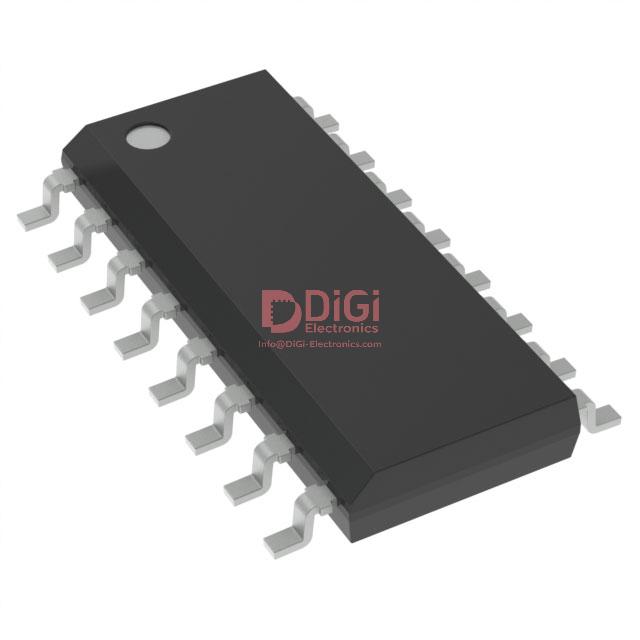
The SO16N (narrow) package footprints the VIPER27LDTR for optimal layout flexibility under high-density constraints, such as metering, home appliance supplies, and auxiliary rails in industrial automation. Its thermal dissipation profile supports operation within sealed enclosures without auxiliary heat sinks in most low to medium-power scenarios, leveraging internal power MOSFET efficiency.
For designers, the consolidated functionality translates to streamlined bill of materials and reduced design validation time. Application circuits typically require only input filtering, output rectification, and feedback interfacing, with minimal external loop compensation. This level of integration also reduces electromagnetic interference sources and simplifies regulatory qualification for worldwide deployment.
Practically, deploying the VIPER27LDTR in high-reliability or long service-life environments underscores its true value. Systems experience fewer field returns attributed to input surge failures. Its predictable protection responses under repeated stress enhance downstream component longevity, a key concern in mission-critical or remote power nodes.
Examining broader implications, the convergence of noise immunity, energy efficiency, and robust protection in the VIPER27LDTR series reflects a pragmatic trajectory in compact AC-DC conversion: instead of incremental improvement of discrete designs, deeply integrated ICs now serve as enablers for next-generation smart appliances and autonomous edge devices, where reliability and regulatory compliance are no longer in tension with compactness and low standby losses.
Key Electrical Features and Advantages of VIPER27LDTR
VIPER27LDTR integrates critical electrical features tailored for switched-mode power supply (SMPS) applications, harmonizing high-voltage endurance and sophisticated management. At the component core, the embedded N-channel MOSFET supports a maximum drain-source voltage of 800 V, matched with a gate-engineered R_DS(on) of 7 Ω at 25°C. This configuration sustains avalanche conditions with predictable thermal behavior, providing persistent reliability in demanding line surge and transient environments. Such robustness under fault stress is vital for systems deployed in industrial controls and consumer electronics where grid stability fluctuates.
The controller’s architecture enables selectable switching frequencies between 60 kHz (L-type) and 115 kHz (H-type), a feature that grants flexibility in transformer dimensioning and output ripple optimization. Frequency jittering, intentionally implemented, disperses harmonic energy across the spectrum, significantly reducing peak EMI emissions without additional filtering. This design choice offers tangible cost savings in compliance verification, eliminating the need for overspecifying passive filtering networks.
Safety and system integrity are secured through a layered protection protocol. The dual-level overcurrent detection isolates instantaneous faults and long-duration overloads, shielding both the primary switching device and downstream components. Overvoltage protection operates with tight reference accuracy, essential for maintaining output quality and safeguarding sensitive loads. Thermal runaway is mitigated via hysteretic shutdown, ensuring cyclic response without thermal fatigue—a practical measure observed to prevent repetitive transformer overheating during brownouts or ambient surges.
Energy efficiency is engineered into the VIPER27LDTR’s operating modes. Standby consumption is maintained below 50 mW through pulse-skipping and burst-mode modulation, a strategic response to evolving global efficiency mandates (such as ErP and DOE standards). The soft-start mechanism, adjustable to 8.5 ms, subtly elevates output while reducing inrush stress on secondary diodes and transformer cores. Adjustable current limiting, controlled by the CONT pin, refines overload response, balancing output stability with device preservation, and minimizing magnetic saturation during load transients.
The auto-restart function, featuring a slow repetition cadence, is particularly effective post-fault. Instead of rapid cycling that can escalate internal damage, the controlled restart alleviates cumulative stress, upholding long-term reliability. In field deployment, such measured fault recovery correlates with reduced service calls and higher MTBF values, substantiating the device’s suitability for mission-critical and consumer-grade SMPS solutions.
Collectively, the VIPER27LDTR demonstrates a holistic approach to integrated power management. By prioritizing protection depth, flexibility in design parameters, and system-level energy performance, it meets modern requirements for compactness and dependability. This deliberate convergence of control, protection, and efficiency makes it a preferred foundation for engineers aiming to optimize both the footprint and operational resilience of their SMPS topologies.
Application Scenarios for VIPER27LDTR
Application scenarios for the VIPER27LDTR emerge from its advanced integration of high-voltage startup circuitry, PWM controller, and protection features, all enclosed within a compact package. This device is engineered around a quasi-resonant flyback topology, which enables efficient energy conversion and reliable performance under variable input conditions.
At the component selection level, VIPER27LDTR is optimized for auxiliary power supply designs across a spectrum of end-use cases. For consumer electronics and home appliance subsystems—such as ATX standby rails, set-top boxes, and white goods controller logic—the device ensures tight output regulation at low power levels, even in the presence of brown-out or line surge. Its inherent protection suite, including overload, over-temperature, and short-circuit response, addresses operational safety mandates without inflating BOM or design complexity. The compact form factor is a key enabler for dense PCBs, where board space is at a premium.
In the realm of AC-DC adapter design, particularly for low to medium power ratings, VIPER27LDTR demonstrates a clear advantage. Its high-efficiency switching mechanism and low standby consumption streamline compliance with global energy standards such as DOE, CoC Tier 2, and ErP directives. Adopting this controller simplifies design for manufacturers who must routinely pass stringent regulatory audit cycles. Integrating the device’s high-voltage startup and embedded MOSFET eliminates several discrete components, supporting robust EMI performance within challenging size constraints. Field deployment shows that designs based on VIPER27LDTR can achieve consistent thermal performance and start reliably over a wide input range, even in adverse grid environments.
In off-line flyback applications feeding critical subsystems, the device’s resilience extends beyond regulation accuracy. Designed to tolerate wide AC input swings and to manage load transients, VIPER27LDTR includes tailored protection such as hiccup-mode fault response and auto-restart capability. This behavior isolates downstream loads during fault conditions without triggering catastrophic failure in core power stages. Custom implementations—such as those in industrial sensor interfaces and communication module power rails—benefit from this robust envelope. Board-level experience indicates minimal derating is required, even at upper ambient temperatures, providing designers latitude in thermally constrained enclosures.
Overall, the device’s system-level integration reduces external requirements while offering a platform capable of adapting to rapid design cycles and shifting regulatory frameworks. VIPER27LDTR positions itself not merely as a replacement for legacy solutions but as a fundamental building block, fostering innovation across high-efficiency, compact, and highly protected power conversion landscapes.
Internal Architecture and Functional Blocks of VIPER27LDTR
The VIPER27LDTR exhibits a multifaceted internal architecture, purpose-built for efficiency, robustness, and application versatility. At the core, the power section centers on SenseFET technology, achieving precise, fast current sensing directly within the device. This approach not only minimizes external components but also reduces energy losses, ensuring accurate feedback with negligible voltage drop. The inherent high dv/dt tolerance supports stable operation in noisy environments, meeting the stringent demands of industrial and consumer power supplies.
The start-up subsystem features an integrated high-voltage circuit that activates only when the input exceeds defined thresholds. This design prevents erratic device behavior during initial power-on or undervoltage events, safeguarding system reliability. The selective enablement of the start-up path enables rapid, deterministic initialization while curtailing unnecessary current draw during standby or low-line occurrences. Such mechanisms are particularly valuable in offline switching power supplies where wide input variations are common.
Central to control, the PWM engine incorporates frequency jittering, distributing energy across a wider spectral band to substantially lower peak EMI. The modulated switching frequency, coupled with precise internal MOSFET gate drive strategies, effectively dampens noise spikes and limits gate current overshoot. This results in cleaner electromagnetic profiles, simplifying compliance with international EMI standards and streamlining filter design considerations.
Protection is multi-layered, encompassing rapid-response circuits for overcurrent, output overvoltage, input brown-out, and thermal overload. Each fault is monitored in real time, with tailored intervention—for example, temporary shutdown or retry mechanisms—to enhance long-term system durability. These embedded safeguards enable the device to self-correct or gracefully handle transient anomalies, directly supporting high-uptime requirements in critical loads.
Customizability emerges through accessible configuration pins, notably CONT and BR, empowering designers to set application-specific current limits, overvoltage cutoff points, and brown-out sensitivity. This flexible paradigm limits the need for bill-of-material changes across end-product variants and expedites design iterations; it is particularly advantageous in fast-paced product development cycles or tiered product lines.
Field deployment reveals that leveraging SenseFET’s robust sensing and the stability endowed by frequency-jittered PWM markedly simplifies EMI filter networks and thermal management. Adjusting brown-out thresholds via BR pin tuning streamlines compatibility across regional input voltages, crucial for globally shipped power modules. Furthermore, the synthesis of advanced protection logic directly within silicon expedites safety qualification, shrinking validation timelines.
A nuanced understanding emerges: internal integration, when coupled with flexible interface points, not only boosts operational reliability but also compresses design cycles and system cost. VIPER27LDTR’s architecture exemplifies the trend toward smart power ICs that balance protection and configurability without compromise. Rigorous engineering discipline in subsystem interplay—SenseFET feedback, startup gating, and adaptive shutdown strategies—enables this device to address both legacy challenges and modern application frontiers with efficiency and agility.
Operating Modes and Fault Management in VIPER27LDTR
Operating modes in VIPER27LDTR are architected to maximize power conversion efficiency and robust protection across varying load and fault scenarios. Burst-mode operation serves as a critical feature under low or no-load conditions. By sharply reducing switching frequency, average switching losses are substantially minimized, aligning with modern standby consumption targets. This controlled burst operation mode not only improves energy efficiency but also contributes to EMI optimization by shifting noise emissions out of sensitive frequency bands—a practical improvement often observed in compliance testing of consumer and industrial power supplies.
During system initialization, the integrated soft-start scheme incrementally raises the current limit. This measured escalation effectively suppresses high inrush currents, shielding secondary-side components from voltage overshoot and thermal shock. Over time, such gentle ramp-up sequences have been correlated with extended power supply lifespan and reduced field failure rates, confirming the theoretical benefits of soft-start on the assembly line and in operational deployments.
Brown-out protection forms the foundational layer of resilience against input undervoltage. The controller monitors input rails and ceases switching instantly upon detecting voltage drops beneath the rigorously defined threshold. This approach ensures controlled, monotonic output voltage decay rather than abrupt dropout, thus preventing erratic restart cycles and securing downstream circuitry integrity during grid sags or brown-out events. Such performance traits are especially valued in geographically diverse deployments where supply quality and stability may be unpredictable.
In the event of persistent overloads or output short circuits, fault management shifts into a dedicated hiccup mode. Here, the controller cycles through periodic, low-frequency restart attempts, substantially decreasing average dissipation while actively seeking fault clearance. This method ensures thermal limits are never breached, with controlled recovery that favors system survivability and automatic re-engagement, negating the need for manual reset. Application experience shows that proper tuning of this mode can prevent catastrophic damage without noticeable nuisance trips.
The feedback and overload management architecture relies on a programmable delay network, generally tuned via external compensation components. This flexibility enables fine balance between control loop responsiveness and immunity to transient conditions, supporting stringent loop stability criteria while avoiding premature or spurious fault triggers. Precision in these settings translates directly to improved reliability metrics in fast-changing or harsh operating environments.
A nuanced insight emerges: the effectiveness of these protective and operational features is magnified when viewed as a coordinated suite rather than isolated mechanisms. Designers leveraging the programmable aspects of its feedback network can tailor power supply behavior—minimizing faults and maximizing uptime in mission-critical installations. Employing the VIPER27LDTR’s dynamic modes and integrated protections thus transcends datasheet features, representing a holistic approach to modern power system engineering where each mode reinforces both efficiency objectives and long-term durability.
Design-Specific Implementation Notes for VIPER27LDTR
Design-Specific Implementation Notes for VIPER27LDTR require a methodical approach, considering each subsystem’s dynamic interaction in isolating switch-mode power supplies. The initial focus lies with the V_DD capacitor, which is essential for stable device start-up. Its capacitance must be carefully calculated to guarantee that V_DD voltage remains consistently above the UVLO (under-voltage lockout) threshold throughout start-up transients. Insufficient capacitance risks premature turn-off before auxiliary winding voltage regulation is established, often resulting in repeated start-up cycles. Practically, the optimal value stems from the start-up current profile, transformer design, and anticipated auxiliary output delay. Field deployments underline the importance of low-ESR capacitors with a voltage rating margin, ensuring both adequate charge support and minimal ripple.
Current limitation and overvoltage detection parameters are governed by the resistor configuration at the CONT pin. Isolating the current-sense (R_LIM) and overvoltage (R_OVP) resistors enhances boundary control for both protection mechanisms, minimizing interaction effects and enabling precise tuning. Each resistor must be dimensioned so their cumulative current does not exceed the CONT pin’s rated handling capacity, averting thermal drift or parametric shifts over time. Evaluation of resistor tolerances and temperature coefficients ensures consistent protection operation under diverse environmental conditions. In practice, using precision resistors with low thermal coefficient provides long-term stability, particularly in high-reliability applications such as industrial control or smart appliance power stages.
Brown-out sensing fundamentally affects resilience against mains supply fluctuations. The BR pin’s resistor divider should employ high-resistance values to limit leakage and minimize self-heating, yet maintain robustness against noise. Adding a small-value bypass capacitor directly at the BR node proves effective for increasing noise immunity; however, excessive capacitance can introduce delays in threshold recognition, potentially leading to sluggish response or nuisance tripping upon fast voltage sags. Using a ratioed network with calculated hysteresis at the reference threshold enables crisp and repeatable switching under undulating line conditions, improving tolerance especially in weak or contaminated grid environments. Empirical adjustment of both divider resistance and capacitance values, validated under worst-case surge and brown-out scenarios, optimizes system recovery and immunity.
Tuning overload protection response is achieved through appropriate selection and placement of compensation capacitors in the feedback and timing networks. The timing network’s capacitance determines fault detection and limiting intervals, balancing between the need for prompt reaction to genuine faults and tolerance of benign transient conditions. Alternate compensation network architectures—such as integrating series or parallel RC elements—further decouple transient response from overall feedback stability, accommodating wide-ranging output filters and varying load regimes from light standby to full-power swing. Continuous validation with step-load and capacitive loading scenarios facilitates identifying the optimal configuration, avoiding nuisance shutdowns while securing device protection integrity.
Interpreting these implementation details through the lens of practical system integration reveals that stability and noise robustness hinge not only on component selection but on board layout optimization and signal path minimization. Strategic placement of reservoirs and filter elements, tight grounding, and careful separation of analog and switching nodes underpin reliable VIPER27LDTR operation. The subtleties of fine-tuning around threshold margins, as opposed to single-value selection, often determine product differentiation in terms of start-up reliability, fault immunity, and operational efficiency. Leveraging these layered considerations ensures designs that not only function but excel against real-world electrical stressors and field conditions.
Mechanical and Environmental Considerations for VIPER27LDTR
Mechanical and Environmental Considerations for VIPER27LDTR center on design choices that foster both operational durability and responsible material usage. The component is supplied in ECOPACK®-grade packaging, satisfying regulatory and industry mandates for environmental stewardship. This package reduces hazardous substances and facilitates streamlined recycling, which is critical for large-scale deployments in applications subject to shifting compliance frameworks.
The narrow SO16 housing presents distinct integration benefits, especially when maximizing PCB real estate in miniaturized systems. Its compact footprint allows designers to allocate more functional blocks within constrained surfaces, enhancing product capability without compromising performance. Embedding the VIPER27LDTR into space-limited layouts requires rigorous attention to the thermal characteristics inherent to densely populated boards. Specifically, optimizing the copper area beneath drain pins serves as an efficient passive cooling strategy—ensuring heat extraction remains robust under sustained load. This approach not only guarantees junction temperature constraints are maintained but also secures long-term reliability, which is essential in mission-critical consumer electronic circuits.
Leveraging this mechanical configuration, the device aligns seamlessly with embossed SMT lines commonly used in high-throughput electronics manufacturing. The SO16 profile supports automated pick-and-place accuracy, minimizing component orientation and soldering errors. Experience indicates that achieving consistent solder joint integrity at high production volumes is contingent upon precise footprint design and pad geometries—areas where the VIPER27LDTR's package dimensions present tangible advantages. Further, the component's ruggedness under repeated thermal cycling and mechanical stress during SMT placement positions it as a dependable choice for products exposed to fluctuating operating environments.
A layered analysis reveals that material selection and thermal interface optimization directly affect field performance and warranty returns. The convergence of environmental compliance and mechanical robustness within a single package is not merely a regulatory necessity, but a strategic advantage for accelerating time to market and reducing post-deployment failures. A subtle but important aspect involves real-world PCB stackup variation: incorporating adaptive copper pour strategies under critical pins can mitigate thermal hotspots resulting from process variability.
Application scenarios extend from smart appliances to industrial IoT nodes, where PCB density, mechanical resilience, and sustainable materials are key differentiators. Success in high-volume production hinges on granular attention to both package handling and board-level thermal design, suggesting that a holistic view of mechanical and environmental criteria during the component selection phase can resolve downstream engineering bottlenecks. This interplay forms the basis of reliable, scalable, and environmentally aligned product development in contemporary electronics.
Potential Equivalent/Replacement Models for VIPER27LDTR
The process of identifying suitable replacement models for the VIPER27LDTR begins with a granular examination of its functional and electrical characteristics. The VIPER27LDTR employs an integrated high-voltage MOSFET tailored for off-line, low- to medium-power switch-mode power supplies, leveraging a quasi-resonant or fixed-frequency flyback topology. In selecting alternatives, close attention is paid not just to the topology, but to the synergy between switching frequency, maximum drain-source voltage, burst mode implementations, and over-temperature mechanisms. Variants within the VIPER portfolio, such as VIPER16 and VIPER28, feature nuanced distinctions—VIPER16 typically operates at lower output power and switching frequency, while VIPER28 extends voltage ratings and protection schemes. These subtle divergences can directly impact transformer selection, PCB layout strategies, and thermal management methodologies in real-world applications.
Cross-referencing controllers from other suppliers—such as ON Semiconductor's NCP1207 or Power Integrations' TinySwitch series—demands meticulous correlation of pinout configurations, start-up current profiles, and system-level protections, including brown-out and over-voltage safeguards. Experience in redesign shows boundary conditions often arise at the intersection of isolation spacing and thermal dissipation performance; integrated package variants (like SO16N) offer compactness but require careful consideration of heatsinking and creepage distances when scaling power output. In rigorous laboratory prototyping, adherence to international standards—IEC 60950-1 for safety, IEC 61000 family for EMI—governs acceptance, particularly for energy labeling (e.g., DOE or ErP compliance in power adapters).
EMI performance, another critical parameter, varies with switching frequency and burst mode design; model selection must account for board-level filtering requirements and radiated emissions from loop area geometry. Legacy board upgrades often reveal latent incompatibilities—such as mismatched start-up sequences or output stability under load transients—which can manifest as field failures. Here, a robust validation cycle employing automated test benches and accelerated stress protocols becomes invaluable; only genuine drop-in replacements that replicate fault management and efficiency curves under all operating conditions ensure reliability.
A core insight emerges through iterative design cycles: the highest-value substitutes not only match the base electrical characteristics, but also exhibit scalable protection features and system integration ease. Controllers with flexible start-up mechanisms, adaptive burst states, and programmable protection thresholds streamline custom hardware adaptation, minimizing firmware or re-layout efforts. Ultimately, consistent, standards-compliant performance across temperature and voltage extremes supersedes mere parameter matching, establishing a practical litmus test for equivalence. By balancing modularity, certification history, and proven field endurance, engineering teams maximize both risk mitigation and supply chain resilience in component substitution strategies.
Conclusion
The VIPER27LDTR embodies a highly integrated approach to offline power conversion, merging key control and protection elements into a compact package suitable for modern SMPS architectures. At its core, the device employs a current-mode PWM controller with embedded HV startup circuitry, enabling reliable operation directly from the AC line without auxiliary bias. This capability streamlines system design, reducing part count and simplifying EMI management through optimized switching speed and gate drive waveforms.
Layered protection schemes within the VIPER27LDTR address fault tolerance from the silicon upward. Features such as overvoltage protection, thermal shutdown, and pulse-by-pulse current limiting are implemented in hardware, ensuring rapid fault response independent of system software. In high-density PCB layouts, field experience demonstrates that judicious placement of decoupling and snubber elements around the device minimizes false tripping and maximizes longevity under rigorous surge and brownout conditions. Designers frequently leverage its brown-out detection and soft-start functionality to enhance robustness against grid disturbances common in global deployment scenarios.
Configurability is another hallmark; the feedback loop accommodates both opto-isolated and primary-side regulation topologies. This flexibility facilitates application in universal input adapters, LED lighting drivers, and auxiliary power supplies for white goods. Practical implementations benefit from the device’s low external component requirement, which contributes to design reproducibility and easier compliance with efficiency and standby power regulations mandated by energy standards such as ErP and DoE.
From a reliability perspective, the monolithic integration of HV power MOSFET and control circuitry within VIPER27LDTR mitigates risks of misalignment and thermal gradients present in discrete designs. Empirical analysis reveals a reduction in RMA rates, attributable to the controlled inrush characteristic and immunity to line transients provided by internal clamp structures and dynamic OCP thresholds. System architects often adapt layout guidelines to optimize thermal dissipation, capitalizing on the device’s wide operating junction temperature range.
Unique to this device class, the balance between cost efficiency and regulatory overhead is achieved through the built-in protection and EMI management functions. The VIPER27LDTR expedites product certifications, particularly in markets where IEC and UL standards impose stringent limits on leakage current and conducted emissions. Strategic selection of this IC empowers engineering teams to reconcile competing priorities of board space, energy efficiency, and fault immunity, establishing a reference for next-generation consumer appliance platforms.


