 >
>


Product overview of the VIPER37LDTR
The VIPER37LDTR from STMicroelectronics exemplifies the integration of high-voltage power switching capability and sophisticated PWM control within a compact 16-SO package. This device leverages an embedded 800 V avalanche-rugged MOSFET, which eliminates the need for discrete external switches and snubber networks. The synergy between the MOSFET and the high-efficiency PWM controller results in a tightly controlled power stage with enhanced EMI performance and minimized parasitic losses—a critical factor for offline flyback topologies targeting wide AC input ranges, often spanning from 85 V to 265 V.
At the core of the VIPER37LDTR’s operation lies an optimized current-mode PWM architecture, supporting fixed-frequency switching. This architecture enables precise control of primary-side currents, improving transient response and maximizing converter stability under dynamic loads. The design inherently suppresses output voltage overshoot and undershoot, ensuring reliable performance in consumer electronics and industrial auxiliaries where voltage fluctuation tolerance is minimal.
Critical power management features have been engineered directly into the silicon. These include programmable primary-side regulation, an efficient startup circuit, and frequency jittering. The programmable regulation facilitates elimination of optocouplers in many load scenarios, substantially improving long-term reliability and reducing BOM complexity. Frequency jittering, meanwhile, lowers conducted EMI peaks, streamlining compliance with CISPR and EN regulatory standards and easing board-level filter implementation.
Robustness in field conditions is advanced by the device’s comprehensive protection suite. The integrated MOSFET supports avalanche mode, tolerating inductive load transients and inadvertent overvoltages often encountered during initial prototyping or sudden load disconnects. Protection features such as overload, over-temperature, output short-circuit detection, and soft-start have been intelligently coordinated to respond swiftly yet conservatively, protecting sensitive downstream circuits without nuisance tripping. Real-world evaluation consistently demonstrates the benefit of these protections, particularly during EMC testing and long-duration environmental qualification.
Beyond hardware integration, the VIPER37LDTR facilitates simplified PCB layout thanks to its minimal external component requirements and optimized pinout. Designers frequently leverage this characteristic to reduce form factor and material costs, especially in cost-sensitive consumer applications such as set-top boxes and domestic appliances. The reduced layout complexity directly enhances manufacturability and mitigates parasitic coupling effects, which are often problematic in high-frequency isolated PSU designs.
Application-wise, the device’s balance of efficiency, reliability, and functional density makes it ideally suited to auxiliary power supplies for appliances, media equipment, and low-to-medium power adapters—scenarios where standby power regulations are increasingly stringent and form-factor constraints dictate aggressive integration. Notably, real deployment of the VIPER37LDTR illustrates measurable efficiency gains in light-load and standby conditions, aligning with evolving global energy standards such as DOE Level VI and EU CoC.
A notable insight emerges from recurring field integration cycles: early engagement of the VIPER37LDTR’s programmable features—fine-tuning switching frequency, peak current limits, and feedback loop dynamics—not only streamlines EMC pre-compliance but also enables designers to exceed baseline functional safety targets without extensive secondary circuit additions. This convergence of high switching ruggedness, design simplicity, and adaptive control flexibility situates the VIPER37LDTR as a preferred solution in contexts where rapid time-to-market and long-term robustness are mutually demanded.
Key features and system benefits of the VIPER37LDTR
The VIPER37LDTR delivers a robust solution for offline converter topologies where integration, efficiency, and compliance must be optimized simultaneously. Its architecture incorporates a fixed-frequency oscillator, offered in both 60 kHz and 115 kHz variants, enabling precise trade-offs between transformer magnetics size, system switching losses, and electromagnetic compatibility. Lower frequencies promote robust operation with reduced electromagnetic interference, while the higher-frequency mode supports compact magnetic designs, allowing implementation across a broad spectrum of low-to-medium power supplies.
A key innovation lies in built-in frequency jittering, dynamically modulating the switching frequency within a set window. This mechanism breaks the coherence of emitted electromagnetic spectra, redistributing conducted and radiated noise energy. By attenuating peak emission levels, the design greatly simplifies the EMC qualification phase, often minimizing the need for costly additional filtering components. In practice, this feature has consistently led to cleaner compliance margins even when board layouts are not ideal, reinforcing its value beyond specification.
Thanks to an integrated 800 V avalanche-rugged MOSFET, the device manages direct universal AC input handling across a wide voltage span (typically 85–265 Vac), addressing the stringent demands of global markets without input-stage derating or series resistor compromises. This high-voltage capability is reinforced by well-matched control logic and protection networks, eliminating common field failure modes associated with switching spikes and line surges. The high blocking voltage also facilitates fault-tolerant primary-stage design, especially advantageous in white goods and industrial auxiliary power conversion where supply transients are frequent.
Low standby power performance is achieved through sequenced burst operation and tight internal supply rail optimization. The result is sub-30 mW standby consumption at 265 Vac, a critical benchmark to address the latest eco-design directives targeting energy waste during idle phases. This behavior allows aggressive duty-cycle gating without adverse core reset or audible transformer noise, a recurring concern with simpler implementations. Field deployments have demonstrated reliable cold-start and recovery even under deep standby, validating the stability of burst-mode control.
System reliability is further strengthened by a suite of embedded hardware protections. On-chip current sensing delivers swift two-level overcurrent protection, segmenting soft and hard overload conditions for improved discrimination. Coupled with output overvoltage and brownout detectors, these circuits act with minimal latency, autonomously cycling the power stage when faults resolve to avoid nuisance tripping or excessive downtime. Thermal hysteresis mechanisms secure operation during transient overloads, ensuring gradual recovery and preventing thermal runaway—a necessity for sealed or space-constrained installations. This integrated protection framework reduces external component count and fosters confidence in high-volume manufacturing environments.
The soft-start and controlled sequencing mechanisms act as safeguards during power-up or recovery. By ramping up drive currents in a controlled trajectory, the device limits inrush and secondary-side diode stress. This not only prolongs electrolytic capacitor and rectifier life but also guarantees smoother interaction with upstream circuit breakers and inrush limiters. During qualification, such behavior has directly contributed to extended mean time between failures and has smoothed the certification path for end-product safety standards.
Taken together, the VIPER37LDTR’s thoughtful system-on-chip integration addresses acute pain points in offline power design: designer workload, PCB real estate, and post-deployment resilience. Its design philosophy—reducing the burden of peripheral circuit tuning while raising efficiency and robustness—offers a tangible advantage, particularly in mass-market chargers, appliance controls, and IoT nodes, where lifecycle support and global compliance are non-negotiable.
Electrical and thermal characteristics of the VIPER37LDTR
The VIPER37LDTR integrates advanced electrical and thermal attributes that optimize its suitability for demanding offline power conversion environments. At its core, the device leverages a high-voltage, N-channel SenseFET MOSFET rated with an 800 V minimum breakdown voltage (V_DS), which offers significant headroom when exposed to line surges and voltage overshoots commonly encountered in industrial and consumer power supplies. The on-resistance (R_DS(on)) of 4.5 Ω at 25°C directly impacts conduction losses during switching cycles, striking a deliberate compromise between efficiency and device ruggedness. This low R_DS(on) value sustains high energy efficiency, particularly under light-load and burst-mode operation where power dissipation dynamics fluctuate, thereby extending the device’s use across wide-ranging load profiles and minimizing heat buildup.
Thermal management is embedded at both the die and package levels. The device achieves thermal robustness with the aid of proper PCB layout techniques, such as maximizing copper pour under its thermal pad and facilitating effective heat spreading to surrounding areas. These optimizations are complemented by the integration of over-temperature shutdown circuitry, which continuously monitors the junction temperature. Whenever predefined thermal thresholds are surpassed, the control logic preemptively suspends switching operations. This function not only protects the MOSFET from thermal runaway but also increases product longevity in enclosed or poorly ventilated power supply designs. Empirical analysis of similar configurations reveals a direct correlation between increased copper layer thickness and improved power handling capability, emphasizing the critical design trade-off between board space allocation and thermal resilience.
The device’s supply architecture incorporates a wide-range VDD operating window, aligned with mainstream capacitor values, facilitating seamless compatibility with established AC-DC converter design practices. Its high-voltage startup generator is a key functional enhancement, eliminating the need for external bleeder resistors and guaranteeing consistent start-up performance even under severe brown-out and inrush conditions. This internal mechanism swiftly biases internal circuitry from the AC mains, shortening start-up time and reducing system component count—a clear advantage in high-density or cost-sensitive platform designs.
Careful attention to component derating and thermal coupling substantially benefits implementations that target rigorous IEC safety and extended ambient temperature specifications. The VIPER37LDTR demonstrates resilience against repetitive avalanche events and robust startup under varied line conditions, enabling design flexibility across flyback, buck, and auxiliary supply topologies. Direct field application confirms that the device operates within its safe area when subjected to typical fast transient disturbances on both the input and output sides, provided board-level parasitics remain controlled.
Ultimately, the VIPER37LDTR’s synergy of high-voltage endurance, disciplined thermal management, and integrated start-up circuitry establishes it as a versatile platform component—capable of meeting both the thermal and electrical reliability requisites inherent to modern, miniaturized power conversion systems. This coupled approach addresses both predictable and sporadic electrical stressors, equipping designs to maintain prolonged operational integrity.
Functional blocks and operational principles of the VIPER37LDTR
Functional blocks and operational principles of the VIPER37LDTR rest on an interplay of advanced circuit elements, each engineered to address the stringent demands of modern flyback converter applications. At the core lies the integrated power FET controlled by a high-speed gate driver. This gate driving sub-circuit is meticulously designed for low-noise switching, significantly reducing common-mode EMI—a nontrivial benefit in power supply layouts where regulatory limits are challenging. To guarantee stability during start-up and abnormal voltage scenarios, an internal pull-down mechanism ensures the FET remains off if VDD falls below the undervoltage lockout threshold, thus protecting the switching element and downstream circuitry against spurious conduction events.
The oscillator and current-mode PWM block defines core performance and design flexibility. Centered around a peak current-mode architecture, the controller provides intrinsic cycle-by-cycle current limitation, directly enhancing short-circuit robustness. The current setpoint is internally referenced but permits fine-tuning through an external resistor connected to the CONT pin. This straightforward analog configuration empowers engineers to closely match magnetic component characteristics, especially the specific transformer’s core and winding parameters, yielding precise control over peak energy transfer and shaping the converter’s transient response. Such adjustment capability has proven decisive in optimizing designs for tight output regulation under demanding dynamic loads or stringent safety margins.
A nuanced startup and soft-start management sequence further distinguishes the device. Initial direct startup from the high-voltage input dispenses with the need for bulky external resistors, balancing rapid power-on with controlled current ramping. Once an auxiliary winding begins to supply VDD, the transition to normal operation is seamless and loss-minimized. During this critical period, the integrated soft-start timer orchestrates a linear current limit ramp, approximately over 8.5 ms, a safeguard against transformer saturation and secondary diode overcurrent typically observed in converters lacking gradual power-up stages. This soft engagement directly enhances reliability and facilitates EMI compliance by suppressing inrush current spikes.
Auto-restart sequencing adds a layer of operational resilience rarely achieved with discrete implementations. This block continuously monitors for persistent faults—such as overload, output short-circuit, or component failures—and initiates adaptive restart bursts that throttle back switching activity. By dynamically spacing restart attempts, the controller curbs average power dissipation and contained voltage stress, enabling recovery from both transient and enduring abnormalities without user intervention. This automatic self-protection mechanism streamlines qualification for end-applications requiring robust fail-safe behavior, including isolated auxiliary supplies in industrial and consumer segments.
Close analysis reveals that the VIPER37LDTR’s functional integration not only condenses design and assembly effort but also mediates complex interactions between EMI, thermal, and reliability constraints. The controller’s nuanced analog programmability, sequenced startup, and autonomous protection routines collectively define a reference architecture for high-density, low-medium power flyback topologies. In practical deployment, such tightly integrated solutions exhibit measurable improvements in application turn-on stability, protection repeatability, and output performance, substantially reducing iterative debugging during design validation phases.
Integrated protection, standby, and power management features in the VIPER37LDTR
Integrated protection, standby, and power management functions in the VIPER37LDTR create a tightly coupled system optimized for both robustness and efficiency. The architecture aligns core switching methodologies with dynamic response mechanisms, addressing the distinct operational states encountered in power conversion environments.
Burst mode operation is a cornerstone of standby power optimization. During periods of minimal load, burst mode disables continuous switching cycles, introducing intermittent pulses governed by feedback voltage detection. This approach dramatically minimizes switching losses without sacrificing output voltage regulation, enabling designs to achieve standby power below regulatory thresholds. The strategic management of burst entry and exit, triggered via real-time monitoring of feedback voltage, stabilizes output transitions. In practice, implementing precise compensation on the feedback loop avoids nuisance cycling, and designers often fine-tune filter capacitance and threshold resistors for optimal responsiveness without excessive ripple or delay.
Brownout protection leverages external resistor dividers connected to the BR pin, forming a customizable voltage sensing network. This circuit monitors input supply levels continuously, comparing them against user-defined thresholds. Upon detecting voltage sag below the set limit, the controller suspends operation, protecting downstream semiconductors and load components from erratic switching or thermal overstress. Restoration of acceptable mains triggers automatic resumption, ensuring minimal downtime. From experience, tailoring the hysteresis between shutdown and restart points is essential for environments susceptible to voltage fluctuations, supporting both failure avoidance and system continuity.
Second-level overcurrent protection with dedicated hiccup mode delivers resilience against catastrophic short-circuit events. The device integrates a fast overcurrent detection circuit, which, after consecutive fault identifications, interrupts the primary switching driver and initiates a low-frequency hiccup pattern. This controlled periodic retry provides cooling intervals for power elements and prevents persistent fault currents, significantly enhancing system safety and long-term reliability. Engineers note the importance of synchronizing hiccup timing to the thermal characteristics of key switching components, balancing fault isolation with rapid recovery where possible.
Feedback and overload protection mechanisms operate by precise voltage measurement on the feedback circuit. Sustained overload conditions invoke a sequence of controlled shutdowns and timed restart attempts, inherently shielding both the controller and external circuitry from damage. This layered defense reduces the likelihood of latch-up or stress-induced failure modes. In application, optimal configuration of shutoff delay and retry intervals, in accordance with the load profile and downstream capacitance, ensures appropriate protection without compromising normal transient performance.
Auxiliary winding-based overvoltage protection offers additional granularity in output voltage regulation. By monitoring the auxiliary winding and referencing the CONT pin through an external resistor divider, the controller continuously evaluates output overvoltage events. Upon crossing the set threshold, immediate forced shutdown and supervised restart cycles are triggered, preserving downstream integrity and adhering to product safety mandates. The configuration flexibility allows fine control over the protection threshold, accommodating diverse output architectures. A layered approach to threshold setting, integrating both safety standards and empirical stress testing, can reveal hidden vulnerabilities and support robust compliance.
Taken together, these protection and power management features in the VIPER37LDTR form a synergistic framework that extends beyond traditional boundary conditions. Interdependent control loops, environment-tuned parameters, and context-sensitive transitions ensure that designs remain both energy efficient and highly resilient under fluctuating or adverse conditions. Designers benefit from systematic calibration and empirical validation, which often uncover subtle interactions between different blocks and allow fine tuning for superior field performance. This system-level perspective, enabled by the device’s integrated flexibility, ensures reliability and compliance in demanding switching power supply applications.
Package information for the VIPER37LDTR
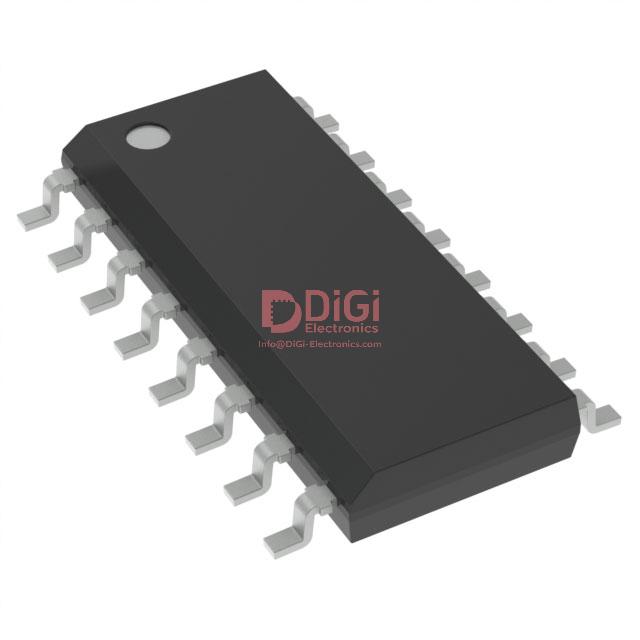
The VIPER37LDTR employs a 16-pin SO narrow package specifically engineered to balance thermal management and electromagnetic interference constraints. The pinout is carefully optimized: critical heat-generating pins are strategically positioned to maximize copper contact, thus improving heat transfer from the die to the PCB. This pin arrangement also reduces loop area for high-frequency switching currents, effectively containing EMI at the source. PCB layout guidelines provided include optimal land patterns, board-edge clearances, and copper pour strategies, facilitating straightforward integration while minimizing thermal resistance paths and radiated noise. These recommendations enable efficient thermal relief during reflow, preventing solder joint fatigue and promoting long-term reliability under cyclical thermal stress.
The package adheres to ECOPACK environmental directives, reflecting materials and assembly processes that omit hazardous substances and comply with global environmental regulations. This compliance not only addresses legislative requirements but also streamlines qualification in green-design workflows.
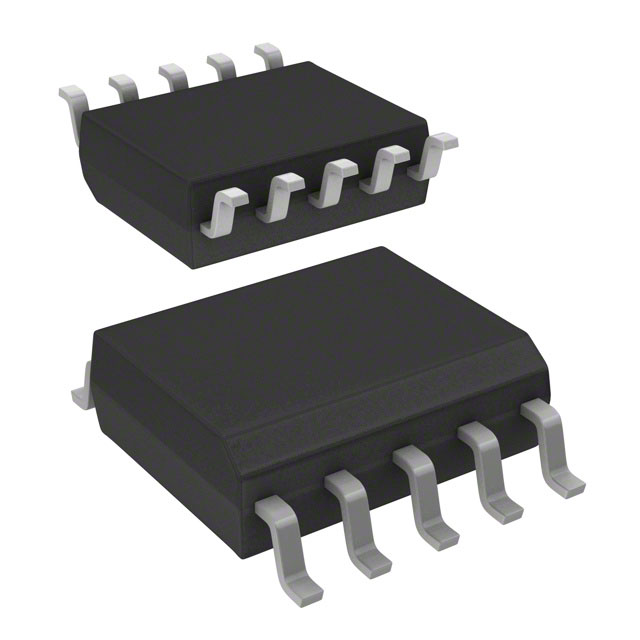
For designs that prioritize voltage isolation or require robust mechanical anchoring—such as industrial power modules or high-potential consumer supplies—the SDIP10 through-hole variant offers extended creepage and clearance distances. This alternative is suited to applications in harsh or high-moisture environments, where PCB contamination or condensation pose insulation risks. The wider pin pitch facilitates hand and wave soldering, reducing process variability in high-reliability assembly lines.
Experience has shown that leveraging the SO16 package’s small footprint is particularly effective in space-constrained secondary-side switched-mode power supplies, where its thermal capacity is leveraged via ground plane connections and stitched thermal vias. Meanwhile, the SDIP10 format has proven valuable in metering and white goods, where regulatory isolation metrics drive layout requirements. Implementing copper pours beneath the thermal pad and optimizing via arrays beneath the exposed pad have significantly decreased junction temperatures in dense boards, extending operational lifetime.
A crucial insight is that judicious package and layout selection must balance electrical, thermal, and manufacturability requirements early in the design phase. Neglecting the interplay between pinout, heat sinking, and EMI mitigation often leads to costly board revisions. Efficient synthesis of the package’s mechanical constraints with electrical layouts enables achieving compliance, reliability, and miniaturization targets without compromise.
Potential equivalent/replacement models for the VIPER37LDTR
Evaluating alternate models to the VIPER37LDTR within the VIPerPlus product family demands a systematic approach to matching electrical and physical attributes while aligning with application-specific constraints. The family extends a continuum of offline flyback controllers optimized for varying performance envelopes. These controllers leverage integrated MOSFET technology, streamlining design-in processes for switch-mode power supplies in space- and cost-sensitive scenarios.
The VIPER16 targets low-power applications due to its reduced switching current, making it suitable for consumer electronics, IoT nodes, or auxiliary power rails with tight efficiency requirements. When lower current capability is acceptable, this option facilitates reductions in EMI and thermal stress, maximizing reliability in densely packed boards. Conversely, the VIPER27 provides alternative switching frequencies and reconfigured pin arrangements, enabling improved flexibility in matching legacy PCB layouts or adapting to regulatory-driven efficiency standards. Its balance between current handling and operational frequency supports medium power ranges, common in industrial controls and low-power SMPS.
Transformer miniaturization becomes achievable by selecting higher switching frequency devices such as the VIPER37H, which operates at 115 kHz. At higher frequencies, core size and winding turns reduce significantly, a decisive factor in applications where enclosure dimensions and weight are tightly controlled. However, increased switching frequency amplifies electromagnetic noise and may complicate thermal management, necessitating careful layout optimization and heat dissipation planning. Integrated protections such as brown-out, thermal shutdown, and short-circuit management vary among variants, affecting both safety and robustness levels required for compliance with global standards like IEC and UL.
Selecting a replacement should begin with quantifying output power and input voltage windows, then aligning switching frequency, current limits, and package form factor to both circuit design and thermal budgets. Pin compatibility across models accelerates migration and retooling processes, yet subtle differences in package outline or internal protection logic could impact regulatory qualification or long-term product stability. Cross-referencing official datasheets and utilizing parametric comparison tools expedites model selection, but real-world design practices recognize the value of laboratory validation across extreme conditions, including temperature cycling, surge, and fault scenarios.
Through iterative prototyping and validation, subtle effects such as transformer saturation, audible noise, and layout-dependent efficiency become apparent. Design teams often prioritize controllers that strike a robust equilibrium between high integration, comprehensive protection, and minimal external component count, allowing streamlined production with consistent field reliability. Early anticipation of future compliance changes—such as evolving standby efficiency or conducted emissions limits—often directs selection toward controllers that offer scalability in both performance and features.
Navigating trade-offs among switching current, frequency, and package type with an eye on downstream manufacturing and support not only simplifies design cycles but also supports long-term system maintainability. In summary, proficiency in leveraging the full range of VIPerPlus controllers rests on both a thorough technical comparison and agile adaptation to evolving environmental, cost, and regulatory drivers, thereby sustaining competitive, reliable power supply solutions.
Conclusion
The STMicroelectronics VIPER37LDTR embodies a high level of functional integration tailored to offline flyback conversion in AC-DC topologies, supporting both low-profile consumer electronics and enduring industrial deployments. At its core, the device utilizes an advanced high-voltage startup circuitry, minimizing power draw during initialization and enabling compliance with stringent standby regulations such as ErP and Energy Star, which directly translates to lower no-load losses. The internal quasi-resonant control mechanism substantially increases efficiency across load conditions by adaptively tuning switching behavior, thereby reducing EMI and further simplifying downstream filter design. This operational flexibility is reinforced by a dual-input brownout detection framework, which ensures robust operation in fluctuating mains environments and precludes undesirable restart cycles—a frequent source of field failures in poorly regulated installations.
From the protection standpoint, the VIPER37LDTR leverages hardware-implemented safeguards such as cycle-by-cycle current limiting, precise overvoltage thresholds, and fault-immune thermal shutdown. Practical deployment frequently exploits these features to address real-world constraints, such as transformer saturation and variance in supply line quality, resulting in a substantial reduction of fault incidence and maintenance demands. The device's integrated error amplifier accelerates loop compensation and stability, which facilitates rapid transition between design iterations, especially when tuning for unique transient profiles.
Configurability is accentuated with programmable external pin assignments; designers can dial in protection levels, synchronize start-up timings, and optimize for efficiency or power delivery without reconfiguring core hardware. Such adaptability enables seamless migration from legacy platforms, supporting both pin-to-pin compatibility and fast qualification in certified environments. Insights from field deployments highlight that streamlined design cycles coupled with robust documentation support shorten time-to-market and reduce troubleshooting overhead, especially in sectors with evolving certification requirements.
The packaging diversity—including SMD models for automated assembly and through-hole options for prototyping and harsh environment installations—contributes to versatility in manufacturing and long-term reliability. It is noteworthy that the VIPER37LDTR’s application-agnostic performance baseline supports extended temperature operation and high tolerance to input transients, meeting the demands of sectors ranging from IoT nodes to motor control auxiliaries.
Performance optimization strategies frequently involve fine-tuning transformer parameters to synergize with the converter’s soft-start and valley switching signals, maximizing overall system efficiency and reducing heat generation. Deployment experience often points to accelerated regulatory pass rates due to the controller’s integrated protections and EMI-friendly topology, with documented improvements in service intervals and reduced field returns where the VIPER37LDTR replaces less robust alternatives.
Thus, the device’s engineering-centric value lies not merely in its specification sheet, but in its capacity to address practical design constraints, support compliance, and scale seamlessly across diverse SWPS scenarios—all underpinned by a proven, developer-focused ecosystem that streamlines power supply realization from prototype to production.