 >
>


Product overview: VIPER26HD STMicroelectronics IC OFFLINE SWITCH FLYBACK 16SO
The VIPER26HD from STMicroelectronics embodies a versatile, high-performance IC optimized for offline power conversion in demanding flyback topologies. Fundamentally, the integration of an 800 V avalanche-rated MOSFET with a current mode PWM controller in a 16-pin SO package streamlines high-voltage AC-to-DC power stages, reducing component count and design complexity. This architectural fusion ensures enhanced efficiency and reliability, especially under variable line conditions, while supporting compact layouts and minimizing thermal footprints.
At the heart of the VIPER26HD’s operation is its robust avalanche MOSFET. Designed for rugged energy handling, it withstands voltage spikes occasioned by line surges and transformer leakage inductance—a critical attribute in the field, where sustained durability under transient events directly affects system lifetime and warranty metrics. The current mode PWM controller synchronizes switching cycles, facilitating fast transient response and stable loop control. This architecture provides precise output voltage regulation, simplifies compensation networks, and supports load step scenarios—vital in both appliance control boards and low-power supply rails in consumer devices.
Advanced power management features further differentiate the IC in practical use. Integrated protections such as Overvoltage Protection (OVP), Overcurrent Protection (OCP), and Thermal Shutdown (TSD) are not mere datasheet entries; they enable designers to meet stringent safety and EMC standards without external circuitry. This streamlining expedites compliance during agency testing. Low standby power operation, achieved via adaptive burst modes, aligns with global energy efficiency mandates for household and industrial power supplies, minimizing losses under light-load and no-load conditions.
Engineers applying the VIPER26HD in auxiliary supplies—for instance in smart meters, appliances, or LED drivers—can leverage its wide input voltage range for universal mains compatibility (90-265 V AC and beyond). Its start-up circuitry and integrated high-voltage startup ensure quick, reliable power-up even with high impedance input sources, mitigating cold-start issues in field deployments. Use in switch-mode power supplies for consumer electronics further benefits from the part’s low external component requirements, streamlined EMI performance due to optimized gate driving, and robust startup/restart behavior in brown-out or fault recovery scenarios.
Practical design experience indicates that effective transformer selection is paramount to capitalizing on the chip’s flyback topology efficiency, especially at low voltages and wide load ranges. Careful snubber and secondary-side rectification design extend the IC’s ruggedness and preserve its low standby power performance. Real-world application testing emphasizes the advantage of VIPER26HD’s integration: reduced production costs, improved long-term reliability, and simplified logistical validation processes for mass-market devices. In summary, the tight coupling of high-voltage MOSFET and intelligent controller in VIPER26HD streamlines development and fortifies offline flyback supplies, supporting a range of modern power conversion challenges from miniaturization to global compliance.
Core features of VIPER26HD STMicroelectronics
VIPER26HD from STMicroelectronics exemplifies modern integration in offline switch-mode power supply controllers, targeting applications from auxiliary supplies to robust industrial converters. At its core, the device merges high-voltage startup circuitry with a sense-FET architecture, establishing a foundation for streamlined designs and minimized external circuitry. Integrated high-voltage startup functions substantially reduce circuit complexity and inrush current, eliminating the need for bulky startup resistors and improving overall conversion efficiency during initial power-on sequences.
The sense-FET mechanism delivers precise current sensing directly within the package, enabling nearly lossless measurement without conventional shunt resistors. This not only lowers power dissipation but also yields improvement in output regulation accuracy and transient load response. From practical deployment, these features manifest as simplified PCB layouts with fewer external components, reduced design risk, and less heat accumulation, all particularly valuable in space-constrained systems or thermally limited enclosures.
VIPER26HD demonstrates a keen focus on no-load and standby efficiency essential for compliance-driven power architectures. With standby power consumption below 30 mW at 230 VAC, the device addresses stringent global regulatory requirements for external power supplies and appliances. Achieving such low standby thresholds directly benefits designs aimed at the evolving energy-efficiency landscape, especially where system certifications hinge on idle consumption figures.
The device’s use of a jittered switching frequency serves dual purposes: it mitigates peak EMI emissions, facilitating cost-effective EMI filter arrays, and distributes switching artifacts across a spectrum to reduce quasi-peak noise signatures. Such spectral flattening is often a decisive factor for mass-manufactured products required to pass Class B EMC standards. By enabling reduced filter specification without compromising compliance margins, the controller assists designers in managing both cost and PCB real-estate.
A versatile current mode control engine, with externally programmable setpoints, gives designers fine-grained authority over system dynamics—ranging from loop bandwidth to peak current thresholds. The built-in error amplifier supports a wide range of compensation schemes, encouraging tailored loop response for varying load and line conditions. The integrated soft-start feature modulates power ramp-up, suppressing inrush currents and voltage overshoots, which are critical for safeguarding sensitive downstream components.
Hysteretic thermal shutdown complements the device’s robustness, ensuring power cycling and system recovery during overtemperature events. The hysteresis window minimizes repeated toggling under marginal conditions, supporting long-term system reliability. This approach demonstrates a balanced trade-off between protection responsiveness and operational continuity, a crucial concern in industrial or high-availability deployments.
VIPER26HD's architectural philosophy embraces tight component integration, functional density, and multi-faceted protection mechanisms. The convergence of lossless current sensing, adaptive EMI management, programmable control, and advanced protection positions this platform as an enabler for high-performance, cost-sensitive designs. Experience in real-world deployments confirms that such features not only facilitate swift time-to-market but anchor long-term field reliability—providing tangible advantages in the relentless cycle of system optimization, cost reduction, and regulatory conformance.
Electrical and thermal ratings for VIPER26HD STMicroelectronics
Electrical and thermal ratings represent foundational criteria in the qualification and application of the VIPER26HD from STMicroelectronics. This device integrates an 800 V minimum breakdown voltage power MOSFET, aligning with the stringent demands of robust offline power conversion. Junction temperature endurance spanning -40°C to +125°C positions the component for deployment in environments with broad thermal fluctuations, which is essential for reliability in both regulated and challenging field conditions.
Critical electrical parameters such as low on-resistance reduce conduction losses, directly impacting efficiency in switch-mode power supplies. Specifications for avalanche energy absorption reflect the MOSFET’s ability to withstand voltage transients, guiding engineers in scenarios involving load dumps or inconsistent mains—conditions commonplace in utility-facing and consumer electronics. Emphasis on safe operating area ensures that the device operates stably across the entire load profile, a necessity in compact, cost-sensitive layouts where stress margins are narrow.
Thermal behavior is particularly influenced by PCB copper area and layout. The device’s measured thermal impedance (junction-to-ambient and junction-to-case) changes significantly with copper spread, dictating permissible output power and derating strategies. This interplay is crucial in single-layer, cost-optimized assemblies, as well as in multilayer, high-density designs. Practical experience shows that enlarging the copper under and around the device’s thermal pad can reduce thermal rise by several degrees Celsius per watt—extending operating lifetime and widening design margins. Ensuring low thermal resistance pathways, either through careful via placement or adequate copper thickness, consistently proves decisive in achieving datasheet-quoted power dissipation limits.
In both open-frame and enclosed topologies, the VIPER26HD’s thermal profile adapts to the degree of available air circulation. When integrated in compact, enclosed converters, system-level simulations using thermal modeling tools validate the effect of limited airflow, often prompting the integration of heat sinks or the adjustment of switching frequencies to keep junction temperatures within limits. Conversely, in open-frame implementations, larger surface copper and efficient airflow can be leveraged for reduced derating, supporting higher continuous loads. Fast transient thermal impedance also guides protection circuit tuning, ensuring precise fault response under overload scenarios.
A unique aspect of power MOSFET deployment in offline supplies, especially with high-voltage devices like VIPER26HD, is the subtle trade-off between minimal footprint and prudent thermal planning. Achieving high-density, reliable assemblies relies on a deep understanding of the interdependencies between stress ratings, board-level thermal design, and real-world application cycles. Long-term field data underscores that conscientious upfront thermal and electrical margining—validated through both bench and simulation verification—mitigates premature failure and supports robust end-product performance across global operating climates.
Power section design in VIPER26HD STMicroelectronics
Power section architecture in the VIPER26HD from STMicroelectronics centers on a monolithic integration of an n-channel power MOSFET, leveraging advanced SenseFET topology. The device achieves efficient current sensing via its low R_DS(on)—typically 7 Ω—enabling accurate feedback with minimal conduction losses under switching loads. This configuration refines both efficiency and signal fidelity, especially in continuous conduction mode where ripple sensitivity is pronounced.
At the gate level, the integrated driver imposes controlled slew rates during switching events, which significantly attenuates high dV/dt and dI/dt effects responsible for electromagnetic interference (EMI). Optimized gate charging profiles ensure that voltage spikes are suppressed, thereby reducing radiated emissions and improving compliance with stringent EMC standards. A complementary pull-down network on the gate automatically enforces a safe ground-referenced state during undervoltage lockout conditions, precluding unwanted turn-on events that can compromise system stability in brown-out scenarios.
Thermal management is an essential aspect embedded within the chip’s design. Internal thermal sensors monitor silicon temperature in real-time, enabling dynamic protection mechanisms such as thermal shutdown and adaptive frequency regulation. The interactive nature of thermal feedback allows operation near performance thresholds without sacrificing reliability—a feature particularly beneficial in high-density power supplies where board space and airflow are constrained.
Implementing such power sections in flyback or buck auxiliary supplies has demonstrated tangible reductions in failure rates related to switching overstress and thermal runaway. The integration of sense and protection features into the silicon directly simplifies layout, enhances resistance to PCB layout-induced parasitics, and limits the need for external protection circuitry. Typical design iterations have shown that reducing exposed traces between the power switch and control domain fosters tighter EMI control and raises system mean-time-between-failure (MTBF).
From an architectural perspective, integrating sensing and protection at the silicon level streamlines the feedback loop, promoting fast fault response and minimizing propagation delay. The choice of SenseFET structure further facilitates accurate peak current mode control, allowing predictable behavior under dynamic loading conditions and contributing to robust output regulation.
These intrinsic features collectively position the VIPER26HD’s power section as an enabler for compact, high-reliability switch-mode power supply designs, particularly valuable where noise, thermal envelope, and system protection are primary concerns. Continuous improvements in die-level integration are likely to drive further advancements in efficiency and resilience, shaping future paradigms in embedded power conversion.
Startup and current generator operation in VIPER26HD STMicroelectronics
Startup sequence and biasing reliability in the VIPER26HD from STMicroelectronics rely on an integrated high-voltage startup current generator, architected to leverage energy directly from the DRAIN pin. Upon mains connection, this block delivers initial bias to the control circuitry before the auxiliary winding establishes steady-state supply. This direct energy path from the high-voltage rail avoids the complexity and power waste of external startup resistors. The high-voltage startup path enables the device to initiate across a wide AC input span while optimizing both component count and PCB real estate.
The transition mechanism between startup and normal operation is critical. Once the auxiliary supply, typically derived from a transformer winding, is stabilized and exceeds the startup threshold, the current generator disables itself. This handover significantly minimizes quiescent consumption during steady-state, a crucial factor for efficiency in off-line applications such as auxiliary power supplies and charger adapters targeting stringent no-load and standby requirements.
A fault-resilient self-bias architecture is embedded in the VIPER26HD. If the auxiliary voltage is lost—commonly due to intermittent loads, transformer disconnection, or optocoupler faults—the current generator autonomously restarts, providing enough bias to sustain controller activity. This ensures the device can execute protective actions such as soft restart or safe shutdown, and, when possible, reinitialize itself without external intervention. The core insight here is the dual-mode nature of the high-voltage generator: it is not merely a startup facilitator but also an active element in system robustness, enabling intelligent fault recovery schemes.
These mechanisms directly influence application reliability. For instance, in designs constrained by high-voltage insulation or seeking to optimize PCB size, eliminating external startup paths minimizes parasitics and EMI pickup, further contributing to system stability. In iterative development, precise measurement of startup currents and auxiliary voltage behavior clarifies the dynamic limits of the transition logic, guiding transformer auxiliary winding design and feedback loop resilience. This dual-path biasing approach, common in advanced integrated switchers, demonstrates the importance of deep integration for both startup agility and fault tolerance, two priorities in demanding offline switch-mode power supply architecture.
Switching oscillator and EMI reduction in VIPER26HD STMicroelectronics
The VIPER26HD from STMicroelectronics leverages a tightly controlled fixed-frequency oscillator, operating at 115 kHz for ‘H’-type models. This oscillator stability forms the backbone of predictable converter behavior and supports streamlined transformer design and loop compensation. Incorporating spread-spectrum frequency modulation, the device introduces a ±8 kHz jitter around the central frequency, cycling at a typical 230 Hz rate. This dynamic variation shifts spectral energy away from discrete harmonics, dispersing it across a wider band and significantly decreasing both conducted and radiated EMI peak amplitudes.
Jitter implementation is both hardware-efficient and robust, integrated within the silicon die. This approach avoids the design complexity and increased bill of materials often associated with external EMI countermeasures. Beyond spectral shaping, the ±8 kHz deviation is selected to balance effective EMI attenuation with converter efficiency, ensuring minimal impact on transformer core loss and magnetic noise while preserving input and output performance metrics. Such fine-tuning minimizes the appearance of distinct spectral spikes, a frequent cause of regulatory non-compliance in compact SMPS designs.
In downstream engineering practice, the adoption of VIPER26HD’s modulation feature commonly leads to simplification of input filtering networks. For instance, the ability to pass regulatory EMI limits with reduced or lower-cost common-mode chokes and X/Y capacitors translates directly into PCB area savings and improved thermal margins. Additionally, less-complex filtering improves manufacturing throughput by reducing component count and simplifies fault analysis in later production stages.
Application-wise, frequency spreading is particularly advantageous in consumer electronics, LED drivers, and auxiliary power supplies, where rigid cost structures and harsh EMI environments intersect. In power supplies exceeding 2W output, for example, the spread-spectrum implementation demonstrably lowers the margin to CISPR32 and EN55032 emission limits, frequently obviating the need to iterate filter stages or resort to shielded enclosures.
The approach taken in VIPER26HD illuminates a broader principle: that oscillator and EMI optimization are interdependent, and an integrated modulation strategy enables higher system-level efficiency. This reflects an understanding that EMI compliance, cost, and system reliability achieve optimal trade-offs not through afterthought filtering, but through foundational choices in oscillator design and frequency domain energy management. In effect, properly engineered frequency jitter sets a new baseline for compliance-oriented, compact, and robust SMPS solutions.
Soft startup implementation in VIPER26HD STMicroelectronics
Soft startup in the VIPER26HD from STMicroelectronics is realized through an integrated algorithm that modulates drain current in a controlled sequence during initial energization and post-fault recovery. The core mechanism limits the drain current on a cycle-by-cycle basis, preventing excessive peak currents that could otherwise drive transformer cores rapidly toward saturation. By constraining the initial conduction duration and incrementally extending it via an internal timing engine, electrical stress on output rectifiers and filter capacitors is mitigated during conditions when component impedance is often highest. This measured approach is particularly effective in managing magnetic component flux, keeping transformer induction within safe boundaries through gradual field buildup, especially vital when facing supply fluctuations or aggressive load steps.
The soft-start process is orchestrated by an internal timing circuit. On the first application of supply voltage, drain current thresholds are deliberately set below nominal levels and are progressively elevated until standard operating conditions are reached. This transition period, impervious to the vagaries of external timing components, ensures consistent behavior across production lots and operating environments. During protection-triggered shutdowns—such as output short circuits or overtemperature conditions—the same algorithm re-engages upon clearing the fault, recalibrating switching activity to avoid abrupt energy delivery. This property benefits systems prone to repeated start-stop cycles or challenging electromagnetic environments, minimizing both material aging and thermal excursions across the device's substrate and peripheral circuitry.
Practical deployment reveals the value of such a strategy beneath repetitive inrush events. For instance, in compact SMPS topologies servicing high-capacitance loads—where the risk of secondary snubber stress is pronounced—the soft-start sequence measurably decreases stress-induced parametric drift. This leads to less pronounced deviations in voltage regulation and longer intervals between recalibration or replacement. Waveform inspection during startup displays subdued drain current spikes, supporting transformer longevity and suppressing EMI emissions tied to sudden current surges. Systems that demand robust behavior during unpredictable utility events, such as brownouts or automated reboots, benefit from the deterministic timing of soft-start, avoiding false latch-up or erratic restart patterns.
It is crucial to recognize that the internal nature of the soft-start function obviates the need for additional discrete components, simplifying board-level design and reducing BOM cost. This integration not only streamlines layout practices but also elevates system reliability by removing sources of analog drift or external interference that can compromise startup profiles. As supply chain dynamics increasingly favor compact, cost-optimized solutions, the holistic implementation of soft start within VIPER26HD sets a precedent for standardizing high-frequency switchers in mission-critical or consumer applications. The move toward algorithmic current limitation as a means of shaping transformer magnetization underscores a broader shift from brute-force protection schemes to predictive, inherently stable startup control, advancing the performance envelope in modern power conversion.
Adjustable current limit configuration in VIPER26HD STMicroelectronics
The VIPER26HD from STMicroelectronics integrates an adjustable current limit mechanism, central to robust power supply design across diverse application segments. At its core, the device employs per-cycle drain current sensing, establishing a precise feedback loop responsive to real-time load variations. The current threshold is defined externally via a resistor interfaced with the LIM pin. This resistor modulates the current sunk from the pin, directly influencing the device's maximum output capability. Selecting the appropriate resistor value allows tight alignment of the current limit with downstream transformer tolerances and load safety margins. This granular tunability is vital during design optimization phases—enabling, for example, protection against both transient overloads and long-duration faults unique to particular end systems.
Fine-tuning the current limit is not only a matter of functional safety but also critical for maximizing power conversion efficiency. Application experience demonstrates that overly conservative current limits may lead to unnecessary shutdowns during benign start-up or inrush events, while excessive thresholds risk device degradation and transformer overstress. The VIPER26HD's external resistor scheme provides an efficient compromise, allowing iterative, bench-verified adjustments during validation cycles without silicon modification. This capability often eliminates the need for bulky fuse-based primary protection, streamlining system integration.
Designers exploiting the adjustable current limit frequently use it to implement coordinated protection. When deployed alongside careful transformer selection and appropriate PCB trace design, the programmable limit enables systems to absorb expected operational surges while maintaining guaranteed cutoffs during abnormal load events or component failures. In mass production scenarios, selecting resistors with tight tolerances is recommended to minimize unit-to-unit performance variation, contributing to system reliability and regulatory compliance.
For situations where customization adds limited value, such as standardized platforms or cost-sensitive applications, the pin's default configuration—either left open or shunted with a high-value resistor—ensures a factory-calibrated current limit. This default setting simplifies procurement and assembly while providing satisfactory protection for broadly similar use cases.
A key insight is that the adjustable current limit serves a dual purpose: it acts as both a dynamic safety net, adapting to application-specific nuance, and a design lever, facilitating iterative hardware optimization without change orders or new layout spins. This approach leverages simple analog configurability to address complex and evolving system protection challenges inherent in modern SMPS solutions.
Feedback and compensation mechanisms in VIPER26HD STMicroelectronics
The feedback and compensation mechanisms within the VIPER26HD from STMicroelectronics are engineered to address a diverse range of power conversion requirements, accommodating both isolated and non-isolated topologies with minimal reconfiguration. At the foundation, the device leverages a flexible feedback node (FB pin) whose wiring dictates the regulation strategy. In non-isolated architectures, direct connection of the output voltage feedback to the FB pin achieves real-time voltage sensing, enabling prompt error correction and high static accuracy. This approach simplifies the control loop, reducing latency while favoring cost-effectiveness and layout efficiency—important in applications where stringent isolation is unnecessary.
For isolated converter designs, isolation is preserved by grounding the FB pin and employing the COMP pin for loop compensation. Here, the opto-transistor, normally the secondary side of an optocoupler, bridges the isolation barrier, translating error signals across domains. Precise compensation is achieved with an external RC network at the COMP pin, directly shaping the loop gain and phase to secure robust regulation despite transformer coupling and parasitic effects. Fine-tuning this RC network addresses system stability and transient response, critical when minimizing overshoot or undershoot during load steps—a common requirement in off-line power supplies and industrial control modules.
The built-in error amplifier operates as a current source or sink, dynamically adjusting the compensation network according to the error detected between the reference and output values. This bi-directional control is key for tight voltage regulation and rapid response to varying line or load conditions. The programmable nature of the compensation network also extends versatility, allowing optimization for noise immunity or fast load transient acceptance, depending on the application’s operational envelope.
A particularly notable feature is how the behavior of the COMP pin not only maintains regulation but also governs mode transition. Under light load conditions, the control loop monitors the COMP node voltage and, when pre-set thresholds are crossed, the controller automatically switches to burst mode operation. This mode transition significantly boosts efficiency by minimizing switching losses and magnetic losses when the output demand is low, catering to standby power regulations and eco-design mandates.
In practice, careful selection and iterative tuning of the optocoupler and compensation components enable high noise margins and low jitter performance even in faced with high common-mode disturbances or wide input voltage swings. Application experience shows that optimizing compensation for the fastest load step does not always yield the quietest or most EMI-resilient operation; an engineered compromise, guided by the intended use-case, typically produces the most robust solution.
A key insight is that the versatility and granularity of the VIPER26HD’s feedback and compensation scheme provide considerable freedom in board-level power conversion design. By understanding the interplay between loop compensation, feedback topology, and operational mode transitions, engineers can architect power supplies that precisely match the nuanced demands of wide-ranging electronic systems, from home appliances to industrial automation.
Energy-saving and burst mode strategies in VIPER26HD STMicroelectronics
Energy-saving and burst mode strategies in power conversion ICs like the VIPER26HD are central to meeting the increasingly aggressive regulatory standards for standby and auxiliary supply efficiency. The VIPER26HD employs a sophisticated feedback-driven approach, continuously monitoring the voltage at the COMP pin to dynamically adjust operational states. When the COMP pin voltage descends below a tightly defined threshold, indicative of low-load or no-load conditions, the controller automatically enters burst mode. In this state, switching activity ceases entirely, and device supply current drops sharply, typically to the microampere range, minimizing system-level power drain.
The underlying mechanisms facilitating burst mode are engineered for both reliability and acoustic performance. Lowering the drain current limit during burst intervals plays a dual role: it restrains transformer magnetization to prevent noise and reduces conduction losses for heightened efficiency. This targeted current clamping not only suppresses audible artifacts—critical for consumer-facing applications—but also mitigates transformer heating and electromagnetic disturbances. The transition logic between normal operation and burst mode is calibrated to avoid false triggering, providing stable output voltage regulation even with highly variable loads.
In application, this architecture excels in circuits where power dissipation during idle periods must be nearly negligible, such as in television auxiliary supplies, charger adapters, smart appliances, and IoT nodes. Real-world deployment highlights a key advantage: fast response recovery from burst mode on load demand, maintaining tight output regulation without sacrificing compliance with standby power limits. Experience shows that tuning external compensation components impacts burst entry and exit points, directly influencing both noise immunity and minimum supply current. Designers benefit from the flexibility this allows, enabling system-specific optimization for noise sensitivity and standby consumption targets.
The approach of temporarily lowering the drain current limit during burst mode is a subtle but powerful design choice. It provides margin for audible noise reduction while retaining efficiency—a balance lacking in older, coarse burst implementations. Continuous monitoring and adaptive control reinforce stable, quiet operation, especially in cost-sensitive consumer equipment where auxiliary supplies must remain practically silent and invisible in terms of energy draw. By integrating these control layers, the VIPER26HD marks a clear evolution toward more intelligent, regulation-ready power conversion solutions, cementing the role of granular burst mode control in high-efficiency modern electronics.
Protections and fault management in VIPER26HD STMicroelectronics
Protections and fault management in the VIPER26HD are engineered through a hierarchy of tightly integrated functions, forming the backbone of its operational reliability. At the core, real-time drain current monitoring is realized using an internal up/down counter synchronized with precision timing logic. This discrete-event approach enables rapid detection and classification of overloads or short circuits. Upon identifying persistent excessive current, the controller enforces a controlled restart protocol: the switch stage is disabled, entering a power-off period sufficient for thermal relaxation, followed by a soft-start ramp upon re-engagement. This dynamic approach reduces component stress and thermal cycling, a key strategy to prolong lifespan in compact power solutions.
The protection architecture extends to open-loop detection mechanisms that continually monitor the integrity of the feedback loop and auxiliary winding. When a feedback anomaly or auxiliary failure is detected, switching actions are suspended to prevent runaway output or transformer saturation. The system differentiates between genuine open-loop failures and benign circuit states—such as transient startup conditions—through event filtering and context-aware fault latches. This discrimination avoids unnecessary shutdowns, an essential capability for improving system robustness in environments prone to noise or sporadic load changes.
From practical deployment, the coordinated use of automatic restart intervals and measured soft-start slopes has demonstrated a significant reduction in field returns caused by overstress events. Fine-tuning of protection thresholds, particularly for drain current and feedback loss, is critical; conservative values can lead to nuisance trips, while overly lax settings admit latent damage. The inclusion of logic that distinguishes miswiring or misconnections from functional defects not only sharpens diagnostics during commissioning but also enables targeted maintenance actions, confining troubleshooting to genuine hardware concerns.
An often overlooked yet impactful aspect lies in the interplay between the device’s protection algorithms and overall power conversion efficiency. Fast recovery and false-trip suppression help avoid unnecessary brownouts, sustaining output regulation even under borderline conditions. Furthermore, these mechanisms contribute to compliance with stringent safety and energy labeling regulations, positioning the VIPER26HD as a resilient solution within high-integrity offline converter topologies. The integration of these multilayer protections within a single monolithic device illustrates a shift toward self-healing power supplies that limit downtime and streamline end-system certification.
Typical application circuits with VIPER26HD STMicroelectronics
VIPER26HD from STMicroelectronics streamlines switched-mode power supply (SMPS) development through well-structured reference circuits tailored for diverse power topologies. Its typical application circuits encompass buck, non-isolated flyback, and primary-side regulated (PSR) flyback configurations, each reflecting finely tuned component arrangements to address both efficiency and EMC compliance. For the buck topology, VIPER26HD enables compact, cost-effective solutions for auxiliary power rails below 15 W, supporting systems like standby supplies in consumer electronics. The reference schematics clarify critical design nuances, such as precise feedback network dimensioning and layout guidance for optimal thermal management.
Non-isolated flyback examples reveal the advantages of direct integration, where advanced protection features—such as built-in current sensing and brown-out handling—minimize external components. The device’s high-voltage start-up circuitry and jittered switching reduce no-load consumption and EMI signatures, directly benefitting LED lighting or metering installations where regulatory limits and long-term reliability are non-negotiable.
For isolated flyback and primary-regulated topologies, the VIPER26HD demonstrates how quasi-resonant operation can be exploited without secondary-side feedback, reducing the bill of materials while meeting demanding CV/CC profiles. The provided schematics illustrate transformer design guidelines, snubber choices, and recommended PCB trace routing, addressing both functional isolation and safe creepage requirements. This approach proves essential in set-top boxes and power metering equipment, where designers must balance stringent standard compliance with spatial constraints.
Practical deployment highlights that selecting primary-side regulation not only cuts component count but also isolates the power stage from the secondary environment, mitigating issues related to ground noise injection. Successful prototype iterations often emerge fastest when leveraging these application notes as baseline configurations, adapting them to unique EMI or transient performance priorities. The modular layout of VIPER26HD reference designs supports rapid adaptation for variant input ranges or output voltage requirements, while clear demarcation of critical paths in documentation streamlines fault tracing and optimization loops during validation phases.
A distinctive benefit is the integration of high-voltage startup and protection circuitry, which optimally supports rapid turn-on and robust response to overtemperature or overload scenarios—features especially valuable in distributed or hard-to-access installations. This architectural choice not only accelerates regulatory approval but also extends service intervals, which is crucial for applications deployed in challenging environments.
Overall, the ecosystem around VIPER26HD reference designs, marked by detailed schematics and application-directed guidance, translates to accelerated design cycles and consistently reliable power delivery solutions, fostering innovation even in tightly regulated markets.
Package options for VIPER26HD STMicroelectronics
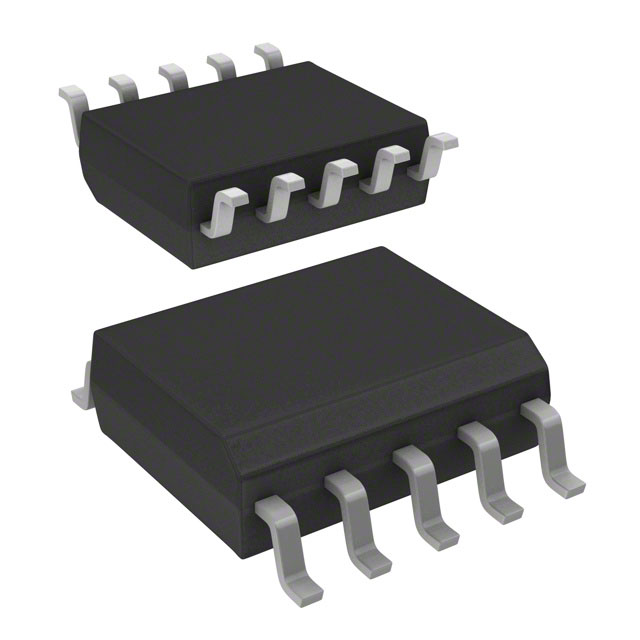
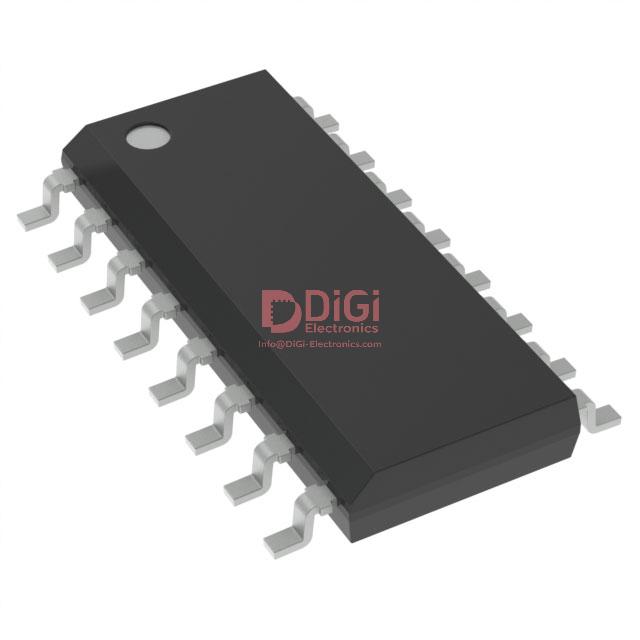
The VIPER26HD from STMicroelectronics is provided in the SO16 narrow package, a configuration engineered to support high-density PCB layouts while facilitating efficient thermal management. The precise package outline and pin pitch are documented in detail within the datasheets, streamlining mechanical integration and ensuring accurate solder footprint definition. Such thorough dimensional specification mitigates assembly tolerance risks and supports repeatable thermal simulations during the design-in phase, empowering system architects to balance electrical isolation and heat dissipation.
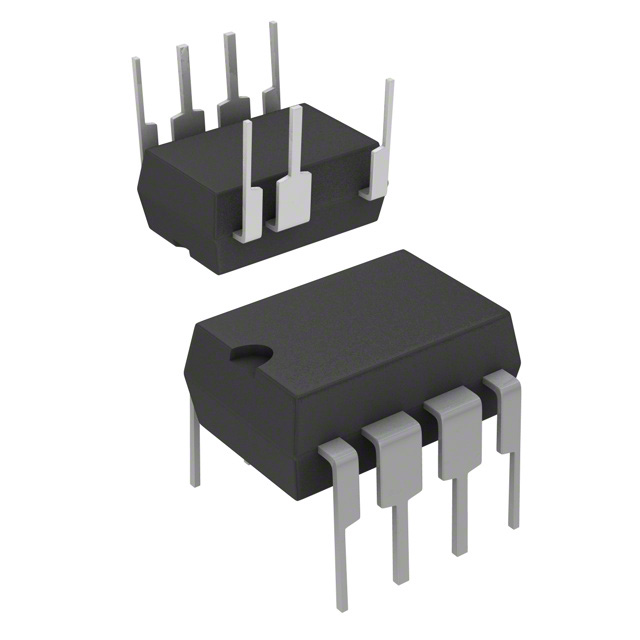
Within the broader VIPER26 series, alternative form factors such as the DIP-7 package are available, enhancing compatibility for legacy board architectures or rapid replacement scenarios. This package variety caters to both automated SMT assembly lines and selective manual or through-hole processes, offering flexibility when retrofitting existing designs or managing mixed technology assemblies.
From an environmental compliance perspective, STMicroelectronics adopts ECOPACK grades across the portfolio. Each package adheres to strict global green standards, such as RoHS and REACH, which are becoming non-negotiable for consumer and industrial certifications in target markets. Proper documentation of ECOPACK compliance not only accelerates regulatory approval cycles but also avoids complications from regional environmental directives, streamlining product entry into environmentally regulated domains.
Practical integration demonstrates the relevance of package choice in balancing the constraints of board space, power density, and certification requirements. For instance, in dense SMPS (switched-mode power supply) designs, the SO16 narrow package minimizes layout footprints and aligns with best practices for heat extraction via multi-layer PCB planes. Meanwhile, DIP-7 options serve maintenance models where socketed replacement or legacy support is prioritized.
A nuanced aspect often overlooked involves the impact of package selection on production yield and long-term reliability. The SO16 narrow, with defined coplanarity and moisture sensitivity ratings, can reduce solder joint failures during reflow processes—a valuable advantage in high-reliability market sectors.
Ultimately, comprehensive understanding of VIPER26HD’s package options and associated environmental grades enables informed decisions throughout the hardware development and regulatory pathways. Thoughtful selection ensures not only seamless assembly and compliance but also positions the end product for evolving worldwide market conditions where both electrical and ecological performance are paramount.
Potential equivalent/replacement models for VIPER26HD STMicroelectronics
When benchmarking alternatives to the VIPER26HD from STMicroelectronics, it is critical to analyze the device architecture in layers—starting with its core integration level. The VIPER26 family, built around an integrated 800 V avalanche rugged MOSFET and a current-mode PWM controller, positions itself as a high-performance solution for compact, off-line switch-mode power supplies. Any equivalent component must tightly match this integration to ensure both performance and design simplicity for low- to mid-power SMPS designs.
Within the vendor’s portfolio, the VIPER26LN and VIPER26LD provide near-identical core circuitry but are distinguished by their fixed 60 kHz switching frequency coupled with an internal spread spectrum of ±4 kHz. This frequency jittering mechanism is more than a design nuance; it plays a decisive role in EMI attenuation, which directly impacts compliance for designs targeting stringent conducted and radiated EMI standards. Practical substitution requires designers to audit board-level EMI performance during prototype testing if transitioning between frequency/feature variants—even within the VIPER26 range—since spectral artifacts can shift subtly between versions.
Thermal management is another foundational axis. The seamless swap-in of alternatives demands thorough assessment of R_DS(on), switching losses, and package thermal ratings. The VIPER26HD’s compact package options, such as the DIP-7, facilitate straightforward integration in legacy layouts, but alternate devices—even with matching pinouts—may deviate in thermal impedance and creepage/clearance ratings. In practice, evaluation of junction temperature margins under worst-case load and startup surges serves as a risk control strategy in power supply design.
Expanding to competitor offerings, models such as the ST VIPER06 or VIPER16 must be evaluated not only for their nominal MOSFET voltage ratings (often in the 700–800 V range) but also for controller sophistication. Key factors include standby power (sub-30 mW class for modern designs), frequency modulation technique, and the completeness of protection features: overvoltage, overload, and brownout detection. Experience shows that even slight differences in brown-in/brown-out thresholds can influence system robustness in wide-range input supplies, particularly under high ambient temperature or weak grid conditions.
For cross-manufacturer comparisons, focus should remain sharply on two dimensions: the efficacy of integrated MOSFET avalanche energy absorption, and the completeness of the controller’s internal protections and diagnostics. Reliable supply chains often dictate that packages and electrical characteristics align closely, especially for volume production and global product variants.
A layered selection methodology emerges as optimal—first, benchmark the integrated silicon against application voltage and power needs; next, validate the frequency and EMI performance at the converter level; finally, verify package fit, protection granularity, and thermal performance through measurement under stress scenarios. This structured, risk-driven evaluation not only increases the success probability of substitution but ensures maximum performance extraction from every node in the power supply’s operational envelope. Engaging with nuanced root-cause analysis during the prototype phase, rather than during later certification or field deployment, consistently reduces redesign cycles when working with VIPER26HD equivalents or replacements.
Conclusion
VIPER26HD from STMicroelectronics represents a targeted advancement in off-line flyback converter technology, effectively bridging integration and performance demands in contemporary power supply design. At the core, the device leverages a high-voltage startup cell, enabling immediate and reliable power-up with minimal input current draw. This foundational mechanism ensures fast, stable initialization, significantly reducing energy lost during the startup phase—a frequent pain point in legacy designs.
Operationally, the current-mode PWM controller within VIPER26HD facilitates fast, cycle-by-cycle primary current regulation. This tight control loop underpins superior transient response and mitigates stress on switching components, thus fostering greater overall converter efficiency and durability. The architecture integrates a high-voltage power MOSFET with optimized switching behavior, reducing system component count and the potential for EMI generation. Notably, the device incorporates a frequency jittering technique together with controlled slew-rate switching transitions; this dual approach combats both conducted and radiated EMI at the source, simplifying compliance with stringent international EMC standards—an aspect often undervalued until late in the prototyping cycle.
Multi-layered protection mechanisms—programmable brownout, overvoltage, overtemperature, overload, and short-circuit protection—are hardwired into the IC, diminishing external safeguard dependencies. Within practical applications, this consolidation of protection logic translates into marked robustness against real-world electrical disturbances and unpredictable load events. Experience shows that, under variable grid conditions or unusual transient surges, the VIPER26HD’s system-level protection suite significantly reduces field failure rates and service interruptions.
Thermal management is approached holistically; the IC’s internal layout and packaging, coupled with dynamic thermal shutdown, facilitate operation in dense, enclosed environments typical of smart appliances and compact meters. This is essential for products where PCB real estate is premium and airflow is inherently restricted. Careful attention to PCB layout—prioritizing heat-spreading copper planes and minimizing EMI-prone loop areas—amplifies these benefits, enabling higher power density without reliability compromise.
The VIPER26HD’s compatibility with both isolated and non-isolated flyback topologies extends applicability across numerous AC-DC conversion scenarios. Its configurable protection thresholds and wide input voltage range serve markets with divergent grid specifications and regulatory mandates, streamlining global qualification and procurement processes.
A nuanced yet often decisive advantage emerges from the device’s integration level. By embedding critical functions, the VIPER26HD relieves system designers of the iterative risk of discrete component selection and validation. This accelerates time-to-market and produces supply chain benefits—minimizing part counts, procurement cycles, and potential for inter-component mismatch. In environments demanding sustained efficiency and minimal downtime, greater system resilience is realized not solely through improved baseline performance but via the reduction in edge-case failures born from external component variability.
Selecting VIPER26HD thus requires nuanced consideration of both technical and operational requirements. Electrical, thermal, and regulatory factors must be balanced with the practical impact on product assembly, certification, and lifecycle maintenance. The device’s integrated architecture stands out in enabling design ambition, simplifying complex compliance, and delivering reliable, efficient performance across broad application landscapes.