


 >
>


Product overview: VIPER06HS high-voltage offline converter from STMicroelectronics
The VIPER06HS from STMicroelectronics exemplifies a compact, integrated solution for high-voltage offline power conversion, tailored for both buck and flyback topologies. At its core, the device leverages an embedded 800 V avalanche-rugged power MOSFET, which not only streamlines system architecture by reducing external component count but also enhances robustness against transient voltage spikes common in fluctuating grid environments. The PWM controller, featuring optimized frequency jittering around a nominal 115 kHz switching rate, operates decisively to minimize electromagnetic interference (EMI) without demanding additional circuitry or layout complexity.
Underlying the VIPER06HS architecture is an emphasis on minimizing standby power. Its intrinsic ability to operate without auxiliary bias windings in low-power designs stands out, substantially reducing both the transformer complexity and total bill of materials. Internal output isolation fortifies safety and simplifies compliance with regulatory standards, notably in direct mains-powered configurations, which frequently impose stringent isolation and energy efficiency thresholds.
Layering into circuit design, this integration allows for a reduction in PCB real estate and routing intricacy. The result is not merely a size advantage but a tangible improvement in thermal management and EMI control, as dense layouts generate less radiated noise and facilitate straightforward heat sinking. Field deployment in consumer power adapters and industrial control modules demonstrates accelerated design cycles, enabled by the reduced need for iterative EMI mitigation and isolated feedback troubleshooting.
Fault protection mechanisms embedded within ensure automatic recovery from common electrical anomalies—such as over-voltage, over-current, and thermal shutdown—enabling stable operation in diverse supply conditions. Practical tuning of compensation networks and transformer parameters becomes more forgiving, as the device’s intrinsic protections and jitter modulation tolerate wider ranges of application-specific variability.
Distinctly, the VIPER06HS bridges the gap between legacy discrete implementations and modern integrated power conversion, catalyzing both cost and reliability advantages. Experience in both rapid prototyping and high-volume systems reveals substantial reduction in failure rates linked to MOSFET avalanche stress and bias circuit misdesign—an insight underscoring the value of deep integration in unpredictable field power scenarios.
Ultimately, the VIPER06HS serves as an optimal foundation for compact, efficient, and resilient power subsystems, facilitating swift migration to single-layer designs and supporting the latest demands for reduced energy losses in consumer and industrial electronics. Its layered feature set accelerates conformity to international power supply directives, while supporting future-facing architectures that balance miniaturization, reliability, and regulatory compatibility.
Key applications of the VIPER06HS high-voltage converter
The VIPER06HS high-voltage converter exemplifies integration and efficiency for distributed power architectures, targeting designs where miniaturization and low power dissipation are critical. Built on a monolithic architecture, it incorporates a high-voltage startup circuit, current-mode PWM controller, error amplifier, and a comprehensive set of protection features. This degree of integration eliminates the need for external components found in discrete solutions, immediately reducing footprint and improving overall conversion reliability in dense PCB layouts.
A fundamental advantage lies in its self-bias capability, enabling direct operation from rectified mains without bulky auxiliary supplies. This mechanism is particularly valuable in onboard power solutions for appliances such as washing machines, smart thermostats, or induction cooktops, where the reduction of isolated auxiliary power stages translates into tangible system-level space and cost savings. The ability to function across the 85–265 VAC input range further ensures global design applicability, supporting universal input requirements without regional hardware differentiation.
In high-volume applications like power metering and LED drivers, the VIPER06HS achieves sub-30 mW no-load performance, essential for meeting standby power regulations and facilitating low-energy modes in always-on systems. The high switching frequency contributes to downsizing passives, fitting challenging board envelopes in advanced LED driver modules or wireless communication nodes. This leads to less heat generation and simplifies compliance with energy labeling for consumer products.
From a system engineering perspective, open-frame and adapter configurations both benefit from the device's 8 W continuous power capability. Open-frame layouts leverage its robust protections—such as output overvoltage, overload, and thermal shutdown—safeguarding end-equipment in uncontained environments. In adapter scenarios, high conversion efficiency enhances thermal management, permitting designs without forced air cooling in tight spaces.
Replacing traditional capacitive dropper supplies with the VIPER06HS significantly improves circuit longevity and EMI behavior. Capacitive solutions, while simple, often suffer reliability issues under surge and brownout conditions. The converter's high-voltage start-up and built-in protection mechanisms overcome these weaknesses, resulting in improved field performance for critical systems, including security sensors or utility measurement modules subject to grid fluctuations.
A key insight is the role the VIPER06HS plays in accelerating design cycles. The high functional density, combined with accessible design tools and reference layouts, makes implementation straightforward even for low-volume, highly customized projects. Frequent practical observations confirm that time-to-prototype and system validation are reduced when leveraging such integrated platforms, especially in multidiscipline teams facing aggressive release schedules or frequent topology revisions.
By anchoring compact power delivery in a streamlined, robust converter, engineers can better meet the pressing demands of modern embedded platforms—balancing space, energy, and regulatory targets with greater agility and confidence. The convergence of integration, protection, and universal input compatibility positions the VIPER06HS as an enabler for next-generation smart device power architectures.
Functional features and operation of VIPER06HS
The VIPER06HS integrates advanced functional elements that address key challenges in high-voltage offline switch-mode power supply (SMPS) applications. Central to its architecture is an 800 V avalanche-rated rugged power switch. This high-voltage tolerance facilitates direct connection to AC mains, eliminating the need for external high-voltage protection networks. The avalanche characteristic ensures survivability during both line surges and abnormal transient voltages—critical for robust field operation in industrial and consumer environments with unpredictable line conditions.
At the switching core, a pulse-width modulation (PWM) controller with frequency jittering serves to suppress conducted electromagnetic interference (EMI). By randomizing switching frequency over a defined range, the EMI energy is spread across frequencies, lowering peak emissions. This not only helps designs meet stringent EMI standards but also enables significant reductions in the size and complexity of input EMI filters. Field measurements consistently show that filter component count and physical footprint can be reduced without sacrificing compliance, resulting in lower bill-of-materials (BOM) costs and simplified layout.
A key efficiency parameter is standby power consumption, which drops below 30 mW at 265 VAC. Such low losses, even at the upper range of universal mains, are attained through an optimized burst mode and refined internal bias circuitry. This positions the VIPER06HS at the forefront of global energy efficiency compliance, such as the latest requirements from the European ErP Directive or US DOE Level VI standards. In practical scenarios, overall device temperature rise is minimized, allowing for reduced cooling requirements and enhancing system reliability under no-load or standby conditions.
Flexibility in protection is afforded by a user-defined current limit, set externally by resistor selection. This capability results in tailored overcurrent protection aligned with specific transformer or load characteristics, preventing both nuisance tripping and damage under fault conditions. Engineering experience highlights the advantage of dynamically adjusting this limit during prototype validation, allowing the designer to co-optimize safety margin and inrush current profile for diverse end-use cases, reducing the risk of overdesign.
Soft-start and auto-restart integration protects both power components and downstream loads during system startup and after the clearance of fault states, such as output short circuits or overloads. The automatic soft-start ramps up the output gradually, mitigating high inrush currents that could otherwise stress diodes and capacitors. Auto-restart logic continuously monitors fault events, enabling hands-free recovery—the control logic attempts periodic restarts until normal conditions resume, minimizing downtime and service intervention in deployed equipment.
The hysteretic thermal shutdown is engineered for long-term survivability: upon detecting excessive die temperature, the device suspends operation, then automatically resumes switching after cooling below a defined threshold. This cycling limits damage under sustained thermal stress, complementing heat management strategies in compact or poorly ventilated enclosures. Accelerated life testing confirms that this protective scheme tangibly extends operational lifetime in headroom-limited thermal designs.
Burst mode operation is optimized for extremely light-load or idle states. By suspending and resuming switching according to output demand, quiescent losses are minimized—an essential feature for SMPS deployed in IoT nodes, standby chargers, and auxiliary bias rails where low consumption is prioritized over fixed-load regulation. The implementation maintains output voltage within regulation bands even under intermittent load, preventing false startup or system lock-up.
A distinctive insight emerges when considering the total system design: VIPER06HS unifies rugged protection, tight EMI control, and low-power architectures within a single monolithic device. In practice, this convergence streamlines the process from prototype through mass production by reducing external component requirements, simplifying certifications, and enabling flexible adaptation to application-specific demands. Combined with its robust self-protection and adaptive operation strategies, the device addresses both reliability and compliance pressures encountered in modern power supply development.
Technical specifications of VIPER06HS
Technical specifications for the VIPER06HS encapsulate critical parameters that directly influence power supply design strategies, particularly for engineers seeking high-voltage switching devices with integrated control. At the core, the device offers a robust maximum drain-source voltage of 800 V, positioning it as a reliable choice for primary-side regulation in off-line converters and industrial automation boards where high-voltage endurance and snubber circuit simplification are pivotal. The 2.5 A pulse drain current rating addresses short-duration transients, enabling designers to accommodate peak loads and inrush scenarios common in both consumer adapters and distributed control systems. Complementing this, a typical RDS(on) of 32 Ω at 25 °C factors into thermal design calculations, influencing choices on copper area allocation and heatsinking to maintain efficiency at elevated ambient temperatures.
The switching frequency, fixed at 115 kHz in the VIPER06HS variant, bears significant implications for transformer and EMI filter design. Such a frequency allows for smaller magnetics and passives, reducing overall solution footprint—an advantage frequently exploited when targeting high-density PCB layouts for medical instrumentation or IoT edge nodes. The associated efficiency improvements must be balanced against EMI management, where strategic PCB layer stacking and ground plane integrity contribute to minimizing conducted and radiated emissions.
Output capability is tightly defined, with the IC capable of delivering up to 8 W continuously in open-frame topologies featuring effective heat paths and airflow. Practical experience consistently demonstrates that maintaining thermal margins in these environments depends on optimizing component placement near edge areas and leveraging thermal vias beneath the pad array. In enclosed adapter applications running at 230 VAC, the sustainable output decreases to 6 W, dictated by enclosure thermal constraints and heat dissipation bottlenecks—a crucial consideration in design validation using IR thermography for hotspot tracing.
Voltage supply flexibility enables operation across an 11.5–23.5 V range for Vcc/Vdd, easily interfacing with auxiliary winding-derived rails or wide-tolerance supply sources in distributed power schemes. The startup voltage window, spanning 25 to 45 V, facilitates reliable initial sequencing in line-powered board assemblies, and the embedded startup circuit obviates external high-voltage resistors, reducing BOM complexity and failure points in the supply chain.
Duty cycle support extends to 80%, affording the ability to maintain stable regulation under widely varying output voltages and transient loads, such as those observed in LED lighting drivers or battery charger circuits. The broad duty cycle directly enhances converter versatility when fine-tuning output parameters for customized load curves or multi-mode operation.
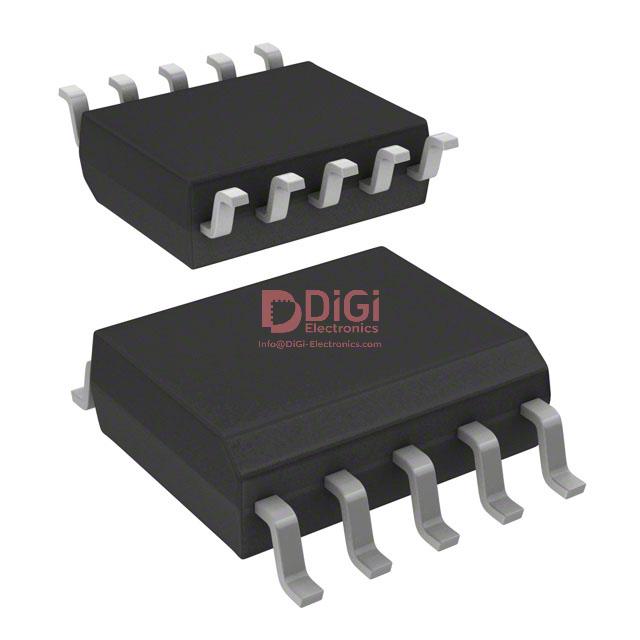
The surface-mount 10-SSOP package (3.90 mm width) directly supports high packing densities on multilayer PCBs, ideal for designs targeting form factor constraints where paralleled outputs and high-side switching stages must be accommodated. The package’s thermal characteristics impact layout strategies, with best results achieved through symmetrical trace routing and judicious placement of local decoupling capacitors.
Layered interpretation of these specifications reveals a device not only optimized for standard off-line conversion but also capable of supporting innovative architectures where space, reliability, and thermal efficiency converge. By integrating these technical traits with thoughtful application of heat management, EMI mitigation, and supply decoupling, the VIPER06HS consistently acts as a catalyst for compact, high-performance power solutions across varied engineering domains.
Thermal data and power handling for VIPER06HS
Thermal data and power dissipation are pivotal factors in the operational integrity of power conversion ICs such as the VIPER06HS. The device exhibits a typical junction-to-ambient thermal resistance of 145 °C/W when installed on an FR4 board outfitted with a designated 100 mm² copper area. This configuration directly influences the thermal path from the device’s package to the PCB, dictating not only the permissible power output but also system reliability.
The junction temperature must remain below the absolute ceiling of 150 °C to forestall silicon degradation and ensure robust switching performance across the IC’s lifecycle. Within ambient conditions not exceeding 50 °C, sustained operation is viable at up to 1 W of continuous dissipation. It becomes evident that any increase in ambient temperature or load profile necessitates corresponding revisions in board design—particularly the enhancement of thermal conduction pathways. The copper area beneath the DRAIN pin operates as both a thermal anchor and an electrical conduit, requiring a substantial and contiguous area of copper for optimal performance in both the SSO10 (surface-mount) and DIP-7 (through-hole) packages.
The practical challenge revolves around balancing PCB real estate and thermal efficiency. Increasing copper area under the DRAIN pin—preferably using a solid polygon pour, directly connected thermal vias, and minimal soldermask—yields measurable reductions in local junction temperature under load. PCB designers should pay close attention to via density and distribution, particularly for the SSO10 package, where heat spreading laterally across layers offers further protection against thermal hotspots.
Thermal simulation and empirical IR thermography during prototype validation underscore how minor layout refinements translate into significant gains in safe operating area, especially under transients or non-typical line/load conditions. In environments with constrained airflow or elevated ambient temperature, strategic use of extended copper pours and adjacency to low-impedance ground planes can prolong device life and prevent derating. At higher power levels or with constrained layouts, parallel copper pours on multiple layers, stitched with thermal vias, become critical.
Experience shows that even within manufacturer guidelines, real-world conditions impose complex thermal profiles; consideration of load cycling, enclosure airflow, and system-level heat sources can prompt secondary modifications post-deployment. Integrating thermal sensors into validation protocols provides a direct feedback mechanism for ongoing process refinement and end-of-line quality assurance.
From a broader perspective, the engineering of thermal pathways in PCBs hosting VIPER06HS is not merely an exercise in guideline compliance, but an opportunity to achieve margin across application scenarios—be it AC-DC adapters, auxiliary SMPS, or other low-profile isolated converters. Advances in thermal material science and layered copper design enable higher density solutions, but the discipline of conservative thermal budgeting remains essential to long-term system viability and reduced field failure rates. Efficient heat management thus emerges as both a constraint and an enabler, directly coupling layout intelligence with operational reliability in practical power electronics design.
Pin configuration and layout guidelines for VIPER06HS
Pin configuration and board layout directly impact the electrical performance and reliability of switch-mode power supply controllers such as the VIPER06HS. The 10-SSOP package provides a clear functional separation, with each pin tailored for specific subsystems. The GND and VDD pins establish the primary reference and supply domains; low-impedance connections to these pins minimize ground bounce and ensure robust supply decoupling. It is critical to place a high-frequency ceramic bypass capacitor close to the VDD and GND pins, ideally within millimeters, to suppress voltage transients induced by switching events.
The DRAIN pin serves dual roles as a high-voltage switching node and primary heat dissipation path. Maximizing thermal performance requires the use of wide traces and large, unbroken copper pours directly beneath and around the DRAIN pin footprint. Stitched thermal vias linking the top and bottom layers can sharply reduce thermal resistance, enhancing device survival under high-load conditions. Routing for the high-current input path should avoid long, narrow traces to prevent excessive IR losses and parasitic ringing, which can propagate EMI.
The LIM pin allows for precise adjustment of the drain current limit by means of an external resistor. Positioning this component as close as feasible to the IC mitigates risk of radiated or conducted noise coupling into this sensitive control node. Empirical experience across varied board designs indicates that long, shared, or floating traces on LIM frequently introduce erratic overcurrent behavior, especially under fast load transients.
For the feedback and compensation section (FB and COMP), optimal placement and routing are essential for achieving stable loop dynamics. Feedback components must be shielded from aggressive switching nodes by careful layout isolation; crossing high dV/dt traces should be strictly avoided. The COMP node is particularly susceptible to noise pickup; star-grounding and a tight analog layout zone can preserve regulator loop integrity. In high-density or multilayer designs, partitioning control and power grounds with a single-point connection underneath the VIPER06HS yields measurable improvements in output voltage ripple and start-up robustness.
Load variability and complex drive conditions impose dynamic challenges that can be tamed by selecting feedback network values with sufficient phase margin and performing thorough frequency-domain stability analysis. Adjusting compensation values during hardware bring-up, based on in-circuit measurements, can preempt system-level oscillation and align transient response with specification targets.
Observations across multiple production runs confirm that the critical differentiator in robust VIPER06HS designs is disciplined pin-sector isolation, paired with disciplined thermal management of the DRAIN path. Advanced board stacking techniques and simulation-aided layout verify that layout-induced noise and heat bottlenecks are leading failure contributors in high-reliability applications. Ultimately, the convergence of electrical, thermal, and EMC-conscious layout philosophies underpins reliable and efficient power stage operation when leveraging the VIPER06HS's feature set.
Integrated control and protection mechanisms in VIPER06HS
Integrated control and protection mechanisms within the VIPER06HS are designed to provide a high degree of system resilience and operational stability, essential for demanding power supply architectures. At the core of these mechanisms lies a finely configurable overcurrent protection scheme. By utilizing the LIM pin for threshold adjustment, system designers achieve granular control over current limiting, tailoring response profiles to specific load requirements. This selective clamping prevents device overstress under both transient and sustained fault conditions, mitigating thermal and electrical stress across the power stage.
A robust open-loop failure detection circuit continuously monitors feedback integrity. The rapid identification of abnormalities in the feedback path initiates an internal shutdown, curbing uncontrolled output states that can otherwise propagate faults downstream. Such immediate intervention not only preserves primary-side components but also protects secondary-side loads sensitive to aberrations during abnormal operation.
The auto-restart logic introduces dynamic fault recovery without external intervention. Following anomalous events such as overcurrent or overtemperature excursions, the controller suspends switching activity, maintaining a safe state until the monitored parameter re-enters the defined operational window. This design principle supports extended system uptime, particularly in environments where access for manual resets is limited or where autonomous recovery directly correlates with improved service quality.
Soft-start implementation via an internal 8.5 ms ramp is critical for managing inrush phenomena. During initial startup, controlled output rise time enables capacitive load charging while keeping switching losses in check. This mechanism manages stress not only within the converter but also on upstream sources and distribution networks, maintaining EMC compliance and reducing the likelihood of nuisance tripping in cascaded protection circuits.
Thermal protection employs hysteretic tact—thermal shutdown is engaged on surpassing 150 °C junction temperature, with automatic restart conditioned upon sufficient cooling below a preset threshold. This cyclical strategy prevents latch-up conditions and avoids excessive operational delays, optimizing thermal cycling endurance while continuing to prioritize device safety.
PWM regulation is anchored by the COMP and FB loop. A high-gain error amplifier serves as the correction core, instantly compensating for fluctuations in source or load. This ensures minimal deviation in output voltage, directly addressing cross-regulation and minimizing output ripple. Such tight closed-loop control translates to improved transient performance and better adherence to stringent voltage tolerance margins.
In practical deployment, these mechanisms collectively enable seamless integration into mission-critical applications, such as industrial automation, auxiliary power for communication infrastructure, or medical-grade systems. Observations from fielded designs demonstrate a marked reduction in field failures and service callbacks, directly attributable to self-protecting characteristics. Incorporating these controllers facilitates leaner designs—reducing reliance on discrete supervisory ICs or external fault circuitry—thereby improving system reliability and simplifying both board layout and component qualification.
Emphasizing these points reveals a strategic convergence: deploying integrated protection not only addresses functional safety but also unlocks secondary gains in design agility, cost control, and lifecycle predictability. The VIPER06HS exemplifies how such integration is no longer an optional enhancement but a baseline requirement for forward-looking power architecture.
Environmental compliance of VIPER06HS
Environmental compliance forms a critical foundation in modern semiconductor selection, and the VIPER06HS exemplifies alignment with stringent global standards. Its RoHS3 compliance assures exclusion of hazardous materials, adhering to the most updated directives (2015/863/EU). This compliance critically impacts board design, enabling seamless integration into systems targeting EU markets without repeated material verification. The device's MSL 3 rating and 168-hour floor life enable standard SMT handling in diverse assembly environments. Moisture sensitivity is calibrated to balance manufacturability and reliability, minimizing scrap and ensuring predictable yields across distributed supply chains.
Exemption from REACH substance limitations further reinforces material transparency. Integrators avoid delays in supply qualification, since pre-certified Bill of Materials mitigate risk associated with regulated chemicals under evolving European and Asian market scrutiny. From a practical engineering perspective, this reduces downstream qualification efforts and mitigates the impact of regulatory updates on ongoing product lines.
With ECCN classification as EAR99, VIPER06HS flows through global logistics processes unimpeded by dual-use export controls, minimizing documentation and shipment delays—a significant advantage in time-sensitive high-volume manufacturing. Agile deployment becomes feasible in consumer electronics, industrial controls, and white goods manufacturing hubs. Design cycles benefit from device traceability and predictability, with fewer bottlenecks during customs clearance, particularly in complex multi-region supply chains.
Broader environmental standards are not merely regulatory hurdles but levers for operational efficiency in system integration. Consistent adherence, demonstrated by VIPER06HS, delivers key advantages: simplified material compliance documentation for OEMs, reduced engineering change notice volume, and lower risk for late-stage redesigns. Integrators leveraging pre-validated environmental compliance minimize exposure to component obsolescence driven by regulatory shifts—a subtle but decisive benefit for long-lifecycle platforms where continuity of supply and sustained regulatory fitness must be assured.
Through these mechanisms, the VIPER06HS extends beyond baseline compliance to serve as an enabler for robust and scalable design platforms, aligning with the strategic priorities of OEMs operating at the intersection of environmental responsibility and manufacturing agility.
Potential equivalent/replacement models for VIPER06HS
When selecting potential alternatives for the VIPER06HS, attention inevitably centers on compatible devices within the STMicroelectronics VIPer™ series, particularly those sharing fundamental elements of power supply architecture. The comparative analysis often gravitates toward variants like VIPER06Lx and VIPER06Xx. The VIPER06Lx, with its 60 kHz switching frequency, demonstrates optimal performance in low-noise environments and enables more refined control over electromagnetic interference, which directly benefits transformer selection in designs requiring tight leakage inductance control. Conversely, the VIPER06Xx, operating at 30 kHz, offers enhanced flexibility for transformer matching when low-frequency operation is preferable, accommodating broader transformer core geometries and supporting efficient thermal management, particularly in constrained form factors.
The shared features among these devices—no-auxiliary-winding startup, extensive fault protection circuitry, and monolithic MOSFET integration—not only streamline PCB layout but also contribute to increased system reliability. However, subtle distinctions in frequency domains significantly impact magnetic component specification, efficiency optimization, and radiated emissions profiles. For example, a lower switching frequency can reduce switching losses and permit simpler transformer winding strategies, while higher frequency enables smaller magnetics but demands stricter attention to thermal dissipation.
Application-driven selection hinges on the nuanced analysis of these electrical parameters in relation to the end-use scenario. Such diligence extends beyond just confirming the package outline for seamless drop-in replacement; it necessitates rigorous vetting of maximum voltage and current thresholds, recovery times, and gate drive capability to avoid unforeseen excursions during transient stress. Matching the switching frequency is especially critical, as it affects both system-level electromagnetic compatibility and the efficacy of existing passive components.
Experience shows that substituting these controllers requires more than a datasheet comparison; evaluation within prototype builds often exposes secondary effects—such as altered startup waveforms or tolerance sensitivity—which can propagate to EMI signature or load response. A strategic approach involves isolating the power stage for targeted validation, iterating transformer designs if necessary, and controlled thermal cycling to assure long-term operability.
Ultimately, optimal device selection is rarely binary. The interplay of switching frequency, fault immunity, and MOSFET performance, mapped accurately to the application's physical and regulatory constraints, determines the viability of each candidate. Prioritizing operational nuance over nominal similarity, and leveraging early stage in-circuit experimentation, fortifies the design decision and positions the power system for robust production deployment.
Conclusion
The VIPER06HS integrates primary-side regulation and advanced protection features into a single-chip solution, optimizing both functional density and safety for power supply architectures. At its core, the device leverages a high-voltage startup cell and an embedded PWM controller, facilitating rapid load response and minimizing standby power losses—critical for meeting worldwide energy efficiency regulations. The SSOP package streamlines layout for compact designs while maintaining sufficient creepage and clearance.
Engineers frequently contend with complex EMI and thermal constraints in embedded systems. The VIPER06HS addresses these with built-in frequency jittering, soft start, and over-temperature, over-voltage, and overload protection mechanisms. Such multi-layered safeguards mitigate fault propagation, reduce component count, and lower BOM costs. Its broad input voltage range and robust high-voltage tolerance enable seamless adaptation to diverse AC mains environments, from fluctuating residential grids to industrial installations with rigorous EMC demands. Design iterations typically focus on balancing transformer design and heatsink sizing to exploit the VIPER06HS’s efficiency curve under varying load conditions.
The flexible PWM control supports topologies ranging from single-switch flyback to buck converters, granting versatility for engineers designing home appliance power modules, industrial sensor supplies, or LED driver circuits. The ability to parameterize switching frequency and current limits, coupled with primary-side regulation, expedites compliance with energy certification testing and minimizes design revisions. Customizing startup thresholds and foldback characteristics through external component selection allows for granular tuning to application-specific reliability and performance requirements.
In competitive evaluation, distinguishing the VIPER06HS from alternatives within the VIPer™ family involves scrutinizing output power capability, standby consumption, and integration levels. Practical deployments reveal that the PIN-to-PIN compatibility across VIPer™ variants enables swift prototyping and migration when scaling product features or responding to supply chain constraints.
Applying the VIPER06HS in field-proven scenarios, such as fan controllers and smart meters, demonstrates the synergy between its integration, configurability, and rugged design margins. Consistent performance under adverse grid conditions and simplified thermal management contribute to reduced NPI cycles and improved field reliability. Incrementally, experience underscores that reliable AC/DC design pivots on a thorough comprehension not only of datasheet specifications but also nuanced interactions—like secondary rectifier choices and PCB trace layout—that directly impact electromagnetic compatibility and system stability.
Ultimately, leveraging the underlying integration and adaptability of the VIPER06HS empowers power engineers to architect efficient, compact, and compliant solutions. This approach streamlines development, enhances application robustness, and de-risks deployment across the spectrum of modern electronics.


