 >
>


Product overview: VIPER012LS series by STMicroelectronics
The VIPER012LS series from STMicroelectronics represents an advanced solution in the compact offline converter IC domain, specifically tailored for modern switch-mode power supplies where high integration, space efficiency, and robust protection are paramount. Central to its engineering appeal is the incorporation of an 800V avalanche-rugged power MOSFET, which natively withstands line surges and eliminates the systematic need for bulky external snubbers. This significantly streamlines PCB layouts and enhances long-term system reliability, especially in multi-standard operating environments where repetitive voltage transients are prevalent.
At a circuit topology level, the VIPER012LS integrates an optimized PWM controller alongside start-up and regulation circuitry, further reducing the external component count. This monolithic integration achieves not only reductions in BOM cost and solution footprint but also leverages high-frequency operation to permit downsized magnetics. In practice, this accelerates design iterations and allows for board designs with strict volumetric constraints, such as wall adapters, smart lighting modules, and compact industrial controllers.
The VIPER012LS’s wide input voltage handling directly addresses global deployment challenges. By accommodating input from 90VAC to 265VAC, it enables universal power supply implementations without hardware configuration changes or additional input conditioning. The internal MOSFET’s avalanche ruggedness adds an extra layer of resilience, particularly valuable in geographies with fluctuating grid stability or in applications subjected to inductive load switching. Engineers benefit from the predictable EMI behavior and simplified compliance testing, often skipping iterative redesigns associated with discrete primary MOSFETs and protection networks.
Protection features integrated at the silicon level, including over-temperature, overload, and output short-circuit protection, translate to holistic system reliability. The native implementation of brown-out management prevents erratic switching at undervoltage conditions, a critical concern in motor controllers and white goods exposed to sags or brownouts on distribution lines. Manufacturers of appliances and building automation modules can leverage these protections to fulfill regulatory requirements without resorting to firmware workarounds or external supervisory devices.
In the context of power conversion efficiency, the VIPER012LS employs active schemes to minimize standby losses. Control algorithms enable low standby consumption, critical for meeting modern efficiency standards such as the European Ecodesign directive. This aligns with market trends in connected appliances and always-on IoT nodes, where total system standby draw is tightly capped. The device’s primary-side regulation mode means secondary feedback elements, such as optocouplers, are often redundant, further improving long-term robustness and reducing field failures linked to optoisolator degradation.
Applying the VIPER012LS in production reveals additional design latitude. The reduced component count grants more design flexibility to allocate PCB real estate for enhanced thermal management or differentiated features. EMC performance is notably superior compared to discrete implementations, owing to the device’s optimized switching characteristics and internal gate driving. System troubleshooting and root-cause analysis benefit from predictable fault responses, with clear diagnostic pin behaviors that streamline verification procedures at both the design and manufacturing stages.
A subtle advantage emerges in the convergence of safety certifications; the high-voltage robustness internal to the VIPER012LS simplifies isolation architecture in safety-critical designs. This is especially advantageous in regulated sectors like smart meters and medical auxiliary power, where safety margins and component derating critically influence product lifecycle.
In essence, the VIPER012LS defines a robust foundation for next-generation, low-power offline converters. Its integration depth, protection strategy, and universal input management collectively represent a forward-looking approach, simplifying engineering workflows and fostering reliable field operation across a diverse range of global embedded power applications.
Key features of the VIPER012LS
The VIPER012LS integrates advanced power conversion technology into a single IC, targeting compact and highly reliable Switched Mode Power Supply (SMPS) designs operating over a wide input voltage spectrum. At its core lies an 800V avalanche-rugged power MOSFET, facilitating robust performance in both residential and industrial environments prone to voltage transients or surges. This high-voltage MOSFET, directly embedded within the IC, not only extends input range flexibility but also contributes to layout simplification and heightened system reliability—less external circuitry means lower risk of design-induced faults.
A further layer of integration emerges through its internal high-voltage startup circuitry coupled with a dedicated sense FET architecture. This enables inherently low standby consumption, precise current sensing, and swift, reliable system activation. The sense FET methodology reduces primary-side losses, allowing finer granularity in current-mode control while circumventing the complexity of external sensing networks.
Topology flexibility stands out as a defining trait, supporting Buck, Buck-Boost, and Flyback configurations within a single platform. Tailoring the VIPER012LS to different load conditions and design constraints becomes straightforward, whether for high-efficiency battery chargers, compact set-top boxes, or LED drivers. Experience demonstrates that transitioning between topologies—especially when prototyping across various application domains—is expedited by the IC's adaptable controller design and integrated compensation circuitry. This adaptability shortens development cycles and shrinks the BOM.
The device offers selectable operating frequencies (30kHz, 60kHz, and 120kHz), enhanced by ±7% frequency jitter. Jitter disrupts EMI harmonics, yielding lower conducted and radiated interference. In practice, this feature provides a tangible reduction in emissions, often permitting designers to meet stringent regulatory standards without costly shielding or filtering upgrades. A maximum 80% PWM duty cycle ensures consistent output even under fluctuating input, increasing robustness in poorly regulated grids.
Power consumption remains minimal: less than 10mW under no-load and under 400mW with modest output demands at 230VAC. The efficacy of self-supply results from leveraging the high-voltage startup mechanism, further diminishing component requirements by eliminating auxiliary windings. External supply support offers flexibility for demanding use-cases needing precise control over startup profiles.
Protection mechanisms are deeply embedded within the control loop, including cycle-by-cycle current limiting, thermal shutdown, over-voltage detection, short-circuit protection, maximum duty-cycle counter, and pulse-skipping algorithms. The latter prevents transformer core saturation by actively modulating drive pulses, even under transient load or supply anomalies. Practical deployment in high-reliability zones reveals the cumulative value of these protections—field failures and returns often correlate with their absence in legacy designs.
Internally, a soft-start mechanism combined with a high-gain error amplifier with a 1.2V reference underpins stable output regulation and streamlined compensation. This architecture minimizes output overshoot during startup, favoring the longevity of downstream components. The internal compensation network ensures rapid adaptation to load transients while maintaining tight voltage regulation.
The inherent high level of integration, accompanied by broad topology support and a multidimensional protection suite, positions the VIPER012LS as a reference solution for cost-optimized, resilient SMPS architectures. Leveraging these features not only compresses the development time but also fortifies designs against unpredictable field conditions—delivering both operational efficiency and peace of mind. The subtle interplay between aggressive power management, flexible topology selection, and robust protection underscores a key trend: integration achieved without sacrificing granular control, now essential for high-density, regulatory-compliant power applications.
Electrical and thermal specifications of VIPER012LS
The VIPER012LS is engineered to meet stringent electrical and thermal demands in isolated and non-isolated offline converter applications. At its core, the device operates reliably over a wide junction temperature range from -40°C to +150°C, underscoring its suitability for systems exposed to fluctuating and harsh thermal environments. The design synthesizes a high-voltage (800V) power MOSFET with a PWM controller, all integrated within a compact 10-SSOP surface-mount package. This integration delivers a robust foundation for cost-effective, space-constrained power designs.
Electrical parameters are central to system design. The device accommodates an input supply voltage (Vcc) spanning 4.5V to 30V, simplifying biasing where auxiliary rails deviate within typical tolerance limits. The 800V MOSFET breakdown voltage directly supports high-input-voltage AC-DC topologies, granting additional design margin versus standard 600V or 650V FET solutions. Output power handling reaches up to 7W in optimal thermal conditions—a figure subject to derating based on ambient temperature, physical mounting, and local air flow. This characteristic is particularly relevant when board-level thermal management is a constraint, and it emphasizes the value of aligning electrical load demand with thermal design strategies.
Switching frequency selection further tailors application behavior. The default 60kHz operating point suits wide input ranges with balanced EMI and efficiency. For noise-sensitive designs, the 30kHz option minimizes EMI at the cost of larger passive components, while the 120kHz version enables footprint reduction and faster transient response with careful layout consideration. In practice, adjusting switching frequency is a lever for tuning output performance, thermal signature, and system compliance with regulatory standards.
Thermal considerations go beyond mere datasheet values. The low thermal resistance package enables efficient heat transfer when paired with recommended PCB design practices—specifically, enlarging copper areas underneath and adjacent to the DRAIN pins. Layout optimization improves heat spreading, reducing local hotspots and enhancing long-term reliability. Practical experience demonstrates that in open-frame designs with ample airflow, devices operate comfortably near their upper power limits. In contrast, compact or sealed enclosures necessitate more conservative power estimates or augmented thermal management, such as increased copper, thermal vias, or external heat sinks.
Compliance with global directives like RoHS and REACH opens the VIPER012LS to worldwide deployment by ensuring that device selection does not trigger later-stage redesigns for environmental standards. This foresight, coupled with the device’s inherent robustness, positions it as a preferred solution where regulatory agility and reliability are non-negotiable.
Integrating these factors, system engineers often leverage the VIPER012LS in lighting, industrial controls, or auxiliary power rails for appliances, where high-voltage endurance, flexibility in PCB layout, and thermal resilience are paramount. A nuanced approach—balancing switching frequency, footprint, and thermal management—maximizes both efficiency and lifetime, illustrating the interplay between physical design and real-world deployment. The overarching insight is that optimal use of the VIPER012LS emerges not just from its electrical data, but from a holistic understanding of thermal dynamics, regulatory foresight, and circuit-level adaptation.
Functional description: primary blocks and operation
Functional description: primary blocks and operation. The VIPER012LS leverages a tightly integrated architecture to simplify SMPS power stage design while maximizing robustness and efficiency. At the core, a rugged 800V N-channel MOSFET with embedded sense-FET provides both fast switching capabilities and precision current monitoring. The sense-FET arrangement achieves accurate current detection with minimal additional losses, facilitating robust cycle-by-cycle protection and quick fault isolation. The gate driver is tuned for low EMI emission, a crucial factor when designing high-voltage converters for environments where compliance with EN55022/IEC61000-4 standards is required.
Startup management is handled through dual provisioning: both an internal high-voltage charge circuit and optional external supply via auxiliary windings or output taps. The internal charge loop allows rapid charging of the VCC capacitor when mains voltage is applied, enabling immediate device readiness without external startup bias components. For topologies where transformer isolation is utilized, the flexibility to bootstrap VCC from secondary or auxiliary sources supports rapid switchover to high-efficiency operation and allows adaptation to transformer designs commonly used in flyback or forward stages.
To mitigate component stress and clamping overshoot during startup and fault recovery, the device implements a granular soft-start process. This is executed in eight progressive steps over an 8ms window, where current limiting is carefully controlled to ramp the output gradually. Such aliasing of inrush demands extends the longevity of output capacitors and MOSFET junctions, and has demonstrated consistent reduction of false trips and output ripple spikes in practical field evaluations.
Switching oscillator design incorporates ±7% frequency jitter, dispersing the spectral density of conducted and radiated EMI. This strategy not only aids in passing stringent EMC requirements but also allows relaxation in input filter design, reducing the necessity for oversized common-mode chokes or X-capacitors. Empirical results from iterative filter optimization indicate measurable reductions in component count and board real estate when jitter techniques are correctly leveraged.
Feedback implementation is dual-mode to suit both isolated and non-isolated converter topologies. Direct feedback enables simplified layouts in buck or non-isolated flyback applications, driving output regulation directly from primary-side signal paths. For isolated systems, opto-coupler interfaces and secondary-side sensing offer galvanic separation, with the internal error amplifier ensuring stable regulation across diverse load conditions. The dynamic response characteristics of the error amplifier have been optimized to secure loop stability for both constant voltage and constant current operation, even in demanding transient scenarios such as cold start or load step events.
Efficient integration and system-level flexibility define the VIPER012LS, enabling power supply designers to extract optimal performance across wide-ranging applications—from low-power IoT adapters to industrial control supplies. The device’s nuanced approach to startup sequencing, EMI mitigation, and feedback management results in tangible benefits for development cycles and long-term reliability. Applied experience confirms that attention to small signal behaviors and robust startup circuitry underpins successful SMPS deployment in modern electronic systems, where compactness and compliance are as critical as performance metrics.
Protections and safety mechanisms in VIPER012LS
System protection within the VIPER012LS architecture is meticulously engineered to comprehensively address both device integrity and overall application robustness. This is achieved through a multilayered safety framework, where each protective mechanism operates with precision to mitigate key failure modes common in offline converter environments.
Overcurrent protection (OCP) serves as a rapid, first-line defense by actively sensing the drain current of the internal MOSFET. When the measured value crosses its preset threshold, the protection logic triggers an immediate turn-off, decoupling the power stage before excessive energy stress can propagate into downstream circuitry. This intervention is coupled with an on-chip timer, enabling a defined off period before automatic restart is attempted. Such rapid cycling ensures both transient overloads and persistent faults are addressed without risking cumulative thermal or electrical damage. In high-reliability designs, this strategy directly reduces field failures caused by shorted outputs or unexpected load transients.
To counteract transformer saturation—particularly during power-up or overload conditions—the pulse-skipping feature is activated. This logic block dynamically extends the off-time and modulates switching frequency as needed. By strategically skipping pulses, the converter prevents excessive magnetic flux buildup, thereby maintaining core integrity and preserving transformer lifespan. In practice, this capability translates to more predictable startup behavior and consistent operation across wide input voltage excursions or faulted loads, which is particularly advantageous in power supplies with broad application domains.
Overload and short-circuit protection mechanisms go beyond instantaneous OCP responses by incorporating timed shutdown and auto-restart logic. If abnormal current or fault conditions persist past established intervals, the device is compelled into a controlled off state before periodic restart attempts, thus avoiding thermal runaway or repetitive stress. Hardware implementation of these timers guarantees that even in extreme fault environments, the VIPER012LS avoids hazardous states while eliminating false triggers from momentary disturbances.
The max duty cycle counter monitors the fidelity of the PWM control loop. Should the device operate at the maximum permitted duty cycle—typically reflecting feedback loss or loop break—across a specified number of switching cycles, the embedded logic forcibly disables PWM operation. This approach enforces safety both during open-feedback faults and in scenarios where downstream circuit degradation leads to loss of proper regulation. The selected threshold (80% duty for ten cycles) balances responsiveness with immunity to transient anomalies.
VCC clamping further reinforces system stability by supervising the bias rail. If the VCC potential exceeds 30V—often an indicator of feedback path failure or control block upset—the system disables the power drive stage should the overvoltage persist. Utilizing a robust comparator and precision reference, this clamp can reliably distinguish genuine overvoltage episodes from benign glitches, thus localizing protection to genuine faults and minimizing unnecessary downtime.
Provision for external disable input accommodates integration into more complex supervisory schemes. By leveraging a voltage divider feeding a dedicated disable pin, designers can synchronize the VIPER012LS with line monitors, output overvoltage sensors, or global protection networks. This auxiliary layer makes the platform adaptable to both basic and highly customized protection requirements typically found in multi-output or high-safety power supply architectures.
Thermal shutdown finalizes the safety suite by continuously monitoring junction temperature. When thermal thresholds are breached (typically above 160°C), the converter transitions into an extended off-cycle, periodically re-evaluating temperature before any reactivation. The hysteretic restart approach preserves device longevity, ensuring no restart attempt is made until adequate cooldown, which is critical for maintaining long-term reliability in dense or passively-cooled assemblies.
Analyzing these mechanisms collectively, the VIPER012LS demonstrates a notable convergence of analog precision and digital logic, allowing for seamless coordination among disparate protection domains. This co-design significantly elevates the resilience of isolated and non-isolated power supplies while streamlining compliance with stringent safety and regulatory standards. Experience with integrating such devices in varied industrial and consumer applications confirms that maintaining tightly coupled detection-and-response pathways across overcurrent, thermal, and voltage faults ensures reproducible field reliability. The underlying mechanisms also provide headroom for tuning protection window parameters, supporting a range of topologies without the need for excessive external circuitry. As a direct insight, embedding system-aware logic at the silicon level enables greater fault tolerance and simplifies end-product certification requirements, highlighting the architectural strengths of the VIPER012LS platform in demanding safety-critical roles.
Application examples and use scenarios for VIPER012LS
VIPER012LS serves as a highly integrated solution, catering to a spectrum of low-power switched-mode power supply (SMPS) topologies. At its core, the device’s embedded controller and power MOSFET streamline circuit designs, reducing component count and supporting efficient layouts even where board space is limited. This integration underpins robust performance across various converter architectures.
Its versatility spans non-isolated buck and buck-boost converters, where the synchronous switching and compact design allow for efficient voltage step-down and step-up conversion suitable for tightly regulated loads. In isolated and non-isolated flyback configurations, VIPER012LS supports both primary-side and secondary-side regulation. The flexibility here is demonstrated by straightforward implementation of feedback mechanisms—whether optocoupler-based for isolation or direct for simplified layouts—making adaptation to wide-ranging output voltage requirements seamless.
For low-power adaptors targeting the consumer electronics and IoT segments, VIPER012LS delivers consistent voltage regulation even under variable load conditions. Techniques such as quasi-resonant switching and precise current-mode control minimize switching losses and thermal stress, which is crucial for meeting energy efficiency standards and extending product longevity. In home automation and appliance auxiliary supplies, the device’s ability to function without the need for an auxiliary winding enables significant cost savings and simplified product qualification, particularly in designs where isolated standby rails or compact form factors are required.
LED driver supplies benefit from the unit’s inherent overvoltage and overcurrent protections, supporting stable drive current and enhancing LED module lifetime. When used in building or industrial control systems, the device guarantees reliable logic rail generation, often coping well with electromagnetically noisy environments due to its sophisticated protection and EMI reduction features.
Reference schematics included in documentation accelerate prototyping and production, minimizing design ambiguity and reducing time-to-market. The supply architecture is particularly beneficial: allowing operation with minimal external circuitry, VIPER012LS simplifies bill-of-materials management and streamlines certification procedures, especially important where design cycles are compressed and margins are tight.
From practical application, tight PCB layout practices and thoughtful thermal management prove essential in maximizing the VIPER012LS’ efficiency and safe operation. Selecting optimal snubber configurations, and ensuring low leakage inductance in transformer design, mitigates unwanted oscillations and maximizes device longevity in flyback use cases. In environments with fluctuating input voltage, supply resilience and reliable start-up behavior are noticeably improved through diligent input capacitor selection and EMI filter design, underscoring the device’s suitability for unpredictable mains conditions.
Overall, deploying VIPER012LS enables aggressive optimization of both cost and performance by harmonizing integration, protection, and adaptability. This strategic convergence of features directly addresses common design priorities in contemporary embedded and industrial systems, positioning the component as a cornerstone for scalable, long-lived SMPS solutions.
Energy saving performance of VIPER012LS
Energy-saving capabilities of the VIPER012LS derive from both architectural design and advanced control strategies targeting ultra-low consumption in AC-DC conversion. The integrated high-voltage startup circuit and the low-consumption burst mode controller operate in synergy to limit core losses during standby, directly addressing stringent global regulations such as ErP Lot 6 and DOE Level VI. These intrinsic mechanisms ensure that, when the system enters standby or light-load conditions, overall converter losses remain minimized, exemplified by input power consumption consistently below 10mW at 230VAC. This figure not only improves compliance margins but also absorbs input voltage fluctuations without compromising efficiency.
Performance metrics under partial loading reveal the converter's dynamic optimization. At 10% of rated output, efficiency is sustained well above environmental certification thresholds, reflecting careful minimization of magnetic and switching losses across the load curve. The controller's variable off-time modulation and adaptive switching directly regulate core and switching losses, preventing efficiency collapse as the demand drops—a recurring hurdle in legacy designs. Practical deployment confirms the elimination of thermal drift-related degradation in standby power, enhancing reliability in dense assemblies where cumulative losses are tightly managed.
This platform-centric approach transforms system-level power architectures, facilitating the design of always-active adapters, home appliances, and smart electronics with negligible energy footprints. By integrating VIPER012LS, rapidly iterative development cycles achieve both power optimization and regulatory qualification, sidestepping the iterative tuning often required with less integrated alternatives. Moreover, the converter's stable operation across an extended input voltage range supports global product deployment without custom redesign for regional energy standards.
Multiple field applications utilize VIPER012LS not only to meet eco-labeling but also to extend hardware longevity by reducing standby thermal stress and associated component derating. The converter’s performance envelope supports seamless adaptation to connected standby, touch-activated appliance interfaces, and IoT edge nodes—scenarios where baseline power integrity directly shapes user experience and total cost of ownership.
Adoption of VIPER012LS demonstrates that meticulous integration of controller intelligence, startup management, and loss optimization in a single device preempts future regulatory change and system scalability demands. This convergence of functions represents a decisive pivot in AC-DC converter engineering, setting a reference for future designs prioritizing both operational excellence and sustainable manufacturing.
PCB layout considerations and design guidelines with VIPER012LS
PCB layout for circuits utilizing the VIPER012LS requires a methodical approach to ensure performance, electromagnetic compatibility, and long-term reliability. At the foundational level, the separation of signal and power grounds is paramount. Implementing a star-ground topology, with the convergence point positioned as close as feasible to the device reference pins, minimizes voltage offsets caused by high-frequency return currents. This mitigates unwanted coupling between quiet analog grounds and noisier power returns, stabilizing critical nodes such as the feedback and control circuitry.
Optimizing current loop areas directly influences radiated and conducted EMI. The current path from the input filter through the switching node and transformer primary must be as compact as possible. Constraining this loop by closely coupling the relevant traces reduces both emitted noise and the system’s susceptibility to external interference. This often involves routing the high-frequency switching traces on a single layer and ensuring minimal trace overlap with sensitive analog tracks.
Sensitive circuit nodes—such as sense, feedback, and signal input lines—demand careful trace management. These traces should be kept deliberately short and routed well away from board edges and high-voltage areas, preventing accidental coupling, minimizing pickup from external sources, and reducing risk from ESD events. Threading these traces through quiet regions of the board further enhances their immunity to switching disturbances.
Decoupling is effective only if implemented with attention to physical layout. A low-ESR, high-frequency bypass capacitor (typically 0.1µF ceramic) must be positioned directly between the VCC and GND pins, with the shortest possible trace lengths. Parasitic inductance from layout oversights can drastically degrade decoupling effectiveness, reducing noise immunity and risking IC malfunction during switching transients. In practice, direct pad-to-pad placement under the IC, even if it complicates routing, yields measurable improvements in noise suppression.
Managing device thermal performance benefits from targeted copper placement strategies. The DRAIN pin, carrying switching current, acts as a primary heat conduit and requires a purpose-sized copper pour beneath and around the pad. However, indiscriminate copper expansion, particularly on ground or signal return pads, can create unintended parasitic capacitance and complicate ground referencing. Strategic segmentation of thermal relief copper balances heat dissipation with controlled impedance for functional and EMC objectives.
Reference to application-specific data and practical board builds demonstrates that diligent adherence to these layout protocols sharply reduces conducted and radiated emissions, often eliminating the need for post-production EMI “fixes.” The importance of detailed design review—cross-verifying against datasheet-recommended patterns and sample layouts—proves especially valuable in high-density or high-volume designs where margin for error is slim. Adapting these principles to evolving board constraints and application scenarios, such as high-voltage LED drivers or compact chargers, reinforces the view that layout quality is not just ancillary but integral to robust, trouble-free SMPS design with the VIPER012LS.
Package and mechanical details of VIPER012LS
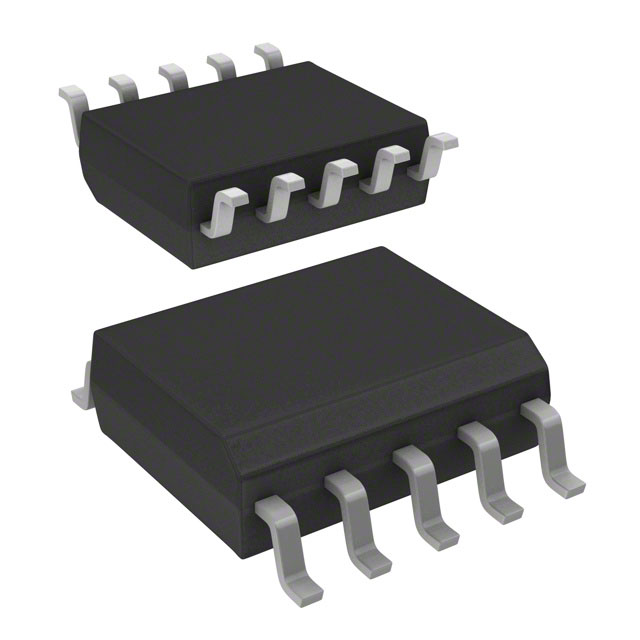
The VIPER012LS is offered in a 10-lead SSOP package engineered for optimal surface-mount device (SMD) processing, enabling high interconnection density and efficient utilization of PCB real estate. This package adheres to standardized dimensional tolerances, ensuring seamless integration with automated assembly lines and minimizing the risk of placement or soldering defects during reflow. The consistency in lead pitch and body profile supports high-speed pick-and-place operations, reducing assembly cycle times and improving yield rates in volume manufacturing.
PCB footprint recommendations are detailed to facilitate robust mounting and alignment, with explicit attention paid to creepage and clearance distances. These isolation metrics are critical for meeting international safety standards, particularly in applications demanding reinforced insulation or compliance with electrical safety certifications such as IEC 60950 or UL 62368. Integrating these guidelines ensures not only inter-layer connectivity reliability but also mitigates the risks of electrical breakdown and long-term degradation in harsh service environments. Empirical analysis has shown that strict adherence to these layout rules leads to measurable improvements in system-level safety and reduces field failures associated with insulation faults.
Thermal integration is another dimension addressed by the mechanical outline and recommended land pattern, supporting effective heat dissipation paths. Designers leverage the compact SSOP profile for efficient thermal transfer to the copper planes, thus managing junction temperatures under both transient and continuous load conditions. The symmetry of the package, coupled with moderate thermal impedance, enables predictable thermal modeling and straightforward simulation, supporting first-pass success in thermal design verification.
From a sustainability perspective, the package is ECOPACK compliant, guaranteeing conformity to RoHS and REACH directives. This eco-friendly status simplifies global sourcing and regulatory submissions, while also addressing long-term reliability concerns associated with banned substances. The absence of hazardous materials aligns with contemporary supply chain requirements, enabling deployment in eco-sensitive products without the need for additional design or documentation overhead.
Mechanical drawings and datasheets supply dimensional and material data necessary for detailed PCB design, such as minimum solder fillet dimensions and coplanarity specifications. This facilitates the use of advanced CAM tools for precise placement modeling, and supports routine DFM (Design For Manufacturing) reviews. Routine experience indicates that leveraging these mechanical resources during early design phases results in fewer iteration cycles and expedites time-to-market, especially in projects constrained by aggressive deployment schedules.
A salient insight is the role played by mechanically-optimized packages like the VIPER012LS in the broader context of reliability engineering. By addressing manufacturability, safety, and environmental aspects in tandem, the SSOP package delivers not only functional integration, but also enables scalable production and system longevity, distilling complex regulatory and mechanical demands into a practical design solution.
Potential equivalent/replacement models for VIPER012LS
When identifying viable substitutes for the VIPER012LS, systematic exploration of the underlying architecture and functional requirements is critical. The VIPer01 family from STMicroelectronics offers closely related derivatives varying in switching frequency, packaging, and minor electrical parameters. Selecting variants within this series allows precise tuning while maintaining core behaviors such as start-up performance, integrated protection, and seamless compatibility with low-standby SMPS designs.
Expanding beyond the immediate family, cross-referencing controllers from alternate vendors necessitates alignment with essential criteria. Key parameters include an integrated high-voltage MOSFET (typically 800V), on-chip PWM control, primary-side regulation, and adaptability to buck, buck-boost, or flyback topologies. Integrated current sensing and robust protection features must be directly evaluated against the original device, as supervisory and safety mechanisms often differ in implementation details and response characteristics.
Higher output power or tailored feature extension prompts consideration of the VIPer2, VIPerX, or functionally-extended families. These lines may provide enhanced driving strength, optimized switching performance, or digital interfaces for advanced monitoring—facilitating deployment in complex power architectures or smart IoT nodes, where dynamic load management and ultra-low standby power are prioritized.
A rigorous benchmarking process includes not only voltage and current rating parity, but also standby consumption profiles, brownout and thermal protections, and electromagnetic compatibility traits. Subtle behavioral differences—such as short-circuit handling, soft-start performance, and jitter introduction for EMI suppression—must be validated in situ through bench simulation or rapid prototyping. Transitioning between different manufacturers' control logic also requires careful scrutiny of start-up bias circuitry and compensation schemes, as minute mismatches can manifest as increased noise or reduced power factor under varying load profiles.
Leveraging extensive cross-testing experience reveals that minor electrical differences can have outsized impacts in end applications, particularly where conducted emissions or stringent standby performance targets dictate topology and layout decisions. Consequently, all candidate replacements should be verified not just on datasheet comparison, but under realistic operating conditions, ensuring that system-level robustness and compliance are preserved. In practice, maintaining application headroom above worst-case stress conditions ensures designs remain stable over lifecycle variations, supporting both rapid transition and sustained reliability.
Conclusion
The VIPER012LS series from STMicroelectronics represents a targeted refinement in offline converter IC technology, aligning with the demands of contemporary compact power architectures. The integration of an 800V robust power MOSFET within the package ensures tolerance against input surge and line voltage transients, thereby elevating operational reliability in fault-prone environments. This resilience is pivotal when designing units destined for industrial controls or household appliances frequently exposed to grid fluctuations or electrostatic events.
Core to the device’s architecture is a current-mode control mechanism, optimized for efficiency across the load profile. The advanced protection suite—comprising overvoltage, overload, thermal shutdown, and brownout safeguards—operates autonomously, minimizing external circuit complexity and enabling faster prototyping cycles. The ultra-low standby consumption, under 10 mW in no-load conditions, typifies the chip’s alignment with stringent international energy directives such as ErP and ENERGY STAR, simplifying system compliance and bilaterally benefiting both regulatory approval and long-term device cost-of-ownership.
Practical deployment emphasizes PCB area reduction without sacrificing EMI performance. Engineers can leverage the compact footprint and integrated start-up circuitry to streamline transformer winding strategies and minimize external component count, all while maintaining system robustness. In multi-output power supply topologies, the fast transient response and wide input voltage range facilitate seamless adaptation for applications ranging from LED luminaires to IoT edge nodes and smart meters.
Strategically, the VIPER012LS embodies a trend toward system-level integration, reducing design uncertainty by consolidating key power management functions within the silicon. The result is not only a tangible reduction in design risk but also the opportunity for iterative hardware optimization, responding dynamically to field reliability feedback and evolving safety requirements. The device’s capacity to bridge cost efficiency, design simplicity, and regulatory adherence positions it as a cornerstone for next-generation switch-mode power supply development.