 >
>


Product Overview
STMicroelectronics’ VIPER37LE is engineered as an offline primary switcher specifically targeting the demands of compact, high-efficiency switch-mode power supplies (SMPS). At its core, the device utilizes an avalanche-rugged 800 V MOSFET, tightly coupled with a Pulse Width Modulation (PWM) controller. This integration streamlines the topology of flyback converters, minimizing component count and layout complexity. The high-voltage tolerance of the MOSFET enables reliable operation under line transients, contributing to robust performance across unpredictable grid conditions. In practice, designs leveraging the VIPER37LE resist voltage spikes caused by sudden disconnects or surges, maintaining functional integrity without supplementary clamping circuitry.
The on-chip PWM controller is optimized for efficiency management, dynamically adjusting duty cycles to regulate output across varying load profiles. This mechanism directly addresses energy conservation targets, especially under light-load or no-load conditions, where the device’s architecture significantly reduces standby power losses. Real-world implementations demonstrate that power supply solutions built around the VIPER37LE consistently pass regulatory benchmarks such as EU CoC and DOE Level VI for energy usage, without extensive firmware overhead.
Embedded safety and protection features, including overvoltage, overload, and thermal protection strategies, support fault-tolerant design methodologies. These capabilities simplify rapid prototyping, as developers need not externally implement basic safeguards, thereby accelerating time-to-market. In field scenarios involving demanding environmental parameters, these protections contribute to high MTBF and reduced service intervals.
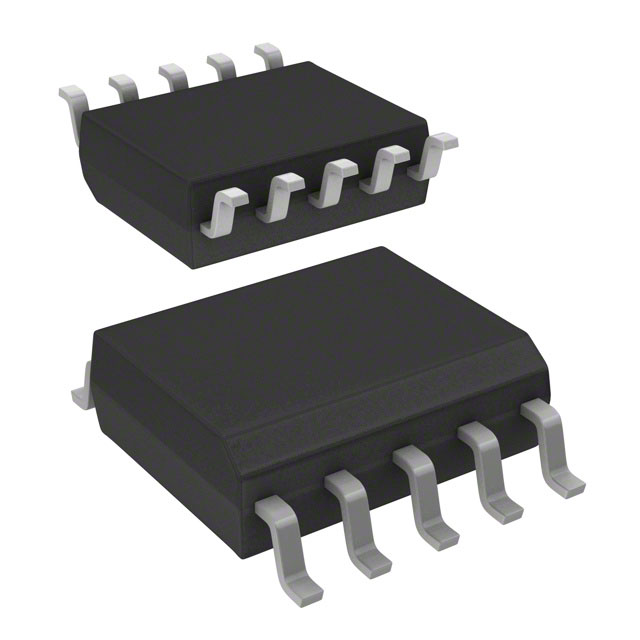
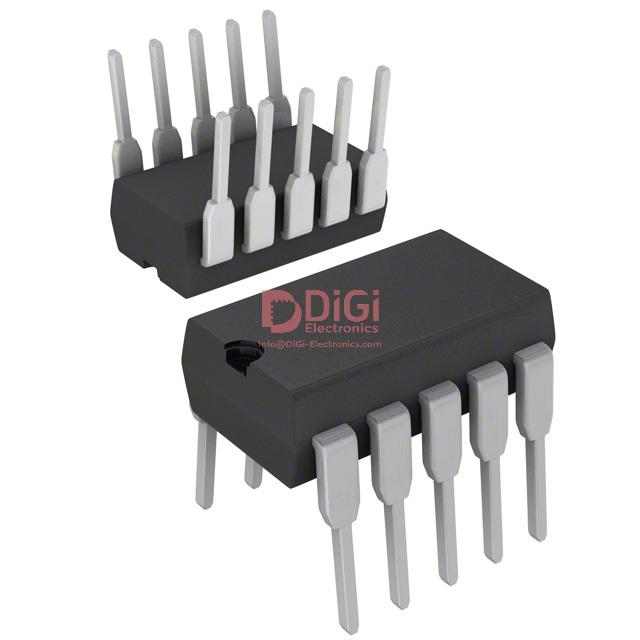
Packaging options, namely SDIP10 and SO16N, facilitate flexible PCB integration for both vertical and horizontal form factors. The compact envelope suits discrete adapter designs and space-constrained embedded modules alike. Migration between packages is straightforward, supporting scalable production lines and variant management.
The VIPER37LE distinguishes itself further through its capacity to meet strict low-power consumption limits while offering designers predictable electromagnetic compatibility behavior. Internal gate driving and sense circuitry are tuned to mitigate switching noise, aiding compliance with CISPR and EN550xx norms. As a design consideration, the device’s switching profile allows for easier snubber and filter selection, optimizing conducted and radiated EMI suppression strategies.
Through practical deployment, the advantages of high integration become evident—PCB area is minimized, BOMs are simplified, and total cost of ownership decreases. The device’s architecture empowers system designers to prioritize reliable regulation and efficiency within constrained design windows. From advanced appliances to industrial controls, solutions built around the VIPER37LE can navigate global regulatory landscapes with assurance, matching contemporary engineering requirements for sustainability and compactness.
Features and Functional Highlights of the VIPER37LE
The VIPER37LE exemplifies a sophisticated integration of circuit design and power management, targeting optimal efficiency and robust operational stability in off-line power conversion applications. At the architectural level, the device incorporates a monolithic, avalanche-rugged 800 V minimum power MOSFET, permitting direct AC line interfacing without supplementary protection or voltage derating buffers. This high-voltage capability streamlines transformer and EMI filter design for systems spanning a broad input range, from low to high line conditions, ultimately reducing the bill of materials and the associated engineering validation effort.
A distinguishing operational characteristic lies in its fixed 60 kHz switching frequency—delivering a balanced compromise between conversion efficiency, physical transformer size, and noise performance. The product family also extends to higher-frequency “H” variants at 115 kHz, affording design flexibility where minimized magnetics or reduced solution footprint is prioritized. Within the control domain, the VIPER37LE implements pulse-width modulation (PWM) with an externally accessible current limit via the CONT pin. This direct parameterization supports precise tailoring of power delivery to match application-specific constraints, whether for compact adaptors, auxiliary supplies, or cost-sensitive appliances. The adjustability of the current limitation proves particularly valuable in the design validation phase, accommodating inrush handling and downstream fault scenarios through iterative tuning without redesign.
Power consumption compliance in low-load and standby modes is addressed through the use of burst mode operation. Under light-load conditions, the controller intermittently halts switching, dramatically dropping standby power to levels as low as 30 mW at 265 VAC—well below global regulatory thresholds such as those defined by the Ecodesign Directive or Energy Star. This capability circumvents the efficiency/standby trade-off often encountered with legacy designs, enabling always-on smart systems to remain continuously powered with negligible energy overhead. Frequency jittering is embedded to address EMI mitigation, subtly modulating the switching frequency and dispersing spectral peaks. Practical experience demonstrates that, when this feature is leveraged in co-design with EMI input filtering, compliance margins are noticeably improved even in compact layouts where loop areas are inherently constrained.
The IC’s systemic protection suite addresses key fault vectors autonomously: integrated high-voltage startup reduces external component count and startup time, while an onboard soft-start algorithm limits peak currents during initial power-up, enhancing transformer longevity and minimizing stress on secondary-side rectifiers. Automated brownout detection disengages switching when input voltage sags below a programmable threshold, preventing erratic operation and downstream logic reset. After resolution of a detected fault, auto-restart logic restores operation seamlessly, obviating the need for external intervention—supporting high-reliability and maintenance-free product targets.
Collectively, these features coalesce to form a platform capable of enabling high-performance, cost-driven, and globally compliant power systems. The integration depth and feature set reflect a deliberate focus on minimizing design risk and field failures while empowering engineers with precise application tuning capabilities. In high-volume implementations, the VIPER37LE’s synergy of low standby power, EMI resilience, and self-protection mechanisms has demonstrated measurable reductions in system-level wastage and in-field returns, distinguishing it as a preferred solution in compact, high-reliability industrial and consumer designs.
Applications of VIPER37LE in Power Supply Designs
The integration level and protection suite of the VIPER37LE facilitate advanced design in switch mode power supplies, especially within isolated flyback configurations. At its core, the monolithic IC consolidates a high-voltage power MOSFET with a current-mode PWM controller, streamlining the engineering process by obviating discrete component selection and layout concerns common to legacy architectures. This integrated approach not only minimizes component count but also stabilizes electrical performance under varying line and load conditions.
Outstanding primary-side regulation, enabled by a robust error-amplifier architecture and precise current sensing, allows the VIPER37LE to provide tight output voltage control—even during load transients—while eliminating secondary feedback circuits. The result is simplified PCB layout and improved EMI performance. Integrated features such as soft start, brown-out protection, overvoltage/overload/overtemperature protections, and an inherent burst mode for ultra-low standby consumption address both regulatory requirements and long-term field reliability. These capabilities are particularly valuable when designing for global markets with diverse input voltages and strict efficiency standards, allowing engineers to avoid add-on circuitry for each protection function or region-specific constraint.
In auxiliary power applications for set-top boxes or DVD units, where circuit board real estate is at a premium, the compact form factor of VIPER37LE permits a reduction in footprint, and with its low quiescent and standby power, designers can easily achieve sub-100 mW consumption in standby mode. This supports compliance with standards such as EuP/ErP, without complicated shutdown algorithms. For domestic appliances and general-purpose SMPS, the IC demonstrates robust behavior under input surges, brown-outs, and overload events, largely due to its self-limiting current-mode structure. The absence of latch-up or uncontrolled restarts has been observed to reduce service returns in deployed designs, enhancing customer satisfaction and field reliability metrics.
When employed in ATX auxiliary rails or compact AC-DC adapters, the VIPER37LE exhibits considerable noise immunity and resilience against line voltage fluctuations, especially at high input. Its high-voltage MOSFET rating provides a considerable design margin, while cycle-by-cycle current limiting curbs fault propagation. These characteristics make it particularly suited for high-density PCBs, where thermal derating and reliability must be balanced against aggressive cost targets and regulatory compliance.
A subtle but critical insight emerges when evaluating long-term production outcomes: the integration of intelligent fault management into a single silicon die not only speeds validation but also significantly mitigates the risk of field failures attributed to drift or component aging—common pain points in modular or discrete approaches. Such design philosophy embodies a shift towards robust, application-specific innovation where the synergy between integration, protection, and analog control offers both efficiency and long-term operational excellence across the diversified landscape of modern low-power and auxiliary supply needs.
Pinout and Package Variants of VIPER37LE
The VIPER37LE integrates both power management and control functions in compact SDIP10 and SO16N packages. Selection between through-hole and surface-mount options influences assembly strategy and system-level thermal management. The SDIP10 offers robust mechanical stability for vertical mounting, advantageous in prototypes and power-dense designs. The SO16N variant delivers superior space efficiency for automated SMD assembly but demands careful PCB design to mitigate thermal stress—wider copper pours and strategic vias beneath DRAIN pins materially improve heat dissipation, preventing localized hotspots under extended load conditions.
Pin configuration mapping serves as the linchpin for reliable application performance. The CONT pin facilitates stable current limiting and overvoltage protection; precise resistor selection connected to CONT determines system robustness against short-circuit events and input surges. Misrouting or noise coupling to this pin often manifests in irregular protection triggering—guarding traces and employing short, direct routing practices minimizes this risk. Feedback and shutdown signals merit equally meticulous handling; the pinout arrangement supports brownout detection circuits, ensuring continuous operation during voltage sags. Direct integration of optocoupler feedback lines to the reference and feedback pins allows tight loop regulation, with minimal propagation delay essential for fast transient response in dynamic loads.
Optimizing layout for these functions underscores the necessity of coordinated electrical and thermal paths. Layer stacking should prioritize short signal loops between controller pins and switching elements, while grounding schemes must prevent cross-interference, especially in high-frequency environments. Experience reveals that inadequate isolation between noisy power and sensitive control traces can compromise loop stability and trip protection features prematurely.
In leveraging VIPER37LE’s package and pinout design, system architects extract reliable power conversion in space-constrained and thermally challenging environments. The nuanced interdependence of package choice, PCB layout, and pin functionality highlights that electrical integrity and thermal performance are co-engineered, not separately optimized. Optimally, comprehensive pin assignment is harmonized with layout constraints and targeted copper areas, securing both protective features and long-term reliability.
Electrical Specifications and Thermal Management for VIPER37LE
Electrical characteristics of the VIPER37LE center on its robust integrated MOSFET, specifically engineered for resilience to global AC mains fluctuations. The minimum 800 V drain-source breakdown voltage (BVDSS) secures ample margin against voltage transients, especially critical in environments prone to grid instability or surge events. This high rating reduces the risk of avalanche breakdown during line disturbances and supports long-term reliability in power conversion circuits subject to unpredictable conditions.
At the heart of switching performance, the typical RDS(on) value of 4.5 Ω demands careful attention. While a lower on-resistance generally diminishes conduction losses, a moderate RDS(on) as found here is leveraged to balance thermal dissipation against efficiency, particularly in applications constrained by board space or cooling limitations. Selecting components with optimal RDS(on) involves trade-offs: minimizing loss while avoiding excessive parasitic capacitance that could degrade high-frequency switching behavior. Practical board layouts demonstrate that increasing copper area around DRAIN pins notably reduces thermal resistance, directly improving junction temperature containment during high-load operation.
Thermal management is not solely a function of silicon specification but intimately tied to PCB design. In open-frame configurations, convective cooling combines with enhanced copper routing to sustain lower junction temperatures. Enclosed setups, with restricted airflow, require even greater diligence, such as employing thermal vias and multi-layer copper pours beneath power pads to facilitate heat spreading into the board substrate. Empirical observations show that optimizing the heat path from the DRAIN pin can frequently yield lower device operating temperatures than datasheet estimates under identical electrical stress conditions.
The synergy of electrical and thermal design dictates system reliability. Proper spacing from high-voltage nets and ensuring low-inductance ground returns mitigate EMI concerns and facilitate efficient switching. Continuous assessment of temperature rise during load variation—using infrared thermography or embedded thermal sensors—provides immediate feedback, enabling iterative layout improvements and rapid validation of design assumptions.
Integrating these specifications within real-world power topologies—flyback, buck, or auxiliary supplies—demonstrates the advantage of holistic co-design. Engineering choices extend from component selection to layout, material, and cooling strategy, all influencing overall system headroom and robustness. The nuanced interplay between MOSFET parameters and PCB layout embodies a core insight: maximizing device margin requires not only reading datasheets but translating technical specification into precise, context-driven physical design.
Detailed Operation Principles of the VIPER37LE
The VIPER37LE integrates current-mode control for flyback topology, leveraging a dedicated internal oscillator to ensure stable fixed-frequency operation. This oscillator is modulated with frequency jitter, a targeted countermeasure for electromagnetic interference, reducing spectral peaks and facilitating compliance with EMI standards even in densely populated PCB layouts. Such modulation is especially critical in industrial power supplies where regulatory margins are tight, and layout constraints limit passive filtering options.
Startup sequencing is orchestrated by a high-voltage, integrated generator that efficiently delivers charge to the VDD capacitor during initial power application. Post-startup, the design transitions to an auxiliary supply derived from a transformer winding, thereby offloading stress from the internal generator and enabling low quiescent mode operation. This dual-stage power delivery mechanism not only improves long-term reliability but also eliminates the need for external startup circuitry, reducing both BOM cost and PCB real estate—a distinct advantage when scaling production for compact SMPS units.
Soft-start functionality within the VIPER37LE is executed through programmable ramping of the primary-side drain-current limit. By controlling the incremental rise of this threshold, the system attenuates abrupt transient events at startup, thereby mitigating magnetization surges in the transformer core. This strategy improves the robustness of magnetics, as evidenced by extended transformer lifespans and lower rates of insulation breakdown under repetitive power cycles. The nuanced control over drain current further prevents overstressing switching MOSFETs, particularly beneficial in wide input-range designs where inrush scenarios are more severe.
Adaptive fault management is woven into the control architecture. When input voltage dips below functional thresholds or when persistent faults such as secondary-side short-circuits occur, the VIPER37LE instantaneously disables the power switch. It then institutes an autonomous restart protocol governed by controlled repetition rates, ensuring average dissipation remains within thermal limits. This approach effectively balances protection with uptime, bypassing traditional latching circuits and allowing for seamless recovery once fault conditions abate, reducing field service routine and unplanned downtime.
Reviewing performance in real-world scenarios, the layered synergy between precise EMI management, dynamic startup sequencing, and intelligent fault handling translates into tangible reductions in product returns due to electrical overstress or regulatory non-compliance. From an engineering perspective, the design philosophy embodied in VIPER37LE highlights the strategic value of integrating core system safeguards at the silicon level. This not only simplifies design cycles but also enables robust operation under challenging grid conditions and aggressive load environments, ultimately supporting higher reliability and more efficient power conversion systems.
Key Protection and Performance Enhancement Features in VIPER37LE
The VIPER37LE exemplifies a robust controller architecture for switched-mode power supplies, emphasizing both comprehensive protection and system performance optimization. At the core, the device incorporates a dual-layer overcurrent protection (OCP) mechanism. The primary layer delivers rapid cycle-by-cycle current limitation, dynamically clamping the primary switch to prevent component stress during transient overloads. If an abnormal current persists, the secondary protection engages by initiating a hiccup-mode restart sequence, effectively reducing thermal accumulation and ensuring long-term endurance during output short-circuit incidents. This layered protection architecture not only shields the power stage but also maintains downstream reliability across a variety of load profiles.
Output overvoltage protection (OVP) employs a finely tuned voltage detection circuit interfaced through the CONT pin and coupled with an auxiliary winding via a precise resistor divider. By allowing for flexible external resistor selection, system designers can tailor the OVP threshold with high granularity, improving system resilience against feedback loop malfunctions or transformer regulation drift. Importantly, persistent overvoltage detection is filtered by requiring multiple consecutive OVP triggers before latching, which boosts immunity against spurious events from line transients or electromagnetic interference. This latching behavior maintains operational safety while minimizing unintended service interruptions during noisy grid conditions.
Input reliability is further strengthened through a dedicated brownout protection function. The BR pin accepts an external divider, permitting accurate setpoints for input undervoltage lockout and user-defined hysteresis. This flexibility aids adaptation to different regional mains profiles and prevents false triggering under light line sags or generator-driven voltage ramps. Proper setup of brownout thresholds has proven critical in field applications, particularly where intermittent brownout conditions might otherwise induce repetitive restarts or component overstress.
Thermal robustness is enforced by integrated hysteretic overtemperature shutdown. The device continuously monitors its junction conditions, disconnecting the drive output upon excessive thermal rise. The hysteretic profile ensures system recovery occurs only after the controller’s thermal environment normalizes, preempting catastrophic failures due to cumulative heating and supporting higher mean time between failures in dense power designs.
Overload protection (OLP) leverages real-time feedback voltage monitoring and a configurable external timing network connected to the feedback pin. This allows both the duration and intensity of overload events to be precisely managed, ensuring the controller reacts by safely shutting down or restarting in synchronization with the power loop’s recovery characteristics. Tailored compensation, achieved through careful network tuning, enables seamless alignment of dynamic response with diverse application constraints such as fast load transients or capacitive loads. Achieving stable operation under marginal overload—with minimized false trips—hinges on deliberate feedback compensation matching not just the converter topology, but also the downstream system’s transient demands.
Standby efficiency is markedly improved by a burst mode algorithm. Under light or no-load conditions, the control logic periodically suspends switching, dramatically lowering switching losses and ensuring sub-30 mW standby power consumption. The intrinsic benefit is twofold: compliance with stringent eco-design regulations and reduction of system self-heating, which enhances both lifetime and regulatory headroom. Burst mode implementation is optimized to avoid audible noise artifacts and ensures smooth transitions back to continuous operation upon load recovery.
Taken together, these mechanisms anchor VIPER37LE’s position as a highly adaptable and protected solution for modern SMPS topologies. Optimal deployment in both isolated and non-isolated designs consistently demonstrates tangible reliability and efficiency gains, especially under challenging grid or load scenarios. The underlying architecture reflects a nuanced balance between protection robustness and performance headroom, illustrating the practical importance of comprehensive yet precisely tunable supervisory features in demanding power applications.
Efficiency and EMC Considerations with VIPER37LE
Efficiency is integral to the VIPER37LE’s design, marked by consistent performance across varying load levels. The device sustains high conversion efficiency at 25%, 50%, 75%, and 100% rated load, maintaining robust metrics at both 115 VAC and 230 VAC input—aligned with ENERGY STAR® average active mode standards. This characteristic is particularly advantageous when deploying in cost-sensitive, energy-regulated products such as home appliances, industrial controllers, or IoT edge devices that demand compliance with global efficiency mandates.
The underlying architecture leverages a quasi-resonant operation and optimized switching logic, which collectively minimize switching and conduction losses throughout the typical load range. Careful attention to gate-drive timing and transformer design enables lower dissipation without sacrificing dynamic response. This layer of efficiency not only reduces long-term operating expenses but also aids thermal management, permitting denser power packaging with less need for elaborate heatsinking or ventilation.
EMC is addressed through embedded frequency jittering techniques, strategically modulating the switching frequency within a confined window. By broadening the spectral energy of the conducted EMI emissions, this approach diminishes peak amplitudes that would otherwise challenge regulatory thresholds. As a result, external EMI filter requirements are relaxed; simpler and more compact filtering topologies become feasible, shrinking BOM cost and PCB footprint. The actual impact is tangible in development cycles: prototypes routinely pass pre-compliance conducted emission tests with minimal redesign, accelerating certification timings and reducing engineering overhead.
A subtle but powerful insight is that integrating efficiency and EMC functions within a single controller advances system reliability and market readiness. The VIPER37LE allows seamless migration from legacy controllers, often enabling designers to meet both efficiency and EMC targets without substantial circuit overhauls. In practice, the blend of jittering and high-efficiency topology not only supports regulatory adherence but also elevates robustness against ambient noise and grid disturbances, critical for connected devices and smart infrastructure. This convergence of attributes fosters versatile application across regions, catering to demanding commercial and consumer sectors with reduced development time and consistent energy performance.
Typical Application Circuits for VIPER37LE
The VIPER37LE is engineered for flexible deployment across a spectrum of flyback converter topologies, offering designers modularity in balancing feature set against system constraints. In minimal-feature applications, the core architecture supports rapid prototyping and BOM optimization by requiring only the essential passive components. The controller’s integration of high-voltage startup circuitry and primary-side regulation minimizes external footprint, targeting low-cost designs without sacrificing baseline safety. Careful selection of transformer parameters, snubber networks, and rectification schemes becomes pivotal in this mode, as the absence of advanced protections necessitates design-time margin for voltage stress and EMI compliance.
For full-feature implementations, the platform demonstrates its capacity to underpin robust switch-mode power supplies adhering to stringent functional safety and electromagnetic standards. The explicit use of external resistors for fine-tuning current limit, output overvoltage protection, and brownout detection reflects a model-driven design approach. These resistors interface directly with the IC’s internal comparators, mapping analog voltage domains to critical fault boundaries. In fielded designs, resistor value tolerances and board-level parasitics often warrant upfront statistical analysis to avoid marginal mis-tripping—especially in thermally dynamic or voltage-variable environments. Here, the interplay between compensation networks and the converter’s transient response must be addressed. Loop compensation, typically realized with RC snubbers or optocoupler feedback tuning, directly impacts regulation bandwidth and overload recovery, dictating both perceived power quality and end-equipment reliability.
Experience shows the most common pitfalls involve mischaracterized transformer leakage inductance or overlooked PCB stray capacitances, leading to either excessive stress on the internal switch or poor noise immunity. Pre-silicon simulations, followed by hardware iteration, often reveal unexpected cross-coupling within densely packed layouts—this underscores the necessity for precise layout practices and thorough validation under worst-case electrical perturbations.
The key insight emerges from leveraging the VIPER37LE’s configurability: even cost-driven designs benefit from incremental adoption of certain advanced protections, as power topology complexity and application domain expand. Small investments in precise component selection and network tuning upstream reduce the risk of downstream compliance failures or early field returns. Thus, the device’s architecture not only facilitates rapid application scaling—from appliances to industrial controls—but rewards a methodical, margin-conscious approach resonant with modern engineering priorities.
Potential Equivalent/Replacement Models for VIPER37LE
Evaluating functional replacements for the VIPER37LE in flyback converter designs requires a systematic approach centered on reliable operation, application fit, and design margin. The core consideration is alignment of key electrical parameters, particularly the supported input voltage range, which dictates MOSFET drain-source breakdown robustness. This directly impacts survivability in challenging environments and tolerance to line transients, making breakdown margin a non-negotiable baseline. Furthermore, comparable switching frequency is critical; mismatches here affect transformer design, EMI behavior, and efficiency optimization. The VIPER37LE’s dual-frequency offering (60 kHz/115 kHz) calls for careful mapping to alternatives that allow similar transformer utilization and EMI profile management.
Integrated feature sets define efficiency and protection thresholds. Soft-start, thermal and short-circuit protections, and standby management are not merely checkboxes—real-world in-circuit resets and recovery times often show substantial variations even among nominal equivalents. Devices like the VIPER35 and VIPER16 in STMicroelectronics’ range illustrate this. VIPER35 typically offers higher power headroom and enhanced protection circuits, facilitating margin for fault tolerance and derating in harsh conditions. VIPER16, while lower in maximum output power, delivers efficient standby and compact packaging, proving advantageous in dense layouts or low-power standby-critical applications, such as auxiliary supplies or IoT node power.
Not all variants are truly drop-in replacements, as subtle pinout differences, package outlines, or specific startup behaviors might influence PCB design and production testing. Higher-frequency VIPER37 derivatives or newer models may introduce trimmed losses, faster transient response, or enhanced primary-side regulation, opening the path for narrowed transformer designs and improved light-load performance. Reviewing detailed electrical characteristics—especially gate drive capability, maximum drain current, and startup time—prevents unexpected corner-case failures in field deployments.
Beyond data sheets, practical integration often exposes minor but impactful disparities. For example, differences in the soft-start algorithm or brownout behavior may affect cold-start reliability with large capacitive loads or in low-mains conditions. Protection thresholds and recovery trajectories—especially after overload or temperature faults—are pivotal for power supply resilience. Ensuring the substitute device maintains or enhances these features in the actual system context often dictates overall choice.
Selecting a replacement thus becomes more than parameter matching; it is a matter of system-level fit. Priority should be on robust voltage and protection margins, matching switching frequencies, and assessing the real-world implications of each candidate’s feature implementation. Early lab validation and controlled overstress scenarios quickly reveal which devices provide the true operational headroom and functional stability needed for dependable long-term deployment.
Conclusion
The VIPER37LE from STMicroelectronics integrates a suite of advanced features engineered to address core demands in offline flyback converter designs, focusing on reliability, efficiency, and space-saving implementations. At its foundation, the device’s monolithic integration of a high-voltage MOSFET establishes a solid basis for enhanced power density, minimizing the external component count and layout footprint. This approach directly translates to heightened mechanical reliability and streamlined manufacturing, especially valuable where PCB real estate is constrained or where design consistency across product variants is pivotal.
Delving into the frequency modulation mechanism, the VIPER37LE employs frequency jittering to mitigate EMI emissions without altering efficiency or output regulation. By subtly varying the switching frequency, the device spreads the energy signature, facilitating compliance with stringent electromagnetic standards. Such spectral management reduces reliance on external filtering, which not only cuts cost and complexity but also expedites certification processes. Practical deployment in connected consumer and industrial applications shows measurable time savings in EMI debugging, reinforcing the value of integrated jittering in modern regulatory environments.
Protection features are architected with granular control, including programmable thresholds for overvoltage, overload, and thermal faults. These allow tailoring to system-specific requirements, safeguarding downstream circuits under adverse conditions while avoiding nuisance trips under transient loads. In field deployments, tweaking the protection suite based on initial test results frequently improves converter robustness without sacrificing restart behavior or long-term uptime, underscoring the importance of iterative adjustment during prototyping.
Ultra-low standby power operation is achieved via optimized burst-mode control and meticulous leakage management. Power supplies using the VIPER37LE consistently meet or exceed global energy efficiency mandates, often operating below 30 mW consumption at no load. Design iterations demonstrate that leveraging the device's standby circuitry, together with attention to snubber and transformer design, yields tangible reductions in overall power draw—a competitive advantage in markets where both operating cost and eco-labeling are deciding factors.
Pin configuration, PCB routing, and thermal management are fundamental to extracting the full potential of the VIPER37LE. The thermal path from MOSFET drain pad to ambient, for instance, dominates lifetime and safe operating area. Well-considered copper pours and vias, matching the device’s footprint, extend operational limits under constrained cooling scenarios. Early adoption projects confirm that conservative derating and proactive heat dissipation extend MTBF, a point often overlooked in cost-sensitive segments but critical for industrial applications with limited maintenance access.
The VIPER37LE’s feature set directly addresses emerging SMPS paradigms, including auxiliary power for IoT infrastructure, compact adapters, and standby controllers in complex assemblies. Its configurability and comprehensive integration streamline iterative design, while its compliance-oriented approach reduces friction from concept to volume deployment. Recognizing the interconnectedness of its individual features and the cumulative impact on system reliability and market competitiveness refines the engineering approach, advocating for an integrated power platform rather than simple part substitution in legacy designs.