 >
>


Product overview: VIPER27HD by STMicroelectronics
The VIPER27HD, manufactured by STMicroelectronics, integrates high-voltage power and control circuitry to address the demanding requirements of off-line AC-DC power conversion. It operates as a monolithic flyback converter, leveraging an 800 V avalanche-rated power MOSFET to withstand line surges and switching stresses typical of industrial environments. The device’s architecture centers on a high-voltage startup cell, coreless current-mode PWM control, and a suite of precision protection features, enabling stable performance under a wide input voltage range and diverse load conditions.
At the foundation, the combination of robust high-voltage silicon and advanced integrated PWM logic allows the VIPER27HD to reduce the external component count, optimizing solution complexity and board area. Low standby consumption is achieved through tailored burst-mode operation, and the high efficiency at light loads aligns the device with global regulatory standards, such as Energy Star and EU CoC, without supplementary circuitry. This efficiency is preserved across various topologies—primary-side regulated or opto-coupled feedback—supporting versatile implementation in auxiliary rails of consumer appliances, HVAC systems, and embedded control circuits.
Protection mechanisms are embedded at multiple levels: over-temperature shutdown, overload and short-circuit protection, Vcc clamping, and two-level overcurrent protection contribute to system robustness. The inherent avalanche ruggedness extends converter lifetime in installations prone to switching surges or grid fluctuations. Designers benefit from the device’s self-restart logic, which provides fault recovery without user intervention, streamlining compliance with safety standards in unattended or sealed-off systems.
Application experience demonstrates that the VIPER27HD’s SO16 package accelerates space-constrained designs, allowing direct routing and improved thermal coupling to ground planes. Its EMI performance, aided by optimized switching profiles and soft-drive gate control, simplifies regulatory qualification and reduces time-to-market risk. During layout, attention to loop minimization and snubber optimization further enhances converter resilience, particularly when deploying the VIPER27HD in low-wattage adapters or as a bias supply for larger power modules.
The VIPER27HD exemplifies a refined synthesis of reliability, regulatory compliance, and design agility. It effectively balances integration depth and configurability, allowing targeted adaptation without overcomplicating the designer’s workflow. This positions it not only as a component but as an enabling platform for resilient, globally deployable low-power supplies.
Architectural highlights of the VIPER27HD flyback converter
The VIPER27HD flyback converter integrates essential power management functions and power-switching hardware into a single compact device, streamlining off-line power supply design. At its core, the device embeds an 800 V avalanche-rugged MOSFET with a high-performance current-mode PWM controller. This on-chip coupling mitigates parasitics, shortens PCB traces, and increases overall reliability, particularly in isolated low- to mid-power designs. By adhering to a flyback topology, the VIPER27HD supports transformer-based galvanic isolation and enables flexible multi-output rails with minimal peripheral circuitry, substantially reducing bill of materials and design complexity.
A standout feature is the implementation of frequency jittering centered around a 115 kHz nominal switching frequency. This technique spreads the energy of conducted and radiated EMI across a wider spectral band, facilitating compliance with stringent electromagnetic compatibility (EMC) standards in line-powered applications such as adapters and auxiliary supplies. This approach is particularly useful in constrained layouts, where filter design often presents space and cost challenges. The flyback’s internal startup circuitry further eliminates external high-value resistors, accelerating system initialization and minimizing static losses at startup. This responsiveness proves advantageous in standby-powered subsystems where quick wake-up is required without compromising efficiency.
Key system-level features—such as programmable soft-start, auto-restart on detected faults, and an adaptive burst mode—collectively optimize energy consumption. Soft-start reduces inrush current and voltage overshoot, enhancing transformer and output capacitor longevity. Auto-restart quickly returns the system to a safe state in the event of load or feedback anomalies, while burst mode significantly improves average efficiency under light-load operating points, a scenario increasingly encountered due to regulatory mandates on standby power. These integrated protections ensure robust operation and extended field reliability, which reduces warranty risk in end products.
From a practical engineering perspective, the VIPER27HD allows straightforward scaling between different power levels and form factors, offering flexibility during prototyping and late-stage optimization. The high level of integration simplifies thermal management: the reduced component count and board area make it easier to achieve uniform heat dissipation and accurate temperature sensing. In field deployment, these inherent advantages translate to less frequent failures and streamlined compliance with global energy and safety standards.
The architecture exemplifies a convergence approach in modern power conversion, where integrating analog and power elements drives efficiency, miniaturization, and design predictability. Devices like the VIPER27HD redefine application boundaries, enabling reliable, compact, and energy-conscious systems—mandates at the forefront of both consumer and industrial power supply innovation.
Electrical performance and ratings of the VIPER27HD
Electrical performance metrics and device ratings of the VIPER27HD anchor its operational capabilities within demanding power conversion applications. At the core, the device’s internal 800 V power MOSFET enables direct interface with rectified AC mains, facilitating robust primary-side configurations for offline converters. The device reliably manages up to 20 W output in open-frame topologies at 230 VAC nominal input, while sustaining up to 12 W across a broad input envelope of 85–265 VAC. This scalability is achieved through the integration of high-voltage process technologies and optimized control loops, allowing efficient conversion without derating across standard mains voltages.
Thermal robustness is embedded in its wide junction temperature handling, spanning from -40°C to +150°C. This range underscores resilience against rapid ambient shifts, frequent in industrial or consumer applications with convection-cooled, non-ventilated enclosures. In practice, layout attention is critical—tight Kelvin-source connections and well-defined heat-spreading copper surfaces yield lower thermal impedance, ensuring sustained operation near upper temperature limits without premature shutdown or output derating.
Central to efficiency is the device’s on-resistance, with an RDS(on) of 7 Ω at 25°C. This parameter directly influences conduction losses during high-frequency switching; minimizing it results in lower thermal dissipation and enhances reliability under sustained load. Yet, in typical flyback or buck-derived topologies driving sub-20 W loads, selection of magnetic components and careful snubber design further mitigate the switching stress on the integrated MOSFET. For transient states, the MOSFET pulse drain current threshold of 3 A provides margin against input surges and transformer magnetization inrush, especially during cold-start or brown-in events.
System-level power consumption governs regulatory compliance, particularly in standby and light-load regimes. The VIPER27HD implements a burst-mode control architecture, inherently reducing switching frequency as output demand drops. Consuming less than 50 mW at 265 VAC in idle conditions, the device aids designers in surpassing stringent standby power requirements mandated by global eco-design standards. This operating mode, when coupled with adequately dimensioned bias windings and low-leakage auxiliary supplies, streamlines qualification processes for Energy Star-like certifications.
Holistic application effectiveness ultimately hinges on component selection and board-level optimization. For instance, judicious placement of EMI filtering and primary-loop snubber networks improves electromagnetic compatibility without compromising transient margins. Coordinated with the VIPER27HD’s electrical strengths, such practices enable practical, compact, and highly efficient power supplies for IoT nodes, smart meters, industrial sensors, and auxiliary supply rails in white goods. These insights highlight the device’s suitability for space-constrained and high-reliability design environments, where electrical characteristics must align with regulatory, thermal, and reliability constraints in real-world deployments.
Key system protection and control features in the VIPER27HD
In the architecture of the VIPER27HD, protection and control mechanisms are deeply interwoven with the converter’s regulation loops, supporting fail-safe operation across fluctuating load and grid conditions. At the core, an adjustable current limiting feature establishes a flexible defense against overload scenarios by allowing precise threshold calibration—a crucial capability when aligning with downstream device tolerances or system-specific derating policies. The dual-level over-current protection operates on both real-time and adaptive layers, combining cycle-by-cycle instantaneous response for transient events and a secondary, hiccup-mode intervention to manage sustained faults. This layered sequence reduces stress on the power MOSFET and associated components, thus prolonging system lifespan and minimizing the risk of catastrophic failure under repeated overloads.
Overvoltage protection leverages comparator-based sensing to disengage switching under excessive peak voltages, tightly coupling power stage health with output compliance requirements. Brownout protection is implemented through dedicated BR pin monitoring, actively suppressing converter operation during input sag events close to UVLO benchmarks and maintaining output integrity during grid disturbances. The hysteretic thermal shutdown employs an on-die temperature sensor that cyclically interrupts operation at critical junction temperatures and automatically reengages after cooldown, thus dynamically adapting to internal and ambient thermal variations—particularly beneficial in compact layouts where airflow is limited.
The control ecosystem is further enriched through the CONT and FB pins, engineered to facilitate granular supervisory intervention and feedback law adjustment. By modifying the FB network parameters or leveraging the CONT input, design teams can optimize start-up timing, manipulate duty cycle boundaries, and implement customized output voltage tracking schemes. This configurability fosters seamless integration with broader power management units, supporting coordinated ramp-up profiles and precise sequencing essential for modern multi-rail systems.
Practical deployments of the VIPER27HD often highlight its resilience in environments characterized by fluctuating mains supply or variable power demand. Experience suggests that tuning the current limit set point not only guards sensitive downstream circuitry but also curtails nuisance trips during inrush events, thereby maintaining application up-time. Configuring the brownout threshold via resistor networks on the BR pin can mitigate premature drop-outs on unstable grids, while fine-tuning the feedback loop mitigates overshoot during load step transitions. The combination of rapid cycle-by-cycle protection and longer-term hiccup mode recovery proves especially effective in designs subject to repetitive over-current stress, supporting robust recovery scenarios without excessive component heating.
The overall protection and control paradigm of the VIPER27HD demonstrates how tightly integrated hardware mechanisms, when exposed through flexible external interfaces, empower detailed system-level adaptation. This convergence of configurability and intrinsic resilience distinguishes power solutions where both operational reliability and design latitude are critical. With an understanding of these layered interactions and experiential insight into tuning strategies, power supply engineers can systematically fortify converter performance against the full spectrum of electrical and thermal threats encountered in advanced embedded environments.
Application scenarios and design considerations for the VIPER27HD
The VIPER27HD integrates advanced power conversion features tailored for high-efficiency, low standby consumption architectures within compact consumer electronics. Its quasi-resonant flyback topology supports robust voltage regulation over an input range of 85–265 VAC, directly addressing the universal supply requirements found in diverse applications such as set-top boxes, DVD recorders, and display units. By embedding burst mode functionality, the device achieves industry-leading standby power performance without external circuitry, thereby streamlining compliance with stringent energy regulations and enabling manufacturers to minimize system-level power budgets.
In typical auxiliary rail designs for white goods and digital appliances, tight output regulation during load transients is critical, especially when transitioning between active and standby states. The VIPER27HD's fast start-up and intrinsic frequency jitter help meet electromagnetic compatibility targets while maximizing conversion efficiency across variable loads. Tested implementations often demonstrate measurable reductions in standby power below 30 mW using optimized transformer selection and careful snubber design; such granular engineering choices become pivotal in iterative prototyping cycles.
The configurable control pin is not limited to setting static current limits. It facilitates integration into more sophisticated system management schemes, such as remote fault isolation and dynamic load adjustment. When paired with external microcontroller logic, the VIPER27HD allows proactive power cut-off or fault signaling, extending its application from simple converters to intelligent subsystems capable of adaptive energy response. This flexibility also enhances field reliability, supporting real-time diagnostics and maintenance interventions in distributed IoT appliances.
From a layout perspective, leveraging the device’s integrated MOSFET and fault protection functions reduces PCB area and component count. Careful attention to loop placement and grounding mitigates common-mode interference, improving conducted EMI margins and thermal stability in densely packed MCM assemblies. Experience with both mass-market and high-reliability products indicates the significant time-savings during regulatory validation, particularly when design targets include Class B emissions and EN/IEC 62368 safety standards.
The architecture's capacity for wide input voltage handling further simplifies BOM standardization for global product launches, allowing a single design reuse across regions with different grid voltages. Innovations in transformer winding and secondary-side rectification, aligned to the VIPER27HD's switching profile, consistently yield improvements in conversion efficiency and idle-mode consumption.
A key insight is that maximizing the benefit of the VIPER27HD depends on holistic design practices—optimal utilization arises from coordinated selection of magnetic elements, precision layout for noise control, and intelligent exploitation of the multifunctional control interface. The resultant solutions offer not only regulatory compliance but also operational agility, supporting next-generation appliance designs where energy management and compactness are paramount.
Package and mechanical design of the VIPER27HD
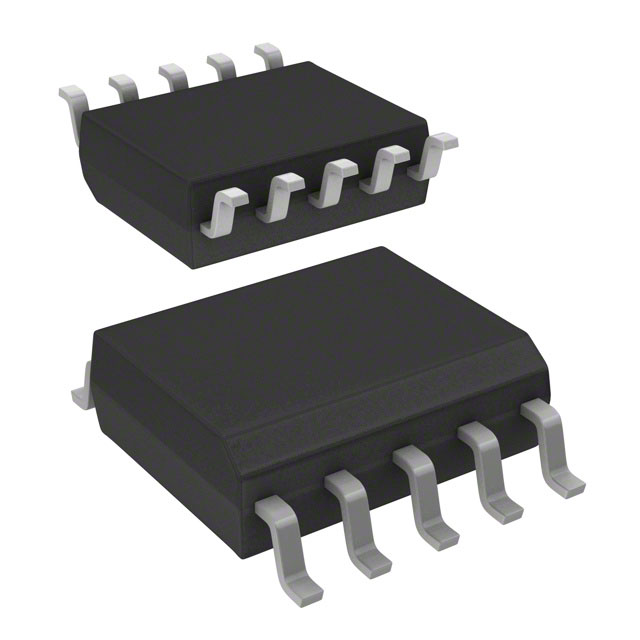
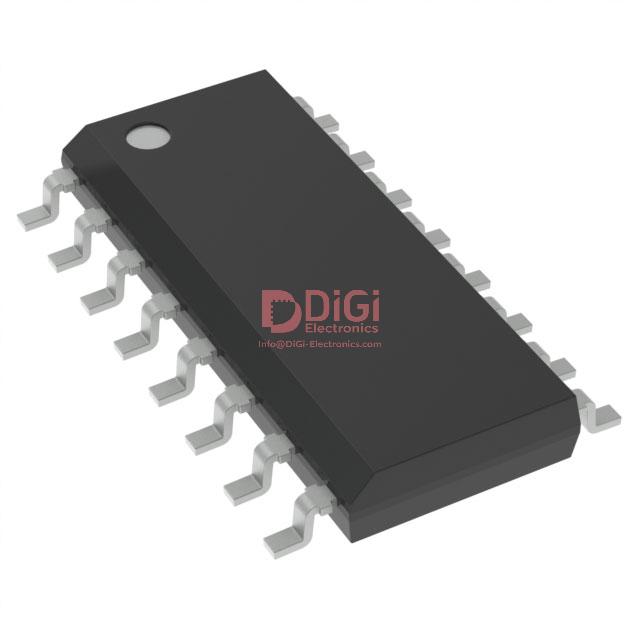
The VIPER27HD features a compact SO16 surface-mount package, with a 3.90 mm width that prioritizes both PCB space efficiency and effective thermal management—critical factors in high-density power designs. This package incorporates multiple pins directly bonded to the internal drain node and metal frame. Effective heat dissipation is achieved by utilizing matching copper pour areas beneath these drain pins on the PCB, creating a direct thermal path away from the chip. Quantitatively, the device exhibits a junction-to-pin thermal resistance of 25°C/W, and a junction-to-ambient thermal resistance reaching down to 50°C/W with optimal board-level layout. These parameters provide a reliable basis for accurately calculating permissible power dissipation, especially under constrained airflow or limited board real estate.
The pin configuration supports straightforward system-level integration. Pins are logically dedicated to ground, control, feedback, brownout, and drain functions, aligning with standard flyback converter topologies. This organization minimizes routing complexity and supports clear functional zoning, reducing EMI susceptibility and supporting robust noise immunity.
Practical deployment demonstrates that maximizing thermal coupling requires more than simply increasing copper area. Strategic via placement directly beneath drain-connected pads, coupled with multi-layer PCB designs, delivers substantial reductions in localized temperature rise. Furthermore, maintaining a low-impedance ground return path mitigates switching noise, particularly vital in low-voltage, high-frequency applications.
A nuanced aspect emerges in balancing package compactness with heat spreading: The SO16's small footprint can become a bottleneck in convection-limited enclosures, placing greater emphasis on accurate thermal simulation during the design phase. Incremental improvements—such as solder mask openings over copper pours or the use of thermal vias—often produce disproportionately large gains in performance reliability.
On a systemic level, the clear functional demarcation within the pinout fosters modularity in circuit design, facilitating rapid adaptation to different input voltages or output power levels without significant schematic revision. In scenarios demanding high integration and minimal PCB size, the package's inherent layout flexibility accelerates time to market while maintaining predictable thermal and electrical behavior.
This mode of mechanical and package engineering, exemplified by the VIPER27HD, demonstrates how deliberate co-design of silicon, leadframe, and PCB infrastructure achieves a synthesis of electrical performance, thermal stability, and integration ease. Profound attention to these multilayered design considerations distinguishes resilient power system architectures.
Environmental compliance and reliability of the VIPER27HD
Environmental compliance and operational reliability of the VIPER27HD originate from its meticulous engineering aligned with global standards. The device’s adherence to RoHS3 and REACH directives goes beyond basic regulatory requirements, ensuring that every constituent material and manufacturing process is optimized for reduced hazardous substance content and environmental safety. This compliance provides manufacturers with regulatory assurance, streamlining approvals for deployment in regions subject to stringent chemical control laws. The integrated JEDEC Moisture Sensitivity Level rating of MSL 3 (168 hours floor life) reflects heightened resilience against ambient humidity during board assembly, minimizing risks of popcorning and latent failures in reflow soldering. This characteristic is particularly beneficial for surface-mount workflows in high-throughput environments, where queue times between unpacking and placement can be unpredictable.
Categorization under ECCN EAR99 facilitates broad export capability, eliminating tight restrictions seen with more sensitive classifications. From a reliability perspective, the device’s absolute maximum ratings—namely, its expansive storage temperature range of -55°C to +150°C—enable robust operation across diverse geographical settings. Field deployments in outdoor power modules and industrial control units have demonstrated the VIPER27HD's ability to withstand rapid thermal cycling and non-climate-controlled warehousing without parametric drift or mechanical degradation. The component’s construction tolerates wide environmental variations while maintaining tight electrical characteristics, an essential factor in mission-critical systems where uptime and long-term stability are prioritized.
By integrating compliance, reliability, and ease of global handling into the core design, the VIPER27HD exemplifies adaptive readiness for evolving electronics manufacturing requirements. Experiences in production runs validate that attention to these interdependent attributes mitigates warranty risks and strengthens supply chain confidence. Early design reviews revealed that combining strong compliance documentation with proven physical robustness accelerates new product introduction cycles, especially for applications in energy infrastructure and consumer appliance sectors. The strategic alignment of the device’s rating schemes and certifications not only satisfies regulatory audits but functions as a catalyst for scalable, sustainable deployment across target markets.
Potential equivalent/replacement models for VIPER27HD
Potential equivalent or replacement models for the VIPER27HD can be identified by analyzing both the electrical specifications and mechanical constraints central to power supply design. The VIPER27 family provides several alternatives tailored to package type and mounting style, notably the VIPER27LD, which utilizes a different package conducive to certain PCB layouts and automated assembly strategies. For through-hole designs, the VIPER27LN and VIPER27HN in DIP-7 format offer enhanced compatibility with legacy manufacturing or environments prioritizing higher mechanical robustness and simplified prototyping.
Selection and cross-reference processes demand rigorous attention to the main performance attributes. Switching frequency, a defining parameter, impacts not only system efficiency but also electromagnetic interference management and magnetic component sizing. The maximum power capability must align with both steady-state and transient system demands, directly affecting transformer design and heat dissipation strategies. Footprint compatibility remains critical for drop-in replacement scenarios, dictating design turnaround times and board-level rework costs.
Underlying these choices, electrical integrity hinges on metrics such as peak drain-source voltage, which must exceed expected line surges and system overstress conditions. Current limits, both in normal and fault states, tie directly to protection schemes and long-term device reliability. Accurate thermal ratings are non-negotiable, as heat sink selection, PCB copper weight, and airflow all interact with device package power dissipation characteristics.
Experience reveals that cross-family substitution can expose nuanced differences, such as subtle variations in start-up current, gate drive performance, or soft-start timing. These seemingly minor deviations may affect start-up behavior or multi-output synchronization in complex designs. It is often advantageous to prototype and bench-validate replacement candidates under worst-case conditions to preclude marginal stability or overshoot issues.
A core insight is the importance of system-level validation beyond datasheet parameter matching. Components with nominally equivalent ratings may exhibit divergent EMI performance or tolerance to PCB parasitics. Leveraging nuanced datasheet scrutiny—in parallel with empirical qualification—secures both functional equivalence and operational robustness, cementing the value of a layered and methodical evaluation strategy in power conversion system development.
Conclusion
The VIPER27HD from STMicroelectronics exemplifies the modern evolution of off-line flyback converters by integrating a robust set of power management features within a compact SO16 package. Leveraging a high level of component integration, this device consolidates essential control, switching, and protection circuitry, strengthening electrical and thermal reliability while significantly reducing the external component count. Such architectural consolidation not only streamlines PCB layout and optimizes power density but also minimizes failure points—a critical advantage for maintaining long-term system integrity in low- and medium-power AC-DC applications.
Advanced protection mechanisms embedded within the VIPER27HD extend beyond conventional overcurrent and overtemperature safeguards. The device implements sophisticated fault-detection protocols, such as brownout sensing, overload protection with automatic restart, and active clamp circuitry to suppress voltage transients. These features form a multilayered defense strategy that addresses both predictable and anomalous operating conditions, thereby meeting increasingly stringent global safety and efficiency standards without imposing additional external circuitry.
From an energy conversion perspective, the VIPER27HD employs high-efficiency switching techniques that mitigate conduction and switching losses. This focus on power conversion efficiency not only aligns with regulatory frameworks like Energy Star and Ecodesign, but also yields tangible reductions in standby power consumption—a growing design imperative as engineers pursue optimally green products for consumer and industrial markets. The device's wide input voltage tolerance accommodates varying grid conditions, which is essential for products targeting global deployment across regions with fluctuating supply quality.
In real-world deployment, the VIPER27HD demonstrates practical adaptability across diverse use cases, including LED lighting drivers, wireless charging pads, appliance controls, and auxiliary power rails in industrial automation. Its compact footprint and simplified bill of materials streamline assembly and inbound logistics, thereby reducing manufacturing complexity and total system cost. Field implementations reveal notable improvements in start-up reliability and resilience against line disturbances, validating the efficacy of integrated protections when deployed in environments with unpredictable load dynamics.
A crucial insight arises from the synergy between highly integrated protection schemes and compliance-driven design. By embedding comprehensive fault response mechanisms and ensuring regulatory alignment at the silicon level, the VIPER27HD decouples many compliance and safety constraints from the PCB and application design phases, redirecting engineering focus toward overall system innovation rather than iterative safety mitigation. This approach establishes a new standard for power platform architecture, where reliability, regulatory compliance, and efficiency are no longer tradeoffs but coexisting attributes delivered within a universally applicable solution.