 >
>


Product overview: VIPER37HE series by STMicroelectronics
The VIPER37HE series from STMicroelectronics represents a notable advance in the domain of offline switch-mode power supply ICs, engineered specifically for flyback converter topologies. At its core, the device integrates an 800 V avalanche-rugged MOSFET alongside sophisticated pulse-width modulation (PWM) control logic, consolidated within a space-saving 10-SDIP enclosure. This architecture supports significant voltage margins and accommodates transient over-voltage events, enhancing operational resilience in power architectures where grid instability or surge tolerance is essential.
The internal MOSFET's avalanche robustness is a key differentiator. By tolerating repetitive energy pulses from line-induced surges, the power stage can be directly interfaced with noisy mains environments without external snubber circuits, streamlining the bill of materials and boosting long-term reliability. The advanced PWM controller enables both fixed and variable frequency operation, optimizing power conversion efficiency under a wide range of loads. Frequency jittering and quasi-resonant switching techniques are deployed to mitigate electromagnetic interference (EMI), a frequent challenge during product certification and deployment in consumer electronics segments.
Protection mechanisms are prominent throughout the device’s logic. Features such as VCC clamp, thermal shutdown, overload protection, and output short-circuit detection work synergistically to guard against catastrophic failures. It delivers robust fault tolerance—an essential requirement for auxiliary supplies in ATX PSUs and appliances, where downtime and maintenance are tightly constrained. The inclusion of brown-out and over-voltage protection extends service life in environments where input voltages fluctuate outside nominal ranges, which is commonly observed in field deployments across divergent mains infrastructures.
From an efficiency standpoint, the VIPER37HE is optimized to adhere to evolving energy regulations such as ErP and Energy Star. Burst mode operation and low standby consumption keep no-load input power beneath mandated thresholds, providing compliance without sacrificing dynamic response. When specifying the VIPER37HE in set-top boxes or DVD players, practical experience shows that board layouts can be simplified using the integrated high-voltage startup circuit, enabling rapid design iteration and minimizing external passives. The combination of high breakdown voltage and adaptive protection has proven effective for manufacturers needing universal input support across global market variations.
Layered integration within the VIPER37HE encourages system-level cost reductions while promoting circuit robustness in high-volume consumer applications and industrial control logic. The convergence of rugged silicon, intelligent control, and flexible fault management redefines expectations for compact SMPS solutions where bench-tested designs must transition rapidly to scalable production, meeting production line constraints and regulatory checkpoints without compromise. Such integrated platforms, when applied judiciously, establish new benchmarks for reliability and long-term value in power conversion—particularly in segments where downtime implies significant operational or reputational risk.
Key features of VIPER37HE series
The VIPER37HE series exemplifies the drive toward highly integrated, robust power supply solutions that respond to the escalating demands of modern electronics. At its core, the 800 V MOSFET sets the foundation for an exceptionally wide input voltage tolerance, which is vital for the resilience of power circuits exposed to unpredictable grid conditions and high-voltage transients. This architecture directly reduces the vulnerability to line surges, ensuring consistent operation across global markets with varying power standards.
Energy efficiency is routinely prioritized in design, particularly for appliances subjected to stringent regulatory frameworks. Achieving standby power consumption as low as 30 mW at 265 VAC is not merely a metric—it translates to smoother compliance with industry energy standards such as ENERGY STAR and supports practical deployment in cost-sensitive, volume-driven consumer products. This advantage does not solely stem from the component selection but integrates architectural optimizations spanning both switching topology and control circuitry.
Frequency management is another key attribute, evidenced by bifurcated fixed-frequency options at 60 kHz and 115 kHz. This duality, combined with built-in frequency jittering, provides dynamic EMI mitigation, substantially lowering requirements for expensive filtering stages. In deployed systems, frequency jittering reveals tangible reductions in radiated and conducted interference, streamlining PCB layout and enclosure design for EMC approval. This feature has demonstrated practical value in dense, multi-output adapters where minimizing cross-channel interference is paramount.
Protection and customization mechanisms extend the series’ adaptability. Adjustable primary current limits and output overvoltage protection enable granular control, essential for tailoring response profiles to load types ranging from capacitive to inductive signatures. Incorporating brownout detection and hysteretic thermal shutdown mechanisms allows designs to gracefully handle undervoltage and thermal events. Dual-level overcurrent protection with auto-restart and soft-start ensures fault tolerance while maintaining smooth power-up characteristics, circumventing stress on downstream circuitry. Such layered protection has shown pronounced reliability improvements—especially for appliances subject to frequent cycling or adverse grid conditions—where system recovery without manual intervention is critical.
Operational flexibility is enhanced by burst mode capability, addressing light-load and no-load scenarios with optimized efficiency. This mode not only cuts energy waste during idle phases but also reduces heat output and enables smaller thermal management elements, further shrinking overall solution footprint.
Collectively, the integrated nature of these features results in a dramatic reduction of necessary external components. Practical implementations consistently reveal that such consolidation streamlines assembly, reduces BOM complexity, and stabilizes mass production yields. Advanced power designers leverage this platform to create compact, high-reliability converters with accelerated time-to-market and lower total cost.
This holistic feature set marks a shift toward intelligent, resilient power stage architectures. The VIPER37HE series is exemplary of how on-chip functionalities, when harmonized through design and operational nuances, provide not just compliance but measurable gains in reliability, manufacturability, and flexibility—key values as power systems move deeper into pervasive, mission-critical applications.
Electrical characteristics and performance parameters of VIPER37HE
The electrical design of the VIPER37HE emphasizes robust functionality under challenging and variable conditions. At its core lies a rugged N-channel MOSFET, engineered to withstand substantial electrical stress. The device achieves an exceptional minimum breakdown voltage (BVdss) of 800V, ensuring resilience against voltage spikes and transient events frequently encountered in high-voltage power applications. The MOSFET's ON-resistance (Rds(on)), maintained at 4.5 Ω at 25°C, balances conduction losses and thermal management requirements, directly influencing system efficiency and heating profiles. This parameter remains stable, supporting consistent operation even during fluctuating ambient conditions.
Thermal performance is engineered for extended range, with the controller accommodating a junction temperature between −25°C and 125°C. This wide envelope is pivotal for installations exposed to harsh climates or demanding cooling scenarios. Reliability is further anchored by precise threshold management. The startup voltage on VDD prevents inadvertent activation, optimizing soft start capabilities and reducing inrush stress. Adjustable current limit settings offer granular protection against overcurrent conditions, enabling the designer to tailor the fault response to different application needs, whereas well-defined undervoltage lockout (UVLO) points contribute to graceful system shutdown, mitigating potential risks associated with unstable supply rails.
Power efficiency is intrinsic to both switching and quiescent states. The device maintains a consistently low operating current, which is critical for energy-sensitive applications such as adapter and auxiliary power supplies. In practical deployment, this translates into reduced standby power draw, meeting increasingly stringent regulatory requirements without sacrificing performance during load transients. Operational precision is further reinforced by tightly controlled switching characteristics. Spread-spectrum frequency modulation minimizes EMI emissions and constrains switching frequency drift. This feature enables compliance with international EMC standards while reducing the need for excessive external filtering, thus streamlining PCB layout and lowering BOM cost.
Integration within real-world power architectures showcases stability and repeatability under diverse operating profiles. When deployed in offline AC-DC converters or auxiliary power modules, the device's avalanche capability and robust control thresholds translate into minimized failure rates and lower maintenance cycles over time. Unique attention to these ruggedization details supports long operational lifetimes, particularly when subjected to repeated extreme events like lightning surges or grid disturbances.
A subtle shift in design philosophy emerges through the prioritization of failure modes and protective boundaries; rather than merely achieving baseline operational criteria, the VIPER37HE embeds system-level safeguards to preemptively address atypical stressors. This approach signals an evolution in power IC development, where device reliability and application adaptability intersect. The result is a component not only suited for conventional power conversion roles but also positioned to serve in scenarios demanding extended uptime and minimal intervention, further reducing total cost of ownership for demanding industrial, commercial, and consumer solutions.
Functional operation and protection mechanisms in VIPER37HE
Functional operation and protection mechanisms in VIPER37HE integrate high-voltage control with advanced system resilience, making the device well-adapted for demanding power conversion environments. Central to its architecture is the high-voltage startup generator, designed for rapid and controlled charging of the VDD capacitor from the bulk input rail. The embedded soft-start sequence carefully moderates the inrush current, reducing electrical and thermal stress across critical startup components. In field deployments, this approach notably extends the longevity of both the switching element and associated passive components, especially in designs constrained by tight thermal margins or subject to frequent power cycling.
The primary-side current mode control framework forms the backbone of the power regulation loop. Adjustment of the current sense threshold via the CONT pin grants design flexibility to accommodate diverse transformer core sizes, wire gauges, and output power specifications. This adaptability ensures optimal current profiling per application, streamlining transformer selection and guaranteeing stable operation across varying load profiles. Experience shows that tuning the current limit provides substantial immunity to component tolerances and system-level uncertainties, enabling robust design margins without excessive oversizing.
For system overvoltage events, the integrated output OVP circuit leverages a resistor divider for precision programmability. This arrangement allows for seamless tailoring of shutdown thresholds to the specific secondary-side voltage requirements, synchronizing closely with safety standards and application reliability targets. During circuit anomalies such as feedback loop disengagement or load disconnects, the OVP circuit triggers an immediate shutdown, preserving downstream devices and preventing catastrophic failure propagation.
A multi-functional feedback interface supports not only accurate output regulation but also advanced overload management. Here, a capacitor-timed shutdown delay differentiates between short-lived startup or load transients and genuine fault conditions, ensuring stable operation even during dynamic performance events like load steps or inrush currents. This timing mechanism eliminates unnecessary interruptions and fosters high system availability, an essential aspect in mission-critical or continuously operating installations.
Brownout protection is especially impactful in installations exposed to fluctuating utility voltages. By actively monitoring the AC mains and enforcing a safe shutdown threshold, the VIPER37HE maintains converter integrity and prevents hazardous restart attempts under undervoltage scenarios. This function is crucial in regions with unreliable grids or cost-sensitive infrastructures prone to voltage sags, where unmitigated brownouts can otherwise trigger persistent converter overstress and latent damage accumulation.
Further enhancing fault tolerance, secondary-side overcurrent protection and hiccup-mode auto-restart address downstream faults with both selectivity and system longevity. Once a secondary-side anomaly, such as a transformer short or secondary rectification failure, is detected, shutdown initiates with periodic restart attempts—balancing the need for automatic recovery against protection of magnetic and power semiconductors. This strategy minimizes cumulative thermal stress and enables rapid restoration to normal operation if the fault clears, markedly reducing maintenance cycles in distributed power systems.
VIPER37HE orchestrates these protection and operation mechanisms with synchronized auto-restart control, ensuring systemic coverage of major fault conditions. This comprehensive oversight delivers predictable self-healing behavior, reducing the need for discrete supervisory hardware and yielding both cost and reliability advantages. A key insight is the deep integration of control and protection within the core IC, which not only simplifies design but also enhances overall system robustness—especially as power density and regulatory expectations continue to advance across application domains.
Implementation and typical application circuits for VIPER37HE
The VIPER37HE exemplifies implementation versatility, accommodating a broad spectrum of design requirements in offline flyback converter topologies. Its inherent flexibility arises from both adjustable internal parameters and thoughtful reference circuit architectures detailed within its documentation. Minimal implementations prioritize component count reduction to address stringent cost targets, particularly effective in applications such as auxiliary rails for ATX power supplies or standby power stages in large home appliances. These compact circuits exploit the integrated high-voltage power MOSFET and robust protection schemes, streamlining regulatory compliance and minimizing external circuitry.
Full-featured reference designs maximize the VIPER37HE’s capabilities, layering advanced functions including programmable current limit, selectable brownout detection thresholds, and precise soft start control. This architecture empowers tailored performance tuning, which is critical when transformer magnetics, line regulation boundaries, and transient response must be balanced. Real-world deployment often necessitates meticulous adjustment of the device’s protection parameters. By leveraging the current sense configuration, designers can align converter peak currents with transformer saturation levels and secondary-side component limitations, reducing risk of thermal runaway in high duty-cycle standby environments.
Capacitive and thermal challenges are mitigated through strategic PCB layout techniques. Enlarged copper landings beneath the device package facilitate enhanced heat spreading, keeping junction temperatures stable even under continuous maximum load. This approach integrates seamlessly into multilayer board designs, where isolated ground planes can further minimize EMI and enable tighter loop areas.
Practical experience reveals the value of iterative parameter optimization in the lab environment, where brownout threshold fine-tuning ensures reliable startup in fluctuating grid scenarios, and transformer selection adapts to market-specific EMC requirements without demanding circuit rework. A unique benefit surfaces in the device’s ability to maintain low standby consumption without external bias, supporting energy efficiency mandates across multiple geographies. The dual emphasis on minimal external circuitry and comprehensive internal protection substantially accelerates product development cycles, enhancing reliability while allowing for rapid prototyping and volume scaling.
Ultimately, the VIPER37HE supports a modular approach—designers can start with reference circuits, adjust internal settings, and scale thermal dissipation according to application stresses, all within a unified platform. This convergence of adaptability, protection depth, and practical usability positions it as a preferred solution for both cost-sensitive and performance-driven power supply designs.
Efficiency and performance metrics of VIPER37HE in flyback designs
Efficiency and performance metrics of VIPER37HE in flyback topologies are critical for designing cost-effective and regulation-compliant power converters. The device’s behavior is systematically evaluated according to ENERGY STAR protocols, with efficiency measured at standardized loading points—25%, 50%, 75%, and 100%—across both 115 VAC and 230 VAC input lines. This structured assessment yields a comprehensive view of how VIPER37HE responds to varying operating demands.
At the core of VIPER37HE’s high efficiency is its sophisticated burst-mode control, which dynamically scales switching activity at light loads and idle states. By significantly reducing switching frequency in these conditions, the converter achieves sub-watt standby power consumption. The IC’s exceptionally low quiescent current—integrated into its silicon design—further minimizes overhead losses that typically erode light-load efficiency in conventional flyback controllers. These technical strategies collectively enable VIPER37HE to meet stringent international off-state and standby energy requirements, often without the need for secondary side controllers or complex auxiliary circuits.
In practical application, the real impact of these optimizations emerges when deploying multiple units across product families intended for global shipment. Design iterations using VIPER37HE often achieve regulatory compliance on the first design pass, reducing development cycles and streamlining qualification testing for various regions. Tuning auxiliary winding parameters and fine-tuning startup resistor values further optimize power drain in extreme no-load scenarios, allowing final production boards to remain comfortably within the 0.1W to 0.3W off-mode mandates set by authorities such as the European Commission and US DOE.
When operating under medium and heavy loads, VIPER37HE maintains robust conversion efficiency, typically exceeding 86-90% in well-matched flyback designs using high-voltage input. This resilience across the entire load spectrum is supported by the chip’s internal HV startup circuitry and low-loss MOSFET integration, which together ensure minimal conduction and switching losses, even as ambient temperatures fluctuate. The device’s ability to maintain flat efficiency regardless of mains voltage adds flexibility in unified design for dual-standard markets, facilitating universal power supply platforms.
A nuanced insight emerges from layout and thermal management exercises: the controller’s stability and efficiency can be further amplified by optimizing PCB copper area under the primary switching node and ensuring low-inductance gate drive traces. Mitigating parasitic capacitances—typically overlooked at first glance—yields incremental efficiency gains, contributing tangibly to regulatory margin buffers in shipped products. Field deployments demonstrate that VIPER37HE’s burst-mode implementation not only meets laboratory metrics but also withstands real-world grid transients and line disturbances, maintaining both EMC performance and load regulation.
Taken as a whole, VIPER37HE represents an advanced integration of low-power control and efficient energy transfer, delivering measurable benefits in compliance, system reliability, and overall cost of ownership. This convergence of silicon-level innovation and system-level tunability positions flyback designs using VIPER37HE as highly competitive options for modern power supply solutions, where every milliwatt saved equates to practical commercial and environmental advantage.
Package details and thermal considerations for VIPER37HE
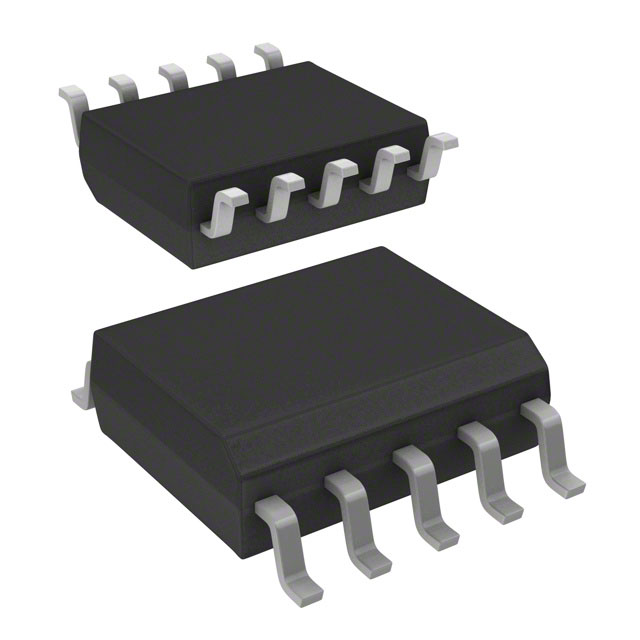
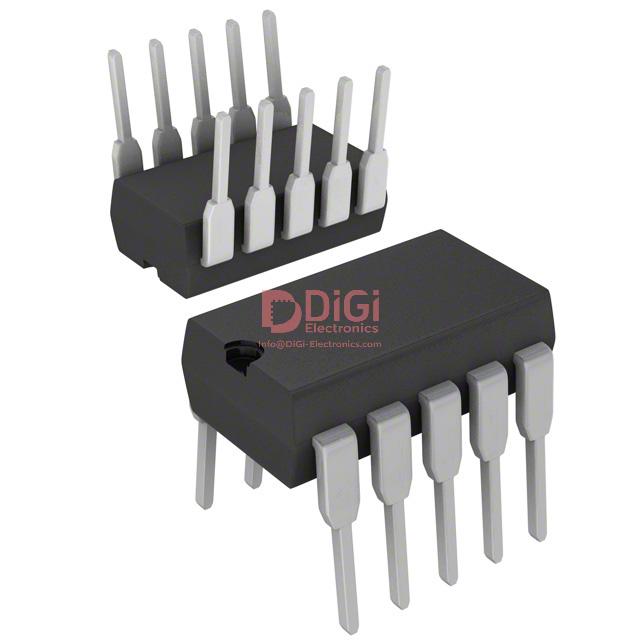
The VIPER37HE employs SDIP10 and SO16N ECOPACK®-compliant packaging, each designed to address thermal and mechanical constraints inherent in embedded power applications. These packages incorporate leadframe designs and material selections specifically chosen to facilitate efficient heat transfer from the silicon die to the copper planes of the PCB. The manufacturer provides detailed recommendations for the minimum copper area directly beneath and around thermal pads, enabling designers to model and predict junction temperatures under full load conditions. Careful application of these guidelines supports both forced and natural convection cooling strategies, which is crucial for maintaining operational reliability in compact and sealed enclosures frequently encountered in cost-driven consumer systems and space-constrained industrial controllers.
The interaction between package profile and PCB stack-up becomes significant when optimizing for thermal impedance. Multilayer PCB designs benefit markedly from distributing thermal vias beneath the package center, promoting vertical heat spreading into ground or power planes. Thermal simulations calibrated with empirical data highlight the diminishing returns of excessively large copper pours, underscoring the importance of directed copper placement and judicious use of PCB real estate. Furthermore, the mounting procedures for SDIP10 and SO16N allow for both automated and selective soldering processes, offering flexibility to contract manufacturers without compromising thermal performance, as the wetting and reflow characteristics are compatible with RoHS-compliant solders.
In design verification, observing temperature differentials between ambient and case under standardized load conditions—especially in ambient temperatures exceeding 50 °C—quickly reveals the effectiveness of different PCB layouts and enclosure venting provisions. For instance, consistent results have shown that enclosing a VIPER37HE-mounted PCB in unventilated plastic housings introduces a thermal penalty, which can be partially offset by maximizing copper under the thermal pad and ensuring good mechanical coupling to internal enclosure surfaces. Balancing these considerations allows for aggressive power density targets while remaining within device thermal limits.
Distinctive insight emerges in the trade-off between footprint minimization and thermal headroom: while narrow-profile packages enable dense board layouts, they necessitate more disciplined thermal management as component clustering raises local hot spots. Effectively, long-term operational stability is closely tied to the early design-phase thermal simulations and prototype validation, as later-stage mitigation through heatsinking or layout modifications is often constrained by physical and economic factors. Ultimately, the careful attention devoted to thermal interface management in the initial mechanical design phase directly impacts system reliability and competitive cost structure in both consumer and industrial deployment scenarios.
Potential equivalent/replacement models for VIPER37HE
Evaluating alternatives to the VIPER37HE requires direct alignment of key electrical and mechanical characteristics with application demands. Within the same lineage, the STMicroelectronics VIPerPlus series presents variants like VIPER22, VIPER27, and VIPER28, each engineered for distinct output power targets and specialized feature sets. Determining suitability starts with precise mapping of maximum drain-source voltage, nominal switching frequency, embedded start-up circuitry, and the breadth of integrated protection mechanisms. Misalignment in any of these areas can directly compromise EMI behavior, system efficiency, or safety compliance, thus necessitating meticulous cross-referencing of device datasheets.
Package compatibility stands as a critical preliminary filter. With VIPER37HE primarily available in SDIP10 and SO16N packages, physical footprint and pinout congruence remain prerequisites, especially in retrofit scenarios or where PCB redesign introduces cost and requalification effort. This mechanical matching must be coupled with the electrical layer: key parameters such as supply voltage ranges, oscillator tolerances, and output current capabilities significantly affect both cold start reliability and steady-state operation.
In power electronics, switching frequency impacts transformer design, EMI filtering, and thermal management. Deviations, even minor, can necessitate revalidation of magnetic components or snubber circuits. The breakdown of protection features—overload, thermal shutdown, and brown-out immunity—differentiates not just robustness but also ease of meeting global certification regimes such as IEC or UL. Direct experience has shown that downstream certification processes are often streamlined when substitute devices deliver superset protection or maintain process compatibility with EMI and safety standards, reducing the need for expensive retesting.
Beyond the native family, consideration extends to competitive alternatives from suppliers like Power Integrations (TinySwitch or LinkSwitch series) and Infineon (CoolSET family), whose pin-compatible offerings and integrated feature set can match target application requirements. These cross-vendor changes generally require more extensive validation: startup current profiles, loop compensation networks, and burst behavior during light load may diverge, elevating the need for breadboard prototyping and edge-case evaluation under extreme line and load conditions.
Reverse engineering previous successful substitutions reveals that iterative lab characterization—particularly under off-nominal voltage and temperature extremes—unveils margin gaps not apparent in nominal datasheet-to-datasheet comparison. This disciplined approach helps avoid undervalued design vulnerabilities that may surface post-deployment, especially where long-term field reliability is non-negotiable.
A nuanced perspective is that expanding the equivalence search to include next-generation smart power devices often unlocks improved standby power and EMI headroom due to advances in process technology. This can absorb forthcoming regulatory tightening and position the design for longer-term platform stability. Embracing such future-proofing early, while verifying legacy compatibility, yields sustainable performance benefits with only marginal increases in development effort. The net effect is a design that remains competitive and compliant within the rapidly evolving landscape of system power requirements.
Conclusion
The VIPER37HE series from STMicroelectronics exemplifies the integration of multifunctional features optimized for high-performance flyback SMPS architectures. Its core architecture combines a high-voltage startup circuit, PWM controller, and power MOSFET within a single monolithic device, reducing both system BOM and PCB complexity. This high level of integration streamlines design processes and directly addresses the industry's need for miniaturized yet reliable power solutions compatible with stringent global efficiency regulations such as ErP Lot 6 and DOE Level VI.
Protection mechanisms in the VIPER37HE, including input overvoltage, output short-circuit, and thermal shutdown, operate autonomously at the hardware level, ensuring system stability across a wide range of operating scenarios. These protections are critical for applications expecting unpredictable input variations or load transients, such as IoT gateways or smart appliances frequently exposed to voltage surges and field disturbances. The device’s adaptive control algorithms also provide flexibility in fine-tuning dynamic response, which is advantageous for designs requiring rapid load regulation without sacrificing standby efficiency.
Thermal management considerations become essential when operating at elevated ambient temperatures or within sealed enclosures. Power density gains are achieved without compromising system safety through the VIPER37HE's low Rds(on) and robust package options, supporting both natural and forced convection cooling. Real-world deployment illustrates that careful PCB layout—reducing loop area and optimizing ground returns—directly affects EMI compliance and overall device lifespan, given the sensitivity of integrated power stages to parasitic elements. Leveraging the part's frequency jittering capability further helps mitigate EMI peaks, easing the path during certification testing.
Efficiency enhancements stem from quasi-resonant operation and variable switching frequency, improving light-load performance and minimizing total energy consumption. In consumer and industrial contexts, this translates to tangible reductions in heat dissipation and energy bills over system lifetime, aligning with eco-design directives. For appliance and auxiliary industrial power rails, where device longevity and ultra-low no-load consumption are critical, VIPER37HE’s low standby current characteristic reduces transformer heating and extends service intervals, a detail often overlooked during initial design but significant in long-term field operation.
From a selection standpoint, interoperability with standard SMPS topologies enables seamless migration from legacy designs, while package options compatible with through-hole and SMD processes maximize production flexibility. Deployment success in actual production lines demonstrates the importance of upfront verification—such as worst-case efficiency mapping and fast pre-compliance EMI scans—highlighting that subtle parameter choices can determine both regulatory compliance and user experience. For applications where design turnaround and installation robustness are paramount, the integrated approach of the VIPER37HE platform delivers an effective foundation for cost-effective, future-ready power architectures.