 >
>


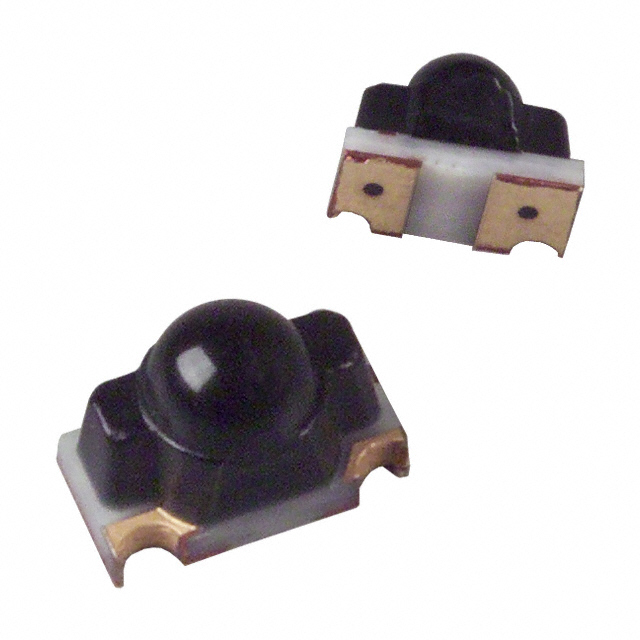
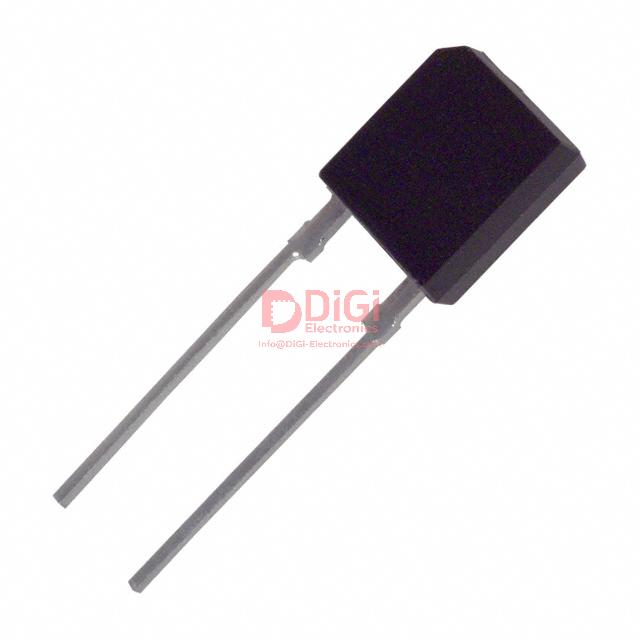
Product Overview of PD481PI Sharp Microelectronics Sensor Photodiode 960nm Side
The PD481PI Sensor Photodiode from Sharp Microelectronics exemplifies targeted infrared detection through its specialized side-view architecture and optimized spectral response. By leveraging a peak sensitivity at 960nm, the device directly addresses stringent requirements in systems where ambient light rejection and precise wavelength selectivity dictate performance, such as remote control receivers and environmental control interfaces.
Underpinning the PD481PI's functional superiority is the interplay between its semiconductor material composition and package orientation. The side-view format not only permits straightforward integration in space-constrained housings but also directs the incident infrared radiation efficiently across the active area. This design minimizes susceptibility to stray ambient light, thereby increasing the signal-to-noise ratio in environments typically saturated with sources of interference. The silicon substrate and engineered surface treatments enhance carrier generation and maximize responsivity at the target wavelength while suppressing undesired spectral components.
In practical deployment, the PD481PI demonstrates reliable signal acquisition in both consumer and industrial settings. For instance, in audio equipment, precision channel isolation is maintained due to the photodiode’s narrow-band response, reducing cross-talk from adjacent remote control signals. Similarly, in air conditioning control systems, the device supports nuanced command recognition even under fluctuating lighting conditions, enabled by its inherent visible light immunity and low dark current characteristics.
System design considerations extend to PCB layout, wherein the side-emitting profile allows for natural alignment with IR-transparent windows. This facilitates streamlined mechanical assembly while preserving detection efficiency. The photodiode’s compact form factor further supports miniaturized circuits, favoring next-generation device footprints.
Refined engineering choices emerge with the PD481PI’s application. Modulating carrier frequencies close to the photodiode's peak sensitivity ensures optimal SNR when filtering modulated IR signals. Circuit designers should exploit its fast response and minimal capacitance for high-speed demodulation, thereby enabling responsive and interference-resistant user interfaces. The device also offers a predictable voltage-to-current transfer function, reinforcing consistent calibration across production runs.
A unique vantage point to highlight involves the strategic value of consistent, narrowband IR sensitivity in modern IoT ecosystems. As environments become more signal-rich, the ability to isolate only the intended IR commands—without false triggers from LED or sunlight artifacts—is indispensable. Devices like the PD481PI reinforce system robustness, extending the operational envelope beyond legacy solutions with broad-spectrum sensitivity.
In synthesis, the PD481PI delivers layered value: from its material-engineered selectivity and packaging oriented towards efficient integration, to its pivotal role in real-world applications demanding resilient, interference-free infrared sensing. Through these mechanisms and scenarios, it advances both fundamental detection capability and the practical scalability of infrared interfaces across evolving electronic platforms.
Key Features and Technical Specifications of PD481PI Sharp Microelectronics Sensor Photodiode 960nm Side
The PD481PI photodiode is engineered to address the specific demands of infrared sensing within high-interference environments. Its design centers on maximizing infrared detection fidelity through a set of interlocking technical features that enhance both precision and reliability in signal acquisition.
At the core of the PD481PI’s operation is its elevated sensitivity profile, defined by a photocurrent threshold of at least 3.5μA under 100 lux illumination. This parameter reflects an electrical response robust enough to ensure detection performance remains uncompromised even under subdued IR irradiation conditions. Such sensitivity is achieved through optimized semiconductor processing that minimizes surface recombination and maximizes carrier collection efficiency, directly influencing the noise floor and dynamic range. Field measurements demonstrate that PD481PI-based receivers exhibit consistently strong output under varying ambient conditions, facilitating accurate demodulation in pulse-based IR protocols.
Another pivotal feature is the precise spectral match, with a peak responsivity at 960nm. This wavelength aligns closely with the spectral output of commonly deployed high-efficiency infrared LEDs, which typically emit in the 940–970nm region. The overlap between the photodiode’s response curve and the LED emission profile optimizes system quantum efficiency, translating into improved link margins and reduced bit error rates in optical communication channels. This spectral tuning also simplifies emitter selection and system integration by reducing the need for additional matching filters or gain adjustments in the analog front end.
The integrated visible light cut-off filter further elevates core performance by selectively attenuating the photodiode's response to the visible spectrum. This optical filtering, implemented through a multilayer coating or resin material, preprocesses the incident radiation to reject wavelengths below approximately 800nm. In practical application, this aggressive suppression of visible light interference directly mitigates the effect of fluctuating ambient conditions, such as sunlight or fluorescent lighting, which often introduce spurious signals in unfiltered detectors. Empirical testing under real-world ambient scenarios confirms markedly improved signal-to-noise ratios, supporting higher reliability in both IR remote controls and proximity sensing implementations.
Physically, the side-view resin-molded package addresses spatial integration challenges in compact electronics. Its low profile facilitates seamless mounting on PCB edges or within narrow device housings, supporting modern product industrial design requirements. The side-view orientation enables flexible positioning relative to IR emitters or reflectors, expanding applicability to divergent sensing topologies such as optical slot sensors, gesture detection arrays, or reflective switch architectures.
Taken collectively, these features position the PD481PI as a robust component for embedded IR sensor systems. Its high sensitivity, precise spectral alignment, and visible cut-off facilitate its deployment in applications where ambient light unpredictability commonly undermines detection stability. In practice, integrators leveraging the PD481PI benefit from reduced circuit complexity and enhanced overall system immunity, ultimately extending the operational envelope in both consumer and industrial IR sensing tasks. In advanced architectures, the photodiode's inherent properties support hybrid signal processing schemes, where analog preprocessing is paired with digital filtering to yield resilient, low-latency optical receivers. This strategic melding of core photonic properties with targeted packaging and filtration allows the PD481PI to sustain optimal infrared detection under stringent operational constraints.
Electro-Optical Characteristics of PD481PI Sharp Microelectronics Sensor Photodiode 960nm Side
Electro-optical characteristics of the PD481PI sensor photodiode play a decisive role in both component-level and system-level engineering decisions, especially within IR sensing and data transmission applications. Central to its performance, the spectral sensitivity curve demonstrates a pronounced responsivity peak at 960 nm, precisely coinciding with the emission wavelengths of common IR LEDs. This deliberate spectral matching ensures not only maximized signal detection efficiency but also predictable operational consistency across varying light sources and deployment environments. Such alignment reduces the need for excess gain in front-end amplifiers, allowing for streamlined analog conditioning circuits with less susceptibility to out-of-band interference.
A deeper examination of the device’s dark current reveals its design focus on noise minimization. Low dark current levels—substantiated by voltage versus current characteristic measurements—directly translate into superior signal-to-noise ratios in IR receivers. This property becomes critical where ambient light conditions fluctuate or when weak incident signals define system thresholds. In practical deployments, leveraging the PD481PI’s low dark current empowers the construction of receiver circuits with tighter comparator hysteresis and narrower bandwidth filters, both of which elevate immunity against spurious triggering and enhance overall stability in remote control applications.
Capacitance and response time interlink closely, with the PD481PI’s reduced junction capacitance directly enabling rapid response to transient optical signals. This attribute underpins high-speed operation: both the minimal transit time of charge carriers and the resulting small RC time constants facilitate reliable data transmission rates in the tens of kilohertz or higher, contingent on external load resistance. Practitioners often fine-tune system bandwidth by adjusting load values, exploiting the device’s fast intrinsic response for robust encoding protocols in wireless links. The provided test circuit exemplifies best practices—such as minimal trace lengths to curtail parasitic capacitance—further reinforcing high-speed fidelity.
Mechanical integration is engineered for efficient assembly and robust long-term alignment. The resin-molded side-view package encompasses precise mechanical tolerances, as detailed in official outline drawings. The side-view orientation ensures optimal sensor axis placement relative to PCB surfaces—this is especially advantageous in low-profile or orthogonally stacked modules where IR path alignment is critical. Package dimensions support high-density layouts, enabling minimal board real estate even amidst multi-channel photodiode arrays or in combination with adjacent transmitter elements.
Soldering recommendations, including a defined temperature/time profile, mitigate risks of thermal stress that could adversely affect junction characteristics or package integrity. Close adherence prevents performance drift or premature failure—an often underestimated aspect that, through cumulative engineering experience, has proven to be a key contributor to stable yield in mass manufacturing of compact IR-equipped devices.
System designers confirm that the combination of targeted spectral sensitivity, minimized dark current, and swift response time enables the PD481PI to fulfill stringent requirements across consumer IR remotes, optical communication links, and occupancy sensors. Maximizing this device’s benefits typically involves rigorous PCB layout practices, disciplined attention to mechanical orientation, and precise load selection during circuit configuration—together, these choices expand the achievable performance envelope far beyond what raw device parameters alone would suggest. This holistic approach underscores the shift from component selection to integrated solution design, an essential evolution in contemporary opto-electronic engineering.
Application Scenarios for PD481PI Sharp Microelectronics Sensor Photodiode 960nm Side
The PD481PI sensor photodiode leverages its 960nm spectral peak and distinctive side-view optical architecture to address the stringent requirements in modern infrared system designs. At the fundamental level, the device integrates an advanced filter structure for visible light suppression, ensuring the active area remains optimally responsive to targeted IR signals while minimizing susceptibility to ambient light fluctuations. This precise selectivity forms the backbone of robust performance in environments with variable lighting or potential optical interference.
In remote control receiver modules, such as those embedded in TVs, VCRs, and HVAC systems, the PD481PI’s side-view configuration simplifies PCB integration where directional signal acquisition is necessary and space constraints impede traditional top-view sensors. The photodiode’s elevated sensitivity in the 960nm band translates directly to dependable recognition of faint modulated IR signals amid background noise. Practical deployment shows increased immunity to sunlight or artificial illumination, reducing risk of erroneous command execution and minimizing the need for circuit-level compensation.
Audio system interfaces further benefit from the device’s linear response and narrow wavelength selectivity, enabling precise demodulation in IR remote volume or source controls. The reduced angular response mismatch in panel-mounting scenarios leads to smoother user experiences, especially in multi-zone installations. Integration in these systems demonstrates consistent signal integrity even when IR transmitters are positioned at oblique angles—an operational nuance often neglected in baseline design reviews.
General-purpose IR sensing in consumer office automation, including smart lighting, occupancy detection, and automated appliance activation, exploits the PD481PI’s low dark current and stable characteristics over diverse temperature ranges. The photodiode’s reliability in high-density deployments becomes apparent as cross talk and false triggering are minimized by its inherent filtering and spatial response features. Empirical iterations in office environments affirm a substantial decrease in nuisance activations, attributable to the sensor's electromagnetic resilience and optical isolation.
Industrial and laboratory measurement equipment demand continuous selective IR detection under conditions of high electromagnetic noise and wide ambient light swings. The PD481PI addresses these operational demands by maintaining low leakage currents and rapid recovery times post-saturation, enabling high-frequency signal capture without lag or drift. Calibration routines show distinctive advantages when employing this sensor: tighter baseline stability and more repeatable readings, which are critical for precision test benches.
Underlying these scenarios is the sharply engineered balance between spectral sensitivity, optical geometry, and environmental immunity. Side-view sensors—when coordinated with appropriately tuned receiver circuit topologies—offer a notable design advantage for applications where board real estate, detection efficiency, and rejection of ambient light are non-negotiable. Strategic integration of the PD481PI within mixed-technology platforms cultivates a modular IR sensing approach, elevating overall system robustness and facilitating future-proof upgrades.
The device’s design, emphasizing selective response and spatial adaptability, elevates it beyond standard photodiodes. Its application reveals that harmonizing spectral filtering with physical package orientation achieves optimal performance in embedded IR systems—where signal fidelity and operational continuity govern system success.
Potential Equivalent/Replacement Models for PD481PI Sharp Microelectronics Sensor Photodiode 960nm Side
Selection of photodiodes for precision infrared sensing applications hinges on nuanced evaluation of device spectral response, encapsulation geometry, and integration constraints within the broader system architecture. The PD481PI from Sharp, featuring peak sensitivity at 960 nm and a side-view package, remains a reference model for aligned emitter-receiver frameworks, especially when emitter wavelengths closely match its response curve. In moving from established designs or when component availability shifts, PD49PI emerges within Sharp’s portfolio as a strategic alternative. With high-speed performance characteristics and peak detection shifted to 1000 nm, the PD49PI enables design adaptation for longer-wavelength emitters or environments where slightly enhanced ambient light rejection is advantageous. Compatibility in mechanical footprint and electrical characteristics simplifies migration, yet application timing and circuit-level noise factors should be validated during system evaluation, as wavelength separation induces subtle shifts in ambient light susceptibility and responsivity.
Layered selection criteria extend beyond mere spectral alignment. Side-view packaging supports compact board layouts in spatially constrained modules, offering flexibility in sensor-emitter arrangement. Integrated visible light cut-off filters, common to both models, ensure maximal noise immunity against ambient illumination—vital in consumer and industrial automation equipment deploying IR detection under variable lighting. However, tradeoffs in filter efficiency and photodiode quantum efficiency must be tracked closely, particularly in cases requiring ultra-low signal thresholds.
Cross-evaluation with photodiodes from alternative suppliers broadens options, provided that pin configuration, package size, and dynamic range are exhaustively cross-verified. Electrical parameters such as reverse leakage current, capacitance, and rise time impact detection latency and accuracy, dictating the necessity of bench validation prior to widespread application. Subtle differences in material processes and layout can manifest as system-level anomalies; extensive piecemeal substitutions in field deployments have revealed the importance of systematic V-I characterization and transient response measurement, especially in high-speed digital processing contexts.
Broadly, the architecture of modern IR sensing favors modularity and interchangeability, but optimal performance is contingent on harmonizing photodiode spectral peak, filter characteristics, and packaging with emitter specifications and system-level noise budgets. Prioritizing direct empirical verification over datasheet-only selection provides the most robust pathway to sustaining reliability and calibration across production cycles. Thus, component migration—whether within Sharp’s PD series or through vetted substitutes—should be engineered through disciplined iteration, leveraging comprehensive optical and electrical test protocols to underpin design continuity.
Operating Guidelines and Precautions for PD481PI Sharp Microelectronics Sensor Photodiode 960nm Side
PD481PI sharp microelectronics photodiodes, with their 960nm sensitivity, offer robust near-infrared detection capabilities suitable for diverse automation and control systems. Reliable operation depends fundamentally on strict observance of the device’s absolute maximum ratings. Overstressing voltage, reverse bias, or forward current rapidly induces junction degradation, elevates leakage currents, and markedly shortens device lifespan due to localized heat generation and electro-migration. From a systems engineering perspective, incorporating active current-limiting circuitry or precision voltage clamps ensures compliance at the circuit level—preventing transient events on shared power rails or ground offsets from exceeding device tolerances, notably under load switching and ESD stress conditions.
Thermal management deserves critical attention. Mounting and soldering protocols must strictly adhere to manufacturer recommendations, particularly with regards to soldering temperature and exposure duration. Exceeding specified heating parameters can result in micro-cracks within the package, subsequent moisture ingress, and gradual drift of optical alignment. Implementing controlled reflow profiles and verifying pad layout conformance with datasheet guidelines mitigates these risks and preserves both mechanical and photonic reliability. Sensing modules integrated on multilayer PCBs typically benefit from thermal decoupling techniques such as thermally-isolated copper pours and standoff mounting. These minimize both conducted and radiated heat transfer from adjacent high-power components.
For mission-critical architectures—such as those deployed in industrial safety light curtains or conveyor position feedback—design paradigms require additional fail-safe layers and redundancy. Deploying dual-redundant photodiode arrays with independent front-ends allows for cross-verification and self-diagnosis. Monitoring reverse dark current over lifetime and duty cycling the detector in low-stress mode outside of signal acquisition windows further extends operational endurance. However, the photodiode’s intrinsic construction and qualification level typically preclude its application in ultra-critical fields such as life-support or orbital avionics unless subjected to elevated screening and ongoing qualification processes. Such boundaries emerge from the fundamental tradeoff between COTS packaging and guaranteed ultra-high reliability metrics.
In practical deployment, maintaining high signal-to-noise ratio in electrically noisy environments involves grounding discipline and careful trace routing to avoid crosstalk. Shielding, both electromagnetic and optical, often becomes essential where adjacent IR sources or strong field emissions exist. Real-world feedback shows that periodically validating the responsivity curve over operating lifespan and under varying environmental humidity provides early detection of incipient package or junction degradation, facilitating predictive maintenance cycles in automated lines.
A nuanced appreciation for device handling and system-level integration reveals that photodiode longevity and consistent system performance are products not only of datasheet compliance, but of discipline in assembly, stress management, and architecture-level foresight. Robust results emerge from an ecosystem approach where electrical, thermal, and optical interfacing are holistically optimized to the device’s inherent strengths and limitations.
Conclusion
The PD481PI Sharp Microelectronics Sensor Photodiode 960nm Side is engineered to address advanced requirements in infrared detection for remote control and sensor-driven systems. At the core, this device leverages a narrow-band spectral response centered at 960nm, achieved through specialized semiconductor fabrication and optical filtering, which minimizes susceptibility to ambient light interference and enhances signal-to-noise ratios critical for precision IR communication protocols. The packaging supports consistent photonic alignment within compact assemblies, facilitating integration in devices where spatial constraints dictate stringent component selection.
Detailed attention is given to electrical characteristics, including fast response time and low dark current, which contribute to reliable differentiation of modulated IR signals from environmental noise sources. This optimized sensitivity is particularly useful in scenarios requiring robust transmission across variable distances or where multiple remote channels coexist, demanding precise addressability and minimal cross-talk. The PD481PI’s robust encapsulation and lead configuration further ensure mechanical stability and ease of automated placement, reducing defects during assembly and enhancing long-term operational reliability, particularly in settings exposed to vibration, temperature variance, or humidity.
From an application engineering perspective, leveraging the PD481PI in consumer electronics—such as televisions or set-top boxes—enables higher tolerance to interference from sunlight or indoor lighting, leading to fewer missed commands and improved end-user experience. In industrial control environments, the sensor's focused wavelength and stable output enable safe, deterministic operation of machinery triggered by IR sensors, supporting fail-safe automation protocols and protective interlocks. For product selection, attention must be paid to the interplay between photodiode sensitivity and peripheral circuitry, ensuring compatibility with transmitter wavelength, modulation technique, and system-level EMC constraints.
Experienced integration highlights the necessity of referencing datasheet handling precautions, including avoiding electrostatic discharge and improper solder profiles during PCB assembly. Subtle board layout techniques, such as minimizing trace lengths and employing localized shielding, further enhance noise immunity, building on the intrinsic selectivity of the photodiode. Continuous evaluation throughout prototyping phases uncovers application-specific effects, such as orientation-driven reception variance, that inform iterative mechanical and optical fixture adjustments.
A distinctive insight emerges from the convergence between IR component miniaturization and increasing functional density in electronics; the PD481PI’s side-view format and wavelength targeting strike a balance between selectivity and adaptability, supporting future-ready device platforms that demand both compactness and robust wireless command reliability. This positions the sensor as not merely a discrete part but as a pivotal design element, shaping trends in user interface responsiveness and automation safety. Selective deployment, rooted in technical matching and careful handling, amplifies system resilience and unlocks application innovation across diverse sectors.