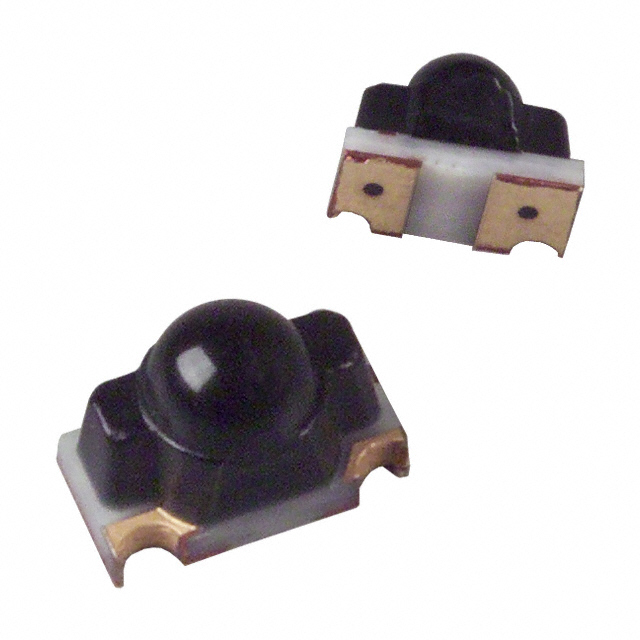
PD100MC0MP >
PD100MC0MP
Sharp Microelectronics
SENSOR PHOTODIODE 820NM SIDE
485133 Pcs New Original In Stock
Photodiode 820nm 10ns 40° Side View
Request Quote (Ships tomorrow)
*Quantity
Minimum 1
PD100MC0MP Sharp Microelectronics
5.0 / 5.0 - (56 Ratings)

PD100MC0MP

Product Overview

7925265

DiGi Electronics Part Number

PD100MC0MP-DG
PD100MC0MP

Description

SENSOR PHOTODIODE 820NM SIDE

Inventory

485133 Pcs New Original In Stock
Photodiode 820nm 10ns 40° Side View
Quantity
Minimum 1

Purchase and inquiry

Quality Assurance

365 - Day Quality Guarantee - Every part fully backed.

90 - Day Refund or Exchange - Defective parts? No hassle.

Limited Stock, Order Now - Get reliable parts without worry.

Global Shipping & Secure Packaging

Worldwide Delivery in 3-5 Business Days

100% ESD Anti-Static Packaging

Real-Time Tracking for Every Order

Secure & Flexible Payment

Credit Card, VISA, MasterCard, PayPal, Western Union, Telegraphic Transfer(T/T) and more

All payments encrypted for security

Request Quote (Ships tomorrow)
* Quantity
Minimum 1
(*) is mandatory
We'll get back to you within 24 hours

PD100MC0MP Technical Specifications

Category Optical Sensors, Photodiodes

Manufacturer Sharp Microelectronics

Packaging -

Series -

Product Status Obsolete

Wavelength 820nm

Color - Enhanced -

Spectral Range 400nm ~ 1100nm

Diode Type -

Responsivity @ nm -

Response Time 10ns

Voltage - DC Reverse (Vr) (Max) 20 V

Current - Dark (Typ) 10nA

Active Area -

Viewing Angle 40°

Operating Temperature -30°C ~ 85°C

Mounting Type Surface Mount

Package / Case Side View

Datasheet & Documents

HTML Datasheet

PD100MC0MP-DG

Environmental & Export Classification

Moisture Sensitivity Level (MSL) 3 (168 Hours)
ECCN EAR99
HTSUS 8541.49.1050

Additional Information

Other Names
425-1027-1
425-1027-2
Standard Package
2,000

Reviews

5.0/5.0-(Show up to 5 Ratings)
Riviè***ereine
December 02, 2025
5.0
Leur rapidité et la diversité de leur assortiment nous rendent la vie beaucoup plus facile.
Mus***agie
December 02, 2025
5.0
Der Kundenservice ist super freundlich und die Produkte sind stets von erstklassiger Qualität.
Dusk***amer
December 02, 2025
5.0
Reliable, affordable, and supportive—DiGi Electronics checks all the boxes.
Quie***verie
December 02, 2025
5.0
They excel in offering budget-friendly options and keeping to delivery schedules.
Star***Path
December 02, 2025
5.0
Quality and affordability come together perfectly at DiGi Electronics, backed by friendly customer care.
Sunbe***haser
December 02, 2025
5.0
I enjoyed the minimalistic design, which made browsing a pleasant experience.
Drea***aver
December 02, 2025
5.0
High standards and quick delivery processes set DiGi Electronics apart.
Publish Evalution
* Product Rating
(Normal/Preferably/Outstanding, default 5 stars)
* Evalution Message
Please enter your review message.
Please post honest comments and do not post ilegal comments.

Frequently Asked Questions (FAQ)

Can the PD100MC0MP photodiode from Sharp Microelectronics be used as a direct replacement for the Vishay BPW34 in high-speed optical sensing applications, and what are the key performance trade-offs?

While the PD100MC0MP (Sharp) and BPW34 (Vishay) both operate in the near-infrared range and offer fast response times, they are not direct drop-in replacements due to critical differences. The PD100MC0MP has a narrower spectral peak at 820nm and a faster response time of 10ns compared to the BPW34’s ~50ns, making it better suited for high-speed modulation. However, the BPW34 has a larger active area (7.5 mm² vs. unspecified but typically smaller for side-view SMD packages), which improves signal collection in diffuse or low-light conditions. Additionally, the PD100MC0MP is surface-mount and side-view, while the BPW34 is through-hole and top-view—requiring PCB layout changes. If your design prioritizes speed and space constraints, the PD100MC0MP may be preferable, but expect reduced sensitivity and alignment complexity due to the viewing angle and package orientation.

What are the risks of using the obsolete PD100MC0MP in new product designs, and how should engineers mitigate long-term supply chain vulnerabilities?

Using the PD100MC0MP in new designs poses significant supply chain risks due to its obsolete status, despite current inventory availability. Sharp Microelectronics may discontinue support or halt restocking, leading to last-time buy scenarios or unexpected shortages. To mitigate this, engineers should immediately identify second-source alternatives (e.g., Osram SFH205 or Hamamatsu S1223) with similar 820nm sensitivity and ≤20ns response time, and validate them in prototype testing. Additionally, consider designing a flexible optical interface that accommodates multiple photodiode footprints and viewing angles. If continuing with the PD100MC0MP, secure a lifetime buy or negotiate vendor-managed inventory, and document a clear obsolescence transition plan in your BOM lifecycle management process.

How does the 40° viewing angle of the PD100MC0MP affect optical alignment in compact consumer electronics, and what design strategies minimize signal loss?

The 40° full viewing angle of the PD100MC0MP introduces alignment sensitivity in space-constrained designs such as wearables or mobile IR sensors. Unlike top-view photodiodes, its side-view emission pattern requires precise lateral positioning relative to the emitter (e.g., 850nm LED), and even minor angular misalignment can drastically reduce received signal strength. To minimize loss, use precision-molded light guides or reflective cavities to direct photons into the acceptance cone. Additionally, maintain a minimum clearance zone above the component to avoid mechanical interference with covers or shields. Simulate optical paths using ray-tracing tools early in layout, and consider oversizing the emitter drive current slightly to compensate for angular losses—while monitoring dark current (10nA typ) to avoid SNR degradation.

Is the PD100MC0MP suitable for outdoor ambient light rejection in industrial IR communication systems, given its spectral range of 400nm–1100nm?

The PD100MC0MP’s broad spectral response (400nm–1100nm) makes it vulnerable to interference from sunlight and artificial lighting, which contain strong components across this range—especially in outdoor or high-ambient-light industrial environments. Although it peaks at 820nm, it lacks built-in optical filtering, unlike filtered variants such as the TEMD6010FX01 (Vishay), which includes a daylight-blocking filter. For reliable operation, pair the PD100MC0MP with an external 820nm narrowband optical filter (±10nm) and implement synchronous detection (lock-in amplification) in the receiver circuit. This combination suppresses out-of-band noise and improves SNR. Without these mitigations, false triggering or reduced communication range is likely under direct sunlight.

What PCB layout and soldering precautions are critical when integrating the PD100MC0MP due to its MSL 3 rating and surface-mount side-view package?

The PD100MC0MP’s Moisture Sensitivity Level 3 (MSL 3) rating requires strict handling to prevent popcorning and delamination during reflow. Store components in dry cabinets (<10% RH) and limit floor life to 168 hours after bag opening. Use a controlled reflow profile with a peak temperature of 245–250°C and ensure the entire package reaches thermal equilibrium slowly to avoid thermal shock. Due to its side-view SMD package, avoid placing vias or copper pours directly under the optical window, as outgassing or contamination can scatter light. Additionally, maintain a 1.5mm keep-out zone around the sensor for optical clarity and use non-conformal coating sparingly—if needed, apply only to non-optical areas. These steps ensure long-term reliability and consistent photodiode performance in field deployments.

Quality Assurance (QC)

DiGi ensures the quality and authenticity of every electronic component through professional inspections and batch sampling, guaranteeing reliable sourcing, stable performance, and compliance with technical specifications, helping customers reduce supply chain risks and confidently use components in production.

Quality Assurance
Counterfeit and defect prevention

Counterfeit and defect prevention

Comprehensive screening to identify counterfeit, refurbished, or defective components, ensuring only authentic and compliant parts are delivered.

Visual and packaging inspection

Visual and packaging inspection

Electrical performance verification

Verification of component appearance, markings, date codes, packaging integrity, and label consistency to ensure traceability and conformity.

Life and reliability evaluation

DiGi Certification
Blogs & Posts
PD100MC0MP CAD Models
productDetail
Please log in first.
No account yet? Register