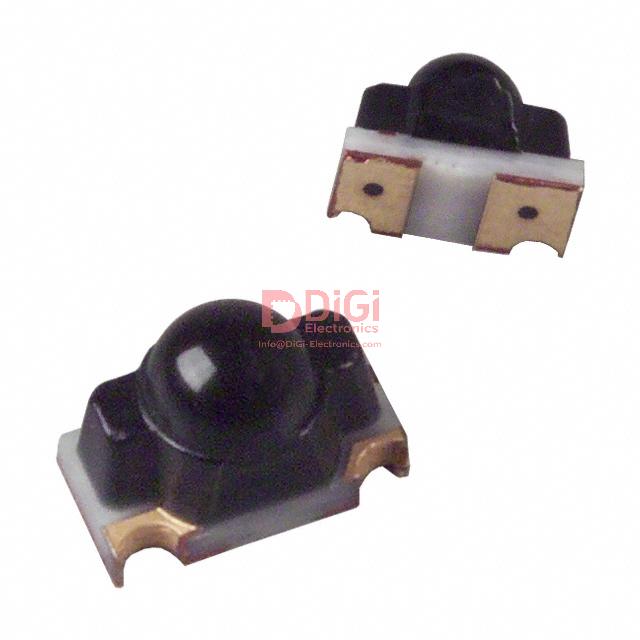
PD100MF0MP >
PD100MF0MP
Sharp Microelectronics
SENSOR PHOTODIODE 850NM SIDE
2376 Pcs New Original In Stock
Photodiode 850nm 10ns 40° Side View
Request Quote (Ships tomorrow)
*Quantity
Minimum 1
PD100MF0MP Sharp Microelectronics
5.0 / 5.0 - (352 Ratings)

PD100MF0MP

Product Overview

7925747

DiGi Electronics Part Number

PD100MF0MP-DG
PD100MF0MP

Description

SENSOR PHOTODIODE 850NM SIDE

Inventory

2376 Pcs New Original In Stock
Photodiode 850nm 10ns 40° Side View
Quantity
Minimum 1

Purchase and inquiry

Quality Assurance

365 - Day Quality Guarantee - Every part fully backed.

90 - Day Refund or Exchange - Defective parts? No hassle.

Limited Stock, Order Now - Get reliable parts without worry.

Global Shipping & Secure Packaging

Worldwide Delivery in 3-5 Business Days

100% ESD Anti-Static Packaging

Real-Time Tracking for Every Order

Secure & Flexible Payment

Credit Card, VISA, MasterCard, PayPal, Western Union, Telegraphic Transfer(T/T) and more

All payments encrypted for security

In Stock (All prices are in USD)
  • QTY Target Price Total Price
  • 1 0.1971 0.1971
Better Price by Online RFQ.
Request Quote (Ships tomorrow)
* Quantity
Minimum 1
(*) is mandatory
We'll get back to you within 24 hours

PD100MF0MP Technical Specifications

Category Optical Sensors, Photodiodes

Manufacturer Sharp Microelectronics

Packaging -

Series -

Product Status Obsolete

Wavelength 850nm

Color - Enhanced -

Spectral Range 680nm ~ 1100nm

Diode Type -

Responsivity @ nm -

Response Time 10ns

Voltage - DC Reverse (Vr) (Max) 20 V

Current - Dark (Typ) 10nA

Active Area -

Viewing Angle 40°

Operating Temperature -30°C ~ 85°C

Mounting Type Surface Mount

Package / Case Side View

Datasheet & Documents

HTML Datasheet

PD100MF0MP-DG

Environmental & Export Classification

Moisture Sensitivity Level (MSL) 3 (168 Hours)
REACH Status REACH Unaffected
ECCN EAR99
HTSUS 8541.49.1050

Additional Information

Other Names
425-1028-1
425-1028-2
Standard Package
2,000

Reviews

5.0/5.0-(Show up to 5 Ratings)
바***날
December 02, 2025
5.0
고객 서비스를 받는 내내 친절한 태도에 감탄했고, 상품도 안전하게 잘 도착했어요.
Geda***nFrei
December 02, 2025
5.0
Ich erhielt meine Bestellung in Rekordzeit und die Verpackung war sehr sorgfältig.
LushL***scapes
December 02, 2025
5.0
The company’s after-sales assistance has helped me maximize my investment.
Sile***eadow
December 02, 2025
5.0
The cost savings with DiGi Electronics are impressive, especially given the high standards of their packaging.
Majes***Moons
December 02, 2025
5.0
Their thoughtful approach to customer needs makes me feel valued and respected.
Auro***ream
December 02, 2025
5.0
Their after-sales support team provided troubleshooting steps that quickly resolved my issues.
Even***Echo
December 02, 2025
5.0
Customer service responded promptly to my inquiries, providing helpful and friendly assistance.
Sta***zer
December 02, 2025
5.0
The support staff is always friendly, professional, and eager to help.
Peac***eper
December 02, 2025
5.0
Their product packaging is both eco-friendly and sturdy, aligning with their affordable pricing.
Publish Evalution
* Product Rating
(Normal/Preferably/Outstanding, default 5 stars)
* Evalution Message
Please enter your review message.
Please post honest comments and do not post ilegal comments.

Frequently Asked Questions (FAQ)

Can the Sharp Microelectronics PD100MF0MP photodiode be used as a drop-in replacement for the Vishay BPW34 in high-speed optical communication applications?

The PD100MF0MP is not a direct drop-in replacement for the Vishay BPW34 due to key differences in package, orientation, and electrical characteristics. While both are 850nm-sensitive photodiodes with fast response times, the BPW34 has a top-view TO-18 package with a wider 120° viewing angle and larger active area, whereas the PD100MF0MP uses a side-view surface-mount package with a narrow 40° field of view and faster 10ns response. This makes the PD100MF0MP better suited for directional, high-speed signaling in constrained PCB layouts, but mechanical and optical alignment must be re-evaluated. Additionally, the PD100MF0MP’s lower dark current (10nA vs. ~2nA for BPW34) may improve SNR in low-light conditions, but its obsolete status introduces long-term supply risk—consider qualifying an alternate such as the Osram SFH205 or Hamamatsu S1223 if future availability is a concern.

What are the critical design risks when integrating the PD100MF0MP into a surface-mount PCB for industrial ambient light sensing in variable-temperature environments?

Integrating the PD100MF0MP in industrial ambient light sensing presents several risks: its narrow 40° viewing angle demands precise optical alignment to avoid signal loss from off-axis light sources, and the side-view package requires careful PCB layout to ensure unobstructed light path. With an operating range of -30°C to 85°C, thermal cycling can affect solder joint reliability due to CTE mismatch—use a robust solder profile and consider underfill if mechanical stress is expected. Additionally, the MSL 3 rating (168-hour floor life) requires strict moisture control during assembly; improper handling can lead to popcorning or delamination. Since the part is obsolete, long-term field reliability data is limited—mitigate this by derating the reverse voltage below 15V (from 20V max) and validating performance across the full temperature range during prototype testing.

How does the spectral response of the PD100MF0MP compare to modern InGaAs photodiodes like the Hamamatsu G12180-030A when detecting 850nm signals in fiber optic links?

The PD100MF0MP, based on silicon, has a spectral range of 680–1100nm with peak responsivity near 850nm, making it suitable for short-reach 850nm VCSEL-based links. However, it cannot match the quantum efficiency or extended wavelength capability of InGaAs diodes like the Hamamatsu G12180-030A, which operates from 900–1700nm and excels in longer-wavelength telecom bands. For 850nm applications, the PD100MF0MP offers faster response (10ns vs. ~50ns for many InGaAs types) and lower cost, but with lower sensitivity at the band edge. The trade-off is clear: use the PD100MF0MP for high-speed, cost-sensitive 850nm detection where silicon suffices, but avoid it in systems requiring >1000nm operation or ultra-low light detection—where InGaAs is superior. Note that the PD100MF0MP’s obsolescence may force a redesign if supply runs out.

Is it safe to operate the PD100MF0MP at its maximum reverse voltage of 20V in a 24V industrial power system with transient spikes?

Operating the PD100MF0MP at 20V reverse bias in a 24V system with transients poses a significant reliability risk. While the datasheet specifies 20V as the absolute maximum, real-world voltage spikes from inductive loads or switching noise can exceed this threshold, leading to premature breakdown or latent damage. In industrial environments, we recommend limiting reverse bias to 12–15V and adding a transient voltage suppressor (TVS) diode or Zener clamp (e.g., 18V Zener) across the photodiode to absorb surges. Additionally, include a series resistor to limit fault current. Derating the voltage improves long-term stability, especially given the part’s obsolete status and lack of recent reliability data. Always validate transient immunity during EMC testing to prevent field failures.

What alternatives should I consider if the PD100MF0MP becomes unavailable, and how do they compare in high-speed proximity sensing applications?

If the PD100MF0MP is no longer available, consider the Osram SFH2701 or Everlight PD15-21B/TR8 as functional alternatives for high-speed proximity sensing. The SFH2701 offers similar 850nm sensitivity, a 35° viewing angle, and 15ns response time in a side-view SMD package, making it a near-match optically and mechanically. The Everlight part has a slightly wider 60° angle but comparable speed and is actively stocked. Both support surface mounting and operate from -40°C to 85°C. However, neither matches the PD100MF0MP’s ultra-low 10ns response exactly—validate timing margins in your signal chain. Since the PD100MF0MP is obsolete, proactively qualify one of these alternatives now to avoid redesign delays. Always cross-check dark current, capacitance, and package footprint to ensure compatibility with your TIA and PCB layout.

Quality Assurance (QC)

DiGi ensures the quality and authenticity of every electronic component through professional inspections and batch sampling, guaranteeing reliable sourcing, stable performance, and compliance with technical specifications, helping customers reduce supply chain risks and confidently use components in production.

Quality Assurance
Counterfeit and defect prevention

Counterfeit and defect prevention

Comprehensive screening to identify counterfeit, refurbished, or defective components, ensuring only authentic and compliant parts are delivered.

Visual and packaging inspection

Visual and packaging inspection

Electrical performance verification

Verification of component appearance, markings, date codes, packaging integrity, and label consistency to ensure traceability and conformity.

Life and reliability evaluation

DiGi Certification
Blogs & Posts
PD100MF0MP CAD Models
productDetail
Please log in first.
No account yet? Register