PC3H410NIP0F >
PC3H410NIP0F
Sharp Microelectronics
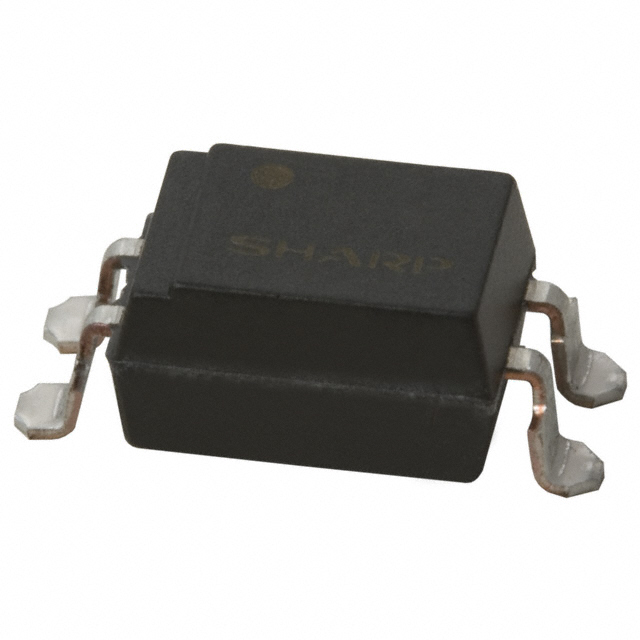
OPTOISO 2.5KV TRANS 4-MINI-FLAT
7866 Pcs New Original In Stock
Optoisolator Transistor Output 2500Vrms 1 Channel 4-Mini-Flat
Request Quote (Ships tomorrow)
*Quantity
Minimum 1
PC3H410NIP0F Sharp Microelectronics
5.0 / 5.0 - (374 Ratings)

PC3H410NIP0F

Product Overview

7929334

DiGi Electronics Part Number

PC3H410NIP0F-DG
PC3H410NIP0F

Description

OPTOISO 2.5KV TRANS 4-MINI-FLAT

Inventory

7866 Pcs New Original In Stock
Optoisolator Transistor Output 2500Vrms 1 Channel 4-Mini-Flat
Quantity
Minimum 1

Purchase and inquiry

Quality Assurance

365 - Day Quality Guarantee - Every part fully backed.

90 - Day Refund or Exchange - Defective parts? No hassle.

Limited Stock, Order Now - Get reliable parts without worry.

Global Shipping & Secure Packaging

Worldwide Delivery in 3-5 Business Days

100% ESD Anti-Static Packaging

Real-Time Tracking for Every Order

Secure & Flexible Payment

Credit Card, VISA, MasterCard, PayPal, Western Union, Telegraphic Transfer(T/T) and more

All payments encrypted for security

Request Quote (Ships tomorrow)
* Quantity
Minimum 1
(*) is mandatory
We'll get back to you within 24 hours

PC3H410NIP0F Technical Specifications

Category Optoisolators, Transistor, Photovoltaic Output Optoisolators

Manufacturer Sharp Microelectronics

Packaging -

Series -

Product Status Discontinued at Digi-Key

Number of Channels 1

Voltage - Isolation 2500Vrms

Current Transfer Ratio (Min) 50% @ 500µA

Current Transfer Ratio (Max) 400% @ 500µA

Turn On / Turn Off Time (Typ) -

Rise / Fall Time (Typ) 4µs, 3µs

Input Type AC, DC

Output Type Transistor

Voltage - Output (Max) 80V

Current - Output / Channel 50mA

Voltage - Forward (Vf) (Typ) 1.2V

Current - DC Forward (If) (Max) 10 mA

Vce Saturation (Max) 200mV

Operating Temperature -30°C ~ 100°C

Mounting Type Surface Mount

Package / Case 4-SOIC (0.173", 4.40mm Width)

Supplier Device Package 4-Mini-Flat

Datasheet & Documents

HTML Datasheet

PC3H410NIP0F-DG

Environmental & Export Classification

RoHS Status RoHS Compliant
Moisture Sensitivity Level (MSL) 1 (Unlimited)
ECCN EAR99
HTSUS 8541.49.8000

Additional Information

Other Names
425-2102-1
425-2102-2
425-2102-6
Standard Package
3,000

Alternative Parts

PART NUMBER
MANUFACTURER
QUANTITY AVAILABLE
DiGi PART NUMBER
UNIT PRICE
SUBSTITUTE TYPE
HMHAA280V
onsemi
21466
HMHAA280V-DG
0.1986
Similar
HMHAA280
onsemi
6433
HMHAA280-DG
0.0025
Similar
TCMT1600T3
Vishay Semiconductor Opto Division
3947
TCMT1600T3-DG
0.2071
Similar
HMHAA280R2
onsemi
1958
HMHAA280R2-DG
0.2561
Similar
TCMT1600
Vishay Semiconductor Opto Division
20153
TCMT1600-DG
0.0026
Similar

Reviews

5.0/5.0-(Show up to 5 Ratings)
Crims***orizon
December 02, 2025
5.0
Their shipping was so quick that I received my components just two days after placing the order.
Dus***ncer
December 02, 2025
5.0
They prioritize customer satisfaction with swift shipping and great service.
StarG***Story
December 02, 2025
5.0
The after-sales support from DiGi Electronics is exceptional; they tracked my shipment closely and kept me updated throughout.
Radi***Soul
December 02, 2025
5.0
I’m a happy return customer because of their affordable pricing and eco-friendly approach.
Publish Evalution
* Product Rating
(Normal/Preferably/Outstanding, default 5 stars)
* Evalution Message
Please enter your review message.
Please post honest comments and do not post ilegal comments.

Frequently Asked Questions (FAQ)

What are the key design risks when replacing PC3H410NIP0F with TCMT1600 in a high-noise industrial control interface, and how can I mitigate signal integrity issues?

Replacing PC3H410NIP0F with TCMT1600 introduces potential signal integrity risks due to differences in propagation delay and current transfer ratio (CTR) stability over temperature. The PC3H410NIP0F offers a tighter CTR range (50–400% @ 500µA) and lower Vce(sat) (200mV max), which supports more predictable saturation behavior in logic-level applications. The TCMT1600, while electrically similar, may exhibit slower rise/fall times under light loads, increasing susceptibility to noise in high-interference environments. To mitigate this, ensure the input drive current is maintained at ≥5mA (not just the minimum 500µA) and add a pull-down resistor (e.g., 10kΩ) at the output to prevent floating states. Also verify timing margins in your microcontroller interface—consider adding Schmitt-trigger buffering if edge sensitivity is critical.

Can PC3H410NIP0F be safely used in a 24V industrial input module with long cable runs, and what layout practices prevent false triggering due to ground loops?

Yes, the PC3H410NIP0F can be used in 24V industrial input modules, but long cable runs increase the risk of ground loops and induced transients that may cause false triggering. The 2.5kVrms isolation helps, but layout is critical: keep the input-side ground (LED side) fully separated from the output-side ground (transistor side) with a >8mm creepage distance on the PCB. Use a low-impedance path for the LED return and avoid routing high-current traces near the optocoupler. Additionally, place a 100nF ceramic capacitor across the input supply near the PC3H410NIP0F to suppress high-frequency noise. For added robustness, consider a series resistor (e.g., 1kΩ) on the input to limit surge current from cable inductance during switching.

Why is PC3H410NIP0F discontinued at Digi-Key, and what long-term reliability concerns should I consider when designing it into a new product with a 10-year lifecycle?

The PC3H410NIP0F has been discontinued at Digi-Key (though still listed as active by Sharp), signaling reduced availability and potential obsolescence risk—especially problematic for products with 10-year lifecycles. Even if stock exists today, future supply chain disruptions could halt production. More critically, long-term reliability of optocouplers depends on LED degradation over time; the PC3H410NIP0F’s CTR can drop significantly after 50,000+ hours under high-temperature operation. To future-proof your design, either secure a lifetime buy or migrate to a pin-compatible, actively supported alternative like HMHAA280R2, which offers similar CTR and isolation specs with better lifecycle support. Always derate forward current to ≤50% of max (i.e., ≤5mA) to extend LED life.

How does the PC3H410NIP0F compare to HMHAA280 in terms of switching performance for PWM-based motor control signals, and what trade-offs exist in rise/fall time versus power consumption?

The PC3H410NIP0F and HMHAA280 both support PWM applications, but the PC3H410NIP0F typically delivers faster rise/fall times (4µs/3µs typ) compared to the HMHAA280 (~5µs/4µs), making it better suited for higher-frequency PWM (>10kHz). However, this speed comes with a trade-off: the PC3H410NIP0F requires tighter control of input current to maintain CTR consistency, whereas the HMHAA280 is more forgiving at lower drive currents. For motor control, where timing accuracy affects torque ripple, the PC3H410NIP0F’s faster response reduces phase lag. But if your system operates at lower frequencies (<5kHz) and prioritizes low-power standby modes, the HMHAA280 may be preferable due to its lower typical forward voltage and wider CTR tolerance. Always validate with actual timing measurements under load.

What surface-mount assembly challenges should I anticipate when using PC3H410NIP0F in a high-volume reflow process, and how does its MSL rating impact handling?

The PC3H410NIP0F has an MSL 1 (unlimited) rating, meaning it’s not moisture-sensitive and can be stored and handled without dry packing or bake-out procedures—a major advantage in high-volume SMT lines. However, its 4-Mini-Flat package (4-SOIC, 4.40mm width) has small pad spacing, increasing the risk of solder bridging during reflow if stencil aperture design is suboptimal. Use a laser-cut stainless steel stencil with 1:1 aperture ratio and 50–75µm thickness, and ensure proper nitrogen atmosphere in reflow to minimize oxidation. Also, verify coplanarity of the package during placement, as warpage can lead to incomplete joints. Unlike moisture-sensitive devices, you can skip pre-baking, reducing cycle time and handling complexity—ideal for automated production environments.

Quality Assurance (QC)

DiGi ensures the quality and authenticity of every electronic component through professional inspections and batch sampling, guaranteeing reliable sourcing, stable performance, and compliance with technical specifications, helping customers reduce supply chain risks and confidently use components in production.

Quality Assurance
Counterfeit and defect prevention

Counterfeit and defect prevention

Comprehensive screening to identify counterfeit, refurbished, or defective components, ensuring only authentic and compliant parts are delivered.

Visual and packaging inspection

Visual and packaging inspection

Electrical performance verification

Verification of component appearance, markings, date codes, packaging integrity, and label consistency to ensure traceability and conformity.

Life and reliability evaluation

DiGi Certification
Blogs & Posts
PC3H410NIP0F CAD Models
productDetail
Please log in first.
No account yet? Register