PC123S >
PC123S
Sharp Microelectronics
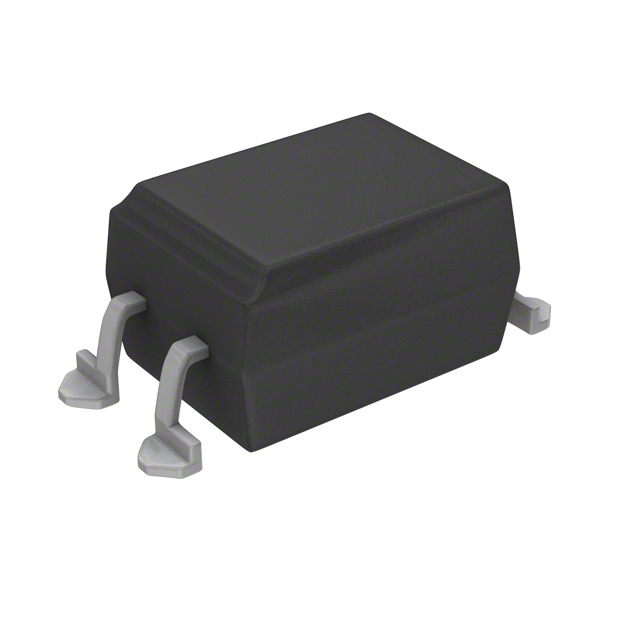
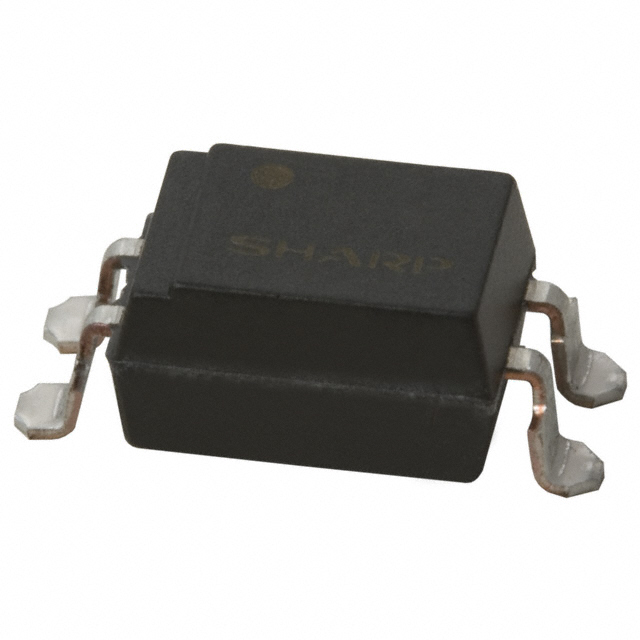
OPTOISOLATR 5KV TRANSISTOR 4-DIP
2170 Pcs New Original In Stock
Optoisolator Transistor Output 5000Vrms 1 Channel 4-DIP
Request Quote (Ships tomorrow)
*Quantity
Minimum 1
PC123S Sharp Microelectronics
5.0 / 5.0 - (373 Ratings)

PC123S

Product Overview

7928538

DiGi Electronics Part Number

PC123S-DG
PC123S

Description

OPTOISOLATR 5KV TRANSISTOR 4-DIP

Inventory

2170 Pcs New Original In Stock
Optoisolator Transistor Output 5000Vrms 1 Channel 4-DIP
Quantity
Minimum 1

Purchase and inquiry

Quality Assurance

365 - Day Quality Guarantee - Every part fully backed.

90 - Day Refund or Exchange - Defective parts? No hassle.

Limited Stock, Order Now - Get reliable parts without worry.

Global Shipping & Secure Packaging

Worldwide Delivery in 3-5 Business Days

100% ESD Anti-Static Packaging

Real-Time Tracking for Every Order

Secure & Flexible Payment

Credit Card, VISA, MasterCard, PayPal, Western Union, Telegraphic Transfer(T/T) and more

All payments encrypted for security

Request Quote (Ships tomorrow)
* Quantity
Minimum 1
(*) is mandatory
We'll get back to you within 24 hours

PC123S Technical Specifications

Category Optoisolators, Transistor, Photovoltaic Output Optoisolators

Manufacturer Sharp Microelectronics

Packaging -

Series -

Product Status Obsolete

Number of Channels 1

Voltage - Isolation 5000Vrms

Current Transfer Ratio (Min) 100% @ 5mA

Current Transfer Ratio (Max) 200% @ 5mA

Turn On / Turn Off Time (Typ) -

Rise / Fall Time (Typ) 4µs, 3µs

Input Type DC

Output Type Transistor

Voltage - Output (Max) 70V

Current - Output / Channel 50mA

Voltage - Forward (Vf) (Typ) 1.2V

Current - DC Forward (If) (Max) 50 mA

Vce Saturation (Max) 200mV

Operating Temperature -30°C ~ 100°C

Mounting Type Through Hole

Package / Case 4-DIP (0.300", 7.62mm)

Supplier Device Package 4-DIP

Datasheet & Documents

HTML Datasheet

PC123S-DG

Environmental & Export Classification

RoHS Status RoHS non-compliant
Moisture Sensitivity Level (MSL) 1 (Unlimited)
ECCN EAR99
HTSUS 8541.49.8000

Additional Information

Other Names
425-1316-5
Standard Package
100

Alternative Parts

PART NUMBER
MANUFACTURER
QUANTITY AVAILABLE
DiGi PART NUMBER
UNIT PRICE
SUBSTITUTE TYPE
FOD817
onsemi
18140
FOD817-DG
0.0060
Similar
FOD817C300
onsemi
32138
FOD817C300-DG
0.0005
Similar
FOD817B
onsemi
9764
FOD817B-DG
0.0014
Similar
VO615A-3
Vishay Semiconductor Opto Division
1319
VO615A-3-DG
0.1483
Similar
FOD817C
onsemi
18744
FOD817C-DG
0.0024
Similar

Reviews

5.0/5.0-(Show up to 5 Ratings)
LuneE***antée
December 02, 2025
5.0
Je suis toujours impressionné par leur rapidité d'expédition et leur assistance après-vente.
Herz***ster
December 02, 2025
5.0
Bei DiGi Electronics stimmt das Preis-Leistungs-Verhältnis nicht nur bei den Produkten, sondern auch bei der Logistik und dem Service.
Blissf***ourney
December 02, 2025
5.0
Affordable prices combined with excellent support make DiGi Electronics my first choice.
Lumi***sPath
December 02, 2025
5.0
Thanks to DiGi’s efficient delivery system, we've reduced inventory wait times and improved overall workflow.
Publish Evalution
* Product Rating
(Normal/Preferably/Outstanding, default 5 stars)
* Evalution Message
Please enter your review message.
Please post honest comments and do not post ilegal comments.

Frequently Asked Questions (FAQ)

Can I use the Sharp PC123S optoisolator as a drop-in replacement for the FOD817C in a 24V industrial control circuit, and what design risks should I consider?

While the Sharp PC123S shares similar electrical characteristics with the FOD817C—such as 5kV isolation and a transistor output—it is not a direct drop-in due to key differences. The PC123S has a higher typical forward voltage (1.2V vs. ~1.0V for FOD817C), which may require adjustment of the input current-limiting resistor to maintain proper If (~5–20mA). Additionally, the PC123S is obsolete and RoHS non-compliant, posing supply chain and regulatory risks in new designs. Its through-hole 4-DIP package matches mechanically, but verify PCB footprint compatibility. For long-term reliability and compliance, consider migrating to a modern alternative like the FOD817C300 or VO615A-3 instead of relying on obsolete stock.

What are the thermal and derating considerations when operating the Sharp PC123S near its maximum junction temperature in an enclosed industrial enclosure?

The Sharp PC123S has an operating temperature range of -30°C to 100°C, but sustained operation near 100°C significantly reduces LED lifespan and current transfer ratio (CTR) stability. In enclosed environments with poor airflow, internal temperatures can exceed ambient by 20–40°C, pushing the device toward thermal limits. Derate the forward current (If) by at least 30% above 70°C ambient to prevent accelerated degradation. Also, ensure the output transistor’s Vce(sat) does not cause excessive power dissipation—at 50mA and 200mV, that’s only 10mW, but cumulative heat from nearby components can still impact performance. Use thermal modeling or empirical testing to validate safe operating margins.

How does the current transfer ratio (CTR) degradation over time affect long-term reliability of the Sharp PC123S in a safety-critical signal isolation application?

The Sharp PC123S specifies a CTR of 100–200% at 5mA, but like all optocouplers, its CTR degrades over time due to LED aging, especially under high temperature or high forward current stress. In safety-critical applications (e.g., emergency stop circuits or medical interfaces), this drift can lead to undetected failure or false triggering. To mitigate risk, design with a CTR safety margin of at least 2:1 at end-of-life (e.g., assume 50% of initial CTR after 10 years). Implement periodic diagnostic checks or use redundant channels. Given the PC123S is obsolete, sourcing new units for replacements may be unreliable—consider qualifying a modern, higher-reliability alternative like the FOD817B with guaranteed lifetime CTR specs.

Is the Sharp PC123S suitable for isolating fast digital signals in a 100kHz PWM motor control circuit, and what signal integrity issues might arise?

The Sharp PC123S has typical rise/fall times of 4µs and 3µs, which are too slow for clean 100kHz PWM signal transmission (10µs period). At this frequency, the output waveform will be severely distorted due to limited bandwidth, leading to duty cycle errors and potential shoot-through in motor drivers. The device is better suited for low-frequency on/off control (<10kHz). If you must use it, add output buffering (e.g., a Schmitt trigger) to clean up edges, but expect latency and jitter. For high-speed isolation, replace the PC123S with a high-speed optocoupler like the 6N137 or HCPL-2630, which offer sub-100ns propagation delays and are designed for digital signal integrity.

What are the key differences between the Sharp PC123S and the VO615A-3 that would influence a redesign from an obsolete to a modern optoisolator?

When replacing the obsolete Sharp PC123S with the VO615A-3, note several critical differences: the VO615A-3 offers improved CTR stability over temperature and time, is RoHS-compliant, and has a lower typical forward voltage (1.05V vs. 1.2V), reducing input power and heat. It also features a higher output current capability (up to 100mA) and better moisture resistance (MSL 1 vs. PC123S’s MSL 1, but newer manufacturing ensures consistency). However, the VO615A-3 uses a different internal phototransistor structure, so verify saturation voltage and switching speed meet your load requirements. Update input resistor values to maintain optimal If, and revalidate isolation performance under surge conditions. This migration future-proofs your design against obsolescence and compliance issues.

Quality Assurance (QC)

DiGi ensures the quality and authenticity of every electronic component through professional inspections and batch sampling, guaranteeing reliable sourcing, stable performance, and compliance with technical specifications, helping customers reduce supply chain risks and confidently use components in production.

Quality Assurance
Counterfeit and defect prevention

Counterfeit and defect prevention

Comprehensive screening to identify counterfeit, refurbished, or defective components, ensuring only authentic and compliant parts are delivered.

Visual and packaging inspection

Visual and packaging inspection

Electrical performance verification

Verification of component appearance, markings, date codes, packaging integrity, and label consistency to ensure traceability and conformity.

Life and reliability evaluation

DiGi Certification
Blogs & Posts
PC123S CAD Models
productDetail
Please log in first.
No account yet? Register