


Request Quote
(Ships tomorrow)
ZXTPS720MCTA Equivalent & Substitute Parts
Part Overview
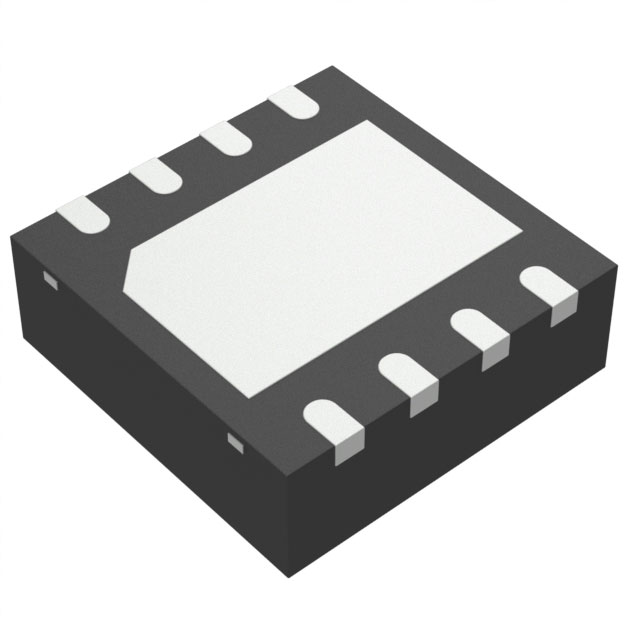
The ZXTPS720MCTA is a PNP bipolar junction transistor with integrated isolated diode manufactured by Diodes Incorporated. This component is designed for surface mount applications requiring moderate current switching and signal amplification in the 40 V operating range. The device integrates both transistor and diode functionality in a compact 8-WDFN package with exposed pad.
The ZXTPS720MCTA is classified as obsolete. Identifying equivalent and substitute parts is necessary to support ongoing production requirements, design revisions, and inventory management for applications currently utilizing this component.
Substiute Parts
Key Parameters
| Parameter | Value | Unit |
|---|---|---|
| Transistor Type | PNP + Diode (Isolated) | — |
| Maximum Collector Current (Ic) | 3 | A |
| Collector-Emitter Breakdown Voltage (Max) | 40 | V |
| Vce Saturation (Max) | 370 | mV @ 250mA, 2.5A |
| Collector Cutoff Current (Max) | 25 | nA |
| DC Current Gain (hFE Min) | 60 | @ 1.5A, 2V |
| Maximum Power Dissipation | 3 | W |
| Transition Frequency | 190 | MHz |
| Operating Temperature Range | -55 to 150 | °C (TJ) |
| Package Type | 8-WDFN Exposed Pad | — |
| Mounting Type | Surface Mount | — |
| RoHS Status | ROHS3 Compliant | — |
| Moisture Sensitivity Level (MSL) | 1 (Unlimited) | — |
Substitute Part Grouping Explanation
Substitution of the ZXTPS720MCTA is determined by strict equivalence across the following critical parameters:
Functional Architecture: The component must be a PNP bipolar junction transistor with integrated isolated diode in the same configuration.
Electrical Performance: Substitute parts must meet or exceed the following specifications:
- Maximum collector current of 3 A
- Collector-emitter breakdown voltage of 40 V
- Vce saturation of 370 mV at specified bias conditions
- DC current gain (hFE) minimum of 60 at 1.5 A, 2 V
- Maximum power dissipation of 3 W
- Transition frequency of 190 MHz
Thermal and Environmental: Operating temperature range of -55°C to 150°C (junction temperature).
Package and Mounting: 8-WDFN Exposed Pad surface mount package.
Compliance: RoHS3 compliance and MSL 1 rating.
Parameter Comparison
| Parameter | ZXTPS720MCTA (Main Part) | ZXTPS720MCTA (Substitute) |
|---|---|---|
| Manufacturer | Diodes Incorporated | Diodes Incorporated |
| Transistor Type | PNP + Diode (Isolated) | PNP + Diode (Isolated) |
| Maximum Collector Current | 3 A | 3 A |
| Collector-Emitter Breakdown Voltage | 40 V | 40 V |
| Vce Saturation (Max) | 370 mV @ 250mA, 2.5A | 370 mV @ 250mA, 2.5A |
| Collector Cutoff Current (Max) | 25 nA | 25 nA |
| DC Current Gain (hFE Min) | 60 @ 1.5A, 2V | 60 @ 1.5A, 2V |
| Maximum Power Dissipation | 3 W | 3 W |
| Transition Frequency | 190 MHz | 190 MHz |
| Operating Temperature Range | -55°C to 150°C (TJ) | -55°C to 150°C (TJ) |
| Package Type | 8-WDFN Exposed Pad | 8-WDFN Exposed Pad |
| Mounting Type | Surface Mount | Surface Mount |
| RoHS Status | ROHS3 Compliant | ROHS3 Compliant |
| Moisture Sensitivity Level | 1 (Unlimited) | 1 (Unlimited) |
Engineering Selection Recommendations
The ZXTPS720MCTA is an obsolete component. Direct parametric equivalents meeting all specified electrical, thermal, and package requirements are limited in availability.
When selecting a substitute for the ZXTPS720MCTA, the following criteria apply:
Compliance Requirements: Any substitute must maintain ROHS3 compliance and MSL 1 rating to ensure compatibility with current manufacturing and environmental standards.
Functional Equivalence: The substitute must provide identical PNP + Diode (Isolated) architecture with no functional degradation across the specified operating range.
Electrical Specifications: All electrical parameters, including current ratings, voltage ratings, saturation characteristics, and frequency response, must match the original specification to ensure drop-in compatibility.
Package Compatibility: The 8-WDFN Exposed Pad surface mount package is a critical constraint. PCB layout, thermal management, and assembly processes are designed around this specific package geometry.
Thermal Performance: The 3 W power dissipation rating and -55°C to 150°C operating range must be maintained to support the intended application environment.
Frequently Asked Questions (FAQ)
Q: What makes the ZXTPS720MCTA difficult to replace?
A: The ZXTPS720MCTA combines a PNP transistor with an integrated isolated diode in a compact 8-WDFN package. This integrated architecture is not universally available across all manufacturers. The specific combination of electrical parameters (3 A collector current, 40 V breakdown voltage, 190 MHz transition frequency, and 3 W power dissipation) further limits substitute options.
Q: Can I use a standard PNP transistor without the integrated diode?
A: No. The integrated diode is a functional component of the ZXTPS720MCTA design. Substituting with a discrete PNP transistor would require circuit redesign to add the diode separately, altering PCB layout, component count, and thermal characteristics.
Q: Are there any package alternatives to the 8-WDFN Exposed Pad?
A: The 8-WDFN Exposed Pad package is specified for this application. Alternative packages would require PCB redesign, thermal analysis, and assembly process validation. No direct substitution with different package types is supported without design modification.
Q: What is the significance of the isolated diode configuration?
A: The isolated diode is electrically independent from the transistor and serves specific circuit protection or signal conditioning functions. This isolation is a critical design feature and must be preserved in any substitute component.
Q: How do I verify electrical compatibility with a potential substitute?
A: Electrical compatibility is confirmed by matching all parameters listed in the Key Parameters table. Particular attention must be paid to Vce saturation characteristics, DC current gain, and transition frequency, as these directly affect circuit performance.
Q: What is the importance of MSL 1 rating?
A: MSL 1 (Unlimited) indicates the component has unlimited shelf life and requires no special moisture control during storage or handling. This simplifies inventory management and reduces risk of moisture-induced failures during assembly.
Q: Why is ROHS3 compliance mandatory for substitutes?
A: ROHS3 compliance ensures the component meets current environmental and regulatory standards for hazardous substance restrictions. This is essential for product certification, customer acceptance, and long-term supply chain viability.
Alternative Parts

SJ6012L2TP
Littelfuse Inc.
6 Alternative Parts

JMK107BBJ476MA-RE
Taiyo Yuden
10 Alternative Parts

GMK107BBJ475MA-T
Taiyo Yuden
5 Alternative Parts
SJ6020N2ARP
Littelfuse Inc.
3 Alternative Parts
SJ6025R2ATP
Littelfuse Inc.
4 Alternative Parts

2474-05L
API Delevan Inc.
1 Alternative Parts

4590R-684K
API Delevan Inc.
1 Alternative Parts

CM6560R-334
API Delevan Inc.
1 Alternative Parts

CM6460-104
API Delevan Inc.
1 Alternative Parts

5526-12
API Delevan Inc.
1 Alternative Parts