


Request Quote
(Ships tomorrow)
ZX5T851ASTZ Equivalent & Substitute Parts
Part Overview
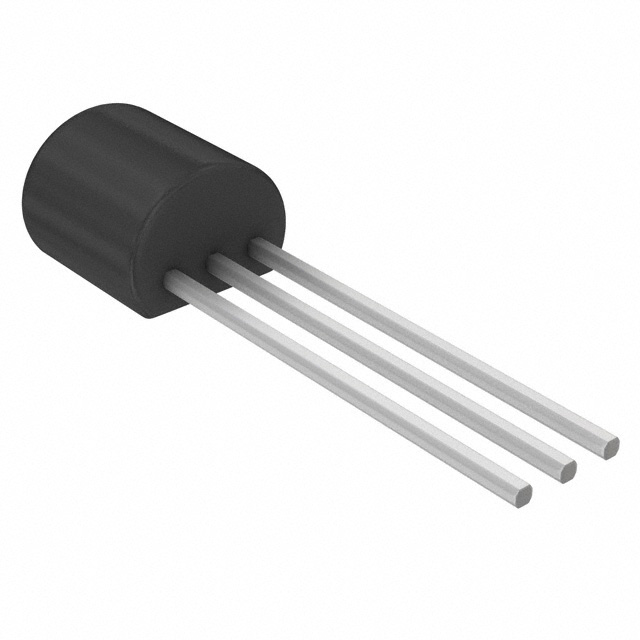
The ZX5T851ASTZ is an NPN bipolar junction transistor (BJT) manufactured by Diodes Incorporated, designed for general-purpose switching and amplification applications. This device features a 60 V collector-emitter breakdown voltage rating and a maximum collector current of 4.5 A, with a 1 W power dissipation capability in a Through Hole E-Line (TO-92 compatible) package.
The ZX5T851ASTZ is currently in Active product status with 5250 units in stock. Equivalent and substitute parts are identified for applications requiring alternative sourcing, inventory management, or end-of-life component replacement strategies.
Substiute Parts
Key Parameters
| Parameter | Value | Unit |
|---|---|---|
| Transistor Type | NPN | — |
| Voltage - Collector Emitter Breakdown (Max) | 60 | V |
| Current - Collector (Ic) (Max) | 4.5 | A |
| Power - Max | 1 | W |
| Frequency - Transition | 130 | MHz |
| Operating Temperature Range | -55 to 150 | °C |
| Mounting Type | Through Hole | — |
| Package / Case | E-Line-3 (TO-92 compatible) | — |
| RoHS Status | ROHS3 Compliant | — |
Substitute Part Grouping Explanation
Substitution of the ZX5T851ASTZ is determined by electrical and mechanical compatibility across the following critical parameters:
Electrical Compatibility Criteria:
- Transistor type must be NPN
- Voltage - Collector Emitter Breakdown rating must be equal to or greater than 60 V
- Current - Collector (Ic) maximum rating must be equal to or greater than 4.5 A
- Power dissipation capability must be equal to or greater than 1 W
- Frequency - Transition rating must support the intended application frequency
Mechanical Compatibility Criteria:
- Mounting type must be Through Hole
- Package must be physically compatible with E-Line or TO-92 form factors
- Lead configuration must accommodate existing PCB layouts
The STSA1805-AP from STMicroelectronics meets these substitution criteria with equal or superior electrical ratings and compatible Through Hole packaging.
Parameter Comparison
| Parameter | ZX5T851ASTZ (Diodes Inc.) | STSA1805-AP (STMicroelectronics) | Compatibility |
|---|---|---|---|
| Transistor Type | NPN | NPN | Match |
| Voltage - Collector Emitter Breakdown (Max) | 60 V | 60 V | Match |
| Current - Collector (Ic) (Max) | 4.5 A | 5 A | Substitute Superior |
| Power - Max | 1 W | 1.1 W | Substitute Superior |
| Frequency - Transition | 130 MHz | 150 MHz | Substitute Superior |
| Operating Temperature (Max) | 150 °C | 150 °C | Match |
| Mounting Type | Through Hole | Through Hole | Match |
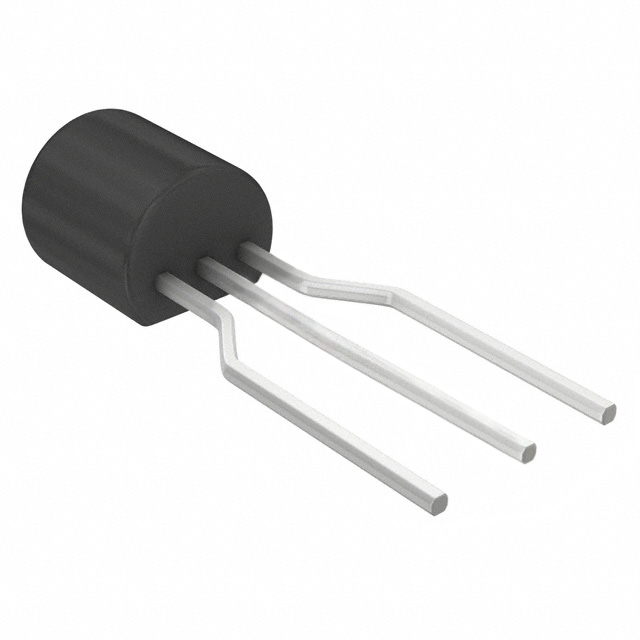
| Package / Case | E-Line-3 (TO-92 compatible) | TO-92AP (TO-226-3) | Compatible |
| RoHS Status | ROHS3 Compliant | ROHS3 Compliant | Match |
Engineering Selection Recommendations
ZX5T851ASTZ (Primary Selection): The ZX5T851ASTZ is recommended for new designs and applications where Diodes Incorporated component qualification is required. This device maintains Active product status with substantial inventory availability (5250 units in stock), ensuring supply chain continuity. Full RoHS3 compliance and REACH unaffected status support regulatory requirements across global markets.
STSA1805-AP (Substitute Selection): The STSA1805-AP from STMicroelectronics serves as a direct substitute for the ZX5T851ASTZ in existing applications. This device provides superior electrical performance across all critical parameters: 5 A collector current (versus 4.5 A), 1.1 W power dissipation (versus 1 W), and 150 MHz transition frequency (versus 130 MHz). The STSA1805-AP maintains identical voltage ratings and operating temperature specifications.
The STSA1805-AP carries Last Time Buy product status, indicating limited future availability. This classification applies to mature components with declining market demand. Selection of this substitute should account for long-term supply planning and inventory requirements.
Both devices maintain ROHS3 compliance and REACH unaffected status, supporting equivalent regulatory and environmental standards.
Frequently Asked Questions (FAQ)
Q: Can the STSA1805-AP directly replace the ZX5T851ASTZ in existing circuit designs?
A: Yes. The STSA1805-AP is electrically and mechanically compatible with the ZX5T851ASTZ. Both devices are NPN transistors with 60 V breakdown voltage ratings, Through Hole mounting, and TO-92 compatible packaging. The STSA1805-AP provides equal or superior performance across all electrical parameters.
Q: What are the key differences between these two devices?
A: The STSA1805-AP offers higher collector current (5 A versus 4.5 A), greater power dissipation (1.1 W versus 1 W), and higher transition frequency (150 MHz versus 130 MHz). Both devices share identical voltage ratings and operating temperature ranges. The primary distinction is product status: ZX5T851ASTZ is Active, while STSA1805-AP is Last Time Buy.
Q: Are there package compatibility concerns when substituting these parts?
A: No. Both devices use Through Hole mounting with TO-92 compatible packaging. The ZX5T851ASTZ uses E-Line-3 packaging, and the STSA1805-AP uses TO-92AP (TO-226-3) with formed leads. These packages are physically and functionally interchangeable in standard PCB layouts designed for three-lead Through Hole transistors.
Q: What does Last Time Buy status mean for the STSA1805-AP?
A: Last Time Buy status indicates that STMicroelectronics has announced end-of-life for this component. New orders may be accepted for a limited period, but production will cease. Inventory availability is finite. Applications requiring long-term supply should prioritize the Active-status ZX5T851ASTZ or identify alternative long-term qualified components.
Q: Are both devices RoHS compliant?
A: Yes. Both the ZX5T851ASTZ and STSA1805-AP are ROHS3 compliant and REACH unaffected, meeting current environmental and regulatory standards for electronic components in global markets.
Q: What saturation voltage differences exist between these devices?
A: The ZX5T851ASTZ specifies 210 mV saturation voltage at 200 mA base current and 5 A collector current. The STSA1805-AP specifies 600 mV saturation voltage at the same test conditions. This difference may affect switching speed and power dissipation in saturation-mode applications. Circuit designs sensitive to saturation voltage should evaluate this parameter during substitution.
Alternative Parts

SJ6012L2TP
Littelfuse Inc.
6 Alternative Parts

JMK107BBJ476MA-RE
Taiyo Yuden
10 Alternative Parts

GMK107BBJ475MA-T
Taiyo Yuden
5 Alternative Parts
SJ6020N2ARP
Littelfuse Inc.
3 Alternative Parts
SJ6025R2ATP
Littelfuse Inc.
4 Alternative Parts

2474-05L
API Delevan Inc.
1 Alternative Parts

4590R-684K
API Delevan Inc.
1 Alternative Parts

CM6560R-334
API Delevan Inc.
1 Alternative Parts

CM6460-104
API Delevan Inc.
1 Alternative Parts

5526-12
API Delevan Inc.
1 Alternative Parts