




Request Quote
(Ships tomorrow)
XBA170S Equivalent & Substitute Parts
Part Overview
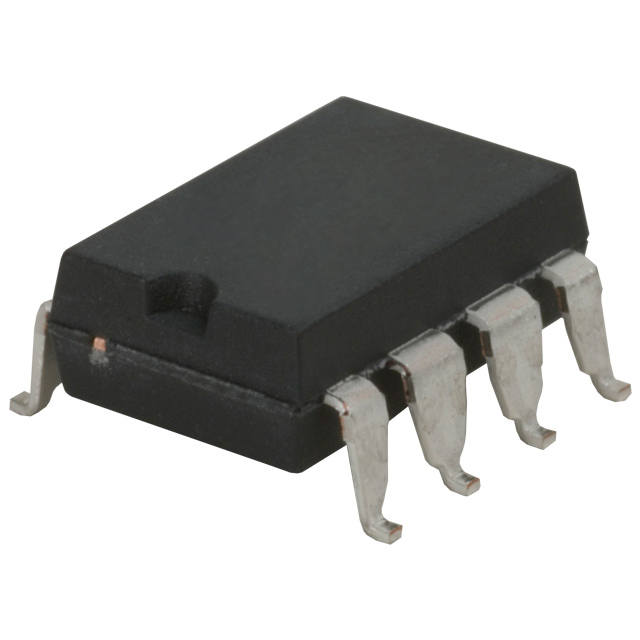
The XBA170S is a solid-state relay manufactured by Littelfuse, part of the OptoMOS® series. It functions as a SPST-NO/NC (1 Form A and B) relay with dual-channel capability in an 8-SMD surface mount package. The device is rated for 100 mA load current across 0–350 V AC/DC applications with a 1.2 VDC input trigger voltage.
The XBA170S is classified as obsolete. Locating equivalent substitute parts is necessary to maintain design continuity and ensure component availability for new production runs, repairs, and system upgrades.
Substiute Parts
Key Parameters
| Parameter | XBA170S |
|---|---|
| Manufacturer | Littelfuse |
| Series | XBA, OptoMOS® |
| Circuit Configuration | SPST-NO + SPST-NC (1 Form A and B) |
| Output Type | AC, DC |
| Voltage - Input | 1.2 VDC |
| Voltage - Load | 0 V ~ 350 V |
| Load Current | 100 mA |
| On-State Resistance (Max) | 50 Ohms |
| Package / Case | 8-SMD (0.300", 7.62mm) |
| Termination Style | Gull Wing |
| Mounting Type | Surface Mount |
| Moisture Sensitivity Level (MSL) | 1 (Unlimited) |
| Product Status | Obsolete |
Substitute Part Grouping Explanation
Substitute parts for the XBA170S are qualified based on the following criteria:
- Circuit Configuration: Must maintain SPST-NO + SPST-NC (1 Form A and B) dual-channel architecture
- Package Compatibility: Must use 8-SMD (0.300", 7.62mm) surface mount package with gull wing termination
- Electrical Ratings: Load voltage range must encompass 0–350 V AC/DC operation
- Input Voltage: Must operate within the control signal range of 1.2 VDC or lower
- Load Current: Must support minimum 100 mA continuous current
- On-State Resistance: Lower resistance values indicate improved performance and are acceptable
- Mounting Type: Must be surface mount compatible with standard PCB assembly processes
The two qualified substitutes—AQW610EHA and LH1502BAC—meet all mechanical and electrical compatibility requirements while offering improved performance characteristics and active product status.
Parameter Comparison
| Parameter | XBA170S | AQW610EHA | LH1502BAC |
|---|---|---|---|
| Manufacturer | Littelfuse | Panasonic Electric Works | Vishay Semiconductor Opto Division |
| Series | XBA, OptoMOS® | PhotoMOS™ AQW | LH1502 |
| Circuit Configuration | SPST-NO + SPST-NC (1 Form A and B) | SPST-NO + SPST-NC (1 Form A and B) | SPST-NO + SPST-NC (1 Form A and B) |
| Output Type | AC, DC | AC, DC | AC, DC |
| Voltage - Input | 1.2 VDC | 1.14 VDC | 1.26 VDC |
| Voltage - Load | 0 V ~ 350 V | 0 V ~ 350 V | 0 V ~ 350 V |
| Load Current | 100 mA | 120 mA | 150 mA |
| On-State Resistance (Max) | 50 Ohms | 25 Ohms | 20 Ohms |
| Package / Case | 8-SMD (0.300", 7.62mm) | 8-SMD (0.300", 7.62mm) | 8-SMD (0.300", 7.62mm) |
| Termination Style | Gull Wing | Gull Wing | Gull Wing |
| Mounting Type | Surface Mount | Surface Mount | Surface Mount |
| Moisture Sensitivity Level (MSL) | 1 (Unlimited) | Not Applicable | 1 (Unlimited) |
| Product Status | Obsolete | Active | Active |
Engineering Selection Recommendations
Both AQW610EHA and LH1502BAC are active products with full manufacturer support, addressing the obsolescence of the XBA170S.
AQW610EHA (Panasonic Electric Works)
- Rated for 120 mA load current, exceeding the XBA170S requirement by 20%
- On-state resistance of 25 Ohms provides 50% lower resistance than the original part
- Input voltage of 1.14 VDC is compatible with XBA170S control circuits
- RoHS3 compliant; MSL classification not applicable
- Suitable for applications requiring improved thermal performance and lower power dissipation
LH1502BAC (Vishay Semiconductor Opto Division)
- Rated for 150 mA load current, exceeding the XBA170S requirement by 50%
- On-state resistance of 20 Ohms provides 60% lower resistance than the original part
- Input voltage of 1.26 VDC is within acceptable control signal range
- RoHS3 compliant; MSL 1 (Unlimited) matches original specification
- Includes operating temperature range specification (-40°C ~ 85°C) and multiple approval agencies (CQC, FIMKO, UL, VDE)
- Suitable for applications requiring maximum current capacity and comprehensive regulatory approvals
Both substitutes maintain identical package geometry, termination style, and circuit configuration, enabling direct PCB layout compatibility without redesign.
Frequently Asked Questions (FAQ)
Q: Can AQW610EHA or LH1502BAC be used as direct replacements for XBA170S on existing PCBs?
A: Yes. Both substitutes use the identical 8-SMD (0.300", 7.62mm) package with gull wing termination. No PCB layout modifications are required. Electrical compatibility is maintained across all specified load voltage and input voltage ranges.
Q: What is the primary advantage of switching from XBA170S to a substitute part?
A: The XBA170S is obsolete. AQW610EHA and LH1502BAC are active products with ongoing manufacturer support, ensuring long-term component availability. Both substitutes also offer lower on-state resistance and higher load current ratings, improving system efficiency and thermal performance.
Q: How do the input voltage specifications compare?
A: XBA170S requires 1.2 VDC input. AQW610EHA operates at 1.14 VDC, and LH1502BAC operates at 1.26 VDC. All three values are within typical control signal ranges used in industrial and consumer applications. Existing control circuits designed for XBA170S will operate both substitutes without modification.
Q: Which substitute should be selected for maximum load current capacity?
A: LH1502BAC is rated for 150 mA, compared to 120 mA for AQW610EHA and 100 mA for XBA170S. Select LH1502BAC for applications requiring the highest current margin or operating near maximum load specifications.
Q: Are there compliance or certification differences between the substitutes?
A: LH1502BAC includes multiple approval agencies (CQC, FIMKO, UL, VDE) and specifies operating temperature range (-40°C ~ 85°C). AQW610EHA provides RoHS3 compliance with MSL classification not applicable. Both are RoHS3 compliant and REACH unaffected. Select based on specific regulatory requirements for your application region and industry.
Q: What is the impact of lower on-state resistance on system performance?
A: Lower on-state resistance reduces power dissipation and heat generation during relay operation. LH1502BAC (20 Ohms) and AQW610EHA (25 Ohms) dissipate significantly less power than XBA170S (50 Ohms) at equivalent load currents, improving overall system efficiency and extending component lifespan.
Alternative Parts

SJ6012L2TP
Littelfuse Inc.
6 Alternative Parts

JMK107BBJ476MA-RE
Taiyo Yuden
10 Alternative Parts

GMK107BBJ475MA-T
Taiyo Yuden
5 Alternative Parts
SJ6020N2ARP
Littelfuse Inc.
3 Alternative Parts
SJ6025R2ATP
Littelfuse Inc.
4 Alternative Parts

2474-05L
API Delevan Inc.
1 Alternative Parts

4590R-684K
API Delevan Inc.
1 Alternative Parts

CM6560R-334
API Delevan Inc.
1 Alternative Parts

CM6460-104
API Delevan Inc.
1 Alternative Parts

5526-12
API Delevan Inc.
1 Alternative Parts