


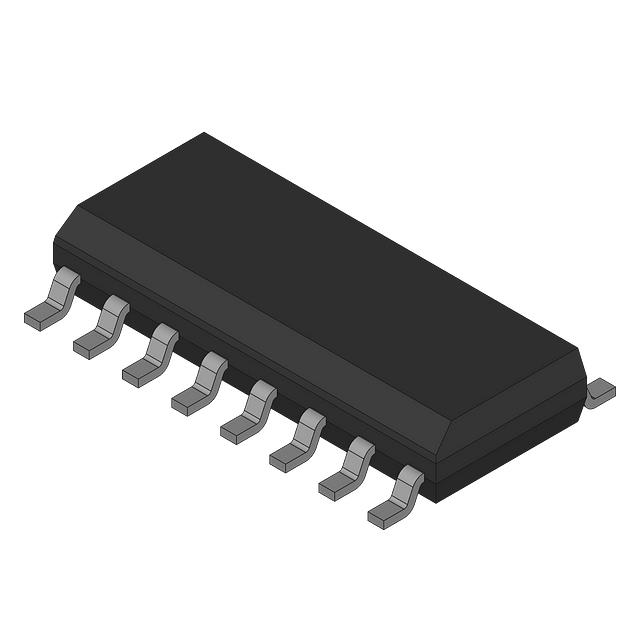
Request Quote
(Ships tomorrow)
UCC2806J Equivalent & Substitute Parts
Part Overview
The UCC2806J is a low-power, dual-output PWM controller IC manufactured by Texas Instruments, designed for boost, flyback, and forward converter topologies. This device operates as a step-up/step-down DC-DC controller with positive, isolation-capable outputs and is packaged in a 16-CDIP through-hole configuration.
The UCC2806J carries a Last Time Buy product status, indicating that Texas Instruments has discontinued or will discontinue production. This status necessitates identifying functionally equivalent substitute components to maintain design continuity and ensure long-term supply chain reliability for applications currently utilizing this controller.
Substiute Parts
Key Parameters
| Parameter | Value |
|---|---|
| Manufacturer | Texas Instruments |
| Part Number | UCC2806J |
| Category | Power Management (PMIC) |
| Output Type | PWM |
| Function | Step-Up/Step-Down |
| Output Configuration | Positive, Isolation Capable |
| Topology | Boost, Flyback, Forward |
| Number of Outputs | 2 |
| Voltage Supply (Vcc/Vdd) | 8V ~ 14.5V |
| Switching Frequency | 47kHz |
| Duty Cycle (Max) | 50% |
| Operating Temperature | -40°C ~ 85°C (TA) |
| Package Type | 16-CDIP (0.300", 7.62mm) |
| Mounting Type | Through Hole |
| RoHS Status | ROHS3 Compliant |
Substitute Part Grouping Explanation
Substitute parts for the UCC2806J are identified based on strict electrical and mechanical parameter alignment. The following criteria determine substitution eligibility:
Electrical Compatibility Parameters:
- Voltage supply range: 8V ~ 14.5V
- Switching frequency: 47kHz
- Maximum duty cycle: 50%
- Output configuration: Positive, Isolation Capable
- Supported topologies: Boost, Flyback, Forward
- Number of outputs: 2
- Control features: Current Limit, Enable, Frequency Control
- Operating temperature range: -40°C ~ 85°C (TA)
Mechanical Compatibility Parameters:
- Package type: 16-pin configuration
- Pin count and signal assignment compatibility
The UCC2806D qualifies as a direct substitute based on matching electrical specifications across all critical parameters. Both devices share identical supply voltage ranges, switching frequency, duty cycle limits, output configurations, and operating temperature specifications. The primary distinction lies in packaging format and mounting technology, which represents a design-level consideration rather than a functional incompatibility.
Parameter Comparison
| Parameter | UCC2806J (Main Part) | UCC2806D (Substitute) |
|---|---|---|
| Manufacturer | Texas Instruments | Unitrode |
| Output Type | PWM | Transistor Driver |
| Function | Step-Up/Step-Down | Step-Up, Step-Up/Step-Down |
| Output Configuration | Positive, Isolation Capable | Positive, Isolation Capable |
| Topology | Boost, Flyback, Forward | Boost, Flyback, Forward Converter |
| Number of Outputs | 2 | 2 |
| Voltage Supply (Vcc/Vdd) | 8V ~ 14.5V | 8V ~ 14.5V |
| Switching Frequency | 47kHz | 47kHz |
| Duty Cycle (Max) | 50% | 50% |
| Synchronous Rectifier | Yes | Yes |
| Control Features | Current Limit, Enable, Frequency Control | Current Limit, Enable, Frequency Control |
| Operating Temperature | -40°C ~ 85°C (TA) | -40°C ~ 85°C (TA) |
| Package Type | 16-CDIP (0.300", 7.62mm) | 16-SOIC (0.154", 3.90mm Width) |
| Mounting Type | Through Hole | Surface Mount |
| Product Status | Last Time Buy | Active |
Engineering Selection Recommendations
The UCC2806D represents the primary substitute for the UCC2806J based on electrical parameter equivalence and active product status. The UCC2806D maintains all critical electrical specifications required for boost, flyback, and forward converter applications, including identical supply voltage ranges, switching frequency, duty cycle limits, and control feature sets.
The transition from UCC2806J to UCC2806D requires consideration of packaging and mounting technology differences. The UCC2806J utilizes through-hole 16-CDIP packaging, while the UCC2806D employs surface-mount 16-SOIC packaging. This distinction necessitates PCB layout modifications and assembly process adjustments but does not affect electrical functionality or performance characteristics.
The UCC2806D carries Active product status, ensuring continued availability and manufacturing support from Unitrode, providing supply chain stability compared to the Last Time Buy status of the UCC2806J.
Frequently Asked Questions (FAQ)
Q: Can the UCC2806D directly replace the UCC2806J without circuit modifications?
A: The UCC2806D provides electrical equivalence to the UCC2806J across all specified parameters. However, packaging differences require PCB layout modifications. The UCC2806J uses through-hole 16-CDIP mounting, while the UCC2806D uses surface-mount 16-SOIC packaging. Pin assignments must be verified against device datasheets to ensure correct signal routing in the new package format.
Q: What are the key electrical parameters that define substitution eligibility?
A: Substitution eligibility is determined by matching supply voltage range (8V ~ 14.5V), switching frequency (47kHz), maximum duty cycle (50%), output configuration (Positive, Isolation Capable), supported topologies (Boost, Flyback, Forward), number of outputs (2), and operating temperature range (-40°C ~ 85°C). Both the UCC2806J and UCC2806D meet these criteria.
Q: Why is the UCC2806J marked as Last Time Buy?
A: Last Time Buy status indicates that Texas Instruments has ceased or will cease production of this component. This status necessitates transition planning to alternative parts to ensure long-term supply availability and design continuity.
Q: Are there compliance or certification differences between the UCC2806J and UCC2806D?
A: The UCC2806J is ROHS3 compliant. Compliance documentation for the UCC2806D should be verified against specific application requirements and regional regulations before implementation.
Q: What assembly considerations apply when transitioning from UCC2806J to UCC2806D?
A: The primary assembly consideration is the transition from through-hole to surface-mount technology. Through-hole components require wave soldering or manual insertion, while surface-mount components require reflow soldering processes. PCB design must accommodate the different package footprints and pin spacing (16-CDIP at 0.300" versus 16-SOIC at 0.154" width).
Alternative Parts

SJ6012L2TP
Littelfuse Inc.
6 Alternative Parts

JMK107BBJ476MA-RE
Taiyo Yuden
10 Alternative Parts

GMK107BBJ475MA-T
Taiyo Yuden
5 Alternative Parts
SJ6020N2ARP
Littelfuse Inc.
3 Alternative Parts
SJ6025R2ATP
Littelfuse Inc.
4 Alternative Parts

2474-05L
API Delevan Inc.
1 Alternative Parts

4590R-684K
API Delevan Inc.
1 Alternative Parts

CM6560R-334
API Delevan Inc.
1 Alternative Parts

CM6460-104
API Delevan Inc.
1 Alternative Parts

5526-12
API Delevan Inc.
1 Alternative Parts