


Request Quote
(Ships tomorrow)
TSU101RILT Equivalent & Substitute Parts
Part Overview
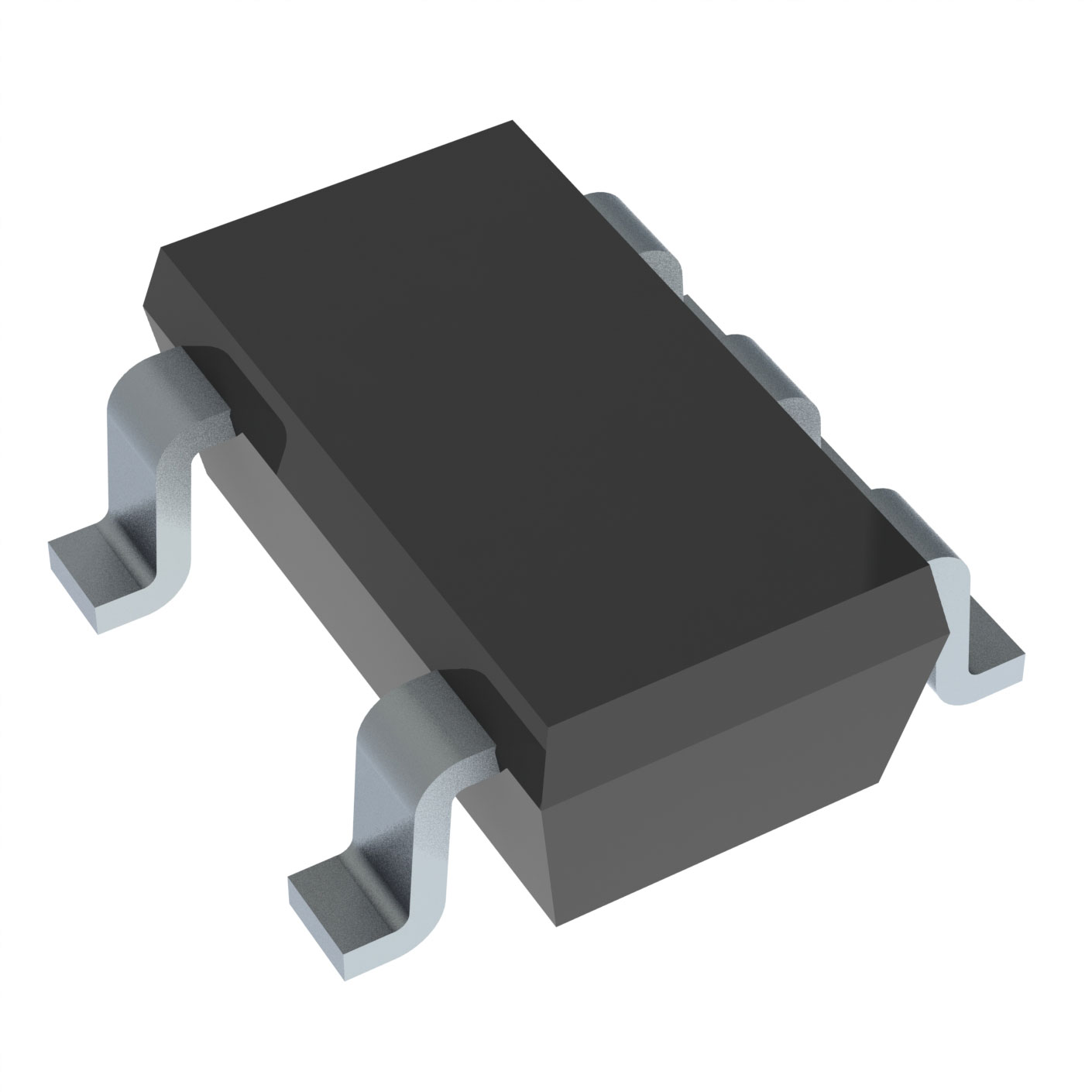
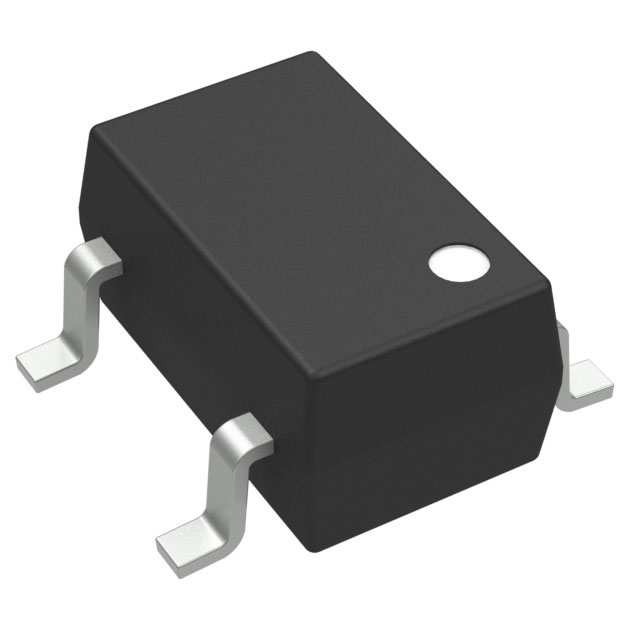
The TSU101RILT is a general-purpose operational amplifier manufactured by STMicroelectronics, housed in a SOT-23-5 surface mount package. This rail-to-rail output amplifier operates across a 1.5 V to 5.5 V supply range and is designed for low-power applications requiring minimal input bias current. The device is actively produced and ROHS3 compliant, making it suitable for modern electronic designs.
Substitute parts become necessary when the primary part experiences supply constraints, extended lead times, or when design requirements permit operation with alternative electrical characteristics within acceptable parameters. The parts listed below maintain functional compatibility through matching package types, output configurations, and supply voltage ranges while offering variations in performance metrics.
Substiute Parts
Key Parameters
| Parameter | TSU101RILT |
|---|---|
| Manufacturer | STMicroelectronics |
| Amplifier Type | General Purpose |
| Number of Circuits | 1 |
| Output Type | Rail-to-Rail |
| Package / Case | SC-74A, SOT-753 |
| Supplier Device Package | SOT-23-5 |
| Mounting Type | Surface Mount |
| Voltage - Supply Span (Min) | 1.5 V |
| Voltage - Supply Span (Max) | 5.5 V |
| Operating Temperature | -40°C ~ 85°C |
| Product Status | Active |
| RoHS Status | ROHS3 Compliant |
| Moisture Sensitivity Level (MSL) | 1 (Unlimited) |
Substitute Part Grouping Explanation
Substitution eligibility for the TSU101RILT is determined by the following criteria:
Primary Compatibility Requirements:
- Amplifier Type: General Purpose
- Number of Circuits: 1
- Output Type: Rail-to-Rail
- Mounting Type: Surface Mount
- Package compatibility: SOT-23-5 or equivalent footprint
Electrical Operating Range:
- Supply voltage overlap within 1.5 V to 5.5 V range
- Operating temperature range of -40°C minimum
- Functional performance within general-purpose amplifier classification
Regulatory Compliance:
- ROHS3 Compliant status
- MSL rating of 1 (Unlimited)
The substitute parts listed below satisfy these primary requirements while offering different performance characteristics in slew rate, gain bandwidth product, input bias current, and supply current. These variations permit selection based on specific application demands without compromising core functionality or package compatibility.
Parameter Comparison
| Parameter | TSU101RILT (STMicroelectronics) | LMV321Q1M5/NOPB (Texas Instruments) | NCS2003ASN2T1G (onsemi) |
|---|---|---|---|
| Amplifier Type | General Purpose | General Purpose | General Purpose |
| Number of Circuits | 1 | 1 | 1 |
| Output Type | Rail-to-Rail | Rail-to-Rail | Rail-to-Rail |
| Slew Rate | 0.003 V/µs | 1 V/µs | 12.5 V/µs |
| Gain Bandwidth Product | 9 kHz | 1 MHz | 7 MHz |
| Current - Input Bias | 5 pA | 15 nA | 1 pA |
| Voltage - Input Offset | 3 mV | 1.7 mV | 500 µV |
| Current - Supply | 650 nA | 130 µA | 300 µA |
| Current - Output / Channel | 11 mA | Not specified | 96 mA |
| Voltage - Supply Span (Min) | 1.5 V | 2.7 V | 1.7 V |
| Voltage - Supply Span (Max) | 5.5 V | 5.5 V | 5.5 V |
| Operating Temperature | -40°C ~ 85°C | -40°C ~ 125°C | -40°C ~ 85°C |
| Mounting Type | Surface Mount | Surface Mount | Surface Mount |
| Package / Case | SC-74A, SOT-753 | SC-74A, SOT-753 | SOT-23-5 Thin, TSOT-23-5 |
| RoHS Status | ROHS3 Compliant | ROHS3 Compliant | ROHS3 Compliant |
| Moisture Sensitivity Level (MSL) | 1 (Unlimited) | 1 (Unlimited) | 1 (Unlimited) |
Engineering Selection Recommendations
TSU101RILT (Primary Part)
The TSU101RILT remains the specified component for designs requiring ultra-low supply current consumption (650 nA) and minimal input bias current (5 pA). This device is appropriate for battery-powered or energy-harvesting applications where power dissipation is critical. The device is actively produced and ROHS3 compliant.
LMV321Q1M5/NOPB (Texas Instruments Substitute)
The LMV321Q1M5/NOPB provides improved performance metrics including higher slew rate (1 V/µs) and greater gain bandwidth product (1 MHz) compared to the TSU101RILT. This part carries AEC-Q100 automotive qualification and supports extended operating temperature to 125°C. The minimum supply voltage requirement increases to 2.7 V, which may restrict use in ultra-low voltage applications. This substitute is suitable for designs where higher bandwidth and automotive-grade reliability are required.
NCS2003ASN2T1G (onsemi Substitute)
The NCS2003ASN2T1G offers the highest performance specifications with slew rate of 12.5 V/µs and gain bandwidth product of 7 MHz. Input offset voltage is significantly reduced to 500 µV, and output current capability reaches 96 mA. The minimum supply voltage is 1.7 V, permitting operation in low-voltage systems. This substitute accommodates applications requiring higher speed and output drive capability. The package designation differs slightly (5-TSOP vs. SOT-23-5), though both are physically compatible SOT-23-5 form factors.
All three parts maintain ROHS3 compliance, MSL rating of 1, and active product status.
Frequently Asked Questions (FAQ)
Q: Can the LMV321Q1M5/NOPB directly replace the TSU101RILT in all applications?
A: Direct replacement is possible in designs operating at supply voltages of 2.7 V or higher. The LMV321Q1M5/NOPB requires minimum 2.7 V supply, whereas the TSU101RILT operates from 1.5 V. Applications using supply voltages between 1.5 V and 2.7 V require the TSU101RILT or NCS2003ASN2T1G. Electrical performance differs significantly; the LMV321Q1M5/NOPB provides higher bandwidth and lower input offset voltage.
Q: What are the package compatibility considerations between these parts?
A: The TSU101RILT and LMV321Q1M5/NOPB both use SC-74A/SOT-753 package designation with SOT-23-5 supplier device package. The NCS2003ASN2T1G uses SOT-23-5 Thin/TSOT-23-5 package designation with 5-TSOP supplier device package. All three parts are surface mount devices with compatible SOT-23-5 footprints suitable for standard PCB layouts.
Q: Which substitute is appropriate for low-power battery applications?
A: The TSU101RILT remains optimal for battery-powered designs due to its 650 nA supply current. The NCS2003ASN2T1G offers a compromise with 300 µA supply current while providing higher performance. The LMV321Q1M5/NOPB consumes 130 µA, making it less suitable for ultra-low-power applications but appropriate for systems where power consumption is secondary to performance.
Q: Are all three parts suitable for automotive applications?
A: The LMV321Q1M5/NOPB carries AEC-Q100 automotive qualification. The TSU101RILT and NCS2003ASN2T1G do not specify automotive qualification. For automotive-grade designs, the LMV321Q1M5/NOPB is the appropriate selection.
Q: What is the significance of the different slew rates among these parts?
A: Slew rate determines how quickly the output voltage can change. The TSU101RILT (0.003 V/µs) is suitable for low-frequency, precision applications. The LMV321Q1M5/NOPB (1 V/µs) accommodates mid-range frequency applications. The NCS2003ASN2T1G (12.5 V/µs) supports high-speed signal processing. Selection depends on the maximum frequency content of signals being amplified.
Q: Can these parts be used interchangeably in existing designs?
A: Interchangeability requires verification that the substitute part's electrical characteristics remain within the design's tolerance margins. Minimum supply voltage requirements, slew rate, gain bandwidth product, and output current capability must be evaluated against circuit requirements. Physical package compatibility exists among all three parts, but electrical performance differences necessitate circuit analysis before substitution.
Alternative Parts

SJ6012L2TP
Littelfuse Inc.
6 Alternative Parts

JMK107BBJ476MA-RE
Taiyo Yuden
10 Alternative Parts

GMK107BBJ475MA-T
Taiyo Yuden
5 Alternative Parts
SJ6020N2ARP
Littelfuse Inc.
3 Alternative Parts
SJ6025R2ATP
Littelfuse Inc.
4 Alternative Parts

2474-05L
API Delevan Inc.
1 Alternative Parts

4590R-684K
API Delevan Inc.
1 Alternative Parts

CM6560R-334
API Delevan Inc.
1 Alternative Parts

CM6460-104
API Delevan Inc.
1 Alternative Parts

5526-12
API Delevan Inc.
1 Alternative Parts