



Request Quote
(Ships tomorrow)
TSH11ID Equivalent & Substitute Parts
Part Overview
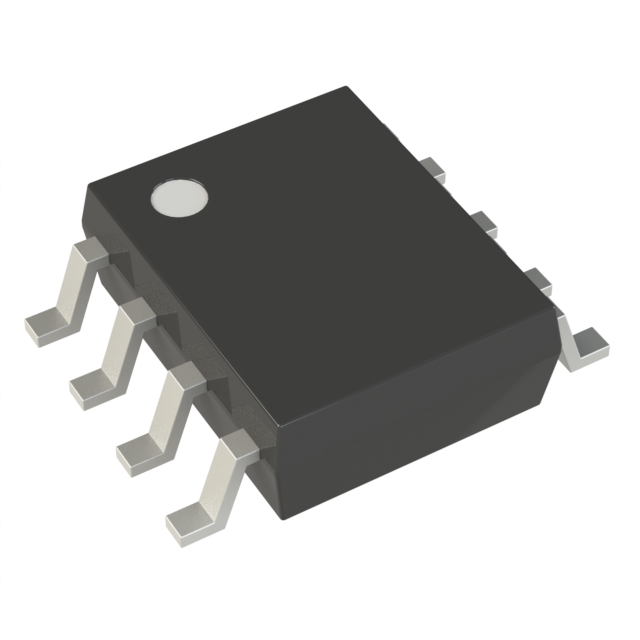
The TSH11ID is a general-purpose operational amplifier manufactured by STMicroelectronics, housed in an 8-SOIC surface-mount package. This device is classified as obsolete, indicating discontinued production and limited availability for new designs. The TSH11ID delivers a gain-bandwidth product of 120 MHz with a slew rate of 150 V/µs, suitable for general-purpose amplification applications requiring moderate bandwidth performance. Due to its obsolete status, identifying functionally compatible substitute components is essential for design continuity, procurement reliability, and long-term product support.
Substiute Parts
Key Parameters
| Parameter | Value | Unit |
|---|---|---|
| Amplifier Type | General Purpose | — |
| Number of Circuits | 1 | — |
| Slew Rate | 150 | V/µs |
| Gain Bandwidth Product | 120 | MHz |
| Current - Input Bias | 2 | pA |
| Voltage - Input Offset | 3 | mV |
| Current - Supply | 20 | mA |
| Current - Output / Channel | 70 | mA |
| Voltage - Supply Span (Min) | 6 | V |
| Voltage - Supply Span (Max) | 12 | V |
| Operating Temperature Range | -40 to 125 | °C |
| Package / Case | 8-SOIC (0.154", 3.90mm Width) | — |
| Mounting Type | Surface Mount | — |
| RoHS Status | ROHS3 Compliant | — |
| Moisture Sensitivity Level | 1 (Unlimited) | — |
Substitute Part Grouping Explanation
Substitution of the TSH11ID with the OPA656U/2K5 is based on the following alignment criteria:
Package Compatibility: Both devices utilize the 8-SOIC (0.154", 3.90mm Width) surface-mount package, enabling direct physical replacement on printed circuit boards without layout modifications.
Electrical Performance Envelope: The OPA656U/2K5 operates within the same supply voltage range (8 V to 12 V maximum), with the TSH11ID requiring a minimum of 6 V. Both devices maintain identical input bias current specifications (2 pA) and support equivalent output current delivery (70 mA per channel).
Functional Classification: Both amplifiers are single-circuit devices (1 circuit per package) suitable for general amplification applications, though the OPA656U/2K5 is classified as a voltage feedback amplifier with enhanced bandwidth characteristics.
Regulatory Compliance: Both components are ECCN EAR99 classified and share identical HTSUS commodity codes (8542.33.0001), confirming equivalent trade and export status.
The OPA656U/2K5 represents an active, production-status alternative with superior performance metrics, making it suitable for applications where the TSH11ID's obsolete status creates procurement constraints.
Parameter Comparison
| Parameter | TSH11ID | OPA656U/2K5 | Unit |
|---|---|---|---|
| Manufacturer | STMicroelectronics | Burr Brown | — |
| Product Status | Obsolete | Active | — |
| Number of Circuits | 1 | 1 | — |
| Slew Rate | 150 | 295 | V/µs |
| Gain Bandwidth Product | 120 | 230 | MHz |
| Current - Input Bias | 2 | 2 | pA |
| Voltage - Input Offset | 3 | 0.25 | mV |
| Current - Supply | 20 | 14 | mA |
| Current - Output / Channel | 70 | 70 | mA |
| Voltage - Supply Span (Min) | 6 | 8 | V |
| Voltage - Supply Span (Max) | 12 | 12 | V |
| Operating Temperature (Min) | -40 | -40 | °C |
| Operating Temperature (Max) | 125 | 85 | °C |
| Package / Case | 8-SOIC (0.154", 3.90mm Width) | 8-SOIC (0.154", 3.90mm Width) | — |
| Mounting Type | Surface Mount | Surface Mount | — |
| ECCN | EAR99 | EAR99 | — |
| HTSUS Code | 8542.33.0001 | 8542.33.0001 | — |
Engineering Selection Recommendations
Procurement Status Consideration: The TSH11ID is classified as obsolete with limited inventory availability (686 pieces). The OPA656U/2K5 maintains active production status with significantly higher inventory levels (65,980 pieces), ensuring long-term supply chain reliability and design sustainability.
Performance Upgrade Path: The OPA656U/2K5 delivers enhanced electrical performance across multiple parameters: slew rate increases from 150 V/µs to 295 V/µs, gain-bandwidth product improves from 120 MHz to 230 MHz, and input offset voltage reduces from 3 mV to 0.25 mV. Supply current consumption decreases from 20 mA to 14 mA, reducing power dissipation in battery-powered or thermally constrained applications.
Temperature Range Trade-off: The TSH11ID supports operation to 125°C, while the OPA656U/2K5 operates to 85°C maximum. Applications requiring extended high-temperature operation beyond 85°C must retain the TSH11ID or identify alternative solutions.
Supply Voltage Minimum: The OPA656U/2K5 requires a minimum supply voltage of 8 V, compared to 6 V for the TSH11ID. Designs operating at supply voltages below 8 V cannot use the OPA656U/2K5 as a direct substitute.
Regulatory Compliance: Both devices maintain identical ECCN and HTSUS classifications, confirming equivalent export control and trade compliance status. RoHS3 compliance is confirmed for the TSH11ID; equivalent compliance documentation for the OPA656U/2K5 should be verified during procurement.
Frequently Asked Questions (FAQ)
Q: Can the OPA656U/2K5 replace the TSH11ID in all applications?
A: Physical and electrical compatibility exists for applications operating at supply voltages between 8 V and 12 V and within the -40°C to 85°C temperature range. Applications requiring operation below 8 V supply voltage or above 85°C ambient temperature require alternative solutions.
Q: What are the primary performance improvements offered by the OPA656U/2K5?
A: The OPA656U/2K5 provides nearly double the slew rate (295 V/µs versus 150 V/µs), nearly double the gain-bandwidth product (230 MHz versus 120 MHz), and significantly lower input offset voltage (0.25 mV versus 3 mV). Supply current consumption is reduced by 30% (14 mA versus 20 mA).
Q: Are there pin-to-pin compatibility concerns between these devices?
A: Both devices are housed in 8-SOIC packages with identical physical dimensions (0.154", 3.90mm width). Pin-to-pin compatibility must be verified against specific application schematics and PCB layouts, as internal circuit topology differences may affect biasing networks and compensation requirements.
Q: What is the impact of the lower maximum operating temperature of the OPA656U/2K5?
A: The OPA656U/2K5 maximum operating temperature is 85°C, compared to 125°C for the TSH11ID. Applications with ambient temperatures or junction temperatures exceeding 85°C cannot use the OPA656U/2K5 without thermal management modifications or alternative component selection.
Q: How does the higher minimum supply voltage of the OPA656U/2K5 affect system design?
A: The OPA656U/2K5 requires a minimum supply voltage of 8 V, while the TSH11ID operates at 6 V minimum. Systems designed for 6 V or 7 V supply operation cannot use the OPA656U/2K5 without power supply redesign.
Q: Are both devices RoHS compliant?
A: The TSH11ID is confirmed ROHS3 compliant. RoHS compliance status for the OPA656U/2K5 should be verified through the manufacturer's current documentation and certification records during procurement evaluation.
Q: What is the significance of the identical ECCN and HTSUS codes?
A: Both devices share ECCN EAR99 classification and HTSUS code 8542.33.0001, confirming equivalent export control and trade classification status. This alignment simplifies regulatory compliance and procurement documentation for international supply chains.
Alternative Parts

SJ6012L2TP
Littelfuse Inc.
6 Alternative Parts

JMK107BBJ476MA-RE
Taiyo Yuden
10 Alternative Parts

GMK107BBJ475MA-T
Taiyo Yuden
5 Alternative Parts
SJ6020N2ARP
Littelfuse Inc.
3 Alternative Parts
SJ6025R2ATP
Littelfuse Inc.
4 Alternative Parts

2474-05L
API Delevan Inc.
1 Alternative Parts

4590R-684K
API Delevan Inc.
1 Alternative Parts

CM6560R-334
API Delevan Inc.
1 Alternative Parts

CM6460-104
API Delevan Inc.
1 Alternative Parts

5526-12
API Delevan Inc.
1 Alternative Parts