



Request Quote
(Ships tomorrow)
TSB712AIST Equivalent & Substitute Parts
Part Overview
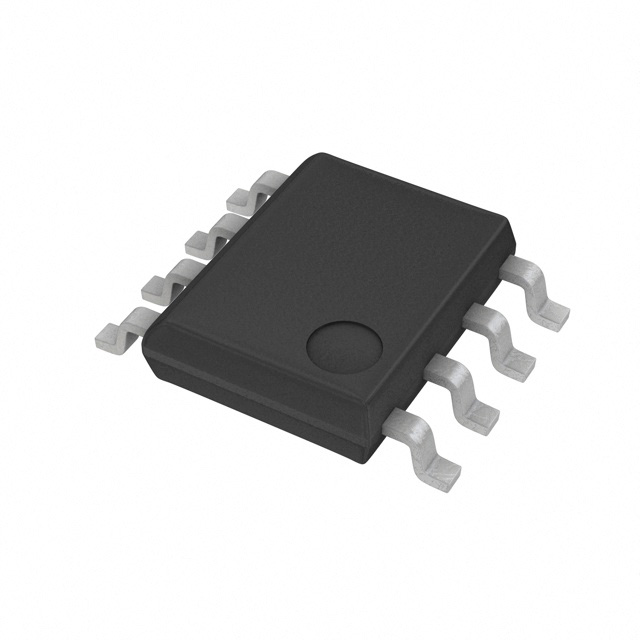
The TSB712AIST is a general-purpose operational amplifier manufactured by STMicroelectronics, configured as a dual-channel (2 circuit) device in an 8-MiniSO surface-mount package. This rail-to-rail output amplifier operates across a wide supply voltage range of 2.7 V to 36 V and is qualified to automotive-grade standards (AEC-Q100). The device is actively produced and maintained in inventory, with ROHS3 compliance and unlimited moisture sensitivity rating.
Equivalent and substitute parts are identified when alternative amplifier devices meet the same functional requirements, package compatibility, and electrical specifications necessary for direct circuit substitution or design flexibility.
Substiute Parts
Key Parameters
| Parameter | Value | Unit |
|---|---|---|
| Amplifier Type | General Purpose | — |
| Number of Circuits | 2 | — |
| Output Type | Rail-to-Rail | — |
| Package / Case | 8-TSSOP, 8-MSOP (0.118", 3.00mm Width) | — |
| Mounting Type | Surface Mount | — |
| Voltage - Supply Span (Min) | 2.7 | V |
| Voltage - Supply Span (Max) | 36 | V |
| Operating Temperature | -40 to 125 | °C |
| Grade | Automotive | — |
| Qualification | AEC-Q100 | — |
| RoHS Status | ROHS3 Compliant | — |
Substitute Part Grouping Explanation
Substitution eligibility for the TSB712AIST is determined by the following critical parameters:
Package Compatibility: Both the main part and substitute must utilize the 8-TSSOP or 8-MSOP surface-mount package with 0.118" width (3.00mm) to ensure PCB footprint compatibility without layout redesign.
Functional Configuration: The substitute device must provide dual-channel (2 circuit) amplification with rail-to-rail output capability to maintain circuit performance characteristics.
Supply Voltage Range: The substitute must operate within or encompass the 2.7 V to 36 V supply voltage specification of the main part. Substitutes with narrower supply ranges may be used only if the application operates entirely within the substitute's specified range.
Operating Temperature: The substitute must support the -40°C to 125°C operating temperature range to maintain automotive-grade reliability.
Compliance Standards: The substitute must maintain ROHS3 compliance and automotive qualification (AEC-Q100) to satisfy regulatory and quality requirements.
The ADA4622-2ARMZ-R7 meets all package, functional, and compliance criteria for substitution consideration.
Parameter Comparison
| Parameter | TSB712AIST (Main Part) | ADA4622-2ARMZ-R7 (Substitute) | Unit |
|---|---|---|---|
| Manufacturer | STMicroelectronics | Analog Devices Inc. | — |
| Amplifier Type | General Purpose | J-FET | — |
| Number of Circuits | 2 | 2 | — |
| Output Type | Rail-to-Rail | Rail-to-Rail | — |
| Slew Rate | 3 | 23 | V/µs |
| Gain Bandwidth Product | 6 | 8 | MHz |
| Current - Input Bias | 300 | 2 | nA |
| Voltage - Input Offset | 650 | 40 | µV |
| Current - Supply | 1.8 | 1.33 | mA |
| Current - Output / Channel | 50 | 20 | mA |
| Voltage - Supply Span (Min) | 2.7 | 5 | V |
| Voltage - Supply Span (Max) | 36 | 30 | V |
| Operating Temperature | -40 to 125 | -40 to 125 | °C |
| Package / Case | 8-TSSOP, 8-MSOP (0.118", 3.00mm Width) | 8-TSSOP, 8-MSOP (0.118", 3.00mm Width) | — |
| Mounting Type | Surface Mount | Surface Mount | — |
| RoHS Status | ROHS3 Compliant | ROHS3 Compliant | — |
| Grade | Automotive | — | — |
| Qualification | AEC-Q100 | — | — |
Engineering Selection Recommendations
TSB712AIST Selection Criteria:
The TSB712AIST is the primary choice for applications requiring automotive-grade qualification (AEC-Q100) with explicit compliance documentation. This device is suitable for systems operating across the full 2.7 V to 36 V supply range, particularly in low-voltage applications below 5 V. The general-purpose amplifier topology provides stable performance across standard signal conditioning and buffering applications. Active production status and current inventory ensure supply continuity and lead-time predictability.
ADA4622-2ARMZ-R7 Selection Criteria:
The ADA4622-2ARMZ-R7 is suitable for applications where the supply voltage range is constrained to 5 V minimum and 30 V maximum. This J-FET amplifier topology delivers superior performance in applications requiring low input bias current (2 pA versus 300 nA), reduced input offset voltage (40 µV versus 650 µV), and higher slew rate (23 V/µs versus 3 V/µs). The substitute is appropriate for precision signal acquisition and high-speed transient applications. ROHS3 compliance is maintained. Applications requiring explicit automotive qualification (AEC-Q100) must verify alternative qualification pathways or confirm that automotive-grade certification is not a mandatory requirement.
Substitution Constraints:
Direct substitution of ADA4622-2ARMZ-R7 for TSB712AIST is valid only when the application supply voltage operates at or above 5 V. Applications utilizing the TSB712AIST's 2.7 V to 4.9 V supply range cannot use the ADA4622-2ARMZ-R7 without circuit redesign. Automotive applications with mandatory AEC-Q100 qualification require the TSB712AIST or equivalent automotive-qualified alternatives.
Frequently Asked Questions (FAQ)
Q: Can the ADA4622-2ARMZ-R7 replace the TSB712AIST in all applications?
A: No. The ADA4622-2ARMZ-R7 has a minimum supply voltage of 5 V, while the TSB712AIST operates from 2.7 V. Substitution is valid only for applications operating at 5 V or higher. Additionally, applications requiring AEC-Q100 automotive qualification must use the TSB712AIST or verify alternative qualification status.
Q: Are the packages physically identical?
A: Yes. Both devices use the 8-TSSOP or 8-MSOP surface-mount package with 0.118" width (3.00mm). PCB footprints are compatible without modification.
Q: What are the key performance differences between these devices?
A: The ADA4622-2ARMZ-R7 is a J-FET amplifier with superior input characteristics (2 pA bias current, 40 µV offset) and higher slew rate (23 V/µs). The TSB712AIST is a general-purpose amplifier with higher output current capability (50 mA versus 20 mA per channel) and wider supply voltage range (2.7 V to 36 V).
Q: Which device should I select for a 3.3 V supply application?
A: The TSB712AIST is the only option from this comparison set, as the ADA4622-2ARMZ-R7 requires a minimum 5 V supply.
Q: Are both devices RoHS compliant?
A: Yes. Both the TSB712AIST and ADA4622-2ARMZ-R7 are ROHS3 compliant.
Q: What is the significance of the AEC-Q100 qualification on the TSB712AIST?
A: AEC-Q100 qualification indicates the device has undergone automotive-grade reliability testing and is approved for use in automotive applications. The ADA4622-2ARMZ-R7 does not carry this qualification in the provided specifications.
Q: Can I use the ADA4622-2ARMZ-R7 in an automotive application?
A: Only if your application does not mandate AEC-Q100 qualification or if alternative qualification pathways have been established. Verify automotive requirements with your system specification before substitution.
Q: What is the difference between the packaging formats (Tape & Reel versus Cut Tape & Digi-Reel)?
A: Tape & Reel and Cut Tape & Digi-Reel are different supply formats for surface-mount components. Both formats contain identical devices in the same package. Selection depends on procurement volume and assembly equipment compatibility, not electrical performance.
Alternative Parts

SJ6012L2TP
Littelfuse Inc.
6 Alternative Parts

JMK107BBJ476MA-RE
Taiyo Yuden
10 Alternative Parts

GMK107BBJ475MA-T
Taiyo Yuden
5 Alternative Parts
SJ6020N2ARP
Littelfuse Inc.
3 Alternative Parts
SJ6025R2ATP
Littelfuse Inc.
4 Alternative Parts

2474-05L
API Delevan Inc.
1 Alternative Parts

4590R-684K
API Delevan Inc.
1 Alternative Parts

CM6560R-334
API Delevan Inc.
1 Alternative Parts

CM6460-104
API Delevan Inc.
1 Alternative Parts

5526-12
API Delevan Inc.
1 Alternative Parts