


Request Quote
(Ships tomorrow)
TS103ACS RLG Equivalent & Substitute Parts
Part Overview
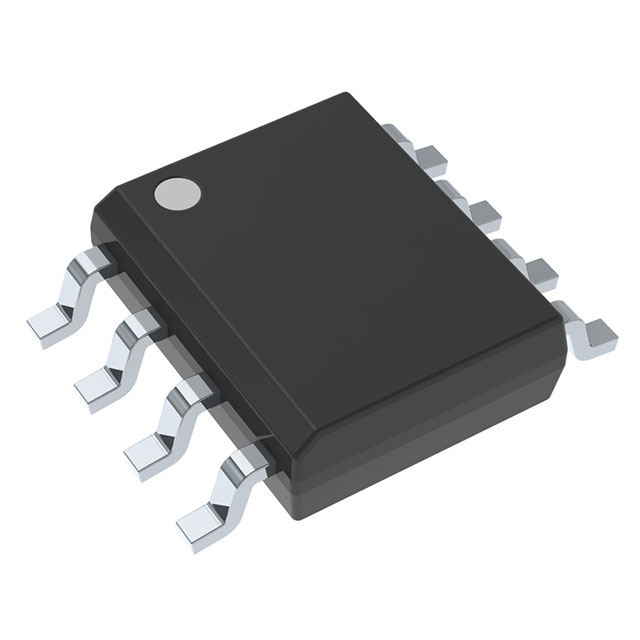
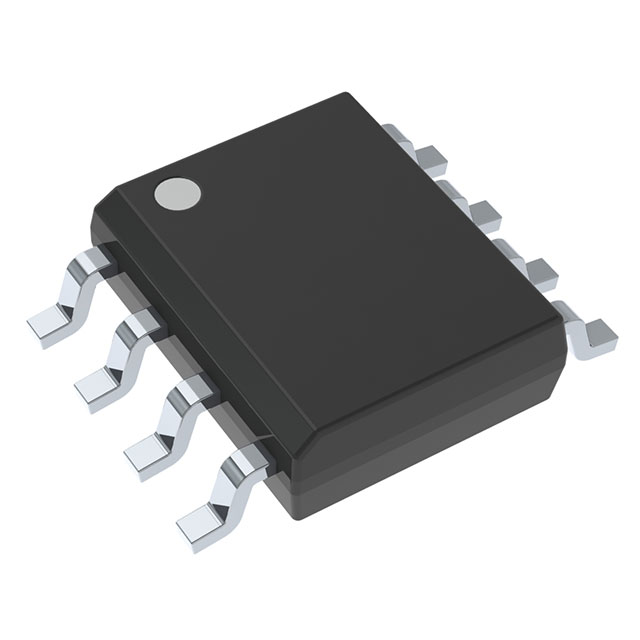
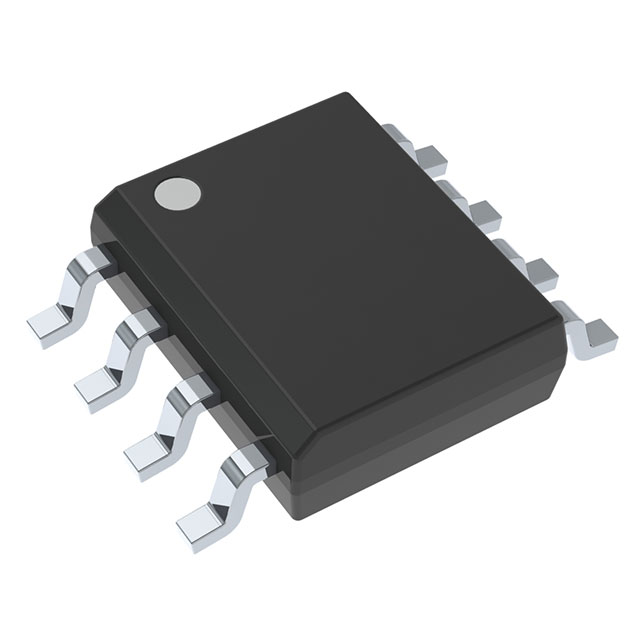
The TS103ACS RLG is a general purpose operational amplifier manufactured by Taiwan Semiconductor Corporation, configured as a dual-circuit (2-channel) device in an 8-SOP surface mount package. This part is classified as obsolete, necessitating identification of functionally equivalent alternatives for new designs and ongoing production requirements. The TS103ACS RLG operates across a supply voltage range of 3V to 18V with a slew rate of 0.5V/µs and gain bandwidth product of 1 MHz, making it suitable for general signal conditioning and amplification applications.
Substiute Parts
Key Parameters
| Parameter | Value | Unit |
|---|---|---|
| Manufacturer Part Number | TS103ACS RLG | — |
| Manufacturer | Taiwan Semiconductor Corporation | — |
| Category | Linear, Amplifiers | — |
| Amplifier Type | General Purpose | — |
| Number of Circuits | 2 | — |
| Package / Case | 8-SOIC (0.154", 3.90mm Width) | — |
| Mounting Type | Surface Mount | — |
| Slew Rate | 0.5 | V/µs |
| Gain Bandwidth Product | 1 | MHz |
| Current - Input Bias | 20 | nA |
| Voltage - Input Offset | 500 | µV |
| Current - Supply (per Channel) | 500 | µA |
| Current - Output / Channel | 40 | mA |
| Voltage - Supply Span (Min) | 3 | V |
| Voltage - Supply Span (Max) | 18 | V |
| Operating Temperature Range | -40 to 85 | °C |
| Product Status | Obsolete | — |
| RoHS Status | ROHS3 Compliant | — |
Substitute Part Grouping Explanation
Substitution of the TS103ACS RLG is determined by the following critical parameters: dual-circuit configuration (2 circuits), 8-SOIC surface mount package with 0.154" width (3.90mm), general purpose amplifier functionality, and electrical specifications including slew rate, gain bandwidth product, input bias current, input offset voltage, supply current, output current capability, and supply voltage range.
Substitute parts are grouped into two categories based on amplifier technology and electrical performance:
Category 1: General Purpose Amplifiers (Bipolar Technology) Parts maintaining bipolar junction transistor architecture with comparable general purpose amplifier characteristics. These substitutes preserve the original amplifier type classification and are suitable for direct replacement in applications where bipolar amplifier characteristics are required.
Category 2: CMOS Amplifiers (CMOS Technology) Parts utilizing complementary metal-oxide-semiconductor technology with significantly lower input bias current (0.7 pA versus 20 nA) and reduced supply current consumption (285µA versus 500µA per channel). These substitutes offer enhanced performance in low-power applications and are functionally compatible where CMOS amplifier characteristics are acceptable.
All substitute parts maintain the 8-SOIC package format, dual-circuit configuration, and surface mount mounting type. Electrical parameter compatibility is verified within the constraints of each substitute part's specified operating ranges.
Parameter Comparison
| Parameter | TS103ACS RLG | LM2904AVQDRG4 | TLC27M2BCD | TLC27M2BIDR | TLC27M2CD | TLC27M2CDR | Unit |
|---|---|---|---|---|---|---|---|
| Manufacturer | Taiwan Semiconductor | Texas Instruments | Texas Instruments | Texas Instruments | Texas Instruments | Texas Instruments | — |
| Amplifier Type | General Purpose | General Purpose | CMOS | CMOS | CMOS | CMOS | — |
| Number of Circuits | 2 | 2 | 2 | 2 | 2 | 2 | — |
| Package / Case | 8-SOIC | 8-SOIC | 8-SOIC | 8-SOIC | 8-SOIC | 8-SOIC | — |
| Mounting Type | Surface Mount | Surface Mount | Surface Mount | Surface Mount | Surface Mount | Surface Mount | — |
| Slew Rate | 0.5 | 0.3 | 0.62 | 0.62 | 0.62 | 0.62 | V/µs |
| Gain Bandwidth Product | 1 | 0.7 | 0.635 | 0.635 | 0.635 | 0.635 | MHz |
| Current - Input Bias | 20 | 20 | 0.7 | 0.7 | 0.7 | 0.7 | nA / pA |
| Voltage - Input Offset | 500 | 1000 | 224 | 224 | 1100 | 1100 | µV |
| Current - Supply (per Channel) | 500 | 500 | 285 | 285 | 285 | 285 | µA |
| Current - Output / Channel | 40 | 40 | 30 | 30 | 30 | 30 | mA |
| Voltage - Supply Span (Min) | 3 | 3 | 3 | 4 | 3 | 3 | V |
| Voltage - Supply Span (Max) | 18 | 30 | 16 | 16 | 16 | 16 | V |
| Operating Temperature (Min) | -40 | -40 | 0 | -40 | 0 | 0 | °C |
| Operating Temperature (Max) | 85 | 125 | 70 | 85 | 70 | 70 | °C |
| Product Status | Obsolete | Discontinued at DiGi Electronics | Last Time Buy | Active | Last Time Buy | Active | — |
| RoHS Status | ROHS3 Compliant | ROHS3 Compliant | ROHS3 Compliant | ROHS3 Compliant | ROHS3 Compliant | ROHS3 Compliant | — |
Engineering Selection Recommendations
LM2904AVQDRG4 (Texas Instruments)
The LM2904AVQDRG4 is a general purpose dual operational amplifier maintaining bipolar amplifier architecture identical to the TS103ACS RLG. This part provides direct functional equivalence with matching input bias current (20 nA) and output current capability (40 mA). The LM2904AVQDRG4 extends the maximum supply voltage to 30V and operating temperature to 125°C, offering expanded operating range. Product status is discontinued at DiGi Electronics; however, inventory availability is substantial (6249 units). RoHS3 compliance and REACH unaffected status are maintained. This substitute is appropriate for applications requiring bipolar amplifier characteristics and extended supply voltage range.
TLC27M2BIDR (Texas Instruments)
The TLC27M2BIDR is a CMOS dual operational amplifier with active product status, providing long-term availability assurance. This part delivers significantly reduced input bias current (0.7 pA) and supply current consumption (285µA per channel), enabling low-power circuit designs. The TLC27M2BIDR maintains the -40°C to 85°C operating temperature range matching the TS103ACS RLG. Minimum supply voltage is 4V (versus 3V for the original part), and maximum supply voltage is limited to 16V. Output current capability is reduced to 30 mA. RoHS3 compliance and REACH unaffected status are maintained. This substitute is appropriate for low-power applications where CMOS amplifier characteristics are acceptable and extended operating temperature range is required.
TLC27M2CDR (Texas Instruments)
The TLC27M2CDR is a CMOS dual operational amplifier with active product status and the highest inventory availability (55100 units) among all substitutes. This part provides CMOS amplifier benefits including ultra-low input bias current (0.7 pA) and reduced supply current (285µA per channel). Operating temperature range is 0°C to 70°C, narrower than the original part. Supply voltage range is 3V to 16V. Output current capability is 30 mA. RoHS3 compliance and REACH unaffected status are maintained. This substitute is appropriate for production environments requiring maximum component availability and low-power CMOS amplifier performance within the specified temperature range.
TLC27M2BCD and TLC27M2CD (Texas Instruments)
Both TLC27M2BCD and TLC27M2CD are CMOS dual operational amplifiers with last time buy product status, indicating limited future availability. These parts provide CMOS amplifier characteristics with ultra-low input bias current (0.7 pA) and reduced supply current (285µA per channel). Operating temperature range is 0°C to 70°C. Supply voltage range is 3V to 16V. Output current capability is 30 mA. RoHS3 compliance and REACH unaffected status are maintained. These substitutes are appropriate for applications where CMOS amplifier performance is acceptable and component procurement can be completed within the last time buy window.
Frequently Asked Questions (FAQ)
Q: Can the LM2904AVQDRG4 be used as a direct replacement for the TS103ACS RLG?
A: The LM2904AVQDRG4 is functionally equivalent for general purpose amplifier applications. Both parts are bipolar technology dual operational amplifiers in 8-SOIC packages with matching input bias current (20 nA) and output current (40 mA). The LM2904AVQDRG4 provides extended supply voltage range (3V to 30V versus 3V to 18V) and extended operating temperature (to 125°C versus 85°C). Circuit designs operating within the TS103ACS RLG specifications will function with the LM2904AVQDRG4 without modification.
Q: What are the key differences between the bipolar LM2904AVQDRG4 and the CMOS TLC27M2 series substitutes?
A: The LM2904AVQDRG4 uses bipolar amplifier technology with input bias current of 20 nA and supply current of 500µA per channel. The TLC27M2 series uses CMOS technology with input bias current of 0.7 pA (approximately 28,000 times lower) and supply current of 285µA per channel (43% reduction). CMOS substitutes are preferred for low-power applications. Bipolar substitutes maintain closer electrical performance to the original TS103ACS RLG.
Q: Are all substitute parts compatible with the 8-SOIC package footprint?
A: Yes. All substitute parts are specified in 8-SOIC (0.154", 3.90mm Width) surface mount packages. PCB footprints designed for the TS103ACS RLG are compatible with all listed substitutes without modification.
Q: What is the significance of product status (Active, Last Time Buy, Discontinued, Obsolete)?
A: Product status indicates component availability and manufacturer support. Active status (TLC27M2BIDR, TLC27M2CDR) indicates ongoing production and long-term availability. Last Time Buy status (TLC27M2BCD, TLC27M2CD) indicates limited production windows before discontinuation. Discontinued status (LM2904AVQDRG4) indicates no further production but may have existing inventory. Obsolete status (TS103ACS RLG) indicates the part is no longer available from the manufacturer. For new designs, active status parts are preferred.
Q: Which substitute part is recommended for applications requiring the lowest power consumption?
A: The TLC27M2 series (TLC27M2BCD, TLC27M2BIDR, TLC27M2CD, TLC27M2CDR) provides the lowest supply current at 285µA per channel, compared to 500µA for both the TS103ACS RLG and LM2904AVQDRG4. Among the TLC27M2 variants, TLC27M2BIDR and TLC27M2CDR are preferred due to active product status and extended availability.
Q: What is the impact of reduced output current capability in CMOS substitutes?
A: CMOS substitutes provide 30 mA output current per channel compared to 40 mA for the TS103ACS RLG and LM2904AVQDRG4. Applications requiring output current exceeding 30 mA must use the bipolar LM2904AVQDRG4 or retain the original TS103ACS RLG if available. Most general purpose amplifier applications operate within 30 mA output current limits.
Q: Are there temperature range limitations when substituting with TLC27M2 series parts?
A: Yes. TLC27M2BCD and TLC27M2CD operate from 0°C to 70°C, narrower than the TS103ACS RLG range of -40°C to 85°C. TLC27M2BIDR extends the lower temperature limit to -40°C, matching the original part. Applications requiring operation below 0°C or above 70°C must use the LM2904AVQDRG4 (to 125°C) or retain the original TS103ACS RLG.
Q: What supply voltage considerations apply when selecting substitutes?
A: The TS103ACS RLG operates from 3V to 18V. The LM2904AVQDRG4 extends the maximum to 30V, suitable for higher voltage applications. TLC27M2 series parts limit maximum supply voltage to 16V. TLC27M2BIDR requires minimum 4V supply (versus 3V for other parts). Applications operating at supply voltages above 16V must use the LM2904AVQDRG4. Applications operating below 4V must avoid TLC27M2BIDR.
Q: How do input offset voltage specifications affect circuit design?
A: Input offset voltage ranges from 224µV (TLC27M2BCD) to 1100µV (TLC27M2CD, TLC27M2CDR) and 1000µV (LM2904AVQDRG4), compared to 500µV for the TS103ACS RLG. Applications with precision requirements may require offset nulling circuits. The TLC27M2BCD provides the lowest offset voltage among substitutes. For general purpose applications, offset voltage differences are typically negligible.
Q: What is the significance of slew rate differences among substitutes?
A: Slew rate determines the maximum rate of output voltage change. The TS103ACS RLG provides 0.5V/µs. TLC27M2 series provides 0.62V/µs (24% faster). LM2904AVQDRG4 provides 0.3V/µs (40% slower). Applications with high-frequency signal conditioning or fast transient response may be affected. For low-frequency general purpose applications, slew rate differences are typically not limiting.
Alternative Parts

SJ6012L2TP
Littelfuse Inc.
6 Alternative Parts

JMK107BBJ476MA-RE
Taiyo Yuden
10 Alternative Parts

GMK107BBJ475MA-T
Taiyo Yuden
5 Alternative Parts
SJ6020N2ARP
Littelfuse Inc.
3 Alternative Parts
SJ6025R2ATP
Littelfuse Inc.
4 Alternative Parts

2474-05L
API Delevan Inc.
1 Alternative Parts

4590R-684K
API Delevan Inc.
1 Alternative Parts

CM6560R-334
API Delevan Inc.
1 Alternative Parts

CM6460-104
API Delevan Inc.
1 Alternative Parts

5526-12
API Delevan Inc.
1 Alternative Parts