






Request Quote
(Ships tomorrow)
TRS232EID RS232 Transceiver Equivalent & Substitute Parts
Part Overview
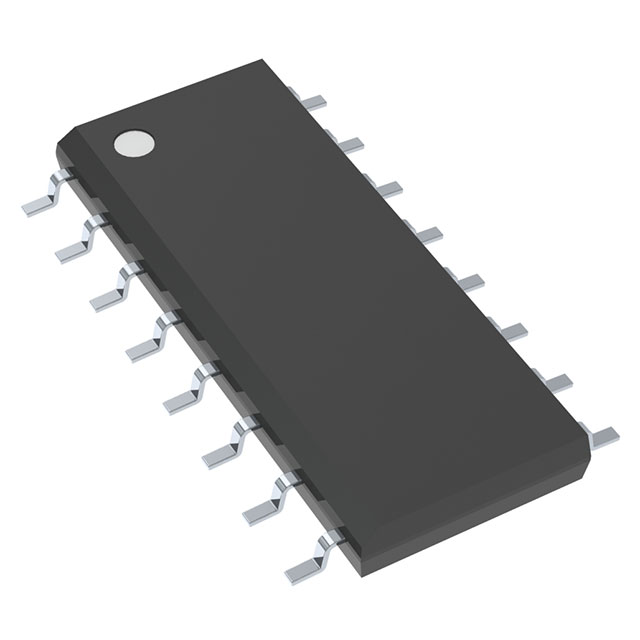
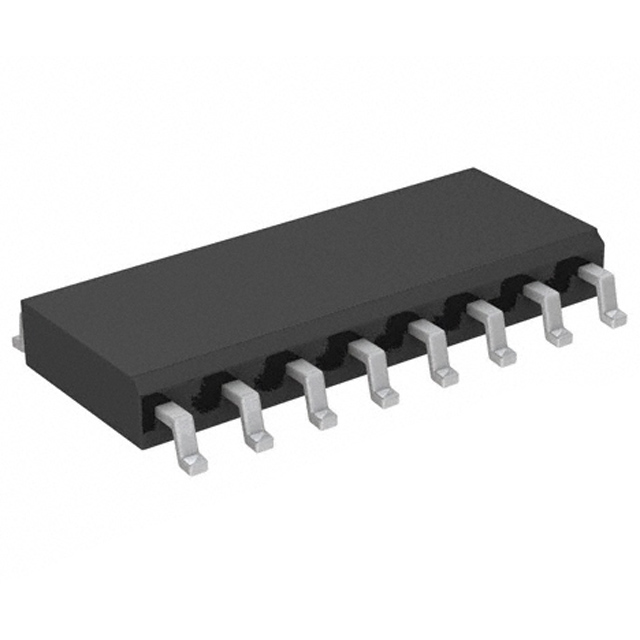
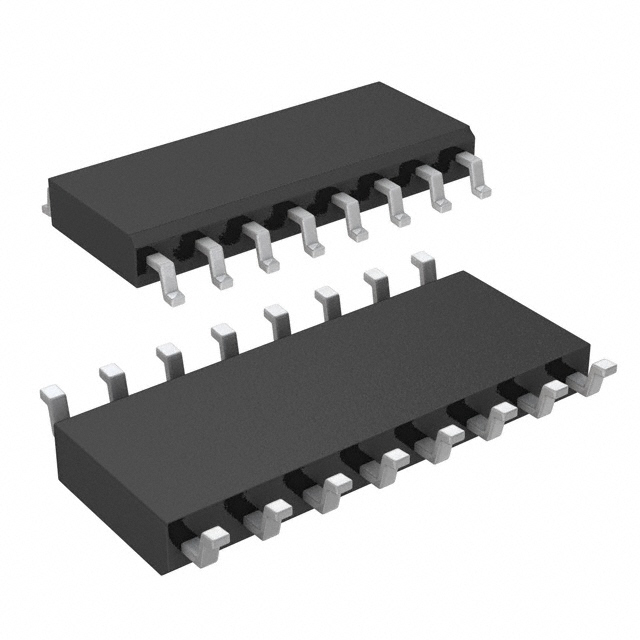
The TRS232EID is a 2/2 full-duplex RS232 transceiver manufactured by Texas Instruments in a 16-SOIC surface mount package. This component is classified as obsolete, which necessitates identification of equivalent and substitute parts for ongoing design support and procurement. The TRS232EID provides bidirectional RS232 signal conversion with 250 kbps data rate capability, making it suitable for legacy serial communication applications requiring full-duplex operation.
Substiute Parts
Key Parameters
| Parameter | TRS232EID Specification |
|---|---|
| Manufacturer | Texas Instruments |
| Type | Transceiver |
| Protocol | RS232 |
| Number of Drivers/Receivers | 2/2 |
| Duplex | Full |
| Receiver Hysteresis | 500 mV |
| Data Rate | 250 kbps |
| Voltage Supply Range | 4.5V ~ 5.5V |
| Operating Temperature | -40°C ~ 85°C |
| Mounting Type | Surface Mount |
| Package | 16-SOIC (0.154", 3.90mm Width) |
| Product Status | Obsolete |
| RoHS Status | ROHS3 Compliant |
| MSL Rating | 1 (Unlimited) |
Substitute Part Grouping Explanation
Substitution of the TRS232EID is determined by strict equivalence across the following critical parameters:
Primary Equivalence Criteria:
- Protocol: RS232
- Driver/Receiver Configuration: 2/2
- Duplex Mode: Full
- Package Type: 16-SOIC (0.154", 3.90mm Width)
- Voltage Supply Range: 4.5V ~ 5.5V minimum
- Operating Temperature Range: Must support -40°C ~ 85°C or be compatible with application requirements
- Mounting Type: Surface Mount
Secondary Compatibility Factors:
- Data Rate: 250 kbps or higher
- Receiver Hysteresis: 500 mV or compatible threshold
- RoHS3 Compliance
- MSL Rating: 1 or 3 acceptable for most applications
Substitute parts are classified into two categories: MFR Recommended (active product status with direct parametric equivalence) and Parametric Equivalent (matching electrical specifications regardless of product status).
Parameter Comparison
| Part Number | Manufacturer | Status | Data Rate | Hysteresis | Temp Range | Package | MSL |
|---|---|---|---|---|---|---|---|
| TRS232EID | Texas Instruments | Obsolete | 250 kbps | 500 mV | -40°C ~ 85°C | 16-SOIC | 1 |
| MAX232EIDR | Texas Instruments | Active | 250 kbps | 500 mV | -40°C ~ 85°C | 16-SOIC | 1 |
| MAX232EID | Texas Instruments | Obsolete | 250 kbps | 500 mV | -40°C ~ 85°C | 16-SOIC | 1 |
| ADM232AARNZ-REEL | Analog Devices Inc. | Active | 200 kbps | 400 mV | -40°C ~ 85°C | 16-SOIC | 1 |
| ADM232AARNZ-REEL7 | Analog Devices Inc. | Active | 200 kbps | 400 mV | -40°C ~ 85°C | 16-SOIC | 1 |
| HIN232EIBNZ-T | Renesas Electronics Corporation | Active | 230 kbps | 500 mV | -40°C ~ 85°C | 16-SOIC | 3 |
| ICL3232IBNZ-T7A | Renesas Electronics Corporation | Active | 250 kbps | 300 mV | -40°C ~ 85°C | 16-SOIC | 3 |
| MAX232ACSE+ | Analog Devices Inc./Maxim Integrated | Active | 200 kbps | 500 mV | 0°C ~ 70°C | 16-SOIC | 1 |
| HIN232ACBNZ-T | Renesas Electronics Corporation | Active | 230 kbps | 500 mV | 0°C ~ 70°C | 16-SOIC | 3 |
| ADM232AARNZ | UMW | Active | 120 kbps | Not specified | -40°C ~ 85°C | 16-SOIC | 1 |
Engineering Selection Recommendations
Tier 1 - Direct Replacement (Highest Compatibility):
MAX232EIDR is the primary recommended substitute. This Texas Instruments part maintains identical electrical specifications to the TRS232EID (250 kbps data rate, 500 mV hysteresis, -40°C ~ 85°C operating range) while offering active product status and improved availability. The part is supplied in Cut Tape and Digi-Reel packaging with 54,300 units in stock.
Tier 2 - Full Parameter Equivalence (Active Status):
HIN232EIBNZ-T (Renesas Electronics Corporation) provides complete parametric equivalence with -40°C ~ 85°C temperature range and 230 kbps data rate. This part is actively manufactured and ROHS3 compliant. The MSL rating of 3 (168 hours) requires standard moisture control during storage and handling.
ICL3232IBNZ-T7A (Renesas Electronics Corporation) matches the 250 kbps data rate specification with extended supply voltage range (3V ~ 5.5V). The 300 mV receiver hysteresis is lower than the original specification but remains within acceptable RS232 signal detection margins. This part supports the full -40°C ~ 85°C temperature range.
Tier 3 - Functional Equivalence with Parameter Variance:
ADM232AARNZ-REEL and ADM232AARNZ-REEL7 (Analog Devices Inc.) provide full-duplex 2/2 RS232 transceiver functionality with -40°C ~ 85°C temperature support. Data rate is specified at 200 kbps with 400 mV hysteresis, both within acceptable operating margins for standard RS232 applications.
Temperature-Constrained Alternatives:
MAX232ACSE+ and HIN232ACBNZ-T are suitable only for applications with 0°C ~ 70°C operating requirements. These parts are not recommended for designs requiring the full -40°C ~ 85°C range of the original TRS232EID.
Lower Data Rate Alternative:
ADM232AARNZ (UMW) operates at 120 kbps and is suitable only for applications with reduced bandwidth requirements.
Frequently Asked Questions (FAQ)
Q: Can MAX232EIDR directly replace TRS232EID without circuit modification?
A: Yes. MAX232EIDR maintains identical pin configuration, electrical specifications, and package dimensions. No circuit redesign is required for direct substitution in existing designs.
Q: What is the difference between HIN232EIBNZ-T and HIN232ACBNZ-T?
A: HIN232EIBNZ-T supports -40°C ~ 85°C operating temperature, matching the TRS232EID specification. HIN232ACBNZ-T is limited to 0°C ~ 70°C and is not suitable for extended temperature applications.
Q: Does MSL rating 3 affect component reliability compared to MSL rating 1?
A: MSL rating 3 (168 hours) indicates the component absorbs moisture during storage and requires reflow soldering within 168 hours of bag opening. This does not affect long-term reliability if proper moisture control procedures are followed during assembly. MSL rating 1 components have unlimited shelf life without moisture precautions.
Q: Are all substitute parts ROHS3 compliant?
A: Yes. All listed substitute parts carry ROHS3 compliance certification, meeting current environmental and hazardous substance restrictions.
Q: What is the significance of receiver hysteresis variation between parts?
A: Receiver hysteresis determines the voltage threshold differential for RS232 signal detection. The TRS232EID specifies 500 mV. Alternatives with 400 mV or 300 mV hysteresis provide tighter threshold margins but remain compatible with standard RS232 signal levels (-3V to +3V minimum). Lower hysteresis may improve noise immunity in marginal signal conditions.
Q: Can ICL3232IBNZ-T7A operate at 3V supply voltage?
A: Yes. ICL3232IBNZ-T7A supports 3V ~ 5.5V supply range, enabling operation in lower-voltage systems. The TRS232EID and most alternatives require minimum 4.5V supply.
Q: Which substitute offers the highest data rate?
A: MAX232EIDR and ICL3232IBNZ-T7A both support 250 kbps, matching the TRS232EID specification. HIN232EIBNZ-T and HIN232ACBNZ-T support 230 kbps. ADM232 variants support 200 kbps or lower.
Q: Is packaging format (Tube vs. Cut Tape) significant for substitution?
A: Packaging format affects procurement and assembly handling but does not impact electrical compatibility. MAX232EIDR is available in Cut Tape and Digi-Reel formats with higher stock availability. Select packaging based on assembly line requirements and inventory management practices.
Alternative Parts

SJ6012L2TP
Littelfuse Inc.
6 Alternative Parts

JMK107BBJ476MA-RE
Taiyo Yuden
10 Alternative Parts

GMK107BBJ475MA-T
Taiyo Yuden
5 Alternative Parts
SJ6020N2ARP
Littelfuse Inc.
3 Alternative Parts
SJ6025R2ATP
Littelfuse Inc.
4 Alternative Parts

2474-05L
API Delevan Inc.
1 Alternative Parts

4590R-684K
API Delevan Inc.
1 Alternative Parts

CM6560R-334
API Delevan Inc.
1 Alternative Parts

CM6460-104
API Delevan Inc.
1 Alternative Parts

5526-12
API Delevan Inc.
1 Alternative Parts