







Request Quote
(Ships tomorrow)
TRS232ECD RS232 Transceiver Equivalent & Substitute Parts
Part Overview
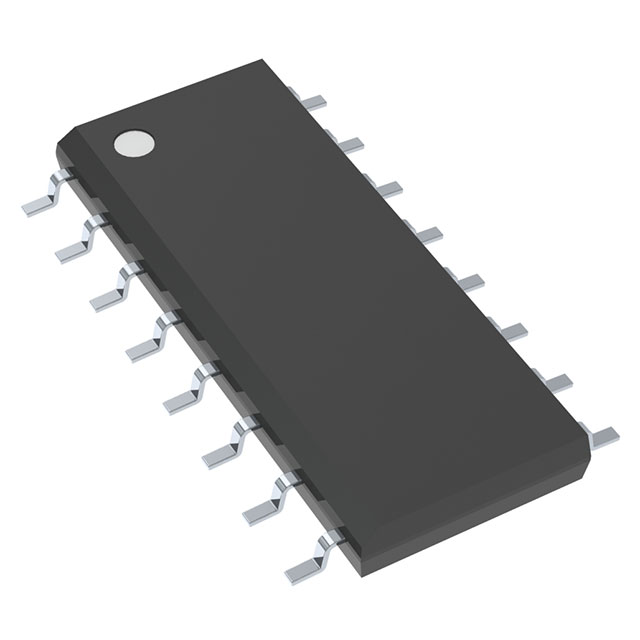
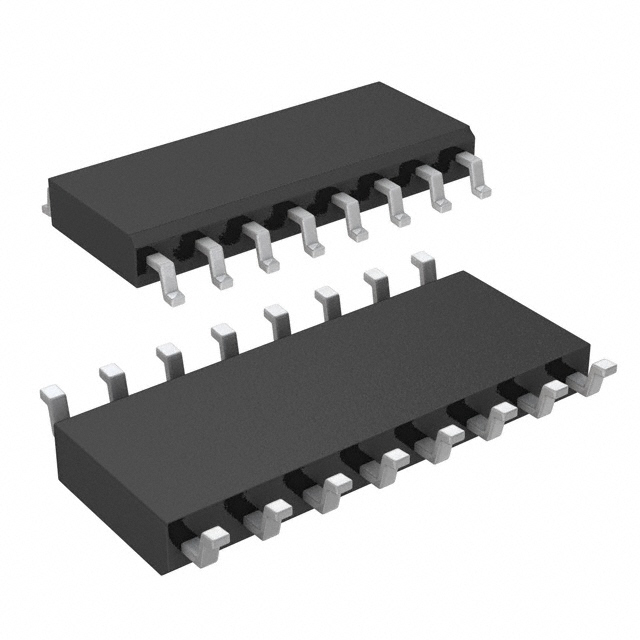
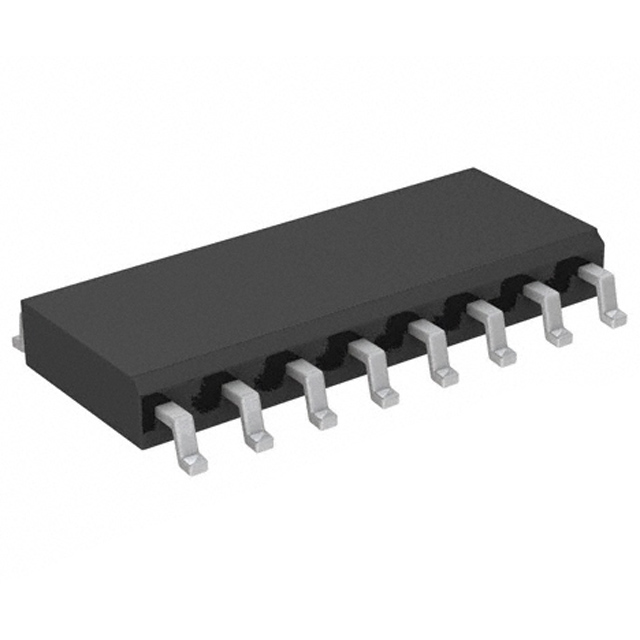
The TRS232ECD is a 2/2 full-duplex RS232 transceiver manufactured by Texas Instruments in a 16-SOIC surface mount package. This interface IC operates at 4.5V to 5.5V supply voltage with a 250 kbps data rate and 500 mV receiver hysteresis. The part is classified as obsolete, making equivalent and substitute parts necessary for ongoing system support and new design implementations. Substitute parts must maintain electrical compatibility across protocol, driver/receiver configuration, duplex mode, supply voltage, and package specifications.
Substiute Parts
Key Parameters
| Parameter | TRS232ECD Value |
|---|---|
| Manufacturer | Texas Instruments |
| Protocol | RS232 |
| Type | Transceiver |
| Number of Drivers/Receivers | 2/2 |
| Duplex Mode | Full |
| Voltage Supply Range | 4.5V ~ 5.5V |
| Data Rate | 250 kbps |
| Receiver Hysteresis | 500 mV |
| Operating Temperature | 0°C ~ 70°C |
| Package / Case | 16-SOIC (0.154", 3.90mm Width) |
| Mounting Type | Surface Mount |
| RoHS Status | ROHS3 Compliant |
| Product Status | Obsolete |
Substitute Part Grouping Explanation
Substitute parts for the TRS232ECD are selected based on strict electrical and mechanical compatibility. The critical parameters determining substitutability are:
- RS232 protocol implementation
- 2/2 driver/receiver configuration
- Full-duplex operation
- 4.5V to 5.5V supply voltage compatibility
- 16-SOIC package form factor
- Surface mount technology
Substitute parts are grouped into two categories: MFR Recommended parts (manufacturer-designated alternatives) and Direct alternatives (functionally equivalent parts meeting all core electrical parameters). All substitute parts maintain ROHS3 compliance and EAR99 export classification. Operating temperature ranges and data rates may vary within acceptable limits for RS232 applications, as the protocol does not mandate identical specifications across all implementations.
Parameter Comparison
| Part Number | Manufacturer | Protocol | Drivers/Receivers | Duplex | Supply Voltage | Data Rate | Receiver Hysteresis | Operating Temp | Package | Product Status |
|---|---|---|---|---|---|---|---|---|---|---|
| TRS232ECD | Texas Instruments | RS232 | 2/2 | Full | 4.5V ~ 5.5V | 250 kbps | 500 mV | 0°C ~ 70°C | 16-SOIC | Obsolete |
| MAX232EIDR | Texas Instruments | RS232 | 2/2 | Full | 4.5V ~ 5.5V | 250 kbps | 500 mV | -40°C ~ 85°C | 16-SOIC | Active |
| LT1781CS#PBF | Analog Devices Inc. | RS232 | 2/2 | Full | 4.5V ~ 5.5V | 250 kbps | 400 mV | 0°C ~ 70°C | 16-SOIC | Active |
| LT1781CS#TRPBF | Analog Devices Inc. | RS232 | 2/2 | Full | 4.5V ~ 5.5V | 250 kbps | 400 mV | 0°C ~ 70°C | 16-SOIC | Active |
| MAX232ECSE+ | Analog Devices Inc./Maxim Integrated | RS232 | 2/2 | Full | 4.5V ~ 5.5V | 120 kbps | 500 mV | 0°C ~ 70°C | 16-SOIC | Active |
| MAX232ECSE+T | Analog Devices Inc./Maxim Integrated | RS232 | 2/2 | Full | 4.5V ~ 5.5V | 120 kbps | 500 mV | 0°C ~ 70°C | 16-SOIC | Active |
| ADM232AARNZ | UMW | RS232 | 2/2 | Full | 4.5V ~ 5.5V | 120 kbps | Not specified | -40°C ~ 85°C | 16-SOIC | Active |
| ADM232AARNZ-REEL | Analog Devices Inc. | RS232 | 2/2 | Full | 4.5V ~ 5.5V | 200 kbps | 400 mV | -40°C ~ 85°C | 16-SOIC | Active |
| ADM232AARNZ-REEL7 | Analog Devices Inc. | RS232 | 2/2 | Full | 4.5V ~ 5.5V | 200 kbps | 400 mV | -40°C ~ 85°C | 16-SOIC | Active |
| HIN232ACBNZ-T | Renesas Electronics Corporation | RS232 | 2/2 | Full | 4.5V ~ 5.5V | 230 kbps | 500 mV | 0°C ~ 70°C | 16-SOIC | Active |
| HIN232EIBNZ | Renesas Electronics Corporation | RS232 | 2/2 | Full | 4.5V ~ 5.5V | 230 kbps | 500 mV | -40°C ~ 85°C | 16-SOIC | Active |
Engineering Selection Recommendations
All listed substitute parts are active production components with ROHS3 compliance and EAR99 export classification, matching the regulatory status of the TRS232ECD. Selection should prioritize parts with active product status to ensure long-term availability and supply chain stability.
For applications requiring extended operating temperature range beyond 0°C to 70°C, the MAX232EIDR, ADM232AARNZ, ADM232AARNZ-REEL, ADM232AARNZ-REEL7, and HIN232EIBNZ support -40°C to 85°C operation.
For applications with data rate requirements at or above 250 kbps, the MAX232EIDR, LT1781CS#PBF, LT1781CS#TRPBF, ADM232AARNZ-REEL, ADM232AARNZ-REEL7, HIN232ACBNZ-T, and HIN232EIBNZ are suitable. Parts with lower data rates (MAX232ECSE+, MAX232ECSE+T, ADM232AARNZ at 120 kbps) are acceptable for lower-speed RS232 applications.
For receiver hysteresis matching at 500 mV, the MAX232EIDR, MAX232ECSE+, MAX232ECSE+T, HIN232ACBNZ-T, and HIN232EIBNZ are direct equivalents. Parts with 400 mV hysteresis (LT1781CS#PBF, LT1781CS#TRPBF, ADM232AARNZ-REEL, ADM232AARNZ-REEL7) provide tighter input threshold specifications.
Frequently Asked Questions (FAQ)
Q: Can I use MAX232ECSE+ or MAX232ECSE+T as direct replacements for TRS232ECD?
A: Yes. Both parts maintain RS232 protocol, 2/2 driver/receiver configuration, full-duplex operation, 4.5V to 5.5V supply voltage, and 16-SOIC package compatibility. The data rate specification is 120 kbps versus 250 kbps on the original part; this is acceptable for most RS232 applications operating below maximum protocol speed.
Q: What is the difference between LT1781CS#PBF and LT1781CS#TRPBF?
A: Both parts are electrically identical Analog Devices LT1781 transceivers. The primary difference is packaging: LT1781CS#PBF is supplied in Tube packaging, while LT1781CS#TRPBF is supplied in Tape & Reel format. Both maintain identical electrical specifications and 16-SOIC package form factor.
Q: Are ADM232AARNZ-REEL and ADM232AARNZ-REEL7 interchangeable?
A: Yes. Both are Analog Devices ADM232 transceivers with identical electrical specifications: 2/2 RS232 configuration, 4.5V to 5.5V supply, 200 kbps data rate, 400 mV receiver hysteresis, and -40°C to 85°C operating temperature. The suffix difference indicates reel packaging variants.
Q: Which substitute part most closely matches the TRS232ECD operating temperature range?
A: The HIN232ACBNZ-T and LT1781CS#PBF maintain the original 0°C to 70°C operating temperature specification. For applications requiring extended temperature operation, HIN232EIBNZ, MAX232EIDR, and ADM232 variants support -40°C to 85°C.
Q: Does receiver hysteresis affect RS232 compatibility?
A: Receiver hysteresis affects input threshold characteristics but does not prevent functional substitution in RS232 applications. The TRS232ECD specifies 500 mV hysteresis. Substitute parts with 400 mV hysteresis (LT1781 and ADM232 series) provide tighter input thresholds and are functionally compatible.
Q: Are all substitute parts ROHS3 compliant?
A: Yes. All listed substitute parts maintain ROHS3 compliance and EAR99 export classification, matching the regulatory status of the TRS232ECD.
Alternative Parts

SJ6012L2TP
Littelfuse Inc.
6 Alternative Parts

JMK107BBJ476MA-RE
Taiyo Yuden
10 Alternative Parts

GMK107BBJ475MA-T
Taiyo Yuden
5 Alternative Parts
SJ6020N2ARP
Littelfuse Inc.
3 Alternative Parts
SJ6025R2ATP
Littelfuse Inc.
4 Alternative Parts

2474-05L
API Delevan Inc.
1 Alternative Parts

4590R-684K
API Delevan Inc.
1 Alternative Parts

CM6560R-334
API Delevan Inc.
1 Alternative Parts

CM6460-104
API Delevan Inc.
1 Alternative Parts

5526-12
API Delevan Inc.
1 Alternative Parts