



Request Quote
(Ships tomorrow)
TPS92001D LED Driver IC Equivalent & Substitute Parts
Part Overview
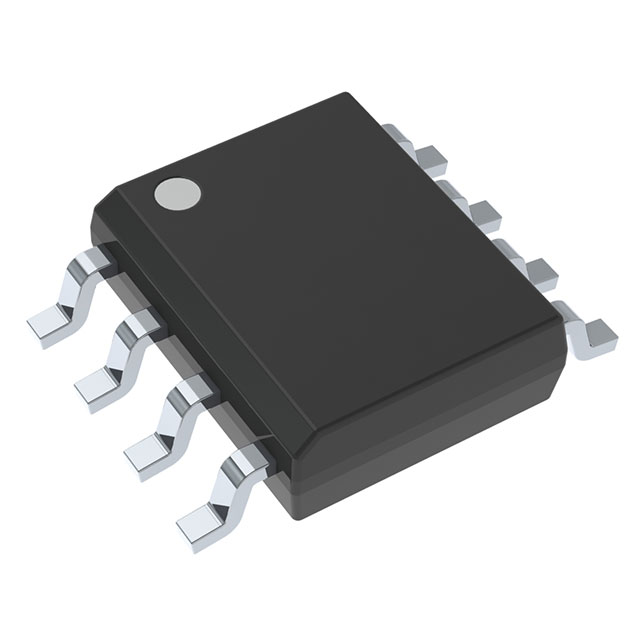
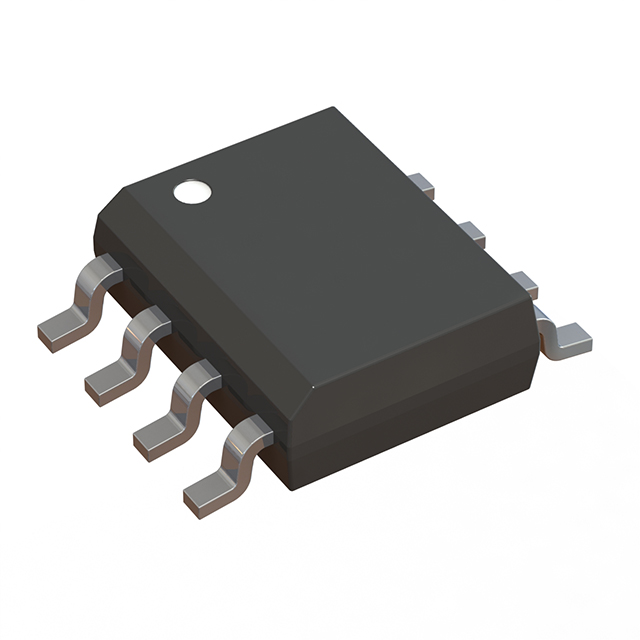
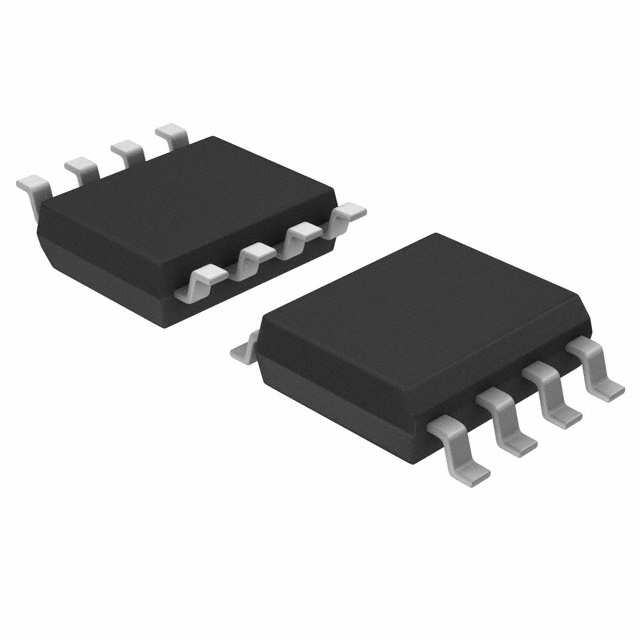
The TPS92001D is an AC DC offline switcher LED driver IC manufactured by Texas Instruments, designed for lighting applications with Triac dimming capability. This device integrates a single output flyback and step-down buck topology in an 8-SOIC surface mount package. The part is currently in Last Time Buy status, indicating end-of-life production. Identifying qualified substitute components ensures design continuity and supply chain reliability for new production runs and legacy system maintenance.
Substiute Parts
Key Parameters
| Parameter | Value |
|---|---|
| Manufacturer Part Number | TPS92001D |
| Manufacturer | Texas Instruments |
| Category | Power Management (PMIC) |
| Type | AC DC Offline Switcher |
| Topology | Flyback, Step-Down (Buck) |
| Number of Outputs | 1 |
| Voltage - Supply (Max) | 21V |
| Voltage - Output | 5V |
| Frequency | 100kHz |
| Dimming | Triac |
| Package / Case | 8-SOIC (0.154", 3.90mm Width) |
| Operating Temperature | -40°C ~ 105°C (TJ) |
| RoHS Status | ROHS3 Compliant |
| Moisture Sensitivity Level (MSL) | 1 (Unlimited) |
| Product Status | Last Time Buy |
Substitute Part Grouping Explanation
Substitution eligibility for the TPS92001D is determined by the following critical parameters:
Primary Compatibility Criteria:
- AC DC offline switcher topology classification
- Single output configuration
- 8-SOIC surface mount package footprint compatibility
- Operating temperature range overlap with -40°C minimum
- RoHS3 compliance and REACH unaffected status
- Moisture sensitivity level MSL 1 or MSL 3
Secondary Consideration:
- Dimming capability (Triac or PWM acceptable for lighting applications)
- Frequency range overlap or compatibility with existing circuit design
- Supply voltage range that encompasses the 21V maximum specification
The substitute parts CPC9909NE, CPC9909NTR, and RT8465ZS meet these criteria with the following distinctions:
CPC9909NE and CPC9909NTR (IXYS Integrated Circuits Division): AC DC offline switchers with step-down buck and step-up boost topologies, PWM dimming, 8-SOIC package, extended supply voltage range (8V–550V), and active product status.
RT8465ZS (Richtek USA Inc.): AC DC offline switcher with step-up boost topology, 8-SOIC package, lower supply voltage range (8V–32V), and obsolete product status.
Parameter Comparison
| Parameter | TPS92001D | CPC9909NE | CPC9909NTR | RT8465ZS |
|---|---|---|---|---|
| Manufacturer | Texas Instruments | IXYS Integrated Circuits Division | IXYS Integrated Circuits Division | Richtek USA Inc. |
| Type | AC DC Offline Switcher | AC DC Offline Switcher | AC DC Offline Switcher | AC DC Offline Switcher |
| Topology | Flyback, Step-Down (Buck) | Step-Down (Buck), Step-Up (Boost) | Step-Down (Buck), Step-Up (Boost) | Step-Up (Boost) |
| Number of Outputs | 1 | 1 | 1 | 1 |
| Voltage - Supply (Min) | — | 8V | 8V | 8V |
| Voltage - Supply (Max) | 21V | 550V | 550V | 32V |
| Frequency | 100kHz | 30kHz ~ 120kHz | 30kHz ~ 120kHz | 220kHz |
| Dimming | Triac | PWM | PWM | — |
| Package / Case | 8-SOIC (0.154", 3.90mm Width) | 8-SOIC (0.154", 3.90mm Width) Exposed Pad | 8-SOIC (0.154", 3.90mm Width) | 8-SOIC (0.154", 3.90mm Width) |
| Operating Temperature | -40°C ~ 105°C (TJ) | -40°C ~ 85°C (TA) | -40°C ~ 85°C (TA) | -40°C ~ 85°C (TA) |
| RoHS Status | ROHS3 Compliant | ROHS3 Compliant | ROHS3 Compliant | ROHS3 Compliant |
| Moisture Sensitivity Level (MSL) | 1 (Unlimited) | 1 (Unlimited) | 1 (Unlimited) | 3 (168 Hours) |
| Product Status | Last Time Buy | Active | Active | Obsolete |
Engineering Selection Recommendations
CPC9909NE and CPC9909NTR are the primary recommended substitutes for the TPS92001D. Both parts are manufactured by IXYS Integrated Circuits Division and maintain active product status, ensuring long-term availability and supply chain stability. These devices share the 8-SOIC package footprint, RoHS3 compliance, and MSL 1 rating. The extended supply voltage range (8V–550V) provides design flexibility beyond the TPS92001D specification. The frequency range of 30kHz–120kHz encompasses the TPS92001D operating point of 100kHz. PWM dimming capability is functionally compatible with lighting applications. CPC9909NE includes an exposed pad variant for enhanced thermal performance, while CPC9909NTR is supplied in cut tape and digi-reel packaging.
RT8465ZS is a secondary substitute option with the following constraints: The device is classified as obsolete, limiting future procurement viability. The supply voltage maximum of 32V accommodates the TPS92001D 21V specification but provides less design margin. The 220kHz operating frequency differs significantly from the TPS92001D 100kHz specification. MSL 3 rating requires controlled moisture exposure during storage and handling. This part is suitable only for legacy system repairs or applications where supply voltage remains below 32V and thermal management is not critical.
Frequently Asked Questions (FAQ)
Q: Can CPC9909NE or CPC9909NTR be used as direct pin-for-pin replacements for TPS92001D?
A: Both CPC9909 variants share the 8-SOIC package footprint and pinout compatibility. However, circuit design validation is required due to differences in topology (buck-boost vs. flyback-buck), dimming method (PWM vs. Triac), and frequency characteristics. PCB layout modifications may be necessary, particularly for CPC9909NE with its exposed pad variant.
Q: What is the impact of switching from Triac dimming to PWM dimming?
A: Triac dimming operates through phase-angle control of AC line voltage, while PWM dimming modulates the DC output duty cycle. Both methods achieve brightness control in lighting applications. PWM dimming typically offers improved flicker performance and compatibility with modern LED driver architectures. Circuit topology and control firmware must be adapted accordingly.
Q: Is RT8465ZS suitable for new production designs?
A: No. RT8465ZS is classified as obsolete, making it unsuitable for new production designs. This part should be reserved for legacy system maintenance only. CPC9909NE or CPC9909NTR are recommended for all new designs.
Q: What are the packaging differences between CPC9909NE and CPC9909NTR?
A: CPC9909NE is supplied in tube packaging with an exposed pad variant (8-SOIC-EP). CPC9909NTR is supplied in cut tape and digi-reel packaging in standard 8-SOIC configuration. Both share identical electrical specifications and are functionally interchangeable. Selection depends on assembly process requirements and packaging preferences.
Q: Does the lower operating temperature maximum of substitute parts affect compatibility?
A: The TPS92001D junction temperature rating is -40°C to 105°C (TJ), while substitute parts are rated -40°C to 85°C (TA, ambient). For applications operating below 85°C ambient temperature, substitute parts are compatible. Thermal analysis is required for applications approaching or exceeding 85°C ambient conditions.
Q: Are all substitute parts RoHS3 compliant?
A: Yes. TPS92001D, CPC9909NE, CPC9909NTR, and RT8465ZS are all RoHS3 compliant and REACH unaffected, meeting current environmental and regulatory requirements.
Alternative Parts

SJ6012L2TP
Littelfuse Inc.
6 Alternative Parts

JMK107BBJ476MA-RE
Taiyo Yuden
10 Alternative Parts

GMK107BBJ475MA-T
Taiyo Yuden
5 Alternative Parts
SJ6020N2ARP
Littelfuse Inc.
3 Alternative Parts
SJ6025R2ATP
Littelfuse Inc.
4 Alternative Parts

2474-05L
API Delevan Inc.
1 Alternative Parts

4590R-684K
API Delevan Inc.
1 Alternative Parts

CM6560R-334
API Delevan Inc.
1 Alternative Parts

CM6460-104
API Delevan Inc.
1 Alternative Parts

5526-12
API Delevan Inc.
1 Alternative Parts