


Request Quote
(Ships tomorrow)
TPS2013DG4 Equivalent & Substitute Parts
Part Overview
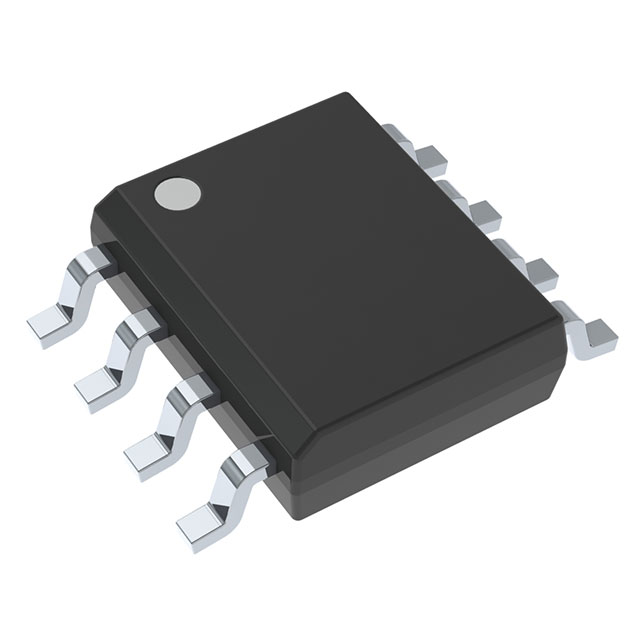
The TPS2013DG4 is a Power Management Integrated Circuit (PMIC) functioning as a power switch/driver with N-Channel output configuration. This component is classified as a General Purpose switch with 1:1 input-to-output ratio and high-side output topology. The TPS2013DG4 is currently discontinued at DiGi Electronics, necessitating identification of functionally equivalent alternatives for ongoing design support and component procurement.
Substiute Parts
Key Parameters
| Parameter | Value |
|---|---|
| Manufacturer Part Number | TPS2013DG4 |
| Manufacturer | Texas Instruments |
| Category | Power Management (PMIC) |
| Switch Type | General Purpose |
| Output Configuration | High Side, N-Channel |
| Voltage - Load | 2.7V ~ 5.5V |
| Current - Output (Max) | 1.5A |
| Rds On (Typ) | 75mOhm |
| Operating Temperature | -40°C ~ 125°C (TJ) |
| Package / Case | 8-SOIC (0.154", 3.90mm Width) |
| Mounting Type | Surface Mount |
| RoHS Status | ROHS3 Compliant |
Substitute Part Grouping Explanation
Substitution eligibility for the TPS2013DG4 is determined by the following critical parameters:
- Output Configuration & Type: High Side N-Channel topology must be maintained
- Voltage Rating: Load voltage range of 2.7V ~ 5.5V must be supported
- Current Capacity: Maximum output current of 1.5A or greater
- Package Compatibility: 8-SOIC surface mount package required
- Operating Temperature Range: -40°C ~ 125°C (TJ) minimum
- Interface Type: On/Off control interface
- Fault Protection: Current limiting and over-temperature protection required
The TPS2013 product family from Texas Instruments provides direct substitutes within this parameter envelope. Variants within this family differ primarily in on-resistance characteristics and additional protection features while maintaining identical electrical and mechanical interfaces.
Parameter Comparison
| Parameter | TPS2013DG4 | TPS2013D | TPS2013AD |
|---|---|---|---|
| Manufacturer | Texas Instruments | Texas Instruments | Texas Instruments |
| Switch Type | General Purpose | General Purpose | General Purpose |
| Number of Outputs | 1 | 1 | 1 |
| Output Configuration | High Side | High Side | High Side |
| Output Type | N-Channel | N-Channel | N-Channel |
| Interface | On/Off | On/Off | On/Off |
| Voltage - Load | 2.7V ~ 5.5V | 2.7V ~ 5.5V | 2.7V ~ 5.5V |
| Current - Output (Max) | 1.5A | 1.5A | 1.5A |
| Rds On (Typ) | 75mOhm | 75mOhm | 33mOhm |
| Input Type | Non-Inverting | Non-Inverting | Non-Inverting |
| Fault Protection | Current Limiting (Fixed), Over Temperature | Current Limiting (Fixed), Over Temperature | Current Limiting (Fixed), Over Temperature, UVLO |
| Operating Temperature | -40°C ~ 125°C (TJ) | -40°C ~ 125°C (TJ) | -40°C ~ 125°C (TJ) |
| Mounting Type | Surface Mount | Surface Mount | Surface Mount |
| Package / Case | 8-SOIC (0.154", 3.90mm Width) | 8-SOIC (0.154", 3.90mm Width) | 8-SOIC (0.154", 3.90mm Width) |
| RoHS Status | ROHS3 Compliant | ROHS3 Compliant | ROHS3 Compliant |
| Moisture Sensitivity Level (MSL) | 1 (Unlimited) | 1 (Unlimited) | 1 (Unlimited) |
Engineering Selection Recommendations
TPS2013D: This part maintains identical electrical specifications to the TPS2013DG4, including 75mOhm on-resistance and equivalent fault protection features. The TPS2013D is designated as "Not For New Designs" but remains functionally compatible for replacement applications. This variant is suitable for direct substitution in existing designs where component availability is the primary concern.
TPS2013AD: This part is the recommended substitute for new designs. It maintains all critical electrical parameters including voltage rating, current capacity, and operating temperature range. The TPS2013AD features improved on-resistance of 33mOhm compared to the 75mOhm of the TPS2013DG4, resulting in lower power dissipation. Additionally, the TPS2013AD includes Under-Voltage Lock-Out (UVLO) protection, providing enhanced circuit protection. The TPS2013AD carries Active product status, ensuring long-term availability and design support.
Both substitute parts are ROHS3 compliant, maintain identical 8-SOIC packaging, and support the same voltage and current specifications as the original TPS2013DG4.
Frequently Asked Questions (FAQ)
Q: Can TPS2013D or TPS2013AD be used as direct replacements for TPS2013DG4?
A: Both parts are direct pin-compatible replacements. All three components share identical 8-SOIC package geometry, pinout configuration, and electrical interface specifications. No PCB modifications are required for substitution.
Q: What is the difference between TPS2013D and TPS2013AD?
A: The primary differences are on-resistance and protection features. TPS2013D maintains 75mOhm on-resistance matching the original TPS2013DG4. TPS2013AD provides improved performance with 33mOhm on-resistance and includes UVLO protection. TPS2013AD is designated Active status, while TPS2013D is Not For New Designs.
Q: Which substitute should be selected for new designs?
A: TPS2013AD is the recommended choice for new designs due to its Active product status, improved on-resistance characteristics, and enhanced protection features including UVLO.
Q: Are there any thermal or electrical performance differences between these parts?
A: The lower on-resistance of TPS2013AD (33mOhm vs. 75mOhm) results in reduced power dissipation and lower junction temperature rise under load. Both parts maintain identical maximum current capacity of 1.5A and operating temperature range of -40°C to 125°C.
Q: Do all three parts support the same load voltage range?
A: Yes. TPS2013DG4, TPS2013D, and TPS2013AD all support load voltage operation from 2.7V to 5.5V with identical interface specifications.
Q: What is the significance of UVLO protection in TPS2013AD?
A: Under-Voltage Lock-Out (UVLO) protection prevents device operation when supply voltage falls below a specified threshold, protecting downstream circuits from undefined behavior during low-voltage conditions. This feature is present in TPS2013AD but not in TPS2013DG4 or TPS2013D.
Alternative Parts

SJ6012L2TP
Littelfuse Inc.
6 Alternative Parts

JMK107BBJ476MA-RE
Taiyo Yuden
10 Alternative Parts

GMK107BBJ475MA-T
Taiyo Yuden
5 Alternative Parts
SJ6020N2ARP
Littelfuse Inc.
3 Alternative Parts
SJ6025R2ATP
Littelfuse Inc.
4 Alternative Parts

2474-05L
API Delevan Inc.
1 Alternative Parts

4590R-684K
API Delevan Inc.
1 Alternative Parts

CM6560R-334
API Delevan Inc.
1 Alternative Parts

CM6460-104
API Delevan Inc.
1 Alternative Parts

5526-12
API Delevan Inc.
1 Alternative Parts