


Request Quote
(Ships tomorrow)
TPS2010D Equivalent & Substitute Parts
Part Overview
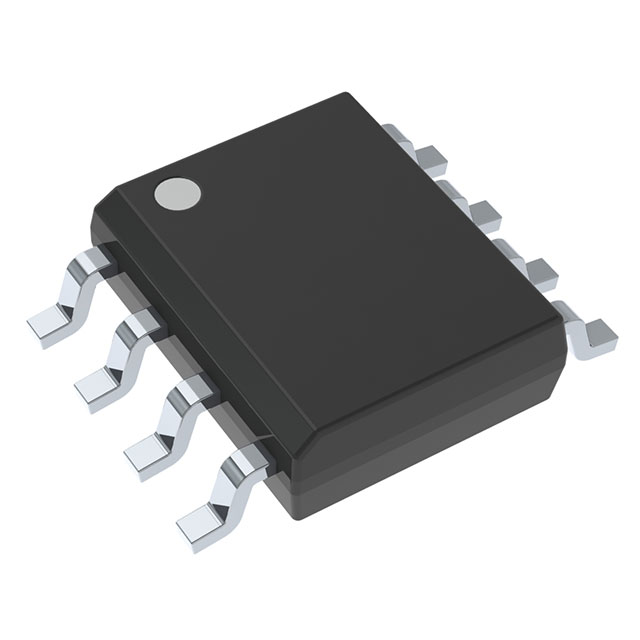
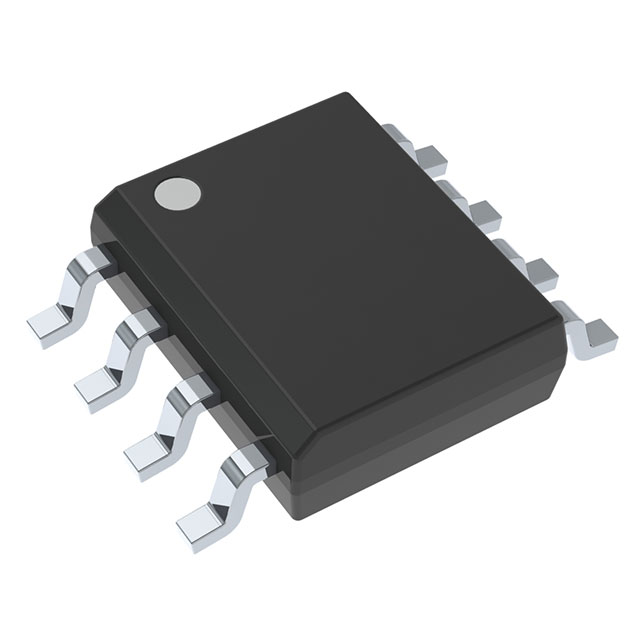
The TPS2010D is a Power Management Integrated Circuit (PMIC) functioning as a power switch/driver with 1:1 N-Channel configuration. This component is classified as Not For New Designs, indicating it has reached end-of-life status. The TPS2010D operates as a general-purpose high-side N-channel switch with 200mA maximum output current, designed for load voltage applications ranging from 2.7V to 5.5V. Due to its discontinued design status, identifying functionally equivalent active alternatives is essential for ongoing system support and new design implementations.
Substiute Parts
Key Parameters
| Parameter | Value |
|---|---|
| Manufacturer | Texas Instruments |
| Category | Power Management (PMIC) |
| Switch Type | General Purpose |
| Output Configuration | High Side |
| Output Type | N-Channel |
| Number of Outputs | 1 |
| Ratio - Input:Output | 1:1 |
| Voltage - Load | 2.7V ~ 5.5V |
| Current - Output (Max) | 200mA |
| Rds On (Typ) | 75mOhm |
| Interface | On/Off |
| Input Type | Non-Inverting |
| Fault Protection | Current Limiting (Fixed), Over Temperature |
| Operating Temperature | -40°C ~ 125°C (TJ) |
| Mounting Type | Surface Mount |
| Package / Case | 8-SOIC (0.154", 3.90mm Width) |
| RoHS Status | ROHS3 Compliant |
| Moisture Sensitivity Level (MSL) | 1 (Unlimited) |
Substitute Part Grouping Explanation
Substitution eligibility for the TPS2010D is determined by strict equivalence across the following critical parameters:
- Output Configuration & Type: High-side N-channel topology with 1:1 input-to-output ratio
- Electrical Performance: 200mA maximum output current capability and load voltage range of 2.7V ~ 5.5V
- Package Compatibility: 8-SOIC surface-mount package with identical physical dimensions
- Interface & Control: Non-inverting on/off control logic
- Thermal & Environmental: Operating temperature range of -40°C ~ 125°C and MSL 1 rating
- Compliance: ROHS3 compliance and equivalent regulatory certifications
The TPS2010AD qualifies as a direct substitute based on matching all critical parameters while offering improved electrical characteristics and active product status.
Parameter Comparison
| Parameter | TPS2010D | TPS2010AD |
|---|---|---|
| Manufacturer | Texas Instruments | Texas Instruments |
| Product Status | Not For New Designs | Active |
| Switch Type | General Purpose | General Purpose |
| Output Configuration | High Side | High Side |
| Output Type | N-Channel | N-Channel |
| Number of Outputs | 1 | 1 |
| Ratio - Input:Output | 1:1 | 1:1 |
| Voltage - Load | 2.7V ~ 5.5V | 2.7V ~ 5.5V |
| Current - Output (Max) | 200mA | 200mA |
| Rds On (Typ) | 75mOhm | 30mOhm |
| Interface | On/Off | On/Off |
| Input Type | Non-Inverting | Non-Inverting |
| Fault Protection | Current Limiting (Fixed), Over Temperature | Current Limiting (Fixed), Over Temperature, UVLO |
| Operating Temperature | -40°C ~ 125°C (TJ) | -40°C ~ 125°C (TJ) |
| Mounting Type | Surface Mount | Surface Mount |
| Package / Case | 8-SOIC (0.154", 3.90mm Width) | 8-SOIC (0.154", 3.90mm Width) |
| RoHS Status | ROHS3 Compliant | ROHS3 Compliant |
| Moisture Sensitivity Level (MSL) | 1 (Unlimited) | 1 (Unlimited) |
Engineering Selection Recommendations
The TPS2010AD is the recommended substitute for the TPS2010D based on the following engineering criteria:
Product Status Alignment: The TPS2010AD maintains Active product status, ensuring continued availability, manufacturing support, and long-term supply chain stability. The TPS2010D's Not For New Designs classification necessitates transition to an active equivalent for sustained system support.
Electrical Equivalence: Both devices maintain identical load voltage specifications (2.7V ~ 5.5V), maximum output current (200mA), and 1:1 input-to-output topology. The TPS2010AD's reduced on-resistance (30mOhm versus 75mOhm) provides improved efficiency and reduced thermal dissipation without compromising functional compatibility.
Enhanced Protection Features: The TPS2010AD incorporates Under-Voltage Lockout (UVLO) protection in addition to the current limiting and over-temperature protection present in the TPS2010D, offering superior system reliability.
Compliance & Certification: Both parts maintain ROHS3 compliance, identical MSL 1 ratings, and equivalent regulatory certifications, ensuring no compliance-related design modifications are required.
Package Compatibility: Identical 8-SOIC package specifications enable direct board-level substitution without PCB redesign.
Frequently Asked Questions (FAQ)
Q: Can the TPS2010AD be used as a direct replacement for the TPS2010D in existing designs?
A: Yes. The TPS2010AD is electrically and mechanically equivalent to the TPS2010D across all critical parameters: output configuration, load voltage range, maximum current, operating temperature, and package type. Pin-for-pin compatibility and identical control logic enable direct substitution without circuit modifications.
Q: What is the significance of the reduced on-resistance in the TPS2010AD?
A: The TPS2010AD's 30mOhm on-resistance compared to the TPS2010D's 75mOhm results in lower power dissipation and reduced thermal generation at equivalent load currents. This improvement enhances system efficiency and thermal performance while maintaining full functional compatibility.
Q: Does the addition of UVLO protection in the TPS2010AD affect circuit operation?
A: No. Under-Voltage Lockout (UVLO) is a protective feature that prevents device operation when supply voltage falls below a specified threshold. This enhancement improves system reliability by preventing erratic behavior during low-voltage conditions and does not alter normal operating characteristics.
Q: Are there any PCB layout or thermal management differences between these parts?
A: No. Both devices use identical 8-SOIC packaging with matching physical dimensions and thermal characteristics. Existing PCB layouts, thermal management strategies, and assembly processes require no modification.
Q: What compliance certifications apply to both parts?
A: Both the TPS2010D and TPS2010AD maintain ROHS3 compliance, MSL 1 (Unlimited) moisture sensitivity rating, and equivalent regulatory certifications. No compliance-related design changes are necessary when transitioning between these parts.
Alternative Parts

SJ6012L2TP
Littelfuse Inc.
6 Alternative Parts

JMK107BBJ476MA-RE
Taiyo Yuden
10 Alternative Parts

GMK107BBJ475MA-T
Taiyo Yuden
5 Alternative Parts
SJ6020N2ARP
Littelfuse Inc.
3 Alternative Parts
SJ6025R2ATP
Littelfuse Inc.
4 Alternative Parts

2474-05L
API Delevan Inc.
1 Alternative Parts

4590R-684K
API Delevan Inc.
1 Alternative Parts

CM6560R-334
API Delevan Inc.
1 Alternative Parts

CM6460-104
API Delevan Inc.
1 Alternative Parts

5526-12
API Delevan Inc.
1 Alternative Parts