



Request Quote
(Ships tomorrow)
TPC817MC C9G Equivalent & Substitute Parts
Part Overview
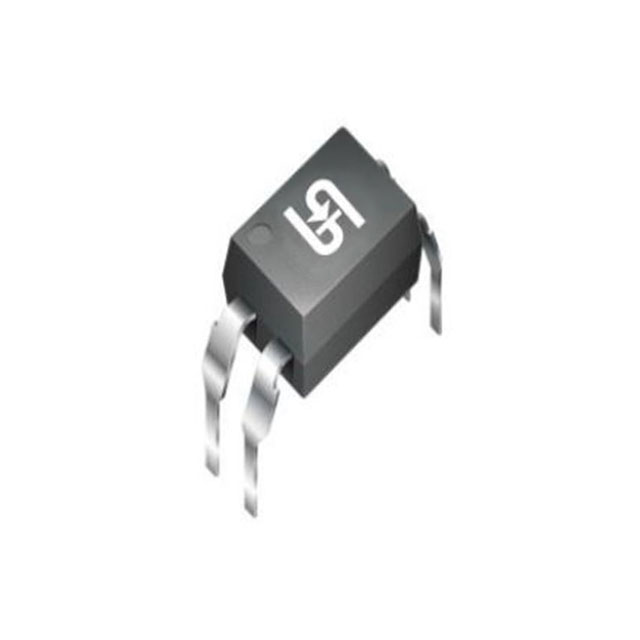
The TPC817MC C9G is a 5000Vrms optoisolator with transistor output manufactured by Taiwan Semiconductor Corporation. This component provides galvanic isolation for DC input signals with a single-channel transistor output configuration in a 4-DIP package. The TPC817MC C9G is classified as obsolete, making identification of equivalent and substitute parts necessary for ongoing design support, maintenance, and production continuity. Substitute parts must maintain electrical and mechanical compatibility while meeting the same isolation voltage, current transfer ratio, and package specifications.
Substiute Parts
Key Parameters
| Parameter | Value |
|---|---|
| Voltage - Isolation | 5000Vrms |
| Number of Channels | 1 |
| Current Transfer Ratio (Min) | 200% @ 5mA |
| Current Transfer Ratio (Max) | 400% @ 5mA |
| Output Type | Transistor |
| Voltage - Output (Max) | 80V |
| Current - Output / Channel | 50mA |
| Vce Saturation (Max) | 200mV |
| Package / Case | 4-DIP (0.400", 10.16mm) |
| Mounting Type | Through Hole |
| Operating Temperature Range | -40°C ~ 100°C |
| RoHS Status | ROHS3 Compliant |
Substitute Part Grouping Explanation
Substitution of the TPC817MC C9G is determined by strict equivalence across the following critical parameters:
Isolation Voltage: 5000Vrms isolation rating is mandatory for functional equivalence in applications requiring high-voltage galvanic isolation.
Channel Configuration: Single-channel optoisolator architecture must be maintained.
Current Transfer Ratio: Minimum 200% and maximum 400% at 5mA input current defines the optical coupling efficiency and must be preserved for circuit operation.
Output Configuration: Transistor output type with 80V maximum output voltage and 50mA maximum output current per channel.
Package Specification: 4-DIP through-hole package with 0.400" (10.16mm) body width ensures mechanical and electrical compatibility with existing PCB layouts.
Compliance Standards: ROHS3 compliance and EAR99 export classification must be maintained.
The EL817(M)(C)-VG from Everlight Electronics Co Ltd meets all these criteria and is classified as an active product, providing long-term availability and supply chain stability compared to the obsolete TPC817MC C9G.
Parameter Comparison
| Parameter | TPC817MC C9G (Main Part) | EL817(M)(C)-VG (Substitute) |
|---|---|---|
| Manufacturer | Taiwan Semiconductor Corporation | Everlight Electronics Co Ltd |
| Product Status | Obsolete | Active |
| Number of Channels | 1 | 1 |
| Voltage - Isolation | 5000Vrms | 5000Vrms |
| Current Transfer Ratio (Min) | 200% @ 5mA | 200% @ 5mA |
| Current Transfer Ratio (Max) | 400% @ 5mA | 400% @ 5mA |
| Output Type | Transistor | Transistor |
| Voltage - Output (Max) | 80V | 80V |
| Current - Output / Channel | 50mA | 50mA |
| Voltage - Forward (Vf) (Typ) | 1.2V | 1.2V |
| Vce Saturation (Max) | 200mV | 200mV |
| Package / Case | 4-DIP (0.400", 10.16mm) | 4-DIP (0.400", 10.16mm) |
| Mounting Type | Through Hole | Through Hole |
| Operating Temperature (Min) | -40°C | -55°C |
| Operating Temperature (Max) | 100°C | 110°C |
| RoHS Status | ROHS3 Compliant | ROHS3 Compliant |
| Moisture Sensitivity Level (MSL) | 1 (Unlimited) | 1 (Unlimited) |
| ECCN | EAR99 | EAR99 |
Engineering Selection Recommendations
The EL817(M)(C)-VG is the direct substitute for the obsolete TPC817MC C9G. Both components share identical electrical specifications for isolation voltage, current transfer ratio, output voltage and current ratings, and saturation voltage. Both are ROHS3 compliant and carry EAR99 export classification.
The EL817(M)(C)-VG offers extended operating temperature range (-55°C to 110°C versus -40°C to 100°C), providing broader environmental compatibility. The substitute part is classified as active, ensuring continued availability and supply chain support, whereas the TPC817MC C9G is obsolete.
Rise and fall time specifications differ slightly between the two parts (TPC817MC C9G: 4µs rise, 3µs fall; EL817(M)(C)-VG: 6µs rise, 8µs fall). These timing differences are within acceptable tolerances for standard optoisolator applications but should be evaluated in timing-critical circuits.
Direct pin-for-pin and functional replacement is supported without circuit modification for applications operating within the TPC817MC C9G's original temperature range.
Frequently Asked Questions (FAQ)
Q: Can the EL817(M)(C)-VG directly replace the TPC817MC C9G without PCB modifications?
A: Yes. Both components use identical 4-DIP through-hole package dimensions (0.400", 10.16mm) and pin configurations. Direct substitution on existing PCBs is supported without layout changes.
Q: What are the key electrical differences between these parts?
A: The primary electrical differences are rise and fall time specifications. The TPC817MC C9G specifies 4µs rise time and 3µs fall time, while the EL817(M)(C)-VG specifies 6µs rise time and 8µs fall time. All other electrical parameters, including isolation voltage, current transfer ratio, output voltage and current ratings, and saturation voltage, are identical.
Q: Does the extended temperature range of the EL817(M)(C)-VG affect compatibility?
A: No. The EL817(M)(C)-VG operating range (-55°C to 110°C) encompasses the TPC817MC C9G range (-40°C to 100°C). Applications designed for the original part will operate within the substitute's specified range.
Q: Are both parts RoHS compliant?
A: Yes. Both the TPC817MC C9G and EL817(M)(C)-VG are ROHS3 compliant with MSL rating of 1 (Unlimited), indicating no moisture sensitivity restrictions.
Q: Why is the TPC817MC C9G classified as obsolete?
A: Obsolescence reflects the manufacturer's discontinuation of the product line. The EL817(M)(C)-VG, classified as active, provides equivalent functionality with ongoing manufacturing support and supply availability.
Q: Are there any export or regulatory restrictions on these parts?
A: Both components carry ECCN classification EAR99, indicating standard commercial export treatment. REACH status is unaffected for both parts.
Q: What is the current transfer ratio and how does it affect circuit design?
A: Both parts specify 200% minimum and 400% maximum current transfer ratio at 5mA input current. This parameter defines the optical coupling efficiency between the LED input and transistor output stages and is critical for determining input current requirements in isolation circuit design.
Alternative Parts

SJ6012L2TP
Littelfuse Inc.
6 Alternative Parts

JMK107BBJ476MA-RE
Taiyo Yuden
10 Alternative Parts

GMK107BBJ475MA-T
Taiyo Yuden
5 Alternative Parts
SJ6020N2ARP
Littelfuse Inc.
3 Alternative Parts
SJ6025R2ATP
Littelfuse Inc.
4 Alternative Parts

2474-05L
API Delevan Inc.
1 Alternative Parts

4590R-684K
API Delevan Inc.
1 Alternative Parts

CM6560R-334
API Delevan Inc.
1 Alternative Parts

CM6460-104
API Delevan Inc.
1 Alternative Parts

5526-12
API Delevan Inc.
1 Alternative Parts