






Request Quote
(Ships tomorrow)
TLV342ID CMOS Amplifier Equivalent & Substitute Parts
Part Overview
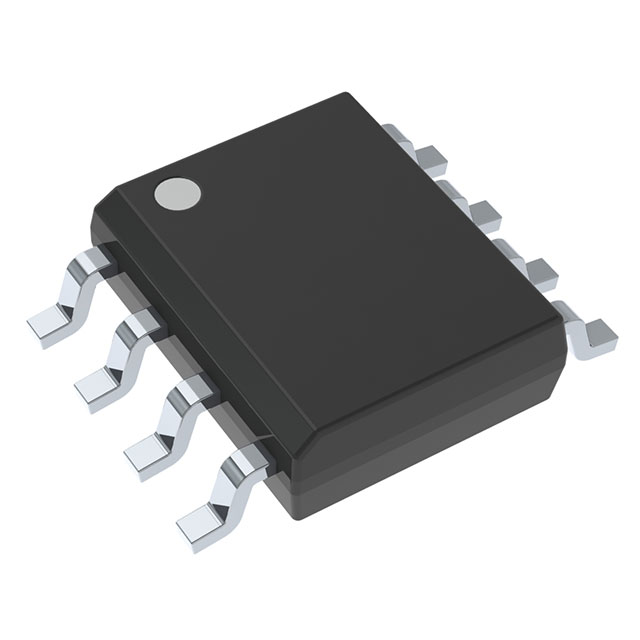
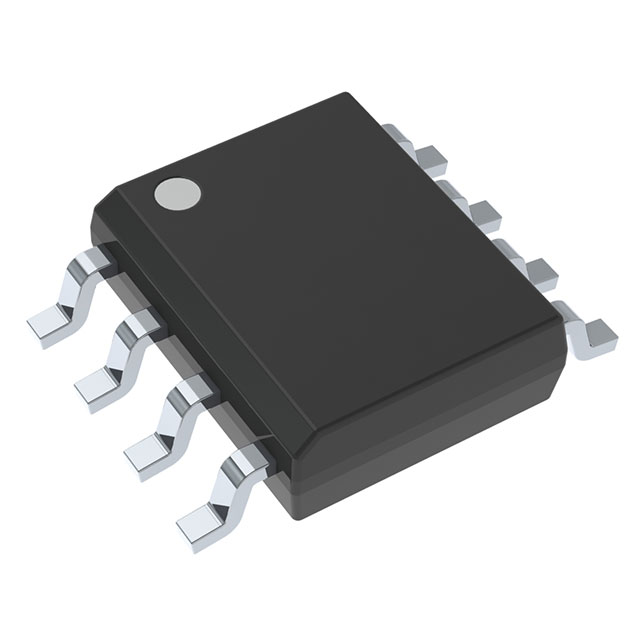
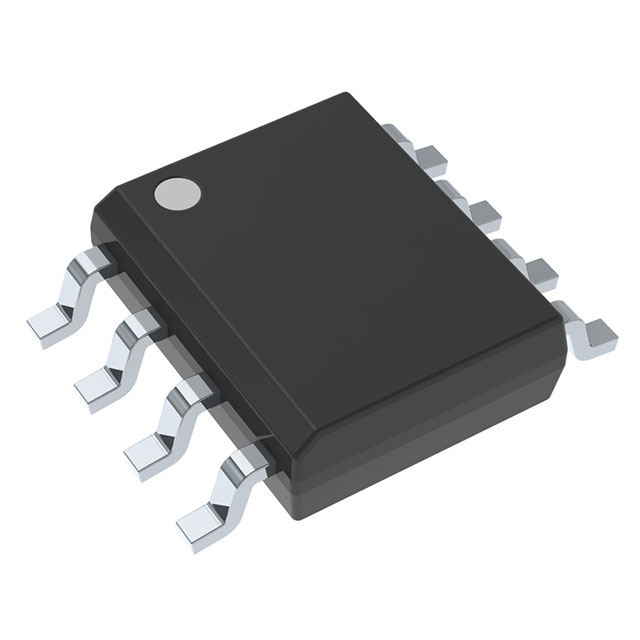
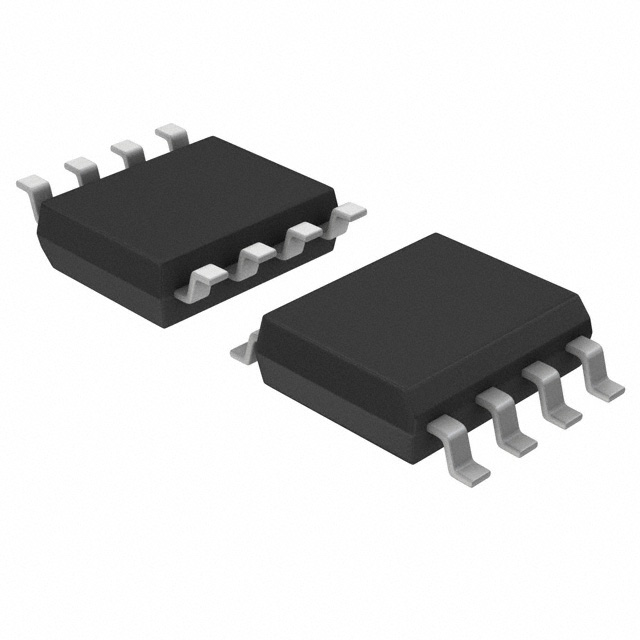
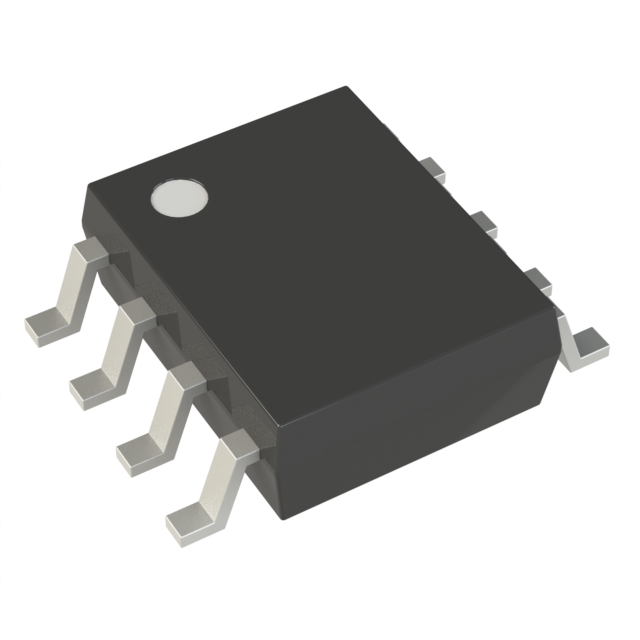
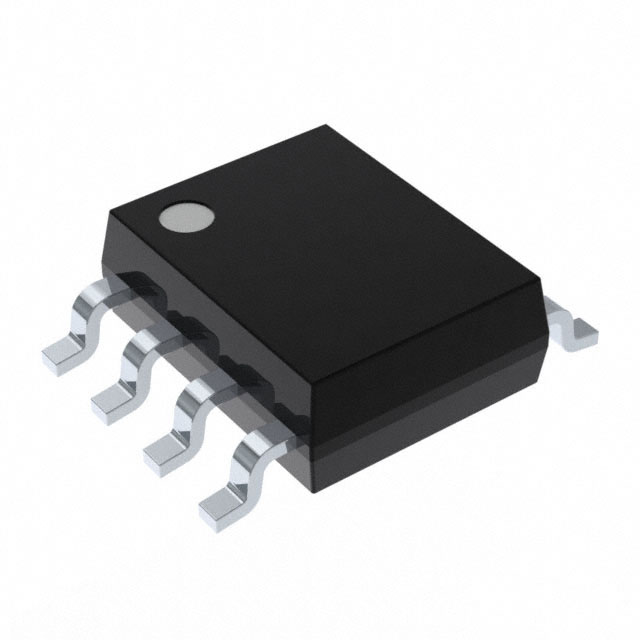
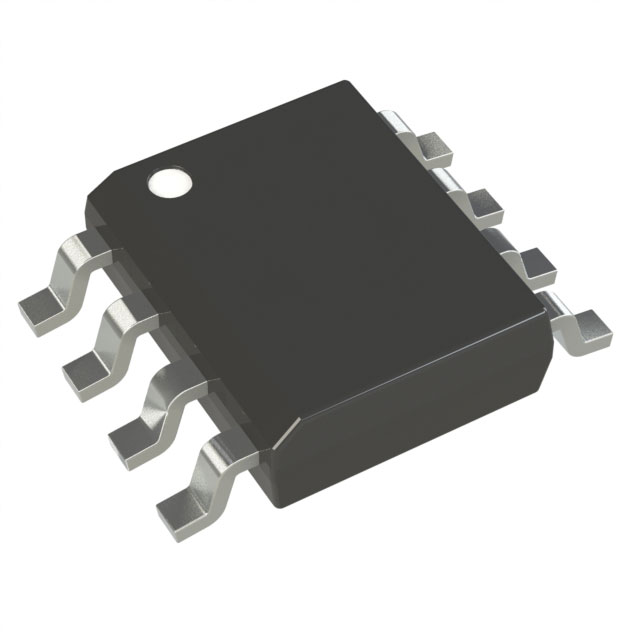
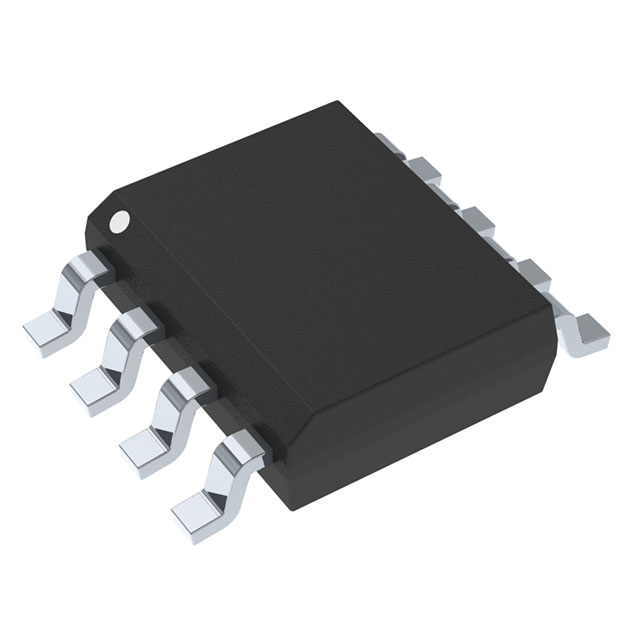
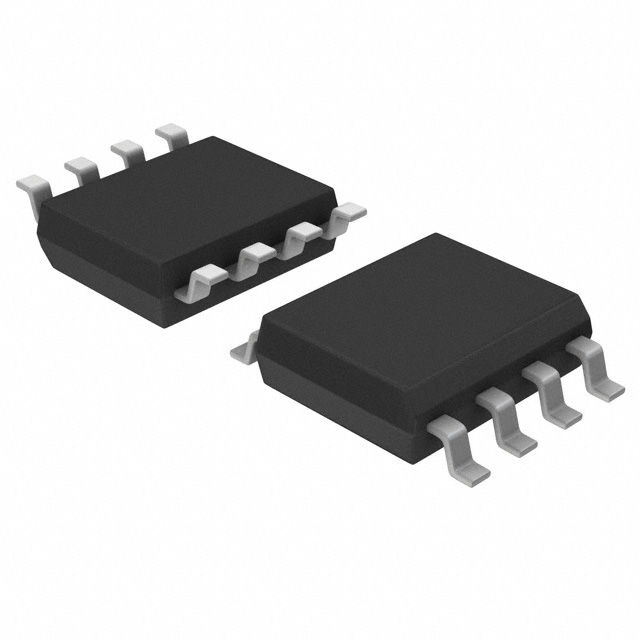
The TLV342ID is a dual-channel CMOS operational amplifier manufactured by Texas Instruments, packaged in 8-SOIC surface mount configuration. This device features rail-to-rail output capability and is designed for low-power, general-purpose amplification applications. The TLV342ID is currently classified as Last Time Buy, indicating end-of-life status. Identifying equivalent and substitute parts is necessary to ensure design continuity, maintain supply chain reliability, and support long-term production requirements for applications currently utilizing this component.
Substiute Parts
Key Parameters
| Parameter | Value | Unit |
|---|---|---|
| Amplifier Type | CMOS | — |
| Number of Circuits | 2 | Channels |
| Output Type | Rail-to-Rail | — |
| Slew Rate | 1 | V/µs |
| Gain Bandwidth Product | 2.3 | MHz |
| Current - Input Bias | 1 | pA |
| Voltage - Input Offset | 300 | µV |
| Current - Supply (per Channel) | 75 | µA |
| Current - Output / Channel | 115 | mA |
| Voltage - Supply Span (Min) | 1.5 | V |
| Voltage - Supply Span (Max) | 5.5 | V |
| Operating Temperature Range | -40 to 125 | °C |
| Package / Case | 8-SOIC (0.154", 3.90mm Width) | — |
| Mounting Type | Surface Mount | — |
| RoHS Status | ROHS3 Compliant | — |
| Moisture Sensitivity Level | 1 (Unlimited) | — |
Substitute Part Grouping Explanation
Substitute parts for the TLV342ID are grouped based on strict electrical and mechanical compatibility criteria. The primary substitution logic is determined by the following parameters:
Critical Matching Parameters:
- Amplifier Type: CMOS
- Number of Circuits: 2 (dual-channel configuration)
- Output Type: Rail-to-Rail
- Package / Case: 8-SOIC surface mount
- Slew Rate: 1 V/µs (minimum acceptable)
- Gain Bandwidth Product: 2.3 MHz (minimum acceptable)
- Supply Voltage Range: 1.5 V to 5.5 V (minimum acceptable)
- Operating Temperature: -40°C to 125°C (minimum acceptable)
Substitution Categories:
Category 1: Direct Packaging Equivalent (Same Tube/Reel Status) TLV342IDR represents the active production equivalent of TLV342ID, maintaining identical electrical specifications while offering improved supply availability through Cut Tape and Digi-Reel packaging options.
Category 2: CMOS Rail-to-Rail Amplifiers with Compatible Performance LMV342MA/NOPB and LMV342MAX/NOPB are CMOS dual-channel amplifiers with rail-to-rail output, matching the core functional requirements. These devices maintain 1 V/µs slew rate and operate within the required supply voltage range, though with slightly different gain-bandwidth characteristics (1 MHz vs. 2.3 MHz).
Category 3: General Purpose Amplifiers with Differential Output LMP2232 series devices (LMP2232AMA/NOPB, LMP2232AMAE/NOPB, LMP2232AMAX/NOPB, LMP2232BMA/NOPB, LMP2232BMAE/NOPB, LMP2232BMAX/NOPB) are general-purpose dual-channel amplifiers with differential and rail-to-rail output capability. These devices operate within the required temperature and supply voltage ranges but feature lower slew rate (0.048 V/µs) and gain-bandwidth product (130 kHz), making them suitable only for applications not requiring high-speed performance.
Category 4: Alternative Manufacturer CMOS Amplifier BU7262F-E2 (Rohm Semiconductor) is a CMOS dual-channel rail-to-rail amplifier with comparable slew rate (1.1 V/µs) and gain-bandwidth product (2 MHz). This device operates within compatible supply voltage ranges but has a different package width (4.40mm vs. 3.90mm) and lower maximum output current per channel (12 mA vs. 115 mA).
Parameter Comparison
| Part Number | Manufacturer | Amplifier Type | Circuits | Output Type | Slew Rate (V/µs) | GBW (MHz) | Input Bias (pA) | Input Offset (µV) | Supply Current/Ch (µA) | Output Current/Ch (mA) | Supply Min (V) | Supply Max (V) | Temp Range (°C) | Package | Status |
|---|---|---|---|---|---|---|---|---|---|---|---|---|---|---|---|
| TLV342ID | Texas Instruments | CMOS | 2 | Rail-to-Rail | 1 | 2.3 | 1 | 300 | 75 | 115 | 1.5 | 5.5 | -40 to 125 | 8-SOIC | Last Time Buy |
| TLV342IDR | Texas Instruments | CMOS | 2 | Rail-to-Rail | 1 | 2.3 | 1 | 300 | 75 | 115 | 1.5 | 5.5 | -40 to 125 | 8-SOIC | Active |
| LMV342MA/NOPB | National Semiconductor | CMOS | 2 | Rail-to-Rail | 1 | 1 | 0.02 | 700 | 107 | 113 | 2.7 | 5.5 | -40 to 125 | 8-SOIC | Active |
| LMV342MAX/NOPB | Texas Instruments | CMOS | 2 | Rail-to-Rail | 1 | 1 | 0.02 | 700 | 107 | 113 | 2.7 | 5.5 | -40 to 125 | 8-SOIC | Active |
| LMP2232AMA/NOPB | Texas Instruments | General Purpose | 2 | Differential, Rail-to-Rail | 0.048 | 0.13 | 0.02 | 10 | 19 | 30 | 1.6 | 5.5 | -40 to 125 | 8-SOIC | Active |
| LMP2232AMAE/NOPB | Texas Instruments | General Purpose | 2 | Differential, Rail-to-Rail | 0.048 | 0.13 | 0.02 | 10 | 19 | 30 | 1.6 | 5.5 | -40 to 125 | 8-SOIC | Active |
| LMP2232AMAX/NOPB | Texas Instruments | General Purpose | 2 | Differential, Rail-to-Rail | 0.048 | 0.13 | 0.02 | 10 | 19 | 30 | 1.6 | 5.5 | -40 to 125 | 8-SOIC | Active |
| LMP2232BMA/NOPB | Texas Instruments | General Purpose | 2 | Differential, Rail-to-Rail | 0.048 | 0.13 | 0.02 | 10 | 19 | 30 | 1.6 | 5.5 | -40 to 125 | 8-SOIC | Active |
| LMP2232BMAE/NOPB | Texas Instruments | General Purpose | 2 | Differential, Rail-to-Rail | 0.048 | 0.13 | 0.02 | 10 | 19 | 30 | 1.6 | 5.5 | -40 to 125 | 8-SOIC | Active |
| LMP2232BMAX/NOPB | Texas Instruments | General Purpose | 2 | Differential, Rail-to-Rail | 0.048 | 0.13 | 0.02 | 10 | 19 | 30 | 1.6 | 5.5 | -40 to 125 | 8-SOIC | Active |
| BU7262F-E2 | Rohm Semiconductor | CMOS | 2 | Rail-to-Rail | 1.1 | 2 | 1 | 1000 | 550 | 12 | 1.8 | 5.5 | -40 to 85 | 8-SOP | Active |
Engineering Selection Recommendations
Primary Recommendation: TLV342IDR
TLV342IDR is the manufacturer-recommended direct substitute for TLV342ID. Both devices are manufactured by Texas Instruments and share identical electrical specifications, including CMOS amplifier type, dual-channel configuration, rail-to-rail output, 1 V/µs slew rate, 2.3 MHz gain-bandwidth product, and -40°C to 125°C operating temperature range. The primary distinction is product status: TLV342IDR is Active, whereas TLV342ID is Last Time Buy. TLV342IDR is available in Cut Tape and Digi-Reel packaging, providing superior supply chain availability. Both devices are ROHS3 Compliant with MSL 1 rating and identical package specifications (8-SOIC, 0.154", 3.90mm Width). This substitution requires no circuit redesign or application modification.
Secondary Recommendation: LMV342MA/NOPB or LMV342MAX/NOPB
LMV342MA/NOPB (National Semiconductor) and LMV342MAX/NOPB (Texas Instruments) are CMOS dual-channel rail-to-rail amplifiers suitable for applications where the lower gain-bandwidth product (1 MHz vs. 2.3 MHz) is acceptable. Both devices maintain 1 V/µs slew rate, operate across -40°C to 125°C, and are packaged in 8-SOIC configuration. The minimum supply voltage is higher (2.7 V vs. 1.5 V), which may restrict use in ultra-low-voltage applications. Output current per channel (113 mA) is comparable to TLV342ID (115 mA). Both devices are ROHS3 Compliant with MSL 1 rating and Active product status. Circuit redesign may be required if the application depends on the higher gain-bandwidth product of TLV342ID.
Tertiary Recommendation: LMP2232 Series (AMA, AMAE, AMAX, BMA, BMAE, BMAX variants)
LMP2232 series devices are general-purpose dual-channel amplifiers with differential and rail-to-rail output capability. These devices are suitable only for low-frequency applications where slew rate (0.048 V/µs) and gain-bandwidth product (130 kHz) are not limiting factors. All variants operate across -40°C to 125°C and are packaged in 8-SOIC configuration. Supply current per channel is significantly lower (19 µA vs. 75 µA), and output current per channel is reduced (30 mA vs. 115 mA). All variants are ROHS3 Compliant with MSL 1 rating and Active product status. Substitution is limited to applications with relaxed bandwidth requirements and is not recommended for high-speed signal processing.
Alternative Manufacturer Option: BU7262F-E2 (Rohm Semiconductor)
BU7262F-E2 is a CMOS dual-channel rail-to-rail amplifier with slew rate (1.1 V/µs) and gain-bandwidth product (2 MHz) comparable to TLV342ID. However, this device has significant limitations: package width is 4.40mm (vs. 3.90mm for TLV342ID), maximum operating temperature is 85°C (vs. 125°C), and output current per channel is substantially lower (12 mA vs. 115 mA). Supply current per channel is significantly higher (550 µA vs. 75 µA). This device is ROHS3 Compliant with MSL 1 rating and Active product status. Substitution is not recommended due to thermal range limitation and reduced output drive capability.
Frequently Asked Questions (FAQ)
Q1: Can TLV342IDR be used as a direct replacement for TLV342ID without circuit modification?
A: Yes. TLV342IDR is the manufacturer-recommended equivalent and shares identical electrical specifications with TLV342ID. Both devices are CMOS dual-channel rail-to-rail amplifiers with 1 V/µs slew rate, 2.3 MHz gain-bandwidth product, and -40°C to 125°C operating temperature. The only difference is packaging format (Cut Tape/Digi-Reel vs. Tube) and product status (Active vs. Last Time Buy). No circuit redesign is required.
Q2: What are the key differences between TLV342ID and LMV342MA/NOPB?
A: Both are CMOS dual-channel rail-to-rail amplifiers in 8-SOIC packages with 1 V/µs slew rate and -40°C to 125°C operating temperature. The primary differences are: (1) Gain-bandwidth product: TLV342ID is 2.3 MHz vs. LMV342MA is 1 MHz; (2) Minimum supply voltage: TLV342ID is 1.5 V vs. LMV342MA is 2.7 V; (3) Input offset voltage: TLV342ID is 300 µV vs. LMV342MA is 700 µV. Substitution is suitable only if the application does not require the higher bandwidth or lower supply voltage operation of TLV342ID.
Q3: Are LMP2232 series devices suitable replacements for TLV342ID?
A: LMP2232 series devices are not recommended as direct replacements for TLV342ID in high-speed applications. While both are dual-channel rail-to-rail amplifiers in 8-SOIC packages operating across -40°C to 125°C, the LMP2232 series has significantly reduced performance: slew rate is 0.048 V/µs (vs. 1 V/µs) and gain-bandwidth product is 130 kHz (vs. 2.3 MHz). These devices are suitable only for low-frequency, low-power applications where bandwidth is not a critical parameter.
Q4: Why is BU7262F-E2 not recommended as a substitute?
A: BU7262F-E2 has three significant limitations compared to TLV342ID: (1) Maximum operating temperature is 85°C (vs. 125°C), restricting use in high-temperature environments; (2) Output current per channel is 12 mA (vs. 115 mA), severely limiting drive capability; (3) Package width is 4.40mm (vs. 3.90mm), potentially causing PCB layout incompatibility. While slew rate and gain-bandwidth product are comparable, the thermal and output current limitations make this device unsuitable for most TLV342ID applications.
Q5: What packaging options are available for TLV342IDR?
A: TLV342IDR is available in Cut Tape (CT) and Digi-Reel packaging formats, providing improved supply chain flexibility compared to TLV342ID, which is supplied in Tube packaging. All packaging formats maintain identical electrical specifications and 8-SOIC surface mount configuration.
Q6: Are all substitute parts ROHS3 Compliant?
A: Yes. All substitute parts listed (TLV342IDR, LMV342MA/NOPB, LMV342MAX/NOPB, LMP2232 series variants, and BU7262F-E2) are ROHS3 Compliant with Moisture Sensitivity Level 1 (Unlimited), matching the compliance status of TLV342ID.
Q7: Which substitute is recommended for applications requiring operation below 2.7 V supply voltage?
A: TLV342IDR is the only recommended substitute that maintains the 1.5 V minimum supply voltage of TLV342ID. LMV342 series devices require minimum 2.7 V supply voltage. LMP2232 series devices require minimum 1.6 V. BU7262F-E2 requires minimum 1.8 V. For ultra-low-voltage applications, TLV342IDR is the only suitable option.
Q8: What is the impact of substituting TLV342ID with a lower gain-bandwidth product device?
A: Substituting TLV342ID (2.3 MHz GBW) with a device having lower gain-bandwidth product (such as LMV342 at 1 MHz or LMP2232 at 130 kHz) will reduce circuit bandwidth and may affect frequency response, stability, and transient response. Applications with bandwidth-dependent performance (such as precision instrumentation, high-speed data acquisition, or wideband signal processing) may experience degraded performance. Substitution is suitable only for applications with relaxed bandwidth requirements.
Alternative Parts

SJ6012L2TP
Littelfuse Inc.
6 Alternative Parts

JMK107BBJ476MA-RE
Taiyo Yuden
10 Alternative Parts

GMK107BBJ475MA-T
Taiyo Yuden
5 Alternative Parts
SJ6020N2ARP
Littelfuse Inc.
3 Alternative Parts
SJ6025R2ATP
Littelfuse Inc.
4 Alternative Parts

2474-05L
API Delevan Inc.
1 Alternative Parts

4590R-684K
API Delevan Inc.
1 Alternative Parts

CM6560R-334
API Delevan Inc.
1 Alternative Parts

CM6460-104
API Delevan Inc.
1 Alternative Parts

5526-12
API Delevan Inc.
1 Alternative Parts