


Request Quote
(Ships tomorrow)
TLV271IDBVRG4 Equivalent & Substitute Parts
Part Overview
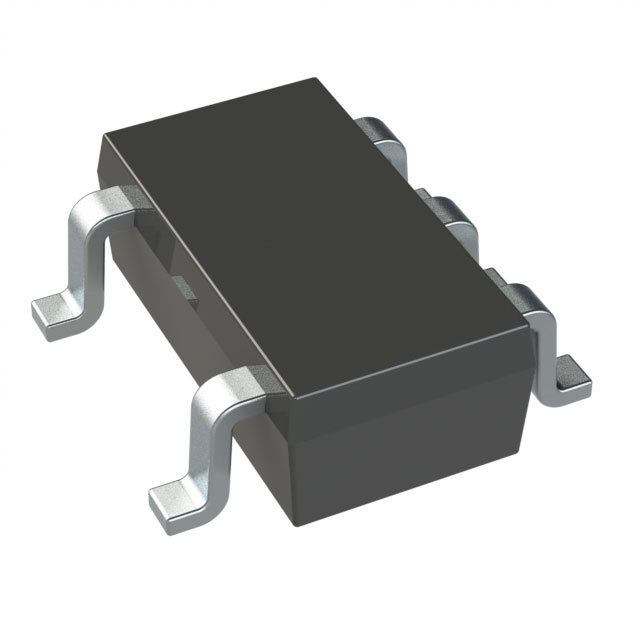
The TLV271IDBVRG4 is a CMOS operational amplifier featuring rail-to-rail output capability in a compact SOT-23-5 surface mount package. This single-circuit amplifier is designed for low-power applications requiring precision signal conditioning across a wide supply voltage range of 2.7 V to 16 V.
The TLV271IDBVRG4 carries an Obsolete product status. Identifying equivalent and substitute components is essential for design continuity, procurement planning, and ensuring long-term product availability for applications currently utilizing this part number.
Substiute Parts
Key Parameters
| Parameter | Value | Unit |
|---|---|---|
| Amplifier Type | CMOS | — |
| Number of Circuits | 1 | — |
| Output Type | Rail-to-Rail | — |
| Slew Rate | 2.6 | V/µs |
| Gain Bandwidth Product | 3 | MHz |
| Current - Input Bias | 1 | pA |
| Voltage - Input Offset | 500 | µV |
| Current - Supply | 625 | µA |
| Current - Output / Channel | 8 | mA |
| Voltage - Supply Span (Min) | 2.7 | V |
| Voltage - Supply Span (Max) | 16 | V |
| Operating Temperature | -40 to 125 | °C |
| Mounting Type | Surface Mount | — |
| Package / Case | SC-74A, SOT-753 | — |
| Supplier Device Package | SOT-23-5 | — |
| RoHS Status | ROHS3 Compliant | — |
| Moisture Sensitivity Level (MSL) | 1 (Unlimited) | — |
Substitute Part Grouping Explanation
Substitution eligibility for the TLV271IDBVRG4 is determined by the following critical parameters:
Primary Substitution Criteria:
- Amplifier Type: CMOS
- Number of Circuits: 1
- Output Type: Rail-to-Rail
- Voltage Supply Range: Minimum 2.7 V, Maximum 16 V
- Package Type: SOT-23-5 or compatible surface mount package
- Operating Temperature Range: -40°C to 125°C (or subset thereof)
- RoHS3 Compliance
Secondary Performance Parameters:
- Slew Rate: 2.6 V/µs (reference specification)
- Gain Bandwidth Product: 3 MHz (reference specification)
- Input Bias Current: 1 pA (reference specification)
- Supply Current: 625 µA (reference specification)
Substitute parts are grouped into two categories based on their alignment with these criteria:
Category A - Direct Functional Equivalents (Texas Instruments TLV271 Series): Parts maintaining identical CMOS architecture, slew rate, and gain bandwidth product specifications.
Category B - Functional Alternatives (Cross-Manufacturer Options): Parts meeting core electrical and mechanical requirements with variations in secondary performance parameters.
Parameter Comparison
| Parameter | TLV271IDBVRG4 (Main) | TLV271IDBVR | MCP6H01T-E/OT | TLV271CW5-7 | TLV271IW5-7 |
|---|---|---|---|---|---|
| Manufacturer | Texas Instruments | Texas Instruments | Microchip Technology | Diodes Incorporated | Diodes Incorporated |
| Product Status | Obsolete | Active | Active | Active | Active |
| Amplifier Type | CMOS | CMOS | General Purpose | CMOS | CMOS |
| Number of Circuits | 1 | 1 | 1 | 1 | 1 |
| Output Type | Rail-to-Rail | Rail-to-Rail | Rail-to-Rail | Rail-to-Rail | Rail-to-Rail |
| Slew Rate (V/µs) | 2.6 | 2.6 | 0.8 | 2.0 | 2.0 |
| Gain Bandwidth Product (MHz) | 3 | 3 | 1.2 | 1.9 | 1.9 |
| Current - Input Bias (pA) | 1 | 1 | 10 | 1 | 1 |
| Voltage - Input Offset (µV) | 500 | 500 | 700 | 500 | 500 |
| Current - Supply (µA) | 625 | 625 | 135 | 550 | 550 |
| Current - Output / Channel (mA) | 8 | 8 | — | 8 | 8 |
| Voltage - Supply Span (Min) (V) | 2.7 | 2.7 | 3.5 | 2.7 | 2.7 |
| Voltage - Supply Span (Max) (V) | 16 | 16 | 16 | 16 | 16 |
| Operating Temperature (°C) | -40 to 125 | -40 to 125 | -40 to 125 | 0 to 70 | -40 to 125 |
| Mounting Type | Surface Mount | Surface Mount | Surface Mount | Surface Mount | Surface Mount |
| Supplier Device Package | SOT-23-5 | SOT-23-5 | SOT-23-5 | SOT-25 | SOT-25 |
| RoHS Status | ROHS3 Compliant | ROHS3 Compliant | ROHS3 Compliant | ROHS3 Compliant | ROHS3 Compliant |
| Moisture Sensitivity Level (MSL) | 1 (Unlimited) | 1 (Unlimited) | 1 (Unlimited) | 1 (Unlimited) | 1 (Unlimited) |
| Inventory Status | 3000 Pcs | 72066 Pcs | 2060 Pcs | 15102 Pcs | 125807 Pcs |
Engineering Selection Recommendations
TLV271IDBVR (Texas Instruments) - Primary Recommendation
The TLV271IDBVR is the direct successor to the obsolete TLV271IDBVRG4. Both parts share identical electrical specifications including CMOS architecture, 2.6 V/µs slew rate, 3 MHz gain bandwidth product, and 625 µA supply current. The TLV271IDBVR maintains Active product status with significantly higher inventory availability (72,066 units). Both parts are ROHS3 compliant with MSL 1 rating. The primary distinction is packaging format: TLV271IDBVR is supplied in Cut Tape and Digi-Reel formats, whereas the original part was supplied in standard packaging. This part is suitable for direct replacement in all applications where the TLV271IDBVRG4 was previously specified.
TLV271IW5-7 (Diodes Incorporated) - Secondary Recommendation
The TLV271IW5-7 provides functional equivalence with the main part while offering the highest inventory availability (125,807 units). This part maintains CMOS amplifier architecture, 1 pA input bias current, 500 µV input offset voltage, and full -40°C to 125°C operating temperature range. Performance parameters show minor variations: slew rate of 2.0 V/µs (versus 2.6 V/µs) and gain bandwidth product of 1.9 MHz (versus 3 MHz). The package format differs (SOT-25 versus SOT-23-5), requiring PCB layout verification. ROHS3 compliance and MSL 1 rating are maintained. This part is suitable for applications where the reduced slew rate and bandwidth are acceptable.
TLV271CW5-7 (Diodes Incorporated) - Conditional Recommendation
The TLV271CW5-7 shares the same base product number (TLV271) and CMOS architecture as the main part. Electrical specifications align closely with input bias current of 1 pA and input offset voltage of 500 µV. However, this part specifies a restricted operating temperature range of 0°C to 70°C, which does not cover the full -40°C to 125°C range of the original part. This part is suitable only for applications operating within the 0°C to 70°C temperature window. Package format is SOT-25, requiring PCB layout verification. ROHS3 compliance and MSL 1 rating are maintained.
MCP6H01T-E/OT (Microchip Technology) - Alternative for Low-Power Applications
The MCP6H01T-E/OT is a general-purpose operational amplifier offering significantly reduced supply current (135 µA versus 625 µA), making it suitable for battery-powered or ultra-low-power applications. This part maintains rail-to-rail output, ROHS3 compliance, and MSL 1 rating. However, performance trade-offs include lower slew rate (0.8 V/µs versus 2.6 V/µs), reduced gain bandwidth product (1.2 MHz versus 3 MHz), higher input bias current (10 pA versus 1 pA), and higher input offset voltage (700 µV versus 500 µV). Additionally, the minimum supply voltage is 3.5 V, which does not support the 2.7 V minimum of the original part. This part is suitable only for applications where power consumption reduction is prioritized over speed and precision performance.
Frequently Asked Questions (FAQ)
Q1: Can I directly replace TLV271IDBVRG4 with TLV271IDBVR without any circuit modifications?
A: Yes. The TLV271IDBVR is electrically identical to the TLV271IDBVRG4 across all specified parameters including slew rate, gain bandwidth product, supply current, and operating temperature range. The primary difference is packaging format (Cut Tape/Digi-Reel versus standard packaging). No circuit modifications are required. PCB footprint compatibility must be verified as both use SOT-23-5 packages.
Q2: What are the key differences between SOT-23-5 and SOT-25 packages?
A: SOT-23-5 and SOT-25 are both surface mount packages for five-pin devices but differ in physical dimensions and pin spacing. SOT-25 is larger than SOT-23-5. Parts specified in SOT-25 (TLV271CW5-7 and TLV271IW5-7) cannot be directly substituted into PCB designs laid out for SOT-23-5 packages without redesign. Verify PCB footprint compatibility before selection.
Q3: Why does MCP6H01T-E/OT have lower supply current than the main part?
A: The MCP6H01T-E/OT is optimized for low-power operation with a supply current of 135 µA compared to 625 µA for the TLV271IDBVRG4. This reduced current consumption comes with trade-offs in performance: lower slew rate (0.8 V/µs versus 2.6 V/µs) and reduced gain bandwidth product (1.2 MHz versus 3 MHz). Selection depends on whether power consumption reduction is prioritized over speed performance in the application.
Q4: Can I use TLV271CW5-7 in applications requiring -40°C operation?
A: No. The TLV271CW5-7 specifies an operating temperature range of 0°C to 70°C, which does not include -40°C. Applications requiring operation at -40°C must use TLV271IDBVR or TLV271IW5-7, both of which support the full -40°C to 125°C range. Verify application temperature requirements before part selection.
Q5: What does ROHS3 compliance mean for component selection?
A: ROHS3 compliance indicates the part meets Restriction of Hazardous Substances Directive requirements, restricting the use of specific hazardous materials including lead, mercury, cadmium, and hexavalent chromium. All substitute parts listed are ROHS3 compliant, ensuring compatibility with environmental and regulatory requirements for modern electronic equipment.
Q6: How does input bias current affect circuit design?
A: Input bias current represents the small DC current flowing into the amplifier inputs. The TLV271IDBVRG4 specifies 1 pA, which is extremely low and suitable for high-impedance input circuits. The MCP6H01T-E/OT specifies 10 pA, which is ten times higher. For applications with very high input impedance (>1 GΩ), the lower input bias current of the TLV271 series is preferred to minimize input offset errors.
Q7: What is the significance of input offset voltage in precision applications?
A: Input offset voltage is the DC voltage difference between the two inputs when the output is at zero. The TLV271IDBVRG4 specifies 500 µV, while MCP6H01T-E/OT specifies 700 µV. In precision signal conditioning applications, lower input offset voltage reduces DC errors. For applications requiring offset nulling or where 200 µV error is acceptable, both parts are suitable. For applications requiring <200 µV DC accuracy, the TLV271 series is preferred.
Q8: How does slew rate affect signal fidelity?
A: Slew rate determines the maximum rate of output voltage change. The TLV271IDBVRG4 specifies 2.6 V/µs, while alternatives range from 0.8 V/µs (MCP6H01T-E/OT) to 2.0 V/µs (Diodes parts). For high-frequency or fast-transient applications, higher slew rate reduces distortion. For low-frequency applications (<10 kHz), slew rate differences are negligible. Verify application signal bandwidth requirements before selecting parts with reduced slew rate.
Q9: What inventory considerations should guide part selection?
A: TLV271IW5-7 offers the highest inventory availability (125,807 units), followed by TLV271IDBVR (72,066 units). Higher inventory availability reduces procurement risk and lead time. However, inventory levels should not override electrical compatibility and package requirements. Verify that the selected part meets all electrical and mechanical specifications before prioritizing inventory availability.
Q10: Are all substitute parts suitable for medical or aerospace applications?
A: All listed parts are ROHS3 compliant and carry MSL 1 rating, indicating standard commercial-grade reliability. Medical and aerospace applications typically require additional qualifications including extended temperature testing, failure rate analysis, and traceability documentation. Consult application-specific standards and manufacturer datasheets to determine if additional qualification is required for regulated applications.
Alternative Parts

SJ6012L2TP
Littelfuse Inc.
6 Alternative Parts

JMK107BBJ476MA-RE
Taiyo Yuden
10 Alternative Parts

GMK107BBJ475MA-T
Taiyo Yuden
5 Alternative Parts
SJ6020N2ARP
Littelfuse Inc.
3 Alternative Parts
SJ6025R2ATP
Littelfuse Inc.
4 Alternative Parts

2474-05L
API Delevan Inc.
1 Alternative Parts

4590R-684K
API Delevan Inc.
1 Alternative Parts

CM6560R-334
API Delevan Inc.
1 Alternative Parts

CM6460-104
API Delevan Inc.
1 Alternative Parts

5526-12
API Delevan Inc.
1 Alternative Parts