


Request Quote
(Ships tomorrow)
TLV2332IP Equivalent & Substitute Parts
Part Overview
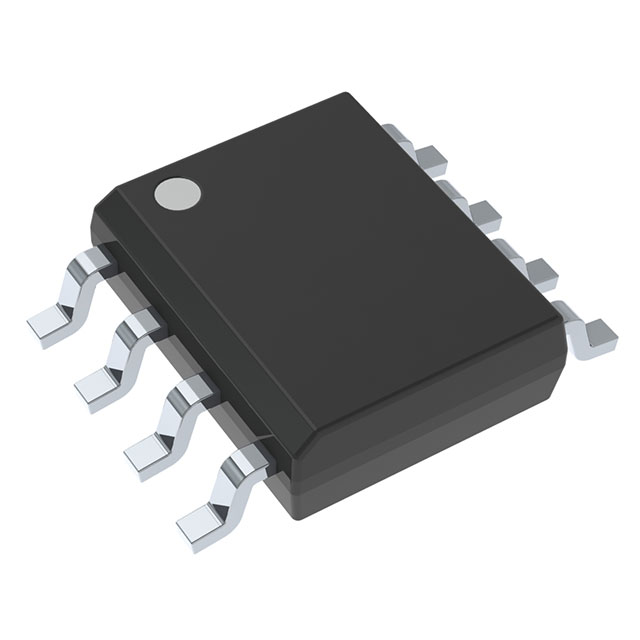
The TLV2332IP is a general-purpose operational amplifier featuring two circuits in an 8-PDIP through-hole package, manufactured by Texas Instruments under the LinCMOS™ series. This device is designated as Last Time Buy, indicating discontinued production status. The TLV2332IP operates across a 2V to 8V supply range with low input bias current (0.6 pA) and is suitable for applications requiring compact, low-power amplification in legacy or space-constrained designs.
Due to its Last Time Buy status, identifying functionally equivalent substitute components is essential for design continuity and long-term project viability. Substitute parts must maintain functional compatibility while accommodating differences in packaging, performance characteristics, and supply availability.
Substiute Parts
Key Parameters
| Parameter | TLV2332IP | Unit |
|---|---|---|
| Amplifier Type | General Purpose | — |
| Number of Circuits | 2 | — |
| Slew Rate | 0.43 | V/µs |
| Gain Bandwidth Product | 525 | kHz |
| Current - Input Bias | 0.6 | pA |
| Voltage - Input Offset | 1.1 | mV |
| Current - Supply (x2 Channels) | 210 | µA |
| Current - Output / Channel | 30 | mA |
| Voltage - Supply Span (Min) | 2 | V |
| Voltage - Supply Span (Max) | 8 | V |
| Operating Temperature | -40 to 85 | °C |
| Mounting Type | Through Hole | — |
| Package / Case | 8-DIP (0.300", 7.62mm) | — |
| Product Status | Last Time Buy | — |
| RoHS Status | ROHS3 Compliant | — |
Substitute Part Grouping Explanation
Substitution of the TLV2332IP is determined by the following critical parameters:
Functional Equivalence Criteria:
- Dual-channel general-purpose operational amplifier architecture
- Minimum supply voltage compatibility (≥2V minimum requirement)
- Output current capability (≥30 mA per channel)
- Input bias current performance (low-leakage specification)
- Operating temperature range coverage (-40°C minimum, 85°C minimum)
Packaging Considerations:
- The TLV2332IP uses through-hole 8-DIP mounting; surface-mount alternatives require PCB redesign
- Pin-compatible substitutes maintain identical pinout and footprint
- Non-pin-compatible substitutes require schematic and layout modifications
Performance Trade-offs:
- Substitute parts may exceed original specifications in slew rate, gain bandwidth product, and supply voltage range
- Enhanced performance characteristics do not preclude substitution when functional requirements are met
- Supply current and output current specifications must meet or exceed application demands
The OPA2990IDR qualifies as a functional substitute based on dual-channel architecture, general-purpose amplifier classification, and superior performance across all critical parameters. However, packaging differences (8-SOIC surface mount versus 8-DIP through hole) necessitate design modifications.
Parameter Comparison
| Parameter | TLV2332IP | OPA2990IDR | Unit |
|---|---|---|---|
| Amplifier Type | General Purpose | General Purpose | — |
| Number of Circuits | 2 | 2 | — |
| Output Type | — | Rail-to-Rail | — |
| Slew Rate | 0.43 | 4.5 | V/µs |
| Gain Bandwidth Product | 525 | 1100 | kHz |
| Current - Input Bias | 0.6 | 10 | pA |
| Voltage - Input Offset | 1.1 | 0.3 | mV |
| Current - Supply (x2 Channels) | 210 | 130 | µA |
| Current - Output / Channel | 30 | 80 | mA |
| Voltage - Supply Span (Min) | 2 | 2.7 | V |
| Voltage - Supply Span (Max) | 8 | 40 | V |
| Operating Temperature | -40 to 85 | -40 to 125 | °C |
| Mounting Type | Through Hole | Surface Mount | — |
| Package / Case | 8-DIP (0.300", 7.62mm) | 8-SOIC (0.154", 3.90mm Width) | — |
| Product Status | Last Time Buy | Active | — |
| RoHS Status | ROHS3 Compliant | ROHS3 Compliant | — |
| REACH Status | REACH Unaffected | REACH Unaffected | — |
Engineering Selection Recommendations
OPA2990IDR as Primary Substitute:
The OPA2990IDR is the manufacturer-recommended substitute for the TLV2332IP. Both devices are manufactured by Texas Instruments and maintain ROHS3 compliance and REACH unaffected status, ensuring regulatory continuity.
Advantages of OPA2990IDR:
- Active product status ensures long-term availability and supply chain stability
- Superior performance specifications across slew rate (4.5 V/µs vs. 0.43 V/µs), gain bandwidth product (1.1 MHz vs. 525 kHz), and output current capability (80 mA vs. 30 mA per channel)
- Extended operating temperature range (-40°C to 125°C vs. -40°C to 85°C)
- Reduced supply current consumption (130 µA vs. 210 µA for dual channels)
- Rail-to-rail output capability provides enhanced signal swing utilization
- Expanded supply voltage range (2.7V to 40V vs. 2V to 8V) accommodates diverse power supply architectures
Design Modification Requirements:
- Package transition from 8-DIP through-hole to 8-SOIC surface-mount necessitates PCB redesign
- Minimum supply voltage increases from 2V to 2.7V; verify power supply specifications
- Pinout compatibility is maintained; direct schematic substitution is feasible following PCB layout changes
Compliance Verification: Both devices satisfy regulatory requirements for RoHS3 and REACH compliance, supporting deployment in regulated applications without additional certification burden.
Frequently Asked Questions (FAQ)
Q: Can the OPA2990IDR directly replace the TLV2332IP without PCB modifications?
A: No. While the OPA2990IDR maintains identical pinout and functional compatibility, the package transition from 8-DIP through-hole to 8-SOIC surface-mount requires PCB redesign. Through-hole and surface-mount footprints are mechanically and electrically incompatible. Schematic substitution is direct; layout modifications are mandatory.
Q: What is the minimum supply voltage requirement for the OPA2990IDR?
A: The OPA2990IDR requires a minimum supply voltage of 2.7V, compared to 2V for the TLV2332IP. Applications operating at 2V to 2.7V must retain the TLV2332IP or verify that system power supplies can be adjusted to 2.7V or higher.
Q: Does the OPA2990IDR provide superior performance in all specifications?
A: The OPA2990IDR exceeds the TLV2332IP in slew rate, gain bandwidth product, output current, and operating temperature range. However, the TLV2332IP exhibits lower input bias current (0.6 pA vs. 10 pA) and lower input offset voltage (1.1 mV vs. 0.3 mV). For applications requiring ultra-low input bias current, the TLV2332IP characteristics may be preferable; the OPA2990IDR remains functionally adequate for general-purpose amplification.
Q: Are both devices RoHS3 compliant?
A: Yes. Both the TLV2332IP and OPA2990IDR are ROHS3 compliant and REACH unaffected, supporting deployment in regulated markets without additional environmental or hazardous substance certifications.
Q: What is the product status difference between these devices?
A: The TLV2332IP is designated Last Time Buy, indicating production discontinuation. The OPA2990IDR maintains Active status, ensuring continued manufacturing, availability, and technical support. For new designs or long-term production requirements, the OPA2990IDR is the recommended selection.
Q: Can the OPA2990IDR operate at the TLV2332IP's maximum supply voltage of 8V?
A: Yes. The OPA2990IDR supports supply voltages up to 40V, encompassing the TLV2332IP's 8V maximum. No supply voltage derating is required for this substitution.
Q: What are the key functional differences in output capability?
A: The OPA2990IDR provides 80 mA output current per channel, compared to 30 mA for the TLV2332IP. Applications requiring higher output current benefit from the OPA2990IDR; applications limited to 30 mA per channel operate within both devices' specifications.
Q: Is the OPA2990IDR suitable for high-speed signal processing applications?
A: The OPA2990IDR's gain bandwidth product of 1.1 MHz and slew rate of 4.5 V/µs exceed the TLV2332IP's 525 kHz and 0.43 V/µs, respectively. The OPA2990IDR is suitable for moderately higher-speed applications; however, both devices are classified as general-purpose amplifiers and are not optimized for high-frequency or high-speed precision applications.
Alternative Parts

SJ6012L2TP
Littelfuse Inc.
6 Alternative Parts

JMK107BBJ476MA-RE
Taiyo Yuden
10 Alternative Parts

GMK107BBJ475MA-T
Taiyo Yuden
5 Alternative Parts
SJ6020N2ARP
Littelfuse Inc.
3 Alternative Parts
SJ6025R2ATP
Littelfuse Inc.
4 Alternative Parts

2474-05L
API Delevan Inc.
1 Alternative Parts

4590R-684K
API Delevan Inc.
1 Alternative Parts

CM6560R-334
API Delevan Inc.
1 Alternative Parts

CM6460-104
API Delevan Inc.
1 Alternative Parts

5526-12
API Delevan Inc.
1 Alternative Parts