


Request Quote
(Ships tomorrow)
TLV0838CDWR Equivalent & Substitute Parts
Part Overview
The TLV0838CDWR is an 8-bit Analog to Digital Converter (ADC) manufactured by Texas Instruments, designed for data acquisition applications requiring moderate resolution and sampling rates. This device features a Successive Approximation Register (SAR) architecture with configurable input options (4, 7, or 8 channels) and operates across a 2.7V to 3.6V supply range. The part is classified as Last Time Buy, indicating end-of-life status. Identifying equivalent and substitute parts is necessary to ensure design continuity and maintain supply chain reliability for applications currently utilizing this component.
Substiute Parts
Key Parameters
| Parameter | Value |
|---|---|
| Manufacturer Part Number | TLV0838CDWR |
| Manufacturer | Texas Instruments |
| Category | Data Acquisition |
| Number of Bits | 8 |
| Sampling Rate (Per Second) | 37.9k |
| Number of Inputs | 4, 7, 8 |
| Input Type | Differential, Pseudo-Differential, Single Ended |
| Data Interface | SPI |
| Architecture | SAR |
| Voltage - Supply, Analog | 2.7V ~ 3.6V |
| Voltage - Supply, Digital | 2.7V ~ 3.6V |
| Operating Temperature | 0°C ~ 70°C |
| Package / Case | 20-SOIC (0.295", 7.50mm Width) |
| Product Status | Last Time Buy |
| RoHS Status | ROHS3 Compliant |
Substitute Part Grouping Explanation
Substitution of the TLV0838CDWR is determined by the following critical parameters:
- Resolution (Number of Bits): The TLV0838CDWR provides 8-bit resolution. Substitute parts may offer equal or higher resolution while maintaining functional compatibility.
- Sampling Rate: The device operates at 37.9k samples per second. Substitutes must support equivalent or faster sampling rates for direct replacement.
- Input Configuration: The device supports 4, 7, or 8 configurable input channels with multiple input types (Differential, Pseudo-Differential, Single Ended). Substitutes must provide equivalent or greater input flexibility.
- Data Interface: SPI communication protocol is mandatory for system compatibility.
- Supply Voltage Range: Operation within 2.7V to 3.6V is required for direct substitution in existing designs.
- Package Compatibility: The 20-SOIC package form factor is a primary constraint for PCB layout and assembly.
- Regulatory Compliance: RoHS3 compliance and REACH unaffected status are required for regulatory alignment.
The ADS7952SBRHBR is identified as a manufacturer-recommended substitute, offering enhanced specifications while maintaining core functional compatibility through SPI interface and SAR architecture.
Parameter Comparison
| Parameter | TLV0838CDWR | ADS7952SBRHBR |
|---|---|---|
| Manufacturer | Texas Instruments | Texas Instruments |
| Number of Bits | 8 | 12 |
| Sampling Rate (Per Second) | 37.9k | 1M |
| Number of Inputs | 4, 7, 8 | 12 |
| Input Type | Differential, Pseudo-Differential, Single Ended | Single Ended |
| Data Interface | SPI | SPI |
| Architecture | SAR | SAR |
| Voltage - Supply, Analog | 2.7V ~ 3.6V | 2.7V ~ 5.25V |
| Voltage - Supply, Digital | 2.7V ~ 3.6V | 1.7V ~ 5.25V |
| Operating Temperature | 0°C ~ 70°C | -40°C ~ 125°C |
| Package / Case | 20-SOIC | 32-VQFN (5x5) |
| Product Status | Last Time Buy | Active |
| RoHS Status | ROHS3 Compliant | ROHS3 Compliant |
Engineering Selection Recommendations
The ADS7952SBRHBR is designated as the manufacturer-recommended substitute for the TLV0838CDWR. This substitution is supported by the following factors:
- Product Status Alignment: The ADS7952SBRHBR maintains Active product status, ensuring long-term availability and supply chain continuity compared to the Last Time Buy status of the TLV0838CDWR.
- Regulatory Compliance: Both devices maintain ROHS3 compliance and REACH unaffected status, satisfying regulatory requirements for equivalent designs.
- Enhanced Specifications: The ADS7952SBRHBR provides superior performance characteristics including 12-bit resolution (versus 8-bit), 1M sampling rate (versus 37.9k), and expanded supply voltage range (1.7V to 5.25V digital, 2.7V to 5.25V analog).
- Interface Compatibility: Both devices utilize SPI communication protocol and SAR architecture, maintaining functional compatibility at the system level.
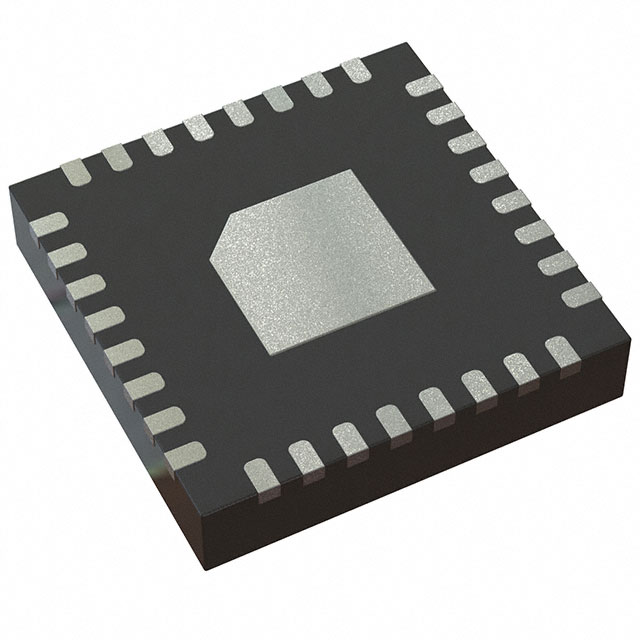
- Package Consideration: The ADS7952SBRHBR uses a 32-VQFN (5x5) package, requiring PCB layout modification compared to the 20-SOIC package of the original part.
Frequently Asked Questions (FAQ)
Q: Can the ADS7952SBRHBR directly replace the TLV0838CDWR without firmware changes?
A: The ADS7952SBRHBR maintains SPI interface compatibility and SAR architecture with the TLV0838CDWR. However, the increased resolution (12-bit versus 8-bit) and different input configuration (12 single-ended inputs versus 4/7/8 configurable inputs) require firmware evaluation to ensure proper register configuration and data interpretation. The different package form factor (32-VQFN versus 20-SOIC) necessitates PCB redesign.
Q: What are the key differences in input configuration between these devices?
A: The TLV0838CDWR offers flexible input configuration with 4, 7, or 8 channels supporting Differential, Pseudo-Differential, and Single Ended input types. The ADS7952SBRHBR provides 12 Single Ended input channels. Applications requiring differential or pseudo-differential inputs must evaluate alternative substitutes or implement external signal conditioning.
Q: Is the ADS7952SBRHBR suitable for low-voltage applications?
A: The ADS7952SBRHBR supports digital supply voltage as low as 1.7V, providing greater flexibility than the TLV0838CDWR (2.7V minimum). Analog supply voltage for the ADS7952SBRHBR begins at 2.7V, matching the original device. Designs operating below 2.7V analog supply require alternative component selection.
Q: What is the impact of the package change from 20-SOIC to 32-VQFN?
A: The package transition from 20-SOIC (0.295" width) to 32-VQFN (5x5mm) requires PCB layout modification, including trace routing, via placement, and thermal management considerations. The VQFN package includes an exposed pad for improved thermal performance. Assembly process parameters and reflow profiles may differ between package types.
Q: Are there temperature range considerations for substitution?
A: The TLV0838CDWR operates across 0°C to 70°C, while the ADS7952SBRHBR supports -40°C to 125°C. Applications requiring operation below 0°C or above 70°C benefit from the expanded temperature range of the ADS7952SBRHBR. Designs operating within the original 0°C to 70°C range are compatible with both devices from a thermal perspective.
Alternative Parts

SJ6012L2TP
Littelfuse Inc.
6 Alternative Parts

JMK107BBJ476MA-RE
Taiyo Yuden
10 Alternative Parts

GMK107BBJ475MA-T
Taiyo Yuden
5 Alternative Parts
SJ6020N2ARP
Littelfuse Inc.
3 Alternative Parts
SJ6025R2ATP
Littelfuse Inc.
4 Alternative Parts

2474-05L
API Delevan Inc.
1 Alternative Parts

4590R-684K
API Delevan Inc.
1 Alternative Parts

CM6560R-334
API Delevan Inc.
1 Alternative Parts

CM6460-104
API Delevan Inc.
1 Alternative Parts

5526-12
API Delevan Inc.
1 Alternative Parts