


Request Quote
(Ships tomorrow)
TLP626(LF2,F) Equivalent & Substitute Parts
Part Overview
The TLP626(LF2,F) is a through-hole optoisolator with transistor output manufactured by Toshiba Semiconductor and Storage. This component provides galvanic isolation up to 5000Vrms across a single channel in a 4-DIP package configuration. The device is classified as obsolete, making identification of active equivalent parts essential for ongoing design support and procurement continuity. The TLP626(LF2,F) accepts both AC and DC input signals and delivers transistor-switched output suitable for logic-level applications requiring high-voltage isolation.
Substiute Parts
Key Parameters
| Parameter | Value | Unit |
|---|---|---|
| Voltage - Isolation | 5000 | Vrms |
| Number of Channels | 1 | — |
| Output Type | Transistor | — |
| Current Transfer Ratio (Min) | 100% | @ 1mA |
| Current Transfer Ratio (Max) | 1200% | @ 1mA |
| Voltage - Output (Max) | 55 | V |
| Current - Output / Channel | 50 | mA |
| Vce Saturation (Max) | 400 | mV |
| Operating Temperature Range | -55 to 100 | °C |
| Mounting Type | Through Hole | — |
| Package / Case | 4-DIP | — |
| Product Status | Obsolete | — |
Substitute Part Grouping Explanation
Substitution of the TLP626(LF2,F) is determined by the following critical parameters that must remain functionally equivalent:
Mandatory Matching Criteria:
- Voltage - Isolation: 5000Vrms (electrical isolation requirement)
- Number of Channels: 1 (functional architecture)
- Output Type: Transistor (switching mechanism)
- Input Type: AC, DC (signal compatibility)
Allowable Variation Criteria:
- Current Transfer Ratio: Substitute may operate at different test conditions (1mA vs. 5mA) with different min/max ranges, provided the device maintains adequate gain for the application
- Voltage - Output (Max): Substitute may exceed the original specification (80V vs. 55V maximum)
- Vce Saturation: Substitute may improve upon the original specification (300mV vs. 400mV maximum)
- Operating Temperature Range: Substitute may extend the upper limit (125°C vs. 100°C maximum)
- Mounting Type: Substitution from through-hole to surface mount is permissible when board redesign is feasible
- Package / Case: Substitution from 4-DIP to 4-SMD is permissible when assembly process supports surface mount technology
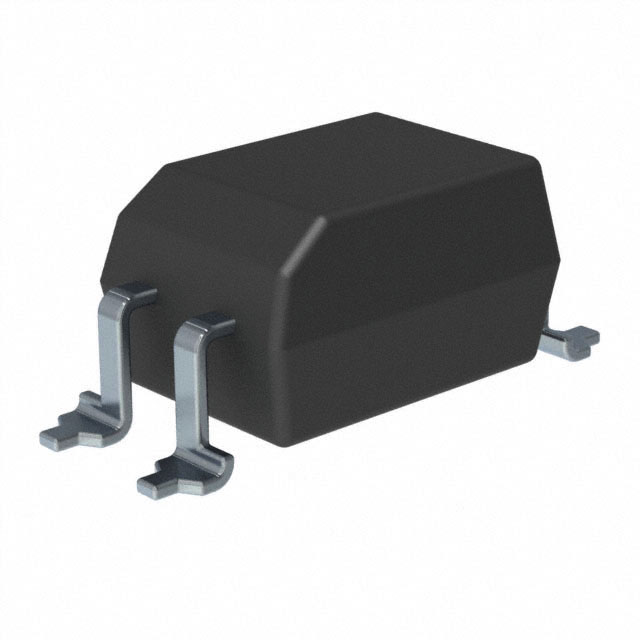
The TLP620M(LF1,E) qualifies as a substitute because it maintains the core isolation voltage, channel count, transistor output architecture, and AC/DC input capability while offering improved performance characteristics and active product status.
Parameter Comparison
| Parameter | TLP626(LF2,F) | TLP620M(LF1,E) | Notes |
|---|---|---|---|
| Manufacturer | Toshiba Semiconductor and Storage | Toshiba Semiconductor and Storage | Same manufacturer |
| Category | Optoisolators | Optoisolators | Same component category |
| Number of Channels | 1 | 1 | Identical |
| Voltage - Isolation | 5000Vrms | 5000Vrms | Identical isolation rating |
| Output Type | Transistor | Transistor | Identical output architecture |
| Input Type | AC, DC | AC, DC | Identical input compatibility |
| Current Transfer Ratio (Min) | 100% @ 1mA | 50% @ 5mA | Different test conditions; substitute has lower minimum at higher test current |
| Current Transfer Ratio (Max) | 1200% @ 1mA | 600% @ 5mA | Different test conditions; substitute has lower maximum at higher test current |
| Turn On / Turn Off Time (Typ) | 10µs, 8µs | 3µs, 3µs | Substitute offers faster switching performance |
| Rise / Fall Time (Typ) | 8µs, 8µs | 2µs, 3µs | Substitute offers faster edge rates |
| Voltage - Output (Max) | 55V | 80V | Substitute supports higher output voltage |
| Current - Output / Channel | 50mA | 50mA | Identical output current rating |
| Voltage - Forward (Vf) (Typ) | 1.15V | 1.25V | Substitute has slightly higher forward voltage |
| Current - DC Forward (If) (Max) | 60mA | 50mA | Substitute has lower maximum forward current |
| Vce Saturation (Max) | 400mV | 300mV | Substitute offers improved saturation performance |
| Operating Temperature Range | -55°C to 100°C | -55°C to 125°C | Substitute supports extended upper temperature limit |
| Mounting Type | Through Hole | Surface Mount | Different mounting technology |
| Package / Case | 4-DIP (0.400", 10.16mm) | 4-SMD (0.300", 7.62mm) | Different package form factor |
| Product Status | Obsolete | Active | Substitute is in active production |
| ECCN | EAR99 | EAR99 | Identical export classification |
| HTSUS | 8541.49.8000 | 8541.49.8000 | Identical tariff classification |
Engineering Selection Recommendations
Product Status Consideration: The TLP626(LF2,F) is classified as obsolete. The TLP620M(LF1,E) is an active product from the same manufacturer, ensuring ongoing availability, manufacturing support, and compliance with current industry standards.
Compliance and Certification: Both parts share identical ECCN (EAR99) and HTSUS (8541.49.8000) classifications, confirming equivalent regulatory and trade compliance status.
Functional Equivalence: The TLP620M(LF1,E) maintains the critical isolation voltage (5000Vrms), single-channel architecture, transistor output topology, and AC/DC input capability required for functional replacement. The substitute meets or exceeds the original specification in key performance areas: maximum output voltage (80V vs. 55V), switching speed (3µs vs. 10µs turn-on), and saturation voltage (300mV vs. 400mV).
Package and Mounting Consideration: The primary difference between these parts is the transition from through-hole (4-DIP) to surface-mount (4-SMD) packaging. This substitution requires board-level redesign and assembly process modification. Organizations with existing through-hole assembly infrastructure must evaluate the cost and schedule impact of this transition against the benefits of securing an active, supported component.
Current Transfer Ratio Evaluation: The TLP620M(LF1,E) specifies current transfer ratio at a different test condition (5mA vs. 1mA). While the absolute percentages differ, both devices operate within acceptable gain ranges for typical optoisolator applications. Circuit designers must verify that the substitute's gain characteristics satisfy the specific input and output current requirements of their application.
Frequently Asked Questions (FAQ)
Q: Can the TLP620M(LF1,E) be used as a direct pin-for-pin replacement for the TLP626(LF2,F)?
A: No. While both devices are 4-pin optoisolators with identical pinout functionality, the TLP620M(LF1,E) uses surface-mount (SMD) packaging, whereas the TLP626(LF2,F) uses through-hole (DIP) packaging. Direct socket substitution is not possible without board redesign and assembly process changes.
Q: What is the significance of the different current transfer ratio test conditions (1mA vs. 5mA)?
A: Current transfer ratio is measured at specific input LED current levels. The TLP626(LF2,F) is characterized at 1mA input current, while the TLP620M(LF1,E) is characterized at 5mA. These different test points reflect different design operating regions. Circuit designers must ensure that their application's actual input current falls within the operating range where the substitute device maintains adequate gain.
Q: Does the higher maximum output voltage of the TLP620M(LF1,E) (80V vs. 55V) affect compatibility?
A: No. A higher maximum output voltage rating indicates the substitute can handle higher voltage levels without damage. If the original application operates at or below 55V, the substitute's 80V rating provides additional design margin and is fully compatible.
Q: Is the improved switching speed of the TLP620M(LF1,E) (3µs vs. 10µs) a concern for compatibility?
A: No. Faster switching speed is a performance improvement. Applications designed for the original 10µs switching time will operate correctly with the faster 3µs response. However, if the application circuit relies on the original switching delay for timing purposes, circuit analysis is required to confirm compatibility.
Q: What is the impact of the extended operating temperature range of the TLP620M(LF1,E) (-55°C to 125°C vs. -55°C to 100°C)?
A: The extended upper temperature limit of the substitute provides additional thermal margin. Applications operating within the original -55°C to 100°C range will function identically. Applications requiring operation above 100°C can benefit from the substitute's extended range.
Q: Are there any regulatory or compliance differences between these parts?
A: No. Both parts share identical ECCN (EAR99) and HTSUS (8541.49.8000) classifications. There are no differences in export control, tariff classification, or regulatory compliance status.
Q: What factors should be evaluated before committing to the TLP620M(LF1,E) as a replacement?
A: Primary considerations include: (1) Board redesign feasibility and cost for surface-mount conversion; (2) Assembly process capability for SMD placement and reflow soldering; (3) Verification that the substitute's current transfer ratio characteristics satisfy the specific input and output current requirements of the application; (4) Confirmation that faster switching speed does not introduce timing conflicts in the circuit; (5) Validation that the lower maximum forward current (50mA vs. 60mA) is acceptable for the LED drive circuit design.
Alternative Parts

SJ6012L2TP
Littelfuse Inc.
6 Alternative Parts

JMK107BBJ476MA-RE
Taiyo Yuden
10 Alternative Parts

GMK107BBJ475MA-T
Taiyo Yuden
5 Alternative Parts
SJ6020N2ARP
Littelfuse Inc.
3 Alternative Parts
SJ6025R2ATP
Littelfuse Inc.
4 Alternative Parts

2474-05L
API Delevan Inc.
1 Alternative Parts

4590R-684K
API Delevan Inc.
1 Alternative Parts

CM6560R-334
API Delevan Inc.
1 Alternative Parts

CM6460-104
API Delevan Inc.
1 Alternative Parts

5526-12
API Delevan Inc.
1 Alternative Parts