



Request Quote
(Ships tomorrow)
TLE2144MDWG4 Equivalent & Substitute Parts
Part Overview
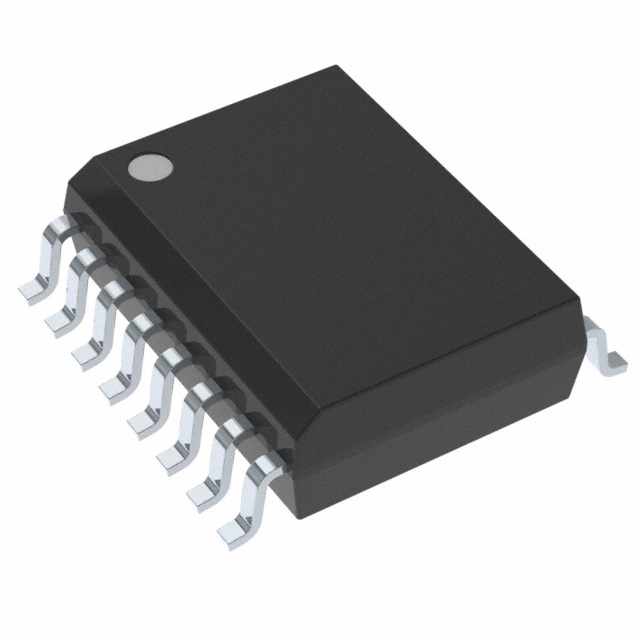
The TLE2144MDWG4 is a general-purpose operational amplifier integrated circuit manufactured by Texas Instruments, featuring four independent amplifier circuits in a 16-SOIC surface mount package. This device is classified as a rail-to-rail output amplifier with a slew rate of 45V/µs and gain bandwidth product of 5.9 MHz, designed for applications requiring moderate-speed signal conditioning and amplification across a wide supply voltage range of 4V to 44V.
The TLE2144MDWG4 is currently discontinued at DiGi Electronics. Equivalent and substitute parts are necessary to maintain design continuity, ensure component availability, and support ongoing production requirements. Substitute components must maintain functional compatibility within the specified electrical and mechanical parameters while meeting RoHS3 compliance and MSL Level 1 moisture sensitivity requirements.
Substiute Parts
Key Parameters
| Parameter | Value | Unit |
|---|---|---|
| Amplifier Type | General Purpose | — |
| Number of Circuits | 4 | — |
| Output Type | Rail-to-Rail | — |
| Slew Rate | 45 | V/µs |
| Gain Bandwidth Product | 5.9 | MHz |
| Current - Input Bias | 700 | nA |
| Voltage - Input Offset | 290 | µV |
| Current - Supply (4 Channels) | 6.9 | mA |
| Current - Output / Channel | 50 | mA |
| Voltage - Supply Span (Min) | 4 | V |
| Voltage - Supply Span (Max) | 44 | V |
| Operating Temperature Range | -55 to 125 | °C |
| Package / Case | 16-SOIC (0.295", 7.50mm Width) | — |
| Mounting Type | Surface Mount | — |
| RoHS Status | ROHS3 Compliant | — |
| MSL Rating | 1 (Unlimited) | — |
Substitute Part Grouping Explanation
Substitute parts for the TLE2144MDWG4 are evaluated based on the following critical parameters that determine functional compatibility:
Primary Compatibility Criteria:
- Number of circuits: Must be 4 independent amplifier circuits
- Package type: Must be 16-SOIC surface mount configuration
- Supply voltage range: Must encompass or be compatible with 4V to 44V operation
- Output current capability: Must support minimum 50 mA per channel
- Operating temperature range: Must support applications within -55°C to 125°C or specified subset
- RoHS3 compliance and MSL Level 1 rating: Required for regulatory and manufacturing compatibility
Substitution Logic:
Substitute parts are grouped into two functional categories based on amplifier type:
-
General Purpose Amplifiers (Direct Functional Equivalents): Parts maintaining general-purpose amplifier topology with comparable slew rate and bandwidth characteristics. These include OP470GSZ, OP470GSZ-REEL, OP471GSZ, OP471GSZ-REEL, and LT1014DSW#TRPBF. These devices provide direct functional replacement with variations in specific electrical performance metrics.
-
J-FET Input Amplifiers (Alternative Technology): Parts utilizing J-FET input stages including AD713JRZ-16, AD713JRZ-16-REEL, LT1058ISW#PBF, and LT1058SW#PBF. These devices offer superior input bias current characteristics (10 pA versus 700 nA) and are suitable for applications where low input bias current is advantageous, though they may have different slew rate and bandwidth profiles.
All substitute parts maintain 16-SOIC packaging, surface mount configuration, RoHS3 compliance, and MSL Level 1 rating. Packaging variants (Tube, Tape & Reel, Cut Tape & Digi-Reel) are functionally equivalent and differ only in supply format.
Parameter Comparison
| Part Number | Manufacturer | Amplifier Type | Slew Rate (V/µs) | GBW (MHz) | Input Bias (nA) | Input Offset (µV) | Supply Current (mA) | Output Current (mA) | Supply Min (V) | Supply Max (V) | Temp Range (°C) | Status |
|---|---|---|---|---|---|---|---|---|---|---|---|---|
| TLE2144MDWG4 | Texas Instruments | General Purpose | 45 | 5.9 | 700 | 290 | 6.9 | 50 | 4 | 44 | -55 to 125 | Discontinued |
| AD713JRZ-16 | Analog Devices | J-FET | 20 | 4 | 0.01 | 300 | 10 | 25 | 9 | 36 | 0 to 70 | Active |
| AD713JRZ-16-REEL | Analog Devices | J-FET | 20 | 4 | 0.01 | 300 | 10 | 25 | 9 | 36 | 0 to 70 | Active |
| LT1014DSW#TRPBF | Analog Devices | General Purpose | 0.4 | 1 | 15 | 60 | 0.35 | 20 | 4 | 44 | 0 to 70 | Active |
| LT1058ISW#PBF | Analog Devices | J-FET | 13 | 5 | 0.01 | 350 | 1.7 | — | 20 | 36 | -40 to 85 | Active |
| LT1058SW#PBF | Analog Devices | J-FET | 13 | 5 | 0.01 | 350 | 1.7 | — | 20 | 36 | 0 to 70 | Active |
| OP470GSZ | Analog Devices | General Purpose | 3 | 6 | 15 | 400 | 9 | — | 9 | 36 | -40 to 85 | Active |
| OP470GSZ-REEL | Analog Devices | General Purpose | 3 | 6 | 15 | 400 | 9 | — | 9 | 36 | -40 to 85 | Active |
| OP471GSZ | Analog Devices | General Purpose | 8 | 6.5 | 25 | 1000 | 9.2 | — | 9 | 36 | -40 to 85 | Active |
| OP471GSZ-REEL | Analog Devices | General Purpose | 8 | 6.5 | 25 | 1000 | 9.2 | — | 9 | 36 | -40 to 85 | Active |
Engineering Selection Recommendations
For General Purpose Applications with Extended Temperature Range:
The OP471GSZ and OP471GSZ-REEL are recommended as primary substitutes for the TLE2144MDWG4 in applications requiring general-purpose amplification. These devices maintain active product status, provide comparable gain bandwidth product (6.5 MHz versus 5.9 MHz), and support the -40°C to 85°C operating range. Both variants are RoHS3 compliant with MSL Level 1 rating. The OP471GSZ-REEL variant is preferred for high-volume manufacturing due to tape and reel packaging format.
For Low-Power Supply Applications:
The LT1014DSW#TRPBF is suitable for applications where supply voltage range compatibility (4V to 44V) and low supply current consumption (0.35 mA versus 6.9 mA) are critical design requirements. This device maintains active status and full RoHS3 compliance. However, the significantly reduced slew rate (0.4 V/µs) and gain bandwidth product (1 MHz) restrict its use to low-frequency signal conditioning applications.
For Low Input Bias Current Requirements:
The AD713JRZ-16 and AD713JRZ-16-REEL provide J-FET input stages with input bias current of 10 pA, substantially lower than the TLE2144MDWG4 (700 nA). These devices are suitable for high-impedance signal sources and precision measurement applications. Both variants are active and RoHS3 compliant. The AD713JRZ-16-REEL is preferred for production quantities.
For Extended Temperature Operation:
The LT1058ISW#PBF supports -40°C to 85°C operating range with J-FET input characteristics and 5 MHz gain bandwidth product. This device is active and RoHS3 compliant, suitable for industrial and automotive applications requiring low input bias current across extended temperature ranges.
Supply Voltage Compatibility Constraints:
The OP470GSZ, OP470GSZ-REEL, OP471GSZ, OP471GSZ-REEL, AD713JRZ-16, AD713JRZ-16-REEL, LT1058ISW#PBF, and LT1058SW#PBF all require minimum supply voltage of 9V or 20V, which exceeds the TLE2144MDWG4 minimum of 4V. These substitutes are not suitable for applications requiring operation below their specified minimum supply voltage.
Frequently Asked Questions (FAQ)
Q: Can the OP471GSZ directly replace the TLE2144MDWG4 in all applications?
A: The OP471GSZ is mechanically and functionally compatible in 16-SOIC surface mount applications. However, the minimum supply voltage requirement is 9V versus 4V for the TLE2144MDWG4. Verify that your application supply voltage meets or exceeds 9V. The OP471GSZ provides comparable gain bandwidth product (6.5 MHz versus 5.9 MHz) and supports the -40°C to 85°C temperature range, which is a subset of the original -55°C to 125°C range.
Q: What is the difference between AD713JRZ-16 and AD713JRZ-16-REEL?
A: Both parts are functionally identical with identical electrical specifications. The difference is packaging format: AD713JRZ-16 is supplied in Tube packaging for manual handling and small quantities, while AD713JRZ-16-REEL is supplied in Tape & Reel format optimized for automated assembly and production environments. Select based on your manufacturing process requirements.
Q: Why does the LT1014DSW#TRPBF have such a low slew rate compared to the TLE2144MDWG4?
A: The LT1014DSW#TRPBF is designed for low-power, precision signal conditioning applications with slew rate of 0.4 V/µs. The TLE2144MDWG4 is optimized for higher-speed applications with 45 V/µs slew rate. The LT1014 is suitable only for applications where signal frequencies are below approximately 100 kHz. Do not use the LT1014 as a substitute in high-frequency or fast-transient applications.
Q: Are all substitute parts RoHS3 compliant?
A: Yes. All substitute parts listed (OP470GSZ, OP470GSZ-REEL, OP471GSZ, OP471GSZ-REEL, AD713JRZ-16, AD713JRZ-16-REEL, LT1014DSW#TRPBF, LT1058ISW#PBF, and LT1058SW#PBF) are RoHS3 compliant with MSL Level 1 (Unlimited) moisture sensitivity rating, matching the original TLE2144MDWG4 compliance profile.
Q: What is the key difference between general-purpose and J-FET input amplifiers?
A: General-purpose amplifiers (OP470, OP471, LT1014) use bipolar input stages with input bias currents in the nanoampere range (15-25 nA). J-FET input amplifiers (AD713, LT1058) use field-effect transistor input stages with input bias currents in the picoampere range (10 pA). J-FET devices are preferred for high-impedance signal sources where input bias current must be minimized. General-purpose devices typically offer lower input offset voltage and are suitable for standard signal conditioning applications.
Q: Can I use LT1058SW#PBF instead of LT1058ISW#PBF?
A: Both devices are functionally identical with identical electrical specifications. The difference is operating temperature range: LT1058ISW#PBF operates -40°C to 85°C, while LT1058SW#PBF operates 0°C to 70°C. Select based on your application temperature requirements. For industrial and automotive applications requiring extended low-temperature operation, use LT1058ISW#PBF.
Q: What is the significance of the 16-SOIC package specification?
A: The 16-SOIC (Small Outline Integrated Circuit) package is a standardized surface mount package with 16 pins, 0.295 inches (7.50 mm) width. All substitute parts maintain this identical package specification, ensuring mechanical and electrical compatibility with existing PCB layouts and assembly processes. No PCB redesign is required when substituting between parts with identical 16-SOIC packaging.
Q: Why is the TLE2144MDWG4 discontinued?
A: The product status indicates discontinuation at DiGi Electronics. This typically reflects manufacturer end-of-life decisions or market consolidation. Substitute parts listed are all active products with ongoing manufacturing and supply availability, ensuring long-term design support and component procurement reliability.
Alternative Parts

SJ6012L2TP
Littelfuse Inc.
6 Alternative Parts

JMK107BBJ476MA-RE
Taiyo Yuden
10 Alternative Parts

GMK107BBJ475MA-T
Taiyo Yuden
5 Alternative Parts
SJ6020N2ARP
Littelfuse Inc.
3 Alternative Parts
SJ6025R2ATP
Littelfuse Inc.
4 Alternative Parts

2474-05L
API Delevan Inc.
1 Alternative Parts

4590R-684K
API Delevan Inc.
1 Alternative Parts

CM6560R-334
API Delevan Inc.
1 Alternative Parts

CM6460-104
API Delevan Inc.
1 Alternative Parts

5526-12
API Delevan Inc.
1 Alternative Parts