



Request Quote
(Ships tomorrow)
TLE2144IDWR Equivalent & Substitute Parts
Part Overview
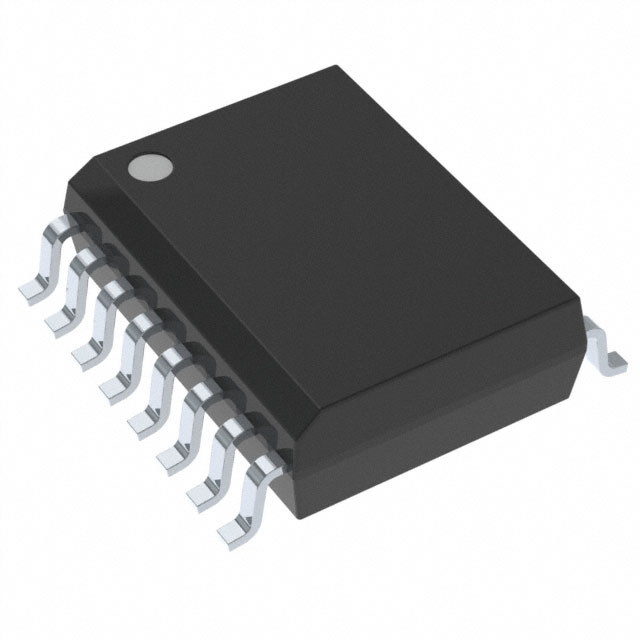
The TLE2144IDWR is a general-purpose operational amplifier manufactured by Texas Instruments, featuring four independent circuits in a 16-SOIC surface-mount package. This device is classified as Active product status and is RoHS3 compliant. The TLE2144IDWR is designed for applications requiring rail-to-rail output capability with moderate slew rate performance and bandwidth characteristics suitable for general signal conditioning and amplification tasks. Substitute parts are identified when equivalent electrical and mechanical parameters align with application requirements, enabling component interchangeability for procurement flexibility, inventory optimization, or design revision purposes.
Substiute Parts
Key Parameters
| Parameter | Value | Unit |
|---|---|---|
| Amplifier Type | General Purpose | — |
| Number of Circuits | 4 | — |
| Output Type | Rail-to-Rail | — |
| Slew Rate | 45 | V/µs |
| Gain Bandwidth Product | 5.9 | MHz |
| Current - Input Bias | 700 | nA |
| Voltage - Input Offset | 290 | µV |
| Current - Supply (x4 Channels) | 6.9 | mA |
| Current - Output / Channel | 50 | mA |
| Voltage - Supply Span (Min) | 4 | V |
| Voltage - Supply Span (Max) | 44 | V |
| Operating Temperature | -40 to 105 | °C |
| Package / Case | 16-SOIC (0.295", 7.50mm Width) | — |
| Mounting Type | Surface Mount | — |
| RoHS Status | ROHS3 Compliant | — |
| Moisture Sensitivity Level (MSL) | 1 (Unlimited) | — |
Substitute Part Grouping Explanation
Substitute parts for the TLE2144IDWR are identified based on strict alignment of electrical and mechanical parameters. The primary substitution criteria are:
Mechanical Compatibility: All substitute parts must use the 16-SOIC surface-mount package with identical pin configuration and footprint dimensions (0.295", 7.50mm Width).
Functional Equivalence: Substitute parts must contain four independent amplifier circuits within a single package to maintain circuit board layout and assembly compatibility.
Electrical Operating Range: Supply voltage span compatibility is critical. The TLE2144IDWR operates across 4V to 44V. Substitute parts must support overlapping or equivalent supply voltage ranges to function in the same application circuits.
Performance Characteristics: Slew rate, gain bandwidth product, input bias current, and input offset voltage determine signal fidelity and frequency response. Substitutes are grouped by amplifier type (general-purpose versus J-FET) and performance tier.
Packaging Format: Substitute parts are available in Tube or Tape & Reel (TR) formats. Format selection affects procurement and assembly processes but does not alter electrical function.
The substitute parts listed include both general-purpose amplifiers (LT1014, LT1079, LT1179 series) and J-FET input amplifiers (AD713, LT1058 series). Each group represents distinct performance and application characteristics while maintaining 16-SOIC package compatibility.
Parameter Comparison
| Part Number | Manufacturer | Amplifier Type | Slew Rate (V/µs) | Gain Bandwidth Product (MHz) | Input Bias Current (pA/nA) | Input Offset Voltage (µV) | Supply Current (mA) | Output Current / Channel (mA) | Supply Span Min (V) | Supply Span Max (V) | Operating Temp (°C) | Packaging |
|---|---|---|---|---|---|---|---|---|---|---|---|---|
| TLE2144IDWR | Texas Instruments | General Purpose | 45 | 5.9 | 700 nA | 290 | 6.9 | 50 | 4 | 44 | -40 to 105 | 16-SOIC |
| AD713JRZ-16 | Analog Devices Inc. | J-FET | 20 | 4 | 10 pA | 300 | 10 | 25 | 9 | 36 | 0 to 70 | 16-SOIC (Tube) |
| AD713JRZ-16-REEL | Analog Devices Inc. | J-FET | 20 | 4 | 10 pA | 300 | 10 | 25 | 9 | 36 | 0 to 70 | 16-SOIC (TR) |
| LT1014DSW#TRPBF | Analog Devices Inc. | General Purpose | 0.4 | 1 | 15 nA | 60 | 0.35 | 20 | 4 | 44 | 0 to 70 | 16-SO (TR) |
| LT1058ISW#PBF | Analog Devices Inc. | J-FET | 13 | 5 | 10 pA | 350 | 1.7 | — | 20 | 36 | -40 to 85 | 16-SO (Tube) |
| LT1058SW#PBF | Analog Devices Inc. | J-FET | 13 | 5 | 10 pA | 350 | 1.7 | — | 20 | 36 | 0 to 70 | 16-SO (Tube) |
| LT1079ISW#PBF | Analog Devices Inc. | General Purpose | 0.1 | 0.2 | 6 nA | 60 | 0.039 | — | 2.2 | 30 | -40 to 85 | 16-SO (Tube) |
| LT1079ISW#TRPBF | Analog Devices Inc. | General Purpose | 0.1 | 0.2 | 6 nA | 60 | 0.039 | — | 2.2 | 30 | -40 to 85 | 16-SO (TR) |
| LT1079SW#PBF | Analog Devices Inc. | General Purpose | 0.1 | 0.2 | 6 nA | 80 | 0.039 | — | 2.2 | 30 | — | 16-SO (Tube) |
| LT1079SW#TRPBF | Analog Devices Inc. | General Purpose | 0.1 | 0.2 | 6 nA | 80 | 0.039 | — | 2.2 | 30 | — | 16-SO (TR) |
| LT1179SW#PBF | Analog Devices Inc. | General Purpose | 0.04 | 0.085 | 3 nA | 160 | 0.017 | — | 5 | 30 | 0 to 70 | 16-SO (Tube) |
Engineering Selection Recommendations
Direct Substitution Candidates:
The LT1014DSW#TRPBF represents the closest general-purpose substitute for the TLE2144IDWR. Both devices support the full 4V to 44V supply range, contain four independent circuits, and are housed in 16-SOIC packages. The LT1014DSW#TRPBF operates across 0°C to 70°C, which is a subset of the TLE2144IDWR's -40°C to 105°C range. This device is suitable for applications where the extended low-temperature performance of the TLE2144IDWR is not required. Both devices are RoHS3 compliant and carry Active product status.
J-FET Input Alternatives:
The AD713JRZ-16 and AD713JRZ-16-REEL (Tape & Reel format) provide J-FET input characteristics with extremely low input bias current (10 pA). These devices operate across 9V to 36V, which overlaps with the TLE2144IDWR's supply range but does not extend to the 4V minimum. The AD713 series is suitable for applications requiring ultra-low input bias current and operating within the 9V to 36V supply window. Both variants are RoHS3 compliant and Active status.
The LT1058ISW#PBF and LT1058SW#PBF are J-FET input amplifiers with 5 MHz gain bandwidth product, matching the TLE2144IDWR's bandwidth performance. These devices require minimum 20V supply and operate to maximum 36V, restricting use to higher supply voltage applications. The LT1058ISW#PBF supports -40°C to 85°C operation, extending low-temperature performance compared to the LT1058SW#PBF (0°C to 70°C).
Low-Power General-Purpose Options:
The LT1079 series (ISW#PBF, ISW#TRPBF, SW#PBF, SW#TRPBF variants) provides ultra-low supply current (39 µA per four channels) with general-purpose amplifier characteristics. These devices operate across 2.2V to 30V, supporting lower supply voltages than the TLE2144IDWR but not extending to 44V maximum. The LT1079ISW#TRPBF and LT1079ISW#PBF support -40°C to 85°C operation. These devices are suitable for battery-powered or low-power applications where the TLE2144IDWR's 6.9 mA supply current is excessive.
The LT1179SW#PBF is an ultra-low-power, low-bandwidth general-purpose amplifier (85 kHz gain bandwidth product, 17 µA supply current). This device operates across 5V to 30V and is suitable only for applications where bandwidth requirements are significantly lower than the TLE2144IDWR.
Compliance and Availability:
All listed substitute parts are RoHS3 compliant, REACH unaffected, and carry Active product status. Packaging formats (Tube versus Tape & Reel) do not affect electrical function but influence procurement and assembly processes. Inventory availability varies across substitute options, with LT1079SW#TRPBF showing highest stock (4247 pcs) and LT1179SW#PBF showing lowest (1109 pcs).
Frequently Asked Questions (FAQ)
Q: Can the AD713JRZ-16 directly replace the TLE2144IDWR in all applications?
A: The AD713JRZ-16 is mechanically compatible (16-SOIC package, four circuits) but has restricted supply voltage range (9V to 36V minimum versus TLE2144IDWR's 4V minimum). Direct substitution is valid only for applications operating within the 9V to 36V window. The AD713 is a J-FET input device with 10 pA input bias current, compared to the TLE2144IDWR's 700 nA, making it suitable for high-impedance signal sources. Operating temperature range is 0°C to 70°C, narrower than the TLE2144IDWR's -40°C to 105°C.
Q: What is the difference between AD713JRZ-16 and AD713JRZ-16-REEL?
A: Both parts are electrically identical. The difference is packaging format: AD713JRZ-16 is supplied in Tube format, while AD713JRZ-16-REEL is supplied in Tape & Reel (TR) format. Tape & Reel packaging is standard for automated assembly processes, while Tube packaging is used for manual assembly or lower-volume applications. Electrical specifications, pin configuration, and performance are identical.
Q: Is the LT1014DSW#TRPBF a suitable substitute for low-speed applications?
A: The LT1014DSW#TRPBF is suitable for applications where the TLE2144IDWR's 5.9 MHz gain bandwidth product exceeds requirements. The LT1014 provides only 1 MHz bandwidth with significantly lower slew rate (0.4 V/µs versus 45 V/µs). This device is appropriate for DC and low-frequency signal conditioning where bandwidth is not a limiting factor. Supply voltage range (4V to 44V) and output current capability (20 mA per channel) are compatible with the TLE2144IDWR. Operating temperature range is 0°C to 70°C.
Q: Why do some substitute parts show different package designations (16-SOIC versus 16-SO)?
A: The designations 16-SOIC and 16-SO refer to the same physical package: a 16-pin small-outline integrated circuit with 0.295" (7.50mm) width. Both designations describe surface-mount packages with identical pin spacing, footprint, and mechanical dimensions. The terminology difference reflects manufacturer naming conventions but does not indicate physical incompatibility. All listed parts are mechanically interchangeable at the PCB level.
Q: Can the LT1079 series replace the TLE2144IDWR in battery-powered applications?
A: The LT1079 series is suitable for battery-powered applications where supply current is critical. The LT1079 consumes only 39 µA (four channels combined) compared to the TLE2144IDWR's 6.9 mA, providing approximately 177× lower power consumption. However, the LT1079 operates across 2.2V to 30V, which does not extend to the TLE2144IDWR's 44V maximum. The LT1079 is appropriate for applications operating within 2.2V to 30V supply range where bandwidth requirements are modest (200 kHz gain bandwidth product).
Q: What are the key differences between general-purpose and J-FET input amplifiers in this list?
A: General-purpose amplifiers (TLE2144, LT1014, LT1079, LT1179) use bipolar input stages with input bias currents in the nanoampere range (3 nA to 700 nA). J-FET input amplifiers (AD713, LT1058) use field-effect transistor input stages with input bias currents in the picoampere range (10 pA). J-FET devices are preferred for high-impedance signal sources where input bias current must be minimized. General-purpose devices typically offer lower input offset voltage and wider supply voltage ranges. Selection depends on source impedance and application requirements.
Q: Are all substitute parts RoHS3 compliant?
A: Yes, all listed substitute parts are RoHS3 compliant. The TLE2144IDWR and all substitute parts carry RoHS3 Compliant status, indicating compliance with Restriction of Hazardous Substances Directive requirements. All parts are also REACH unaffected, confirming regulatory compliance for European and international markets.
Q: What is the significance of Moisture Sensitivity Level (MSL) 1?
A: MSL 1 (Unlimited) indicates that the component has unlimited shelf life and does not require special moisture-control handling during storage or assembly. All listed parts carry MSL 1 rating, meaning they can be stored under standard warehouse conditions without desiccant packaging or moisture-barrier protection. This simplifies procurement, inventory management, and assembly processes compared to higher MSL ratings.
Alternative Parts

SJ6012L2TP
Littelfuse Inc.
6 Alternative Parts

JMK107BBJ476MA-RE
Taiyo Yuden
10 Alternative Parts

GMK107BBJ475MA-T
Taiyo Yuden
5 Alternative Parts
SJ6020N2ARP
Littelfuse Inc.
3 Alternative Parts
SJ6025R2ATP
Littelfuse Inc.
4 Alternative Parts

2474-05L
API Delevan Inc.
1 Alternative Parts

4590R-684K
API Delevan Inc.
1 Alternative Parts

CM6560R-334
API Delevan Inc.
1 Alternative Parts

CM6460-104
API Delevan Inc.
1 Alternative Parts

5526-12
API Delevan Inc.
1 Alternative Parts