


Request Quote
(Ships tomorrow)
TLE2071IDR Equivalent & Substitute Parts
Part Overview
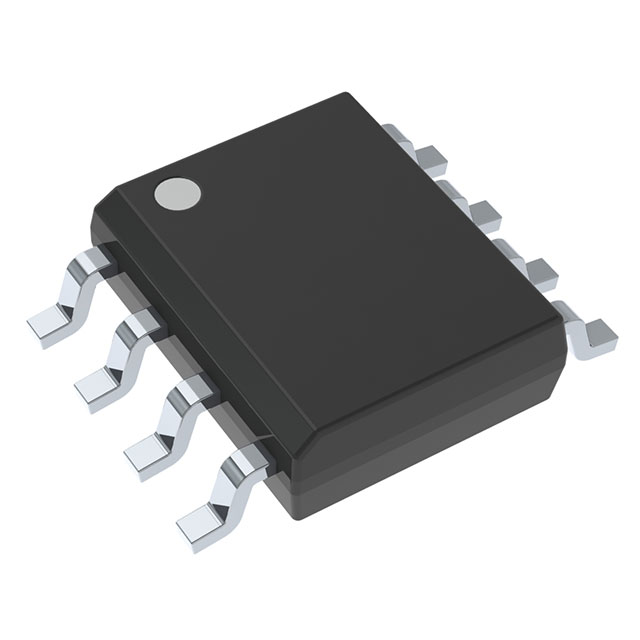
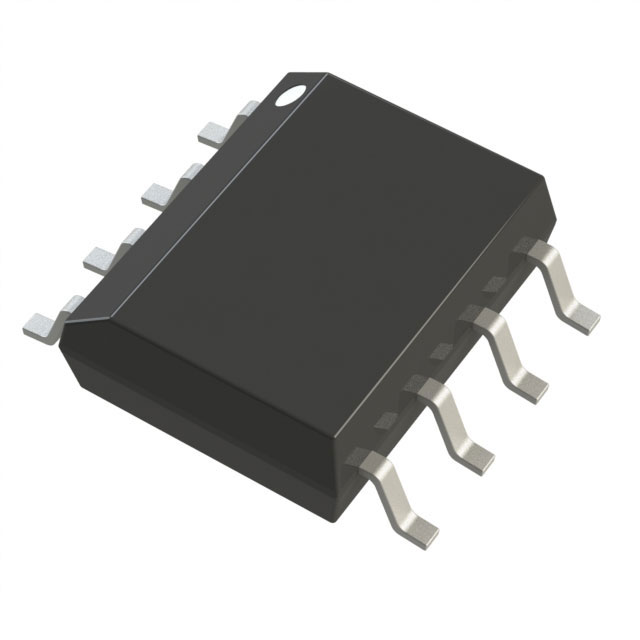
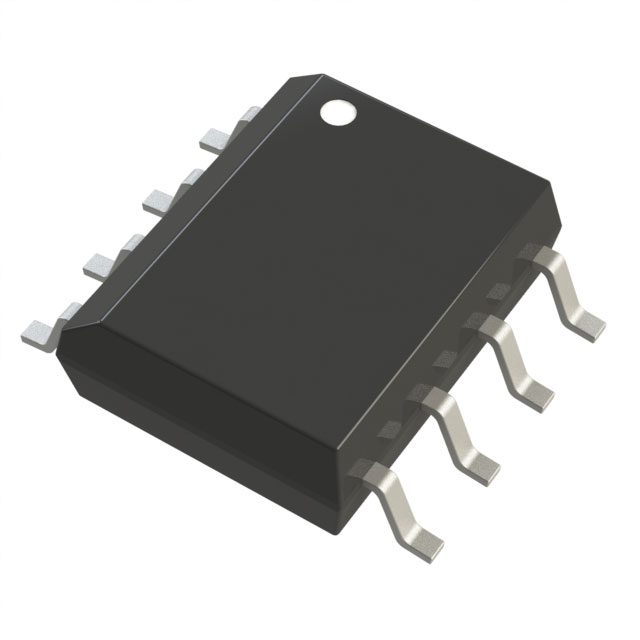
The TLE2071IDR is a J-FET input operational amplifier manufactured by Texas Instruments, housed in an 8-SOIC surface mount package. This device is classified as part of the Excalibur™ series and maintains Active product status. The TLE2071IDR is designed for applications requiring low input bias current and moderate bandwidth performance in a compact form factor.
Substitute parts are identified when equivalent electrical performance can be achieved within the specified parameter ranges while maintaining compatibility with the 8-SOIC package footprint and surface mount assembly requirements.
Substiute Parts
Key Parameters
| Parameter | Value | Unit |
|---|---|---|
| Amplifier Type | J-FET | — |
| Number of Circuits | 1 | — |
| Slew Rate | 45 | V/µs |
| Gain Bandwidth Product | 10 | MHz |
| Current - Input Bias | 20 | pA |
| Voltage - Input Offset | 490 | µV |
| Current - Supply | 1.7 | mA |
| Current - Output / Channel | 48 | mA |
| Voltage - Supply Span (Min) | 4.5 | V |
| Voltage - Supply Span (Max) | 38 | V |
| Operating Temperature | -40 to 85 | °C |
| Package / Case | 8-SOIC (0.154", 3.90mm Width) | — |
| Mounting Type | Surface Mount | — |
| RoHS Status | ROHS3 Compliant | — |
| Moisture Sensitivity Level | 1 (Unlimited) | — |
Substitute Part Grouping Explanation
Substitute parts for the TLE2071IDR are identified based on the following criteria:
Primary Substitution Criteria:
- Amplifier Type: J-FET input configuration
- Number of Circuits: Single circuit (1)
- Package Compatibility: 8-SOIC or equivalent 8-SO form factor
- Mounting Type: Surface Mount
- Operating Temperature Range: Minimum -40°C to 85°C support
- Supply Voltage Range: Overlap with 4.5V to 38V span
Secondary Compatibility Parameters:
- Slew Rate: 45 V/µs baseline (range 12–75 V/µs acceptable)
- Gain Bandwidth Product: 10 MHz baseline (range 4.5–13 MHz acceptable)
- Input Bias Current: 20 pA baseline (range 12–130 pA acceptable)
- Input Offset Voltage: 490 µV baseline (range 30 µV–1.5 mV acceptable)
Compliance Requirements:
- RoHS3 Compliant status
- Moisture Sensitivity Level 1 (Unlimited)
- Active product status
The following parts meet these substitution criteria:
- LT1055S8#PBF – J-FET amplifier with compatible electrical performance
- LT1122CS8#PBF – J-FET amplifier with enhanced slew rate and bandwidth
- OP42GSZ – J-FET amplifier with matched gain bandwidth product
- OP42GSZ-R7 – Tape & Reel variant of OP42GSZ with identical electrical specifications
Non-Qualifying Substitute:
- AD847ARZ – General Purpose amplifier type (not J-FET); exceeds supply voltage minimum requirement (9V vs. 4.5V); higher input bias current (3.3 µA)
- LT1008S8#PBF – Operating temperature range limited to 0°C to 70°C; supply voltage minimum 4V but maximum 36V; general purpose type
Parameter Comparison
| Parameter | TLE2071IDR | LT1055S8#PBF | LT1122CS8#PBF | OP42GSZ | OP42GSZ-R7 |
|---|---|---|---|---|---|
| Amplifier Type | J-FET | J-FET | J-FET | J-FET | J-FET |
| Number of Circuits | 1 | 1 | 1 | 1 | 1 |
| Slew Rate (V/µs) | 45 | 12 | 75 | 50 | 50 |
| Gain Bandwidth Product (MHz) | 10 | 4.5 | 13 | 10 | 10 |
| Current - Input Bias (pA) | 20 | 30 | 12 | 130 | 130 |
| Voltage - Input Offset (µV) | 490 | 500 | 130 | 1500 | 1500 |
| Current - Supply (mA) | 1.7 | 2.8 | 7.8 | 5.1 | 5.1 |
| Current - Output / Channel (mA) | 48 | — | — | 33 | 33 |
| Voltage - Supply Span (Min) | 4.5 V | 10 V | 10 V | 16 V | 16 V |
| Voltage - Supply Span (Max) | 38 V | 36 V | 36 V | 40 V | 40 V |
| Operating Temperature | -40 to 85°C | 0 to 70°C | -40 to 85°C | -40 to 85°C | -40 to 85°C |
| Package / Case | 8-SOIC | 8-SOIC | 8-SOIC | 8-SOIC | 8-SOIC |
| Mounting Type | Surface Mount | Surface Mount | Surface Mount | Surface Mount | Surface Mount |
| RoHS Status | ROHS3 Compliant | ROHS3 Compliant | ROHS3 Compliant | ROHS3 Compliant | ROHS3 Compliant |
| Moisture Sensitivity Level | 1 (Unlimited) | 1 (Unlimited) | 1 (Unlimited) | 1 (Unlimited) | 1 (Unlimited) |
Engineering Selection Recommendations
Primary Substitute: OP42GSZ / OP42GSZ-R7
The OP42GSZ and OP42GSZ-R7 provide the closest electrical match to the TLE2071IDR. Both devices maintain identical gain bandwidth product (10 MHz) and comparable slew rate (50 V/µs vs. 45 V/µs). The OP42GSZ-R7 variant is supplied in Tape & Reel packaging, suitable for automated assembly environments. Both variants are Active status products with full RoHS3 compliance and MSL 1 rating. The primary design consideration is the higher minimum supply voltage requirement (16V vs. 4.5V), which restricts use in low-voltage applications.
Secondary Substitute: LT1122CS8#PBF
The LT1122CS8#PBF offers enhanced performance characteristics with higher slew rate (75 V/µs) and gain bandwidth product (13 MHz). This device supports the full operating temperature range (-40°C to 85°C) and maintains Active product status. The minimum supply voltage requirement (10V) is higher than the TLE2071IDR but lower than the OP42GSZ variants. Input offset voltage is significantly lower (130 µV), which benefits precision applications. Supply current is elevated (7.8 mA vs. 1.7 mA), which may impact power budget in battery-powered designs.
Tertiary Substitute: LT1055S8#PBF
The LT1055S8#PBF is a J-FET amplifier with lower slew rate (12 V/µs) and reduced gain bandwidth product (4.5 MHz). This device is suitable only for applications where bandwidth requirements are less stringent than the TLE2071IDR baseline. The operating temperature range is limited to 0°C to 70°C, excluding use in extended temperature environments. Minimum supply voltage (10V) restricts low-voltage applications.
Compliance Verification:
All recommended substitutes maintain RoHS3 compliance, MSL 1 rating, and Active product status. No additional environmental or regulatory constraints are introduced by substitution.
Frequently Asked Questions (FAQ)
Q1: Can the AD847ARZ substitute for the TLE2071IDR?
No. The AD847ARZ is a General Purpose amplifier type, not a J-FET input device. It requires a minimum supply voltage of 9V, which exceeds the TLE2071IDR's 4.5V minimum. Input bias current (3.3 µA) is significantly higher than the TLE2071IDR (20 pA), making it unsuitable for high-impedance signal sources. The AD847ARZ does not meet the J-FET amplifier type requirement.
Q2: What is the difference between OP42GSZ and OP42GSZ-R7?
Both devices have identical electrical specifications and performance characteristics. The primary difference is packaging: OP42GSZ is supplied in Tube packaging, while OP42GSZ-R7 is supplied in Tape & Reel (TR) format. Selection depends on assembly method. Tape & Reel packaging is standard for high-volume automated pick-and-place assembly. Tube packaging is suitable for lower-volume or manual assembly operations.
Q3: Why does LT1055S8#PBF have a limited operating temperature range?
The LT1055S8#PBF is specified for 0°C to 70°C operation, which is narrower than the TLE2071IDR's -40°C to 85°C range. This device is not suitable for applications requiring extended temperature operation, such as automotive or industrial environments with temperature extremes. Verify application temperature requirements before selection.
Q4: What is the impact of higher minimum supply voltage in OP42GSZ substitutes?
The OP42GSZ and OP42GSZ-R7 require a minimum supply voltage of 16V, compared to the TLE2071IDR's 4.5V minimum. This restriction eliminates use in low-voltage applications (below 16V). Applications powered by single 12V supplies or lower voltage rails cannot use these substitutes. Verify supply voltage availability in the target application before selection.
Q5: How does input bias current affect circuit design?
Input bias current determines the impedance level at which the amplifier can operate without significant error. The TLE2071IDR's 20 pA input bias current supports high-impedance signal sources (megohm range). The OP42GSZ variants (130 pA) and LT1122CS8#PBF (12 pA) have different bias current characteristics. Lower bias current (LT1122CS8#PBF at 12 pA) is preferred for ultra-high-impedance applications. Higher bias current (OP42GSZ at 130 pA) may require input impedance compensation in sensitive circuits.
Q6: Is the 8-SOIC package footprint identical across all substitutes?
Yes. All recommended substitutes use the 8-SOIC package with 0.154" (3.90mm) width. PCB footprints are mechanically compatible. However, verify that the specific supplier device package designation matches your assembly requirements. Some variants may use 8-SO designation, which refers to the same physical package with minor supplier-specific labeling differences.
Q7: Can LT1122CS8#PBF be used in power-sensitive applications?
The LT1122CS8#PBF draws 7.8 mA supply current, compared to the TLE2071IDR's 1.7 mA. In battery-powered or energy-constrained applications, this 4.6× increase in supply current may be significant. Calculate total power dissipation (supply current × supply voltage) to determine if thermal or battery life constraints are exceeded. For low-power applications, the TLE2071IDR or OP42GSZ variants are preferred.
Q8: What compliance certifications apply to all substitutes?
All recommended substitutes are RoHS3 compliant, REACH unaffected, and classified as EAR99 for export control purposes. Moisture Sensitivity Level is 1 (Unlimited) for all devices, indicating no special moisture handling requirements during storage or assembly. These certifications are consistent across the TLE2071IDR and all qualified substitutes.
Alternative Parts

SJ6012L2TP
Littelfuse Inc.
6 Alternative Parts

JMK107BBJ476MA-RE
Taiyo Yuden
10 Alternative Parts

GMK107BBJ475MA-T
Taiyo Yuden
5 Alternative Parts
SJ6020N2ARP
Littelfuse Inc.
3 Alternative Parts
SJ6025R2ATP
Littelfuse Inc.
4 Alternative Parts

2474-05L
API Delevan Inc.
1 Alternative Parts

4590R-684K
API Delevan Inc.
1 Alternative Parts

CM6560R-334
API Delevan Inc.
1 Alternative Parts

CM6460-104
API Delevan Inc.
1 Alternative Parts

5526-12
API Delevan Inc.
1 Alternative Parts