


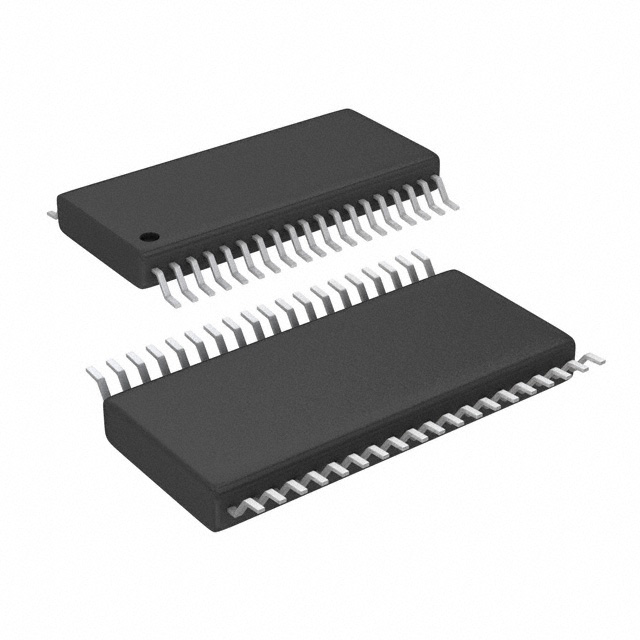
Request Quote
(Ships tomorrow)
TLC542CDWR Equivalent & Substitute Parts
Part Overview
The TLC542CDWR is an 8-bit Analog to Digital Converter (ADC) manufactured by Texas Instruments, designed for data acquisition applications requiring single-ended input multiplexing with SAR (Successive Approximation Register) architecture. This device features 11 input channels, SPI data interface, and operates from a 5V supply. The TLC542CDWR is classified as obsolete, making equivalent substitute parts necessary for new designs and ongoing production requirements.
Substiute Parts
Key Parameters
| Parameter | Value |
|---|---|
| Manufacturer Part Number | TLC542CDWR |
| Manufacturer | Texas Instruments |
| Category | Data Acquisition |
| Number of Bits | 8 |
| Sampling Rate | 25 kSPS |
| Number of Inputs | 11 |
| Input Type | Single Ended |
| Data Interface | SPI |
| Architecture | SAR |
| Reference Type | External |
| Voltage - Supply, Analog | 5V |
| Voltage - Supply, Digital | 5V |
| Operating Temperature | 0°C ~ 70°C |
| Package / Case | 20-SOIC |
| Product Status | Obsolete |
| RoHS Status | ROHS3 Compliant |
Substitute Part Grouping Explanation
Substitution of the TLC542CDWR is determined by the following critical parameters:
- Resolution & Architecture: 8-bit SAR ADC architecture with external reference
- Data Interface: SPI serial communication protocol
- Input Configuration: Single-ended multiplexed inputs with sample-and-hold
- Supply Voltage Compatibility: Analog and digital supply requirements
- Package Type: Surface mount form factor
- Compliance & Status: ROHS3 compliance and active product status for long-term availability
The ADS7960SDBTR qualifies as a manufacturer-recommended substitute based on matching core functional parameters: 8-bit resolution, SAR architecture, SPI interface, single-ended inputs, external reference, and ROHS3 compliance. The substitute offers enhanced specifications including wider supply voltage range, extended temperature range, and higher sampling rate, making it suitable for applications requiring the TLC542CDWR's core functionality.
Parameter Comparison
| Parameter | TLC542CDWR | ADS7960SDBTR |
|---|---|---|
| Manufacturer | Texas Instruments | Texas Instruments |
| Number of Bits | 8 | 8 |
| Sampling Rate (Per Second) | 25 kSPS | 1 MSPS |
| Number of Inputs | 11 | 12 |
| Input Type | Single Ended | Single Ended |
| Data Interface | SPI | SPI |
| Configuration | MUX-S/H-ADC | MUX-S/H-ADC |
| Architecture | SAR | SAR |
| Reference Type | External | External |
| Voltage - Supply, Analog | 5V | 2.7V ~ 5.25V |
| Voltage - Supply, Digital | 5V | 1.7V ~ 5.25V |
| Operating Temperature | 0°C ~ 70°C | -40°C ~ 125°C |
| Package / Case | 20-SOIC | 38-TSSOP |
| Product Status | Obsolete | Active |
| RoHS Status | ROHS3 Compliant | ROHS3 Compliant |
| Moisture Sensitivity Level | 1 (Unlimited) | 2 (1 Year) |
Engineering Selection Recommendations
The ADS7960SDBTR is the manufacturer-recommended substitute for the obsolete TLC542CDWR. Both devices maintain ROHS3 compliance and REACH unaffected status, ensuring regulatory alignment for new designs and production transitions.
Selection of the ADS7960SDBTR is appropriate when:
- Replacing TLC542CDWR in existing designs requiring component refresh or long-term supply assurance
- Designing new systems requiring 8-bit SAR ADC functionality with SPI interface and single-ended multiplexed inputs
- Applications requiring extended operating temperature range (-40°C to 125°C) or wider supply voltage tolerance
- Designs benefiting from higher sampling rate (1 MSPS versus 25 kSPS)
Package transition from 20-SOIC to 38-TSSOP requires PCB layout modification. The increased pin count (38 versus 20) and different footprint necessitate design review and validation.
Frequently Asked Questions (FAQ)
Q: Can the ADS7960SDBTR directly replace the TLC542CDWR without design changes?
A: Functional substitution is possible due to matching 8-bit resolution, SAR architecture, SPI interface, and single-ended input configuration. However, package change from 20-SOIC to 38-TSSOP requires PCB layout redesign and footprint modification.
Q: What are the key differences between these devices?
A: The ADS7960SDBTR offers higher sampling rate (1 MSPS versus 25 kSPS), one additional input channel (12 versus 11), wider supply voltage range (2.7V-5.25V analog, 1.7V-5.25V digital versus fixed 5V), extended temperature range (-40°C to 125°C versus 0°C to 70°C), and active product status versus obsolete.
Q: Are there supply voltage compatibility concerns?
A: The TLC542CDWR requires fixed 5V supplies. The ADS7960SDBTR accepts 5V operation within its wider tolerance range (2.7V-5.25V analog, 1.7V-5.25V digital), ensuring compatibility with existing 5V supply designs.
Q: What is the impact of the package change?
A: The 38-TSSOP package is physically larger than the 20-SOIC package. PCB layout must accommodate the increased footprint size and pin count. Electrical functionality remains equivalent when properly implemented.
Q: Are both devices RoHS compliant?
A: Yes, both the TLC542CDWR and ADS7960SDBTR are ROHS3 compliant and REACH unaffected, meeting current regulatory requirements for electronic components.
Q: How does the increased sampling rate affect system design?
A: The ADS7960SDBTR's 1 MSPS sampling rate is 40 times faster than the TLC542CDWR's 25 kSPS. This enables higher bandwidth signal acquisition but does not require design changes if the application operates at lower conversion rates. The device supports programmable sampling control via SPI interface.
Alternative Parts

SJ6012L2TP
Littelfuse Inc.
6 Alternative Parts

JMK107BBJ476MA-RE
Taiyo Yuden
10 Alternative Parts

GMK107BBJ475MA-T
Taiyo Yuden
5 Alternative Parts
SJ6020N2ARP
Littelfuse Inc.
3 Alternative Parts
SJ6025R2ATP
Littelfuse Inc.
4 Alternative Parts

2474-05L
API Delevan Inc.
1 Alternative Parts

4590R-684K
API Delevan Inc.
1 Alternative Parts

CM6560R-334
API Delevan Inc.
1 Alternative Parts

CM6460-104
API Delevan Inc.
1 Alternative Parts

5526-12
API Delevan Inc.
1 Alternative Parts