


Request Quote
(Ships tomorrow)
TLC3578IDW Equivalent & Substitute Parts
Part Overview
The TLC3578IDW is a 14-bit Analog to Digital Converter (ADC) manufactured by Texas Instruments, designed for data acquisition applications requiring SAR (Successive Approximation Register) architecture. This device features 4 or 8 pseudo-differential and single-ended input channels with a 200 kSPS sampling rate and SPI data interface. The part is classified as Last Time Buy, indicating end-of-life status and the necessity to identify functionally equivalent alternatives for ongoing design requirements and inventory planning.
Substiute Parts
Key Parameters
| Parameter | Value |
|---|---|
| Resolution (Bits) | 14 |
| Sampling Rate (kSPS) | 200 |
| Number of Input Channels | 4, 8 |
| Input Type | Pseudo-Differential, Single Ended |
| Architecture | SAR |
| Data Interface | SPI |
| Analog Supply Voltage | 5V |
| Digital Supply Voltage | 2.7V ~ 5.5V |
| Operating Temperature Range | -40°C ~ 85°C |
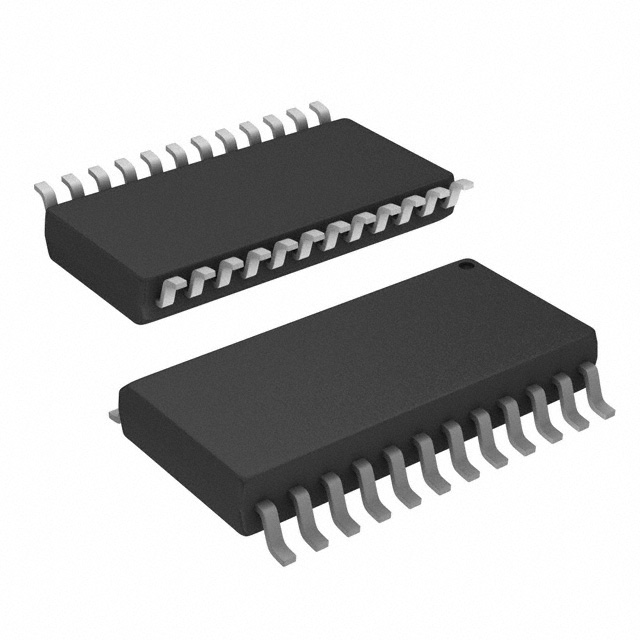
| Package Type | 24-SOIC |
| RoHS Status | ROHS3 Compliant |
| MSL Rating | 1 (Unlimited) |
Substitute Part Grouping Explanation
Substitution of the TLC3578IDW is based on the following critical parameters that must align between the main part and substitute candidates:
- Resolution: 14-bit ADC capability
- Architecture: SAR-based conversion
- Data Interface: SPI protocol compatibility
- Input Configuration: Support for pseudo-differential and single-ended inputs
- Sampling Rate: Minimum 200 kSPS performance
- Supply Voltage Compatibility: Digital supply range 2.7V ~ 5.5V
- Operating Temperature: -40°C ~ 85°C range
- Compliance: ROHS3 and REACH compliance status
- Packaging: Surface mount configuration
The ADS8678IDBTR is identified as a manufacturer-recommended substitute based on these electrical and mechanical parameters.
Parameter Comparison
| Parameter | TLC3578IDW | ADS8678IDBTR |
|---|---|---|
| Manufacturer | Texas Instruments | Texas Instruments |
| Category | Data Acquisition | Data Acquisition |
| Architecture | SAR | SAR |
| Data Interface | SPI | SPI |
| Operating Temperature | -40°C ~ 85°C | -40°C ~ 85°C |
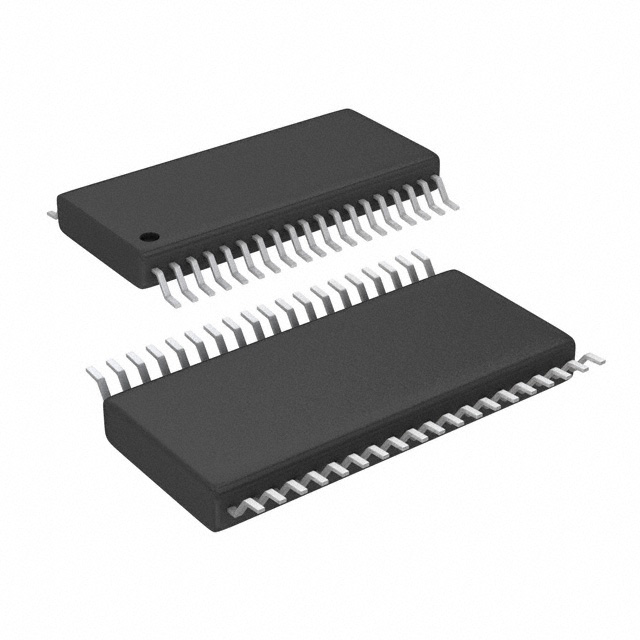
| Package Type | 24-SOIC | 38-TFSOP |
| Mounting Type | Surface Mount | Surface Mount |
| RoHS Status | ROHS3 Compliant | ROHS3 Compliant |
| REACH Status | REACH Unaffected | REACH Unaffected |
| Product Status | Last Time Buy | Active |
Engineering Selection Recommendations
The ADS8678IDBTR is an active product from Texas Instruments and serves as the manufacturer-recommended substitute for the TLC3578IDW. Both devices maintain identical compliance certifications (ROHS3 and REACH), ensuring regulatory alignment for new designs and production transitions. The substitute part is currently in active production status, providing supply continuity and long-term availability compared to the Last Time Buy status of the main part. Both devices operate within the same temperature range (-40°C ~ 85°C) and maintain SPI interface compatibility for data acquisition applications.
Frequently Asked Questions (FAQ)
Q: What is the primary reason for substituting the TLC3578IDW? A: The TLC3578IDW is designated as Last Time Buy, indicating end-of-life status. The ADS8678IDBTR is an active product offering continued availability and supply security.
Q: Are the package types interchangeable between TLC3578IDW and ADS8678IDBTR? A: No. The TLC3578IDW uses 24-SOIC packaging while the ADS8678IDBTR uses 38-TFSOP packaging. PCB layout and footprint modifications are required for substitution.
Q: Do both parts support the same data interface? A: Yes. Both the TLC3578IDW and ADS8678IDBTR use SPI protocol for data communication, ensuring firmware and software compatibility.
Q: Are there compliance differences between the two parts? A: No. Both parts are ROHS3 compliant and REACH unaffected, maintaining identical regulatory status.
Q: What is the moisture sensitivity level difference? A: The TLC3578IDW has MSL 1 (Unlimited), while the ADS8678IDBTR has MSL 2 (1 Year). This affects storage and handling requirements for the substitute part.
Q: Can the ADS8678IDBTR be used in existing designs without modification? A: Electrical compatibility is maintained; however, PCB redesign is necessary due to different package types and pin configurations.
Alternative Parts

SJ6012L2TP
Littelfuse Inc.
6 Alternative Parts

JMK107BBJ476MA-RE
Taiyo Yuden
10 Alternative Parts

GMK107BBJ475MA-T
Taiyo Yuden
5 Alternative Parts
SJ6020N2ARP
Littelfuse Inc.
3 Alternative Parts
SJ6025R2ATP
Littelfuse Inc.
4 Alternative Parts

2474-05L
API Delevan Inc.
1 Alternative Parts

4590R-684K
API Delevan Inc.
1 Alternative Parts

CM6560R-334
API Delevan Inc.
1 Alternative Parts

CM6460-104
API Delevan Inc.
1 Alternative Parts

5526-12
API Delevan Inc.
1 Alternative Parts