


Request Quote
(Ships tomorrow)
TLC27M2IP Equivalent & Substitute Parts
Part Overview
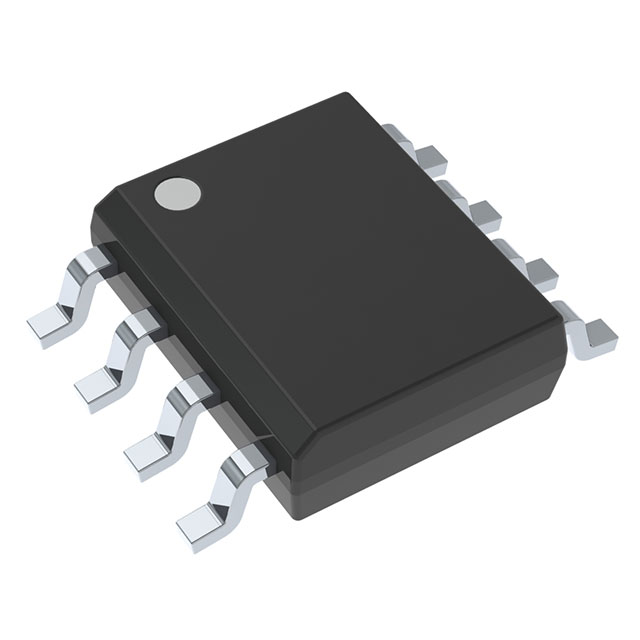
The TLC27M2IP is a CMOS dual-channel operational amplifier manufactured by Texas Instruments, part of the LinCMOS™ series. This device integrates two independent amplifier circuits in an 8-pin DIP package and is designed for general-purpose analog signal processing applications requiring low power consumption and wide supply voltage range operation.
The TLC27M2IP is designated as Last Time Buy, indicating that Texas Instruments has discontinued this product line. Organizations currently using this component must identify suitable alternatives to maintain supply chain continuity and support long-term production requirements. Equivalent substitute parts maintain identical electrical performance specifications while offering alternative packaging formats and active product status.
Substiute Parts
Key Parameters
| Parameter | Value | Unit |
|---|---|---|
| Amplifier Type | CMOS | — |
| Number of Circuits | 2 | — |
| Slew Rate | 0.62 | V/µs |
| Gain Bandwidth Product | 635 | kHz |
| Current - Input Bias | 0.7 | pA |
| Voltage - Input Offset | 1.1 | mV |
| Current - Supply (per Channel) | 285 | µA |
| Current - Output per Channel | 30 | mA |
| Voltage - Supply Span (Min) | 4 | V |
| Voltage - Supply Span (Max) | 16 | V |
| Operating Temperature Range | -40 to 85 | °C |
| Series | LinCMOS™ | — |
| RoHS Status | ROHS3 Compliant | — |
| REACH Status | REACH Unaffected | — |
Substitute Part Grouping Explanation
Substitution eligibility for the TLC27M2IP is determined by strict equivalence across all electrical performance parameters and regulatory compliance certifications. The substitute part must satisfy the following criteria:
Electrical Performance Equivalence: All analog performance specifications must match exactly: slew rate (0.62 V/µs), gain bandwidth product (635 kHz), input bias current (0.7 pA), input offset voltage (1.1 mV), supply current per channel (285 µA), output current per channel (30 mA), and supply voltage range (4 V to 16 V minimum and maximum).
Functional Equivalence: The substitute must contain the same number of independent amplifier circuits (2 circuits) and operate as a CMOS amplifier within the specified temperature range (-40°C to 85°C).
Regulatory and Compliance Equivalence: The substitute must maintain RoHS3 compliance and REACH Unaffected status. Both the main part and substitute must belong to the same base product family (TLC27M2 series).
Packaging Flexibility: While the main part uses Through Hole mounting (8-DIP package), substitute parts may employ Surface Mount technology (8-SOIC package) provided all electrical specifications remain identical. Packaging format selection depends on circuit board design requirements and assembly capabilities.
Parameter Comparison
| Parameter | TLC27M2IP (Main Part) | TLC27M2IDR (Substitute) | Match Status |
|---|---|---|---|
| Manufacturer | Texas Instruments | Texas Instruments | Identical |
| Base Product Number | TLC27M2 | TLC27M2 | Identical |
| Series | LinCMOS™ | LinCMOS™ | Identical |
| Amplifier Type | CMOS | CMOS | Identical |
| Number of Circuits | 2 | 2 | Identical |
| Slew Rate | 0.62 V/µs | 0.62 V/µs | Identical |
| Gain Bandwidth Product | 635 kHz | 635 kHz | Identical |
| Current - Input Bias | 0.7 pA | 0.7 pA | Identical |
| Voltage - Input Offset | 1.1 mV | 1.1 mV | Identical |
| Current - Supply (per Channel) | 285 µA | 285 µA | Identical |
| Current - Output per Channel | 30 mA | 30 mA | Identical |
| Voltage - Supply Span (Min) | 4 V | 4 V | Identical |
| Voltage - Supply Span (Max) | 16 V | 16 V | Identical |
| Operating Temperature Range | -40°C to 85°C | -40°C to 85°C | Identical |
| RoHS Status | ROHS3 Compliant | ROHS3 Compliant | Identical |
| REACH Status | REACH Unaffected | REACH Unaffected | Identical |
| Mounting Type | Through Hole | Surface Mount | Different |
| Package / Case | 8-DIP (0.300", 7.62mm) | 8-SOIC (0.154", 3.90mm Width) | Different |
| Product Status | Last Time Buy | Active | Different |
Engineering Selection Recommendations
Primary Substitute: TLC27M2IDR
The TLC27M2IDR is the manufacturer-recommended substitute for the TLC27M2IP. This part maintains complete electrical equivalence across all performance parameters while offering active product status from Texas Instruments. The TLC27M2IDR is manufactured in 8-SOIC surface mount packaging, which differs from the through-hole 8-DIP format of the main part.
Compliance and Regulatory Status:
Both the TLC27M2IP and TLC27M2IDR maintain identical regulatory compliance certifications: ROHS3 compliance and REACH Unaffected status. This equivalence ensures that substitution does not introduce regulatory risk or require additional compliance documentation.
Product Lifecycle Considerations:
The TLC27M2IP carries Last Time Buy status, indicating that Texas Instruments has concluded production and will not accept new orders beyond a specified cutoff date. The TLC27M2IDR maintains Active product status, ensuring long-term availability and continued manufacturer support. Organizations transitioning from TLC27M2IP should prioritize the TLC27M2IDR to establish sustainable supply chains.
Packaging and Integration Impact:
Selection between TLC27M2IP and TLC27M2IDR depends on circuit board design and assembly infrastructure. Through-hole mounting (TLC27M2IP) requires mechanical insertion and wave soldering processes, while surface mount technology (TLC27M2IDR) integrates with automated pick-and-place assembly and reflow soldering. Existing through-hole designs may require PCB layout modifications to accommodate the smaller 8-SOIC footprint of the substitute part.
Frequently Asked Questions (FAQ)
Q: Can the TLC27M2IDR directly replace the TLC27M2IP in existing circuit designs?
A: The TLC27M2IDR provides complete electrical equivalence and can replace the TLC27M2IP functionally. However, the packaging format differs: TLC27M2IP uses 8-DIP through-hole mounting while TLC27M2IDR uses 8-SOIC surface mount. Direct socket replacement is not possible without PCB redesign. Pin configuration and electrical function remain identical.
Q: What is the significance of the Last Time Buy status on the TLC27M2IP?
A: Last Time Buy designation indicates that Texas Instruments has concluded production of the TLC27M2IP and will not accept new orders after a specified date. Organizations currently using this part must transition to alternative components to maintain supply continuity. The TLC27M2IDR is the active substitute that maintains identical electrical performance.
Q: Are there differences in supply current consumption between the TLC27M2IP and TLC27M2IDR?
A: No. Both parts consume 285 µA per channel under specified operating conditions. Supply current equivalence ensures that power budget calculations and thermal management strategies remain unchanged during substitution.
Q: How do the input bias current specifications compare between these parts?
A: Both the TLC27M2IP and TLC27M2IDR specify 0.7 pA input bias current. This extremely low bias current is characteristic of CMOS amplifier technology and remains constant across both packaging variants.
Q: What packaging considerations apply when selecting between these parts?
A: The TLC27M2IP uses 8-DIP (0.300", 7.62mm) through-hole packaging suitable for breadboard prototyping and legacy PCB designs. The TLC27M2IDR uses 8-SOIC (0.154", 3.90mm Width) surface mount packaging, which reduces PCB footprint and integrates with modern automated assembly processes. Package selection depends on circuit board design methodology and manufacturing capabilities.
Q: Do both parts operate across the same supply voltage range?
A: Yes. Both the TLC27M2IP and TLC27M2IDR operate across a 4 V to 16 V supply voltage range. This equivalence ensures that power supply designs and voltage regulation circuits require no modification during substitution.
Q: Are there any differences in operating temperature specifications?
A: No. Both parts maintain identical operating temperature range specifications of -40°C to 85°C. Thermal management and environmental qualification requirements remain unchanged.
Q: What is the significance of RoHS3 compliance for both parts?
A: RoHS3 compliance certifies that both the TLC27M2IP and TLC27M2IDR meet European Union restrictions on hazardous substances. This equivalence ensures that substitution does not introduce regulatory compliance risk or require additional environmental qualification documentation.
Alternative Parts

SJ6012L2TP
Littelfuse Inc.
6 Alternative Parts

JMK107BBJ476MA-RE
Taiyo Yuden
10 Alternative Parts

GMK107BBJ475MA-T
Taiyo Yuden
5 Alternative Parts
SJ6020N2ARP
Littelfuse Inc.
3 Alternative Parts
SJ6025R2ATP
Littelfuse Inc.
4 Alternative Parts

2474-05L
API Delevan Inc.
1 Alternative Parts

4590R-684K
API Delevan Inc.
1 Alternative Parts

CM6560R-334
API Delevan Inc.
1 Alternative Parts

CM6460-104
API Delevan Inc.
1 Alternative Parts

5526-12
API Delevan Inc.
1 Alternative Parts