


Request Quote
(Ships tomorrow)
TLC27L2BCP Equivalent & Substitute Parts
Part Overview
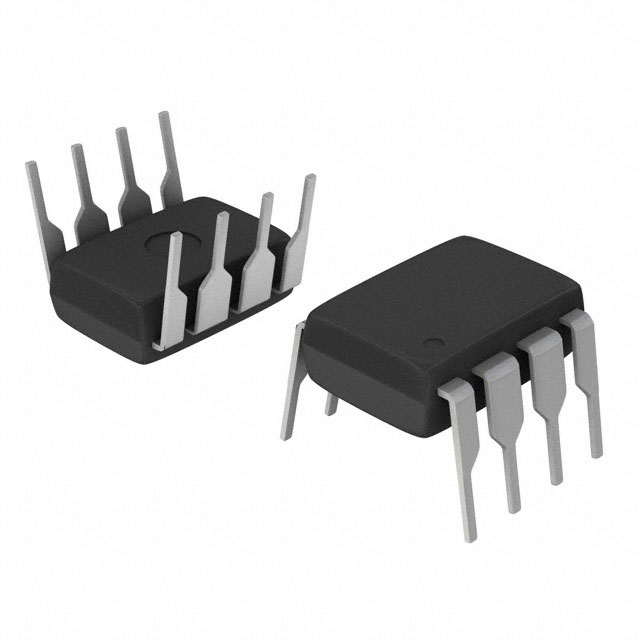
The TLC27L2BCP is a CMOS linear amplifier integrated circuit manufactured by Texas Instruments, featuring two independent amplifier circuits in an 8-pin DIP package. This device is classified as a Last Time Buy product, indicating that it is no longer in active production. The TLC27L2BCP operates across a wide supply voltage range of 3V to 16V and is designed for low-power applications requiring minimal input bias current and low supply current consumption.
Due to its Last Time Buy status, identifying equivalent and substitute parts is necessary for design continuity, long-term product support, and inventory planning. Substitute parts must maintain functional compatibility while accommodating differences in packaging, performance characteristics, and operating conditions.
Substiute Parts
Key Parameters
| Parameter | Value | Unit |
|---|---|---|
| Amplifier Type | CMOS | — |
| Number of Circuits | 2 | — |
| Slew Rate | 0.03 | V/µs |
| Gain Bandwidth Product | 110 | kHz |
| Current - Input Bias | 0.6 | pA |
| Voltage - Input Offset | 204 | µV |
| Current - Supply | 20 | µA (x2 Channels) |
| Current - Output / Channel | 30 | mA |
| Voltage - Supply Span (Min) | 3 | V |
| Voltage - Supply Span (Max) | 16 | V |
| Operating Temperature | 0 to 70 | °C |
| Mounting Type | Through Hole | — |
| Package / Case | 8-DIP (0.300", 7.62mm) | — |
Substitute Part Grouping Explanation
Substitution of the TLC27L2BCP is determined by the following critical parameters:
Functional Compatibility Criteria:
- Number of circuits (must be 2)
- Amplifier type classification (CMOS or General Purpose)
- Slew rate and gain bandwidth product (performance envelope)
- Input bias current and input offset voltage (signal integrity)
- Supply current and output current capabilities (power budget)
- Supply voltage range (operational envelope)
Physical Compatibility Criteria:
- Mounting type (through hole or surface mount)
- Package type and pin count (8-pin configuration)
- Pin assignment compatibility
Regulatory Compliance:
- RoHS status
- REACH compliance status
Two substitute parts are identified for the TLC27L2BCP:
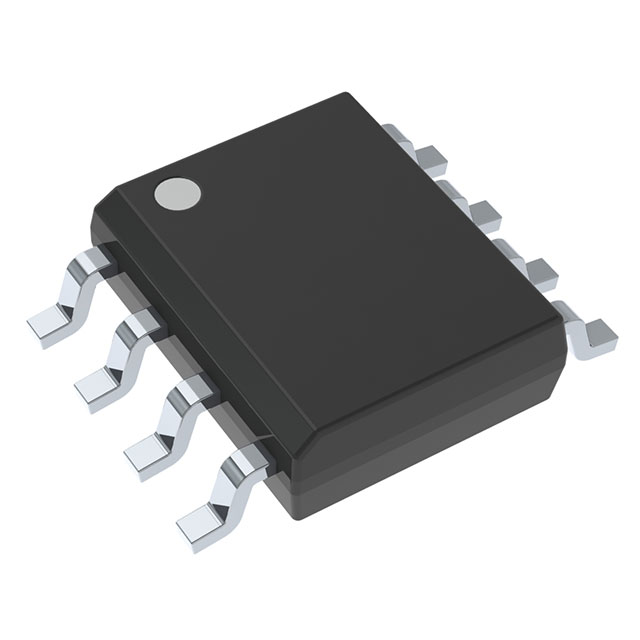
TLC27L2BIDR (Texas Instruments, Surface Mount): This is the manufacturer-recommended direct functional equivalent, maintaining identical CMOS amplifier architecture, slew rate, and gain bandwidth product. The primary difference is packaging format (8-SOIC surface mount versus 8-DIP through hole) and an expanded operating temperature range. This part is in Active product status.
NJM13404D# (Nisshinbo Micro Devices Inc., Through Hole): This is a general-purpose amplifier alternative that maintains the same 8-DIP through-hole package format as the original part. Performance characteristics differ significantly, with higher slew rate (1.2V/µs versus 0.03V/µs) and higher gain bandwidth product (2MHz versus 110kHz), making it suitable for applications requiring faster response times. This part is in Active product status.
Parameter Comparison
| Parameter | TLC27L2BCP | TLC27L2BIDR | NJM13404D# | Unit |
|---|---|---|---|---|
| Manufacturer | Texas Instruments | Texas Instruments | Nisshinbo Micro Devices Inc. | — |
| Amplifier Type | CMOS | CMOS | General Purpose | — |
| Number of Circuits | 2 | 2 | 2 | — |
| Slew Rate | 0.03 | 0.03 | 1.2 | V/µs |
| Gain Bandwidth Product | 110 | 110 | 2000 | kHz |
| Current - Input Bias | 0.6 | 0.6 | 25 | pA / nA |
| Voltage - Input Offset | 204 | 240 | 500 | µV |
| Current - Supply | 20 | 20 | 2000 | µA / mA |
| Current - Output / Channel | 30 | 30 | 35 | mA |
| Voltage - Supply Span (Min) | 3 | 4 | 2 | V |
| Voltage - Supply Span (Max) | 16 | 16 | 14 | V |
| Operating Temperature | 0 to 70 | -40 to 85 | -40 to 85 | °C |
| Mounting Type | Through Hole | Surface Mount | Through Hole | — |
| Package / Case | 8-DIP (0.300", 7.62mm) | 8-SOIC (0.154", 3.90mm) | 8-DIP (0.300", 7.62mm) | — |
| Product Status | Last Time Buy | Active | Active | — |
| RoHS Status | ROHS3 Compliant | ROHS3 Compliant | RoHS Compliant | — |
Engineering Selection Recommendations
For Direct Functional Replacement (Recommended Primary Substitute):
The TLC27L2BIDR is the manufacturer-recommended equivalent and provides the closest functional match to the TLC27L2BCP. Both devices share identical CMOS amplifier architecture, slew rate (0.03V/µs), and gain bandwidth product (110kHz). The TLC27L2BIDR maintains the same supply current specification (20µA per channel) and output current capability (30mA per channel), ensuring compatibility with existing power budgets and load requirements.
The primary design consideration is the transition from through-hole (8-DIP) to surface-mount (8-SOIC) packaging. This substitution requires PCB layout modification but offers advantages in board space efficiency and manufacturing automation. The TLC27L2BIDR operates across an expanded temperature range (-40°C to 85°C) compared to the original part (0°C to 70°C), providing enhanced environmental robustness. The minimum supply voltage increases from 3V to 4V, which must be verified against application requirements.
Both parts maintain ROHS3 compliance and REACH unaffected status, ensuring regulatory continuity.
For Through-Hole Package Retention (Alternative Substitute):
The NJM13404D# provides a through-hole 8-DIP package alternative, eliminating the need for PCB redesign. This part is suitable for applications where packaging format is a critical constraint. However, the NJM13404D# exhibits significantly different performance characteristics: slew rate of 1.2V/µs (40 times faster) and gain bandwidth product of 2MHz (18 times higher). Supply current consumption is substantially higher at 2mA compared to 20µA, representing a 100-fold increase in quiescent current draw.
The NJM13404D# is appropriate only for applications where the original TLC27L2BCP's low-speed, low-power characteristics are not essential. Circuit validation is required to confirm that the higher performance parameters do not introduce stability or noise issues in the target application.
Both substitute parts are in Active product status, ensuring long-term availability and manufacturing support.
Frequently Asked Questions (FAQ)
Q: Can the TLC27L2BIDR be used as a direct pin-for-pin replacement for the TLC27L2BCP?
A: The TLC27L2BIDR is functionally equivalent but not a pin-for-pin replacement due to different package formats. The TLC27L2BCP uses an 8-DIP through-hole package, while the TLC27L2BIDR uses an 8-SOIC surface-mount package. PCB layout and assembly process modifications are required. Pin assignment compatibility must be verified against the specific application schematic.
Q: What is the impact of the minimum supply voltage increase from 3V to 4V in the TLC27L2BIDR?
A: Applications operating at 3V supply voltage cannot use the TLC27L2BIDR without circuit modification. The TLC27L2BIDR requires a minimum of 4V. If the original design operates at 3V, the TLC27L2BCP or an alternative part supporting 3V operation must be retained. Applications operating at 4V or higher are unaffected.
Q: Why does the NJM13404D# have significantly higher supply current consumption?
A: The NJM13404D# is a general-purpose amplifier with higher performance specifications (1.2V/µs slew rate and 2MHz gain bandwidth product) compared to the CMOS-optimized TLC27L2BCP (0.03V/µs slew rate and 110kHz gain bandwidth product). Higher performance inherently requires higher quiescent current. The NJM13404D# is suitable only for applications where this performance level is required and the increased power consumption is acceptable.
Q: Are there temperature range limitations when substituting the TLC27L2BCP?
A: The TLC27L2BCP operates from 0°C to 70°C. The TLC27L2BIDR and NJM13404D# both operate from -40°C to 85°C, providing an extended temperature envelope. Applications requiring operation below 0°C or above 70°C benefit from these substitutes. Applications with temperature requirements within 0°C to 70°C are compatible with all three parts.
Q: What is the significance of the Last Time Buy status for the TLC27L2BCP?
A: Last Time Buy status indicates that Texas Instruments has discontinued production of the TLC27L2BCP and will not accept new orders after a specified date. Existing inventory will be depleted. For new designs or long-term product support, transition to an Active product such as the TLC27L2BIDR or NJM13404D# is necessary.
Q: How do the input offset voltage specifications differ among the three parts?
A: The TLC27L2BCP specifies 204µV input offset voltage, the TLC27L2BIDR specifies 240µV, and the NJM13404D# specifies 500µV. For precision analog applications where input offset voltage is critical, the TLC27L2BCP and TLC27L2BIDR are preferred. The NJM13404D# is suitable for applications with relaxed offset voltage requirements.
Q: Can the NJM13404D# be used in low-power battery-operated applications?
A: The NJM13404D# supply current of 2mA per channel is 100 times higher than the TLC27L2BCP (20µA per channel). For battery-operated or ultra-low-power applications, the NJM13404D# is unsuitable. The TLC27L2BIDR maintains the low-power characteristics of the original part and is the appropriate choice for power-constrained applications.
Q: Are all three parts RoHS compliant?
A: Yes. The TLC27L2BCP and TLC27L2BIDR are ROHS3 compliant. The NJM13404D# is RoHS compliant. All three parts are REACH unaffected. Regulatory compliance is maintained across all substitute options.
Alternative Parts

SJ6012L2TP
Littelfuse Inc.
6 Alternative Parts

JMK107BBJ476MA-RE
Taiyo Yuden
10 Alternative Parts

GMK107BBJ475MA-T
Taiyo Yuden
5 Alternative Parts
SJ6020N2ARP
Littelfuse Inc.
3 Alternative Parts
SJ6025R2ATP
Littelfuse Inc.
4 Alternative Parts

2474-05L
API Delevan Inc.
1 Alternative Parts

4590R-684K
API Delevan Inc.
1 Alternative Parts

CM6560R-334
API Delevan Inc.
1 Alternative Parts

CM6460-104
API Delevan Inc.
1 Alternative Parts

5526-12
API Delevan Inc.
1 Alternative Parts