




Request Quote
(Ships tomorrow)
TLC271CDR Equivalent & Substitute Parts
Part Overview
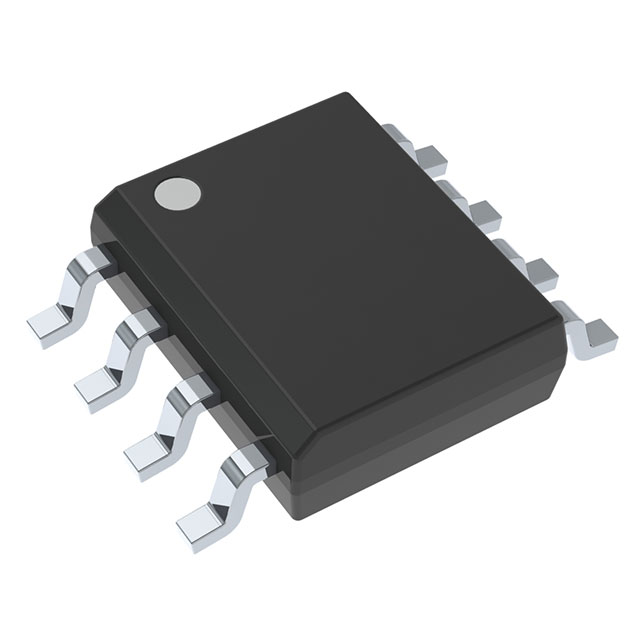
The TLC271CDR is a general purpose operational amplifier manufactured by Texas Instruments, housed in an 8-SOIC surface mount package. This LinCMOS™ series device is classified as Last Time Buy, indicating discontinued production with limited inventory availability. The TLC271CDR delivers a slew rate of 5.3V/µs, gain bandwidth product of 2.2 MHz, and operates across a supply voltage range of 3V to 16V with an operating temperature range of 0°C to 70°C. Finding equivalent and substitute parts is necessary due to the Last Time Buy status, which restricts future procurement of the original component.
Substiute Parts
Key Parameters
| Parameter | Value |
|---|---|
| Manufacturer Part Number | TLC271CDR |
| Manufacturer | Texas Instruments |
| Category | Linear, Amplifiers |
| Amplifier Type | General Purpose |
| Number of Circuits | 1 |
| Package / Case | 8-SOIC (0.154", 3.90mm Width) |
| Slew Rate | 5.3V/µs |
| Gain Bandwidth Product | 2.2 MHz |
| Current - Input Bias | 0.7 pA |
| Voltage - Input Offset | 1.1 mV |
| Current - Supply | 950µA |
| Current - Output / Channel | 30 mA |
| Voltage - Supply Span | 3V to 16V |
| Operating Temperature | 0°C to 70°C |
| Mounting Type | Surface Mount |
| RoHS Status | ROHS3 Compliant |
| Moisture Sensitivity Level | 1 (Unlimited) |
Substitute Part Grouping Explanation
Substitution of the TLC271CDR is determined by the following critical parameters: amplifier type (general purpose), number of circuits (1), supply voltage range compatibility (minimum 3V, maximum 16V), output current capability (minimum 30 mA), and surface mount packaging. The substitute parts identified maintain these core functional requirements while offering variations in performance characteristics such as slew rate, gain bandwidth product, and operating temperature range.
The three substitute parts are grouped as follows:
TLV9151IDBVR (Texas Instruments): Maintains general purpose amplifier functionality with enhanced performance specifications including higher slew rate (20V/µs) and gain bandwidth product (4.5 MHz). Differs in package format (SOT-23-5 versus 8-SOIC) and includes rail-to-rail output capability. Extended operating temperature range (-40°C to 125°C) and higher output current (75 mA).
TLC27L1CS-13 (Diodes Incorporated): Maintains 8-SOIC package compatibility and identical supply voltage range (3V to 16V). Classified as CMOS amplifier with significantly lower supply current (14µA versus 950µA). Reduced slew rate (0.04V/µs) and gain bandwidth product (110 kHz) indicate lower performance tier suitable for low-power applications.
TLV271SN1T1G (onsemi): General purpose amplifier with rail-to-rail output in 5-TSOP package. Maintains supply voltage compatibility (2.7V to 16V) with extended operating temperature range (-40°C to 105°C). Intermediate performance characteristics with slew rate of 2.6V/µs and gain bandwidth product of 3 MHz.
Parameter Comparison
| Parameter | TLC271CDR | TLV9151IDBVR | TLC27L1CS-13 | TLV271SN1T1G |
|---|---|---|---|---|
| Manufacturer | Texas Instruments | Texas Instruments | Diodes Incorporated | onsemi |
| Amplifier Type | General Purpose | General Purpose | CMOS | General Purpose |
| Number of Circuits | 1 | 1 | 1 | 1 |
| Package / Case | 8-SOIC | SOT-23-5 | 8-SOIC | 5-TSOP |
| Slew Rate | 5.3V/µs | 20V/µs | 0.04V/µs | 2.6V/µs |
| Gain Bandwidth Product | 2.2 MHz | 4.5 MHz | 110 kHz | 3 MHz |
| Current - Input Bias | 0.7 pA | 10 pA | 0.7 pA | 1 pA |
| Voltage - Input Offset | 1.1 mV | 125 µV | 10 mV | 500 µV |
| Current - Supply | 950µA | 560µA | 14µA | 490µA |
| Current - Output / Channel | 30 mA | 75 mA | 30 mA | 8 mA |
| Voltage - Supply Span (Min) | 3V | 2.7V | 3V | 2.7V |
| Voltage - Supply Span (Max) | 16V | 16V | 16V | 16V |
| Operating Temperature | 0°C to 70°C | -40°C to 125°C | 0°C to 70°C | -40°C to 105°C |
| Mounting Type | Surface Mount | Surface Mount | Surface Mount | Surface Mount |
| Product Status | Last Time Buy | Active | Active | Active |
| RoHS Status | ROHS3 Compliant | ROHS3 Compliant | ROHS3 Compliant | ROHS3 Compliant |
Engineering Selection Recommendations
For Direct Package Compatibility (8-SOIC):
The TLC27L1CS-13 from Diodes Incorporated maintains identical 8-SOIC packaging and supply voltage range (3V to 16V) as the TLC271CDR. This substitute is suitable for applications where PCB layout modifications are not feasible. The TLC27L1CS-13 operates at significantly lower supply current (14µA), making it appropriate for battery-powered or low-power applications. However, the reduced slew rate (0.04V/µs) and gain bandwidth product (110 kHz) restrict its use to low-frequency signal processing. Both devices share identical input bias current (0.7 pA) and output current capability (30 mA), with operating temperature ranges matching the original specification (0°C to 70°C).
For Enhanced Performance with Package Change:
The TLV9151IDBVR from Texas Instruments offers superior performance metrics including higher slew rate (20V/µs), increased gain bandwidth product (4.5 MHz), and greater output current capability (75 mA). This substitute requires PCB redesign due to SOT-23-5 package format versus the original 8-SOIC. The TLV9151IDBVR extends operating temperature range to -40°C to 125°C and includes rail-to-rail output capability. Supply voltage compatibility remains within the 2.7V to 16V range, encompassing the original 3V to 16V specification.
For Balanced Performance with Minimal Layout Changes:
The TLV271SN1T1G from onsemi provides intermediate performance characteristics with slew rate of 2.6V/µs and gain bandwidth product of 3 MHz. The 5-TSOP package requires PCB layout modification but occupies less board space than 8-SOIC. Extended operating temperature range (-40°C to 105°C) and rail-to-rail output capability are provided. Output current capability (8 mA) is reduced compared to the original specification, limiting applications requiring higher load currents.
All three substitute parts maintain ROHS3 compliance, unlimited moisture sensitivity level (MSL 1), and active product status, ensuring long-term availability and regulatory compliance.
Frequently Asked Questions (FAQ)
Q: Can the TLC27L1CS-13 be used as a direct replacement for the TLC271CDR without PCB modifications?
A: Yes. The TLC27L1CS-13 maintains identical 8-SOIC package dimensions (0.154", 3.90mm width) and pinout compatibility. Both devices operate across 3V to 16V supply voltage range and share identical input bias current (0.7 pA) and output current capability (30 mA). Operating temperature ranges are identical (0°C to 70°C). However, the significantly reduced slew rate (0.04V/µs versus 5.3V/µs) and gain bandwidth product (110 kHz versus 2.2 MHz) restrict the TLC27L1CS-13 to low-frequency applications.
Q: What are the package compatibility implications of using the TLV9151IDBVR?
A: The TLV9151IDBVR uses SOT-23-5 package format, which differs from the original 8-SOIC package. This requires PCB redesign including new footprint layout, trace routing, and potentially different board area allocation. The SOT-23-5 package is smaller than 8-SOIC, potentially reducing board space requirements. Pin assignments differ between packages, necessitating schematic and layout verification before implementation.
Q: Which substitute part is most suitable for low-power applications?
A: The TLC27L1CS-13 is optimized for low-power operation with supply current of 14µA, compared to 950µA for the TLC271CDR and 560µA for the TLV9151IDBVR. The TLC27L1CS-13 maintains 8-SOIC package compatibility and identical supply voltage range. The trade-off is significantly reduced performance with slew rate of 0.04V/µs and gain bandwidth product of 110 kHz, suitable only for low-frequency signal processing.
Q: Are all substitute parts ROHS3 compliant?
A: Yes. The TLC271CDR, TLV9151IDBVR, TLC27L1CS-13, and TLV271SN1T1G are all ROHS3 compliant with unlimited moisture sensitivity level (MSL 1). All parts are suitable for applications requiring environmental and regulatory compliance with lead-free manufacturing standards.
Q: What is the output current limitation when using the TLV271SN1T1G?
A: The TLV271SN1T1G provides maximum output current of 8 mA per channel, compared to 30 mA for the TLC271CDR. This reduced output current capability restricts applications requiring higher load currents or driving lower impedance loads. Applications requiring output currents exceeding 8 mA must use either the TLC271CDR, TLC27L1CS-13 (30 mA), or TLV9151IDBVR (75 mA).
Q: Can the TLV9151IDBVR operate at the minimum supply voltage of the TLC271CDR?
A: The TLV9151IDBVR operates across 2.7V to 16V supply voltage range, which encompasses the TLC271CDR specification of 3V to 16V. The TLV9151IDBVR can operate at 2.7V, providing additional flexibility for lower voltage applications. Both devices maintain 16V maximum supply voltage specification.
Q: What are the input offset voltage differences among substitute parts?
A: The TLC271CDR specifies 1.1 mV input offset voltage. The TLV9151IDBVR provides superior offset voltage specification of 125 µV, the TLV271SN1T1G specifies 500 µV, and the TLC27L1CS-13 specifies 10 mV. Lower input offset voltage reduces DC errors in precision signal processing applications. The TLV9151IDBVR offers the best offset voltage performance among all options.
Q: Are all substitute parts available in active production status?
A: Yes. The TLC271CDR is classified as Last Time Buy (discontinued), while all three substitute parts—TLV9151IDBVR, TLC27L1CS-13, and TLV271SN1T1G—maintain active product status, ensuring continued availability and long-term supply chain reliability.
Alternative Parts

SJ6012L2TP
Littelfuse Inc.
6 Alternative Parts

JMK107BBJ476MA-RE
Taiyo Yuden
10 Alternative Parts

GMK107BBJ475MA-T
Taiyo Yuden
5 Alternative Parts
SJ6020N2ARP
Littelfuse Inc.
3 Alternative Parts
SJ6025R2ATP
Littelfuse Inc.
4 Alternative Parts

2474-05L
API Delevan Inc.
1 Alternative Parts

4590R-684K
API Delevan Inc.
1 Alternative Parts

CM6560R-334
API Delevan Inc.
1 Alternative Parts

CM6460-104
API Delevan Inc.
1 Alternative Parts

5526-12
API Delevan Inc.
1 Alternative Parts