



Request Quote
(Ships tomorrow)
TLC251CD Equivalent & Substitute Parts
Part Overview
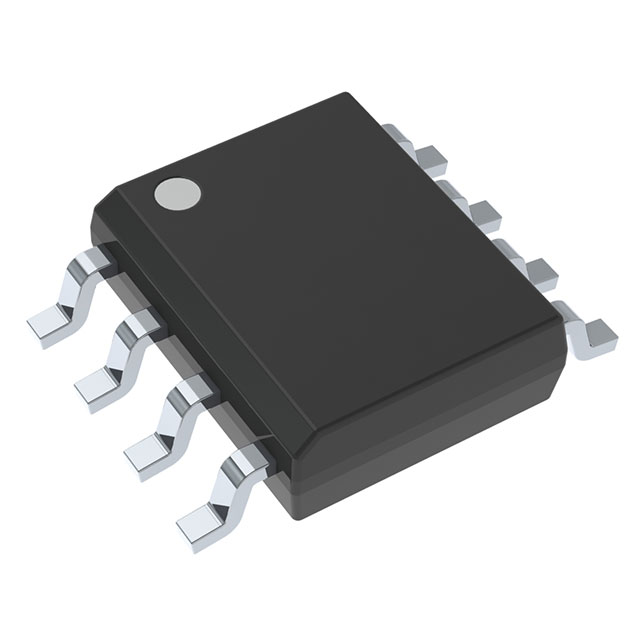
The TLC251CD is a general-purpose operational amplifier manufactured by Texas Instruments, housed in an 8-SOIC surface mount package. This device is classified as a Last Time Buy product, indicating that Texas Instruments has discontinued or will discontinue production. The TLC251CD operates within a supply voltage range of 1.4 V to 16 V and is suitable for applications requiring low-power amplification with moderate bandwidth performance.
Due to its Last Time Buy status, identifying functionally compatible substitute parts is essential for design continuity and long-term component availability. The substitute part TLV9151IDBVR offers enhanced performance characteristics while maintaining core operational compatibility.
Substiute Parts
Key Parameters
| Parameter | TLC251CD |
|---|---|
| Amplifier Type | General Purpose |
| Number of Circuits | 1 |
| Output Type | Standard |
| Slew Rate | 5.3 V/µs |
| Gain Bandwidth Product | 2.2 MHz |
| Current - Input Bias | 0.7 pA |
| Voltage - Input Offset | 1.1 mV |
| Current - Supply | 950 µA |
| Voltage - Supply Span | 1.4 V to 16 V |
| Operating Temperature Range | 0°C to 70°C |
| Package / Case | 8-SOIC (0.154", 3.90 mm Width) |
| Mounting Type | Surface Mount |
| Product Status | Last Time Buy |
| RoHS Status | ROHS3 Compliant |
| Moisture Sensitivity Level | 1 (Unlimited) |
Substitute Part Grouping Explanation
Substitution of the TLC251CD with the TLV9151IDBVR is based on the following alignment criteria:
Functional Compatibility:
- Both devices are single-circuit general-purpose operational amplifiers
- Both are manufactured by Texas Instruments
- Both support surface mount assembly
Electrical Parameter Alignment:
- Supply voltage range overlap: TLC251CD operates 1.4 V to 16 V; TLV9151IDBVR operates 2.7 V to 16 V (compatible for applications within 2.7 V to 16 V range)
- Both devices maintain low input bias current characteristics (0.7 pA vs. 10 pA)
- Both are ROHS3 compliant with MSL 1 rating
Performance Enhancement: The TLV9151IDBVR provides improved specifications including higher slew rate (20 V/µs vs. 5.3 V/µs), higher gain bandwidth product (4.5 MHz vs. 2.2 MHz), lower input offset voltage (125 µV vs. 1.1 mV), and lower supply current (560 µA vs. 950 µA).
Package Consideration: The TLC251CD uses 8-SOIC packaging while the TLV9151IDBVR uses SOT-23-5 packaging. These are different physical packages requiring PCB layout modification.
Parameter Comparison
| Parameter | TLC251CD | TLV9151IDBVR | Notes |
|---|---|---|---|
| Amplifier Type | General Purpose | General Purpose | Functionally equivalent |
| Number of Circuits | 1 | 1 | Functionally equivalent |
| Output Type | Standard | Rail-to-Rail | TLV9151IDBVR offers enhanced output swing capability |
| Slew Rate | 5.3 V/µs | 20 V/µs | TLV9151IDBVR provides 3.8x faster slew rate |
| Gain Bandwidth Product | 2.2 MHz | 4.5 MHz | TLV9151IDBVR provides 2.05x higher bandwidth |
| Current - Input Bias | 0.7 pA | 10 pA | TLC251CD has lower input bias current |
| Voltage - Input Offset | 1.1 mV | 125 µV | TLV9151IDBVR provides 8.8x lower offset voltage |
| Current - Supply | 950 µA | 560 µA | TLV9151IDBVR provides 41% lower supply current |
| Voltage - Supply Span (Min) | 1.4 V | 2.7 V | TLV9151IDBVR requires higher minimum supply voltage |
| Voltage - Supply Span (Max) | 16 V | 16 V | Functionally equivalent |
| Operating Temperature Range | 0°C to 70°C | -40°C to 125°C | TLV9151IDBVR supports extended temperature range |
| Package / Case | 8-SOIC | SOT-23-5 | Different physical packages; PCB redesign required |
| Mounting Type | Surface Mount | Surface Mount | Functionally equivalent |
| Product Status | Last Time Buy | Active | TLV9151IDBVR is actively manufactured |
| RoHS Status | ROHS3 Compliant | ROHS3 Compliant | Both meet regulatory requirements |
Engineering Selection Recommendations
Substitution Feasibility:
The TLV9151IDBVR is a valid substitute for the TLC251CD in applications where the following conditions are met:
-
Supply Voltage Requirement: The application supply voltage must be 2.7 V or higher. Applications requiring operation below 2.7 V cannot use the TLV9151IDBVR as a direct substitute.
-
Package Compatibility: PCB layout modification is mandatory due to package change from 8-SOIC to SOT-23-5. The footprint, pin count, and pin arrangement differ significantly.
-
Temperature Range: If the application requires operation below 0°C or above 70°C, the TLV9151IDBVR supports extended operation from -40°C to 125°C, providing additional design margin.
-
Regulatory Compliance: Both devices are ROHS3 compliant with MSL 1 rating, meeting standard environmental and reliability requirements.
-
Performance Improvement: The TLV9151IDBVR offers superior performance metrics including higher slew rate, increased bandwidth, lower input offset voltage, and reduced supply current consumption. These improvements are beneficial for applications sensitive to signal fidelity and power efficiency.
Product Status Consideration:
The TLC251CD is designated Last Time Buy, indicating limited future availability. The TLV9151IDBVR is an Active product with confirmed ongoing manufacturing and supply availability.
Frequently Asked Questions (FAQ)
Q1: Can the TLV9151IDBVR be used as a direct pin-for-pin replacement for the TLC251CD?
A: No. The TLC251CD uses an 8-SOIC package while the TLV9151IDBVR uses a SOT-23-5 package. These packages have different physical dimensions, pin counts (8 pins vs. 5 pins), and pin arrangements. PCB redesign and layout modification are required for substitution.
Q2: What is the minimum supply voltage requirement for the TLV9151IDBVR?
A: The TLV9151IDBVR requires a minimum supply voltage of 2.7 V. The TLC251CD can operate at supply voltages as low as 1.4 V. Applications requiring operation below 2.7 V cannot use the TLV9151IDBVR as a substitute.
Q3: Are there performance differences between the TLC251CD and TLV9151IDBVR?
A: Yes. The TLV9151IDBVR provides enhanced performance: slew rate of 20 V/µs (vs. 5.3 V/µs), gain bandwidth product of 4.5 MHz (vs. 2.2 MHz), input offset voltage of 125 µV (vs. 1.1 mV), and supply current of 560 µA (vs. 950 µA). The TLV9151IDBVR also features rail-to-rail output capability.
Q4: Does the TLV9151IDBVR support the same operating temperature range as the TLC251CD?
A: No. The TLC251CD operates from 0°C to 70°C, while the TLV9151IDBVR operates from -40°C to 125°C. The TLV9151IDBVR supports an extended temperature range, providing additional design margin for applications requiring operation outside the TLC251CD range.
Q5: Are both devices RoHS compliant?
A: Yes. Both the TLC251CD and TLV9151IDBVR are ROHS3 compliant with Moisture Sensitivity Level 1 (Unlimited), meeting standard environmental and reliability requirements.
Q6: Why is the TLC251CD designated as Last Time Buy?
A: Last Time Buy status indicates that Texas Instruments has discontinued or will discontinue production of the TLC251CD. This designation signals that existing inventory is limited and future availability cannot be guaranteed. The TLV9151IDBVR is an Active product with ongoing manufacturing support.
Q7: What are the key electrical parameters that determine substitution compatibility?
A: The primary parameters are: supply voltage range (minimum and maximum), amplifier type (general purpose), number of circuits (single), input bias current, input offset voltage, slew rate, and gain bandwidth product. The TLV9151IDBVR meets or exceeds these parameters within the overlapping supply voltage range of 2.7 V to 16 V.
Q8: Can the TLV9151IDBVR be used in low-voltage applications below 2.7 V?
A: No. The TLV9151IDBVR has a minimum supply voltage specification of 2.7 V and is not rated for operation below this voltage. Applications requiring supply voltages between 1.4 V and 2.7 V must continue using the TLC251CD or identify alternative substitutes with lower minimum voltage ratings.
Alternative Parts

SJ6012L2TP
Littelfuse Inc.
6 Alternative Parts

JMK107BBJ476MA-RE
Taiyo Yuden
10 Alternative Parts

GMK107BBJ475MA-T
Taiyo Yuden
5 Alternative Parts
SJ6020N2ARP
Littelfuse Inc.
3 Alternative Parts
SJ6025R2ATP
Littelfuse Inc.
4 Alternative Parts

2474-05L
API Delevan Inc.
1 Alternative Parts

4590R-684K
API Delevan Inc.
1 Alternative Parts

CM6560R-334
API Delevan Inc.
1 Alternative Parts

CM6460-104
API Delevan Inc.
1 Alternative Parts

5526-12
API Delevan Inc.
1 Alternative Parts