



Request Quote
(Ships tomorrow)
TL054AID Equivalent & Substitute Parts
Part Overview
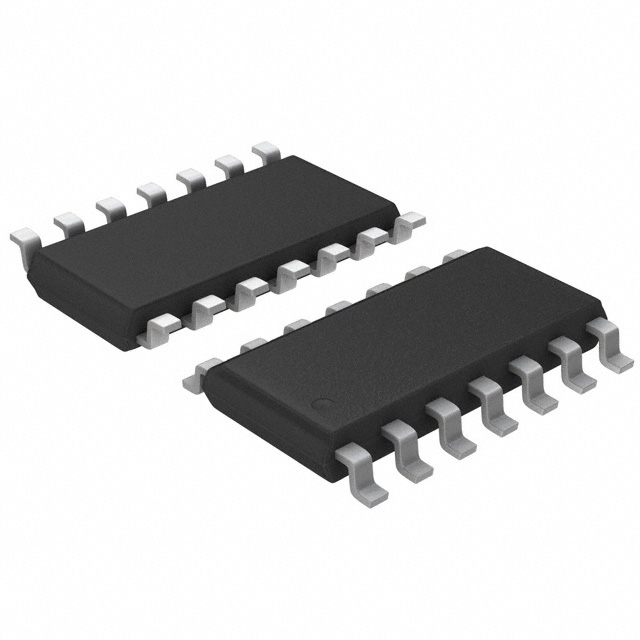
The TL054AID is a J-FET input operational amplifier manufactured by Texas Instruments, configured as a 4-circuit linear amplifier in a 14-SOIC surface mount package. This device is classified as obsolete, necessitating identification of active substitute components for new designs and production continuity. The TL054AID operates across a supply voltage range of 10V to 30V with a slew rate of 17.8V/µs and gain bandwidth product of 2.7 MHz, making it suitable for precision analog signal processing applications requiring low input bias current and low input offset voltage.
Substiute Parts
Key Parameters
| Parameter | Value | Unit |
|---|---|---|
| Amplifier Type | J-FET | — |
| Number of Circuits | 4 | — |
| Slew Rate | 17.8 | V/µs |
| Gain Bandwidth Product | 2.7 | MHz |
| Current - Input Bias | 30 | pA |
| Voltage - Input Offset | 500 | µV |
| Current - Supply (x4 Channels) | 8.4 | mA |
| Current - Output / Channel | 80 | mA |
| Voltage - Supply Span (Min) | 10 | V |
| Voltage - Supply Span (Max) | 30 | V |
| Operating Temperature | -40 to 85 | °C |
| Package / Case | 14-SOIC (0.154", 3.90mm Width) | — |
| Mounting Type | Surface Mount | — |
Substitute Part Grouping Explanation
Substitution of the TL054AID is determined by the following critical parameters: amplifier type (J-FET input architecture), number of circuits (4-channel configuration), package form factor (14-SOIC surface mount), and electrical performance envelope (supply voltage range, slew rate, gain bandwidth product, input bias current, and output current capability).
The substitute parts identified—LF247DT, TL074BCDT, and TS514IDT—share the same 14-SOIC package and 4-circuit configuration. However, each substitute exhibits distinct electrical characteristics that define its application scope:
J-FET Input Substitutes (LF247DT, TL074BCDT): These devices maintain J-FET input architecture, preserving the low input bias current characteristic of the original TL054AID. Both operate within compatible supply voltage ranges and maintain 4-circuit configurations in identical packaging.
General Purpose Substitute (TS514IDT): This device deviates from J-FET input topology, employing general purpose amplifier architecture. While it shares the same package and circuit count, its electrical parameters differ significantly in supply current, slew rate, and input bias current specifications.
Parameter Comparison
| Parameter | TL054AID | LF247DT | TL074BCDT | TS514IDT | Unit |
|---|---|---|---|---|---|
| Amplifier Type | J-FET | J-FET | J-FET | General Purpose | — |
| Number of Circuits | 4 | 4 | 4 | 4 | — |
| Slew Rate | 17.8 | 16 | 13 | 1.5 | V/µs |
| Gain Bandwidth Product | 2.7 | 4 | 3 | 3 | MHz |
| Current - Input Bias | 30 | 20 | 20 | 50 | pA / nA |
| Voltage - Input Offset | 500 | 3000 | 1000 | 500 | µV |
| Current - Supply (x4 Channels) | 8.4 | 1.4 | 1.4 | 0.5 | mA |
| Current - Output / Channel | 80 | 40 | 40 | 23 | mA |
| Voltage - Supply Span (Min) | 10 | 44 | 36 | 6 | V |
| Voltage - Supply Span (Max) | 30 | 44 | 36 | 30 | V |
| Operating Temperature | -40 to 85 | -40 to 105 | 0 to 70 | -40 to 125 | °C |
| Package / Case | 14-SOIC | 14-SOIC | 14-SOIC | 14-SOIC | — |
| Product Status | Obsolete | Active | Active | Active | — |
| RoHS Status | ROHS3 Compliant | ROHS3 Compliant | ROHS3 Compliant | ROHS3 Compliant | — |
Engineering Selection Recommendations
LF247DT (STMicroelectronics): This J-FET input substitute maintains active product status and ROHS3 compliance. The LF247DT operates within an extended supply voltage range (44V minimum and maximum) compared to the TL054AID (10V to 30V). The slew rate of 16V/µs remains within 90% of the original specification, and gain bandwidth product increases to 4 MHz. Input bias current reduces to 20 pA, and input offset voltage increases to 3 mV. Supply current per channel decreases to 1.4 mA, and output current per channel reduces to 40 mA. Operating temperature extends to 105°C. This substitute is suitable for applications where the extended supply voltage range and improved gain bandwidth product provide design advantages, provided output current requirements do not exceed 40 mA per channel.
TL074BCDT (STMicroelectronics): This J-FET input substitute maintains active product status and ROHS3 compliance. The TL074BCDT operates within a supply voltage range of 36V (minimum and maximum), exceeding the original TL054AID specification. Slew rate decreases to 13V/µs (73% of original), and gain bandwidth product is 3 MHz. Input bias current is 20 pA, and input offset voltage is 1 mV. Supply current and output current per channel match the LF247DT at 1.4 mA and 40 mA respectively. Operating temperature range is 0°C to 70°C, which is narrower than the original specification. This substitute is applicable where the reduced slew rate and narrower temperature range are acceptable within the application constraints.
TS514IDT (STMicroelectronics): This general purpose amplifier substitute maintains active product status and ROHS3 compliance. The TS514IDT deviates from J-FET input architecture, employing general purpose amplifier topology. Supply voltage range is 6V to 30V, which encompasses the original specification. Slew rate is significantly reduced to 1.5V/µs (8% of original), and gain bandwidth product is 3 MHz. Input bias current is 50 nA (1000 times higher than the original 30 pA specification), and input offset voltage matches the original at 500 µV. Supply current is minimal at 500 µA, and output current per channel is 23 mA. Operating temperature extends to 125°C. This substitute is applicable only in applications where high input bias current is tolerable and slew rate requirements are minimal.
Frequently Asked Questions (FAQ)
Q: Can the LF247DT directly replace the TL054AID in all applications?
A: The LF247DT shares J-FET input architecture and 14-SOIC packaging with the TL054AID. However, direct replacement requires verification that the application tolerates the increased input offset voltage (3 mV versus 500 µV), reduced output current per channel (40 mA versus 80 mA), and extended supply voltage range (44V versus 10V to 30V). The slew rate reduction from 17.8V/µs to 16V/µs is within 90% of the original specification.
Q: What is the primary difference between the LF247DT and TL074BCDT substitutes?
A: Both are J-FET input amplifiers in 14-SOIC packaging. The LF247DT operates at supply voltages up to 44V with slew rate of 16V/µs and temperature range to 105°C. The TL074BCDT operates at supply voltages up to 36V with slew rate of 13V/µs and temperature range to 70°C. Selection depends on the application's supply voltage requirements and operating temperature envelope.
Q: When should the TS514IDT be considered as a substitute?
A: The TS514IDT is a general purpose amplifier, not a J-FET input device. It exhibits input bias current of 50 nA, which is 1000 times higher than the TL054AID specification of 30 pA. This substitute is applicable only in applications where high input bias current does not degrade circuit performance, such as low-impedance signal processing circuits. The significantly reduced slew rate (1.5V/µs) limits applicability to low-frequency signal processing.
Q: Are all substitute parts RoHS3 compliant?
A: Yes. The TL054AID and all three substitute parts (LF247DT, TL074BCDT, TS514IDT) are ROHS3 compliant. All devices carry moisture sensitivity level (MSL) rating of 1 (Unlimited) and are REACH unaffected.
Q: What packaging options are available for these substitutes?
A: The TL054AID is supplied in Tube packaging. The LF247DT is supplied in Tape & Reel (TR) packaging. The TL074BCDT and TS514IDT are supplied in Cut Tape (CT) & Digi-Reel® packaging. All devices use identical 14-SOIC (0.154", 3.90mm Width) package form factor for surface mount assembly.
Q: How do supply current specifications compare across the substitutes?
A: The TL054AID draws 8.4 mA across 4 channels (2.1 mA per channel). The LF247DT and TL074BCDT each draw 1.4 mA across 4 channels (0.35 mA per channel), representing an 83% reduction in supply current. The TS514IDT draws only 500 µA total, representing a 94% reduction. Lower supply current may provide design advantages in battery-powered or power-constrained applications.
Alternative Parts

SJ6012L2TP
Littelfuse Inc.
6 Alternative Parts

JMK107BBJ476MA-RE
Taiyo Yuden
10 Alternative Parts

GMK107BBJ475MA-T
Taiyo Yuden
5 Alternative Parts
SJ6020N2ARP
Littelfuse Inc.
3 Alternative Parts
SJ6025R2ATP
Littelfuse Inc.
4 Alternative Parts

2474-05L
API Delevan Inc.
1 Alternative Parts

4590R-684K
API Delevan Inc.
1 Alternative Parts

CM6560R-334
API Delevan Inc.
1 Alternative Parts

CM6460-104
API Delevan Inc.
1 Alternative Parts

5526-12
API Delevan Inc.
1 Alternative Parts