


Request Quote
(Ships tomorrow)
TIP33C Equivalent & Substitute Parts
Part Overview
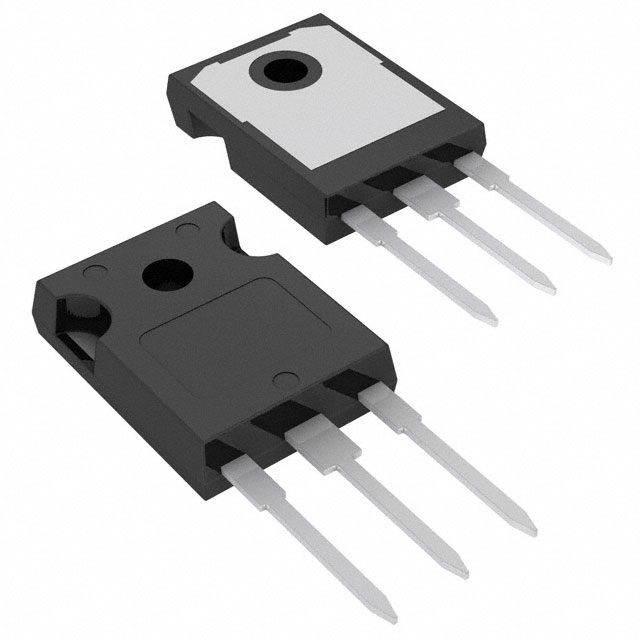
The TIP33C is an NPN bipolar junction transistor manufactured by onsemi, designed for high-current switching and amplification applications. It features a maximum collector current of 10 A, collector-emitter breakdown voltage of 100 V, and maximum power dissipation of 80 W. The device is housed in a TO-218-3 (SOT-93) through-hole package.
The TIP33C is classified as obsolete. Identifying equivalent and substitute parts is necessary to ensure design continuity, maintain supply chain reliability, and support ongoing production requirements for applications utilizing this transistor.
Substiute Parts
Key Parameters
| Parameter | Value | Unit |
|---|---|---|
| Transistor Type | NPN | — |
| Current - Collector (Ic) (Max) | 10 | A |
| Voltage - Collector Emitter Breakdown (Max) | 100 | V |
| Vce Saturation (Max) @ Ib, Ic | 4V @ 2.5A, 10A | V |
| Current - Collector Cutoff (Max) | 700 | µA |
| DC Current Gain (hFE) (Min) @ Ic, Vce | 20 @ 3A, 4V | — |
| Power - Max | 80 | W |
| Frequency - Transition | 3 | MHz |
| Operating Temperature Range | -65 to 150 | °C (TJ) |
| Mounting Type | Through Hole | — |
| Package / Case | TO-218-3 | — |
Substitute Part Grouping Explanation
Substitution of the TIP33C is determined by electrical and mechanical parameter equivalence within the NPN bipolar transistor category. The following parameters establish substitution validity:
Electrical Parameters (Must Match):
- Transistor Type: NPN
- Current - Collector (Ic) (Max): 10 A
- Voltage - Collector Emitter Breakdown (Max): 100 V
- Vce Saturation (Max) @ Ib, Ic: 4V @ 2.5A, 10A
- Current - Collector Cutoff (Max): 700µA
- DC Current Gain (hFE) (Min) @ Ic, Vce: 20 @ 3A, 4V
- Power - Max: 80 W
- Frequency - Transition: 3MHz
- Operating Temperature Range: -65°C to 150°C (TJ)
Mechanical Parameters (Must Match):
- Mounting Type: Through Hole
- Base Product Number: TIP33
Substitute parts must satisfy all electrical specifications and maintain through-hole mounting compatibility. Package variations (TO-218-3 versus TO-247-3) are permitted when mechanical fit and thermal management requirements are compatible with the application design.
Parameter Comparison
| Parameter | TIP33C (Main Part) | TIP33CG (Substitute) | Match Status |
|---|---|---|---|
| Manufacturer | onsemi | onsemi | Identical |
| Transistor Type | NPN | NPN | Identical |
| Current - Collector (Ic) (Max) | 10 A | 10 A | Identical |
| Voltage - Collector Emitter Breakdown (Max) | 100 V | 100 V | Identical |
| Vce Saturation (Max) @ Ib, Ic | 4V @ 2.5A, 10A | 4V @ 2.5A, 10A | Identical |
| Current - Collector Cutoff (Max) | 700µA | 700µA | Identical |
| DC Current Gain (hFE) (Min) @ Ic, Vce | 20 @ 3A, 4V | 20 @ 3A, 4V | Identical |
| Power - Max | 80 W | 80 W | Identical |
| Frequency - Transition | 3MHz | 3MHz | Identical |
| Operating Temperature Range | -65°C to 150°C (TJ) | -65°C to 150°C (TJ) | Identical |
| Mounting Type | Through Hole | Through Hole | Identical |
| Package / Case | TO-218-3 | TO-247-3 | Different |
| Product Status | Obsolete | Active | Different |
| RoHS Status | RoHS non-compliant | ROHS3 Compliant | Different |
Engineering Selection Recommendations
The TIP33CG serves as a direct electrical substitute for the TIP33C. All electrical parameters, including collector current, breakdown voltage, saturation characteristics, current gain, power dissipation, transition frequency, and operating temperature range, are identical between the two devices.
Product Status Consideration: The TIP33C is classified as obsolete, while the TIP33CG is active. Selection of the TIP33CG ensures access to current manufacturing stock and ongoing supplier support.
Compliance Consideration: The TIP33CG is ROHS3 compliant, whereas the TIP33C is RoHS non-compliant. Applications subject to RoHS regulatory requirements must utilize the TIP33CG.
Package Consideration: The primary difference between the TIP33C and TIP33CG is the package format. The TIP33C uses TO-218-3 (SOT-93) packaging, while the TIP33CG uses TO-247-3 packaging. Both are through-hole devices. Package selection depends on printed circuit board layout, thermal management design, and mechanical mounting requirements specific to the application.
Frequently Asked Questions (FAQ)
Q: Can the TIP33CG directly replace the TIP33C in existing designs?
A: The TIP33CG is electrically equivalent to the TIP33C across all specified parameters. However, the package format differs (TO-247-3 versus TO-218-3). Direct replacement requires verification that the printed circuit board layout and mechanical mounting accommodate the TO-247-3 package dimensions.
Q: What is the primary reason to transition from TIP33C to TIP33CG?
A: The TIP33C is obsolete, limiting availability and supplier support. The TIP33CG is an active product with current manufacturing and inventory. Additionally, the TIP33CG is ROHS3 compliant, meeting regulatory requirements for new designs and applications in regulated markets.
Q: Are the electrical characteristics identical between TIP33C and TIP33CG?
A: Yes. Both devices share identical specifications for collector current (10 A), breakdown voltage (100 V), saturation voltage (4V @ 2.5A, 10A), current gain (20 @ 3A, 4V), power dissipation (80 W), transition frequency (3MHz), and operating temperature range (-65°C to 150°C).
Q: What are the package differences between TO-218-3 and TO-247-3?
A: Both are through-hole packages for high-current transistor applications. The TO-247-3 package is commonly used in modern designs and offers different mechanical mounting characteristics. Specific dimensional differences require reference to the respective package datasheets for printed circuit board design compatibility.
Q: Is the TIP33CG suitable for applications requiring RoHS compliance?
A: Yes. The TIP33CG is ROHS3 compliant. The TIP33C is RoHS non-compliant and is not suitable for applications subject to RoHS regulatory requirements.
Q: Can thermal management performance differ between the two packages?
A: Thermal performance depends on package design, printed circuit board copper area, and heat sink implementation. While both devices have identical maximum power dissipation ratings (80 W), the TO-247-3 package may offer different thermal characteristics compared to TO-218-3. Application-specific thermal analysis is necessary to confirm adequate heat dissipation in the target design.
Alternative Parts

SJ6012L2TP
Littelfuse Inc.
6 Alternative Parts

JMK107BBJ476MA-RE
Taiyo Yuden
10 Alternative Parts

GMK107BBJ475MA-T
Taiyo Yuden
5 Alternative Parts
SJ6020N2ARP
Littelfuse Inc.
3 Alternative Parts
SJ6025R2ATP
Littelfuse Inc.
4 Alternative Parts

2474-05L
API Delevan Inc.
1 Alternative Parts

4590R-684K
API Delevan Inc.
1 Alternative Parts

CM6560R-334
API Delevan Inc.
1 Alternative Parts

CM6460-104
API Delevan Inc.
1 Alternative Parts

5526-12
API Delevan Inc.
1 Alternative Parts