



Request Quote
(Ships tomorrow)
TIP117 PBFREE Equivalent & Substitute Parts
Part Overview
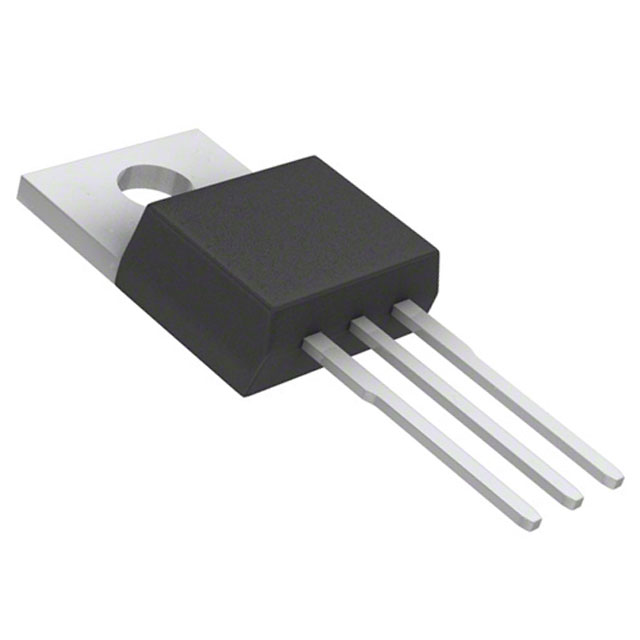
The TIP117 PBFREE is an NPN Darlington bipolar junction transistor manufactured by Central Semiconductor Corp, designed for through-hole applications in the TO-220-3 package. This device operates at a maximum collector-emitter breakdown voltage of 100 V with a transition frequency of 25 MHz and supports operating temperatures from -65°C to 150°C. The TIP117 PBFREE is classified as an obsolete product, making identification of suitable substitute components essential for ongoing design support, maintenance, and production continuity.
Substiute Parts
Key Parameters
| Parameter | Value | Unit |
|---|---|---|
| Transistor Type | NPN - Darlington | — |
| Voltage - Collector Emitter Breakdown (Max) | 100 | V |
| Vce Saturation (Max) @ Ib, Ic | 2.5 @ 8mA, 2A | V |
| Current - Collector Cutoff (Max) | 1 | mA |
| DC Current Gain (hFE) (Min) @ Ic, Vce | 1000 @ 1A, 4V | — |
| Frequency - Transition | 25 | MHz |
| Operating Temperature Range | -65 to 150 | °C |
| Mounting Type | Through Hole | — |
| Package / Case | TO-220-3 | — |
| RoHS Status | ROHS3 Compliant | — |
Substitute Part Grouping Explanation
Substitution of the TIP117 PBFREE is determined by strict alignment of the following electrical and mechanical parameters:
Critical Matching Parameters:
- Transistor topology: NPN Darlington configuration
- Voltage rating: 100 V collector-emitter breakdown voltage (maximum)
- Package type: TO-220-3 through-hole mounting
- Operating temperature range: -65°C to 150°C
- Saturation voltage characteristics: Vce(sat) at specified base and collector currents
- Current gain (hFE) performance at rated conditions
- RoHS3 compliance and REACH unaffected status
The BDX33CG qualifies as a manufacturer-recommended substitute based on matching these core parameters. Both devices share identical voltage ratings, temperature ranges, package configurations, and compliance certifications. Differences in maximum collector current, power dissipation, and transition frequency do not preclude substitution when the application circuit operates within the electrical envelope defined by the TIP117 PBFREE specifications.
Parameter Comparison
| Parameter | TIP117 PBFREE | BDX33CG | Unit |
|---|---|---|---|
| Manufacturer | Central Semiconductor Corp | onsemi | — |
| Transistor Type | NPN - Darlington | NPN - Darlington | — |
| Voltage - Collector Emitter Breakdown (Max) | 100 | 100 | V |
| Vce Saturation (Max) @ Ib, Ic | 2.5 @ 8mA, 2A | 2.5 @ 6mA, 3A | V |
| Current - Collector Cutoff (Max) | 1 | 0.5 | mA |
| DC Current Gain (hFE) (Min) @ Ic, Vce | 1000 @ 1A, 4V | 750 @ 3A, 3V | — |
| Operating Temperature Range | -65 to 150 | -65 to 150 | °C |
| Mounting Type | Through Hole | Through Hole | — |
| Package / Case | TO-220-3 | TO-220-3 | — |
| RoHS Status | ROHS3 Compliant | ROHS3 Compliant | — |
| REACH Status | REACH Unaffected | REACH Unaffected | — |
| Product Status | Obsolete | Active | — |
Engineering Selection Recommendations
The BDX33CG is the manufacturer-recommended substitute for the TIP117 PBFREE. Both devices maintain identical voltage ratings, temperature operating ranges, and package configurations. The BDX33CG carries active product status from onsemi, ensuring ongoing availability and supply chain continuity compared to the obsolete TIP117 PBFREE.
Both components satisfy ROHS3 compliance and REACH unaffected regulatory requirements, supporting deployment in applications subject to environmental and hazardous substance restrictions. The electrical parameter alignment—particularly matching collector-emitter breakdown voltage and saturation voltage characteristics—ensures functional equivalence within circuits designed for the TIP117 PBFREE.
The BDX33CG demonstrates superior current handling capability (10 A maximum collector current versus 2 A for the TIP117 PBFREE) and increased power dissipation rating (70 W), providing design margin in applications where the TIP117 PBFREE operates near its electrical limits. These enhanced ratings do not introduce incompatibility; they represent performance headroom that benefits long-term circuit reliability.
Frequently Asked Questions (FAQ)
Q: Can the BDX33CG directly replace the TIP117 PBFREE in existing circuit designs?
A: Yes. Both devices share identical TO-220-3 package pinouts, voltage ratings (100 V), temperature ranges (-65°C to 150°C), and saturation voltage characteristics. Pin-for-pin substitution is mechanically and electrically valid. Circuits designed for the TIP117 PBFREE operate within the BDX33CG electrical envelope.
Q: What is the significance of the BDX33CG having higher maximum collector current (10 A versus 2 A)?
A: The higher current rating provides additional design margin and does not create incompatibility. If the original circuit operates the TIP117 PBFREE at 2 A or below, the BDX33CG performs identically at those current levels. The enhanced rating supports applications requiring higher current handling without circuit modification.
Q: Are there compliance or regulatory differences between these devices?
A: No. Both the TIP117 PBFREE and BDX33CG are ROHS3 compliant and REACH unaffected. They satisfy identical environmental and hazardous substance regulations, supporting deployment in equivalent application contexts.
Q: Why is the TIP117 PBFREE classified as obsolete?
A: Obsolete status indicates the manufacturer (Central Semiconductor Corp) has discontinued production. The BDX33CG, maintained in active production by onsemi, provides a path for design continuity and supply chain stability in applications previously using the TIP117 PBFREE.
Q: How do the DC current gain specifications differ, and does this affect substitution?
A: The TIP117 PBFREE specifies hFE(min) = 1000 @ 1A, 4V; the BDX33CG specifies hFE(min) = 750 @ 3A, 3V. Both values exceed typical circuit requirements for Darlington transistor applications. The BDX33CG maintains sufficient current gain for base drive calculations and switching performance in standard applications.
Q: What packaging format is the BDX33CG supplied in?
A: The BDX33CG is supplied in tube packaging, suitable for automated assembly and manual component handling. The TO-220-3 case outline remains identical to the TIP117 PBFREE, ensuring compatibility with existing PCB footprints and thermal management solutions.
Alternative Parts

SJ6012L2TP
Littelfuse Inc.
6 Alternative Parts

JMK107BBJ476MA-RE
Taiyo Yuden
10 Alternative Parts

GMK107BBJ475MA-T
Taiyo Yuden
5 Alternative Parts
SJ6020N2ARP
Littelfuse Inc.
3 Alternative Parts
SJ6025R2ATP
Littelfuse Inc.
4 Alternative Parts

2474-05L
API Delevan Inc.
1 Alternative Parts

4590R-684K
API Delevan Inc.
1 Alternative Parts

CM6560R-334
API Delevan Inc.
1 Alternative Parts

CM6460-104
API Delevan Inc.
1 Alternative Parts

5526-12
API Delevan Inc.
1 Alternative Parts