



Request Quote
(Ships tomorrow)
TIP100 Equivalent & Substitute Parts
Part Overview
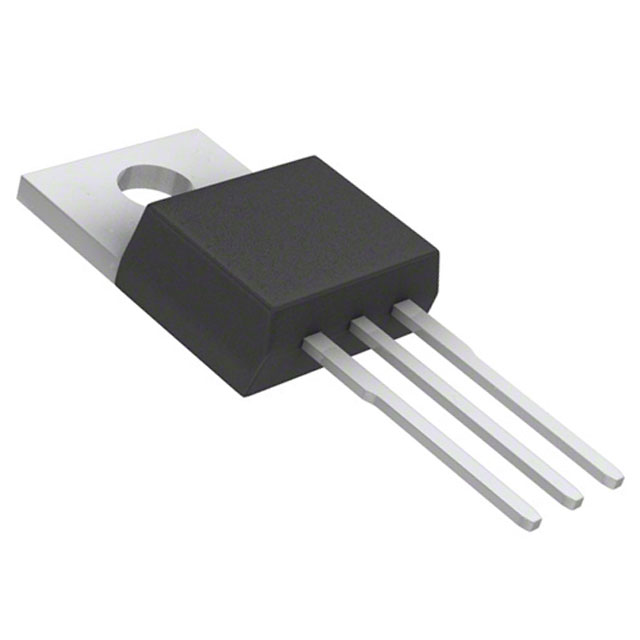
The TIP100 is a Bipolar (BJT) NPN Darlington transistor manufactured by Central Semiconductor Corp, designed for high-current switching and amplification applications. It features a maximum collector current of 8 A, collector-emitter breakdown voltage of 60 V, and maximum power dissipation of 80 W in a Through Hole TO-220-3 package. The TIP100 is classified as an Obsolete product, making identification of compatible substitute components essential for ongoing design support and procurement continuity.
Substiute Parts
Key Parameters
| Parameter | Value | Unit |
|---|---|---|
| Transistor Type | NPN - Darlington | — |
| Current - Collector (Ic) (Max) | 8 | A |
| Voltage - Collector Emitter Breakdown (Max) | 60 | V |
| Vce Saturation (Max) @ Ib, Ic | 2.5V @ 80mA, 8A | — |
| Current - Collector Cutoff (Max) | 50 | µA |
| DC Current Gain (hFE) (Min) @ Ic, Vce | 1000 @ 3A, 4V | — |
| Power - Max | 80 | W |
| Frequency - Transition | 4 | MHz |
| Operating Temperature Range | -65 to 150 | °C (TJ) |
| Mounting Type | Through Hole | — |
| Package / Case | TO-220-3 | — |
| Moisture Sensitivity Level (MSL) | 1 (Unlimited) | — |
Substitute Part Grouping Explanation
Substitution of the TIP100 is determined by electrical and mechanical compatibility within the following critical parameters:
Electrical Compatibility Criteria:
- Transistor configuration: NPN topology
- Collector current rating: Substitute must support minimum 8 A continuous operation
- Collector-emitter breakdown voltage: Substitute must support minimum 60 V
- Power dissipation capability: Substitute must support minimum 80 W
- DC current gain (hFE): Substitute must demonstrate sufficient gain for intended switching or amplification function
- Operating temperature range: Substitute must cover the required thermal operating window
Mechanical Compatibility Criteria:
- Package type: TO-220-3 or equivalent Through Hole footprint
- Pin configuration: Standard three-pin Darlington or NPN configuration
- Mounting method: Through Hole assembly compatibility
The TIP41C-BP qualifies as a substitute based on shared NPN topology and Through Hole TO-220 package family. However, electrical parameter differences exist and must be evaluated against specific application requirements.
Parameter Comparison
| Parameter | TIP100 (Main Part) | TIP41C-BP (Substitute) | Unit |
|---|---|---|---|
| Manufacturer | Central Semiconductor Corp | Micro Commercial Co | — |
| Transistor Type | NPN - Darlington | NPN | — |
| Current - Collector (Ic) (Max) | 8 | 6 | A |
| Voltage - Collector Emitter Breakdown (Max) | 60 | 100 | V |
| Vce Saturation (Max) @ Ib, Ic | 2.5V @ 80mA, 8A | 1.5V @ 600mA, 6A | — |
| Current - Collector Cutoff (Max) | 50 | 700 | µA |
| DC Current Gain (hFE) (Min) @ Ic, Vce | 1000 @ 3A, 4V | 15 @ 3A, 4V | — |
| Power - Max | 80 | 2 | W |
| Frequency - Transition | 4 | 3 | MHz |
| Operating Temperature (Max) | 150 | 150 | °C (TJ) |
| Mounting Type | Through Hole | Through Hole | — |
| Package / Case | TO-220-3 | TO-220AB | — |
| Product Status | Obsolete | Active | — |
| RoHS Status | Not specified | ROHS3 Compliant | — |
Engineering Selection Recommendations
Product Status Consideration: The TIP100 is classified as Obsolete, while the TIP41C-BP is Active. This status difference is significant for long-term supply chain planning and design continuity.
Compliance and Certification: The TIP41C-BP carries ROHS3 Compliance certification, whereas RoHS status for the TIP100 is not specified in the provided data. Both components are REACH Unaffected and classified under ECCN EAR99.
Electrical Parameter Deviations: The TIP41C-BP exhibits the following differences from the TIP100:
- Collector current maximum: 6 A versus 8 A (25% reduction)
- Power dissipation maximum: 2 W versus 80 W (97.5% reduction)
- DC current gain: 15 versus 1000 (66× lower)
- Collector-emitter breakdown voltage: 100 V versus 60 V (67% higher)
Selection Basis: Selection of TIP41C-BP as a substitute is valid only when application requirements do not exceed the TIP41C-BP electrical limits. The reduced power rating and current capacity represent the primary constraints. The higher breakdown voltage of the TIP41C-BP provides additional margin in voltage-limited applications.
Frequently Asked Questions (FAQ)
Q: Can the TIP41C-BP directly replace the TIP100 in all applications?
A: No. The TIP41C-BP has a maximum collector current of 6 A compared to the TIP100's 8 A, and a maximum power dissipation of 2 W compared to 80 W. Substitution is valid only when application current and power requirements do not exceed TIP41C-BP specifications.
Q: What is the primary difference between the TIP100 and TIP41C-BP transistor types?
A: The TIP100 is classified as an NPN Darlington transistor, while the TIP41C-BP is a standard NPN transistor. Darlington configuration provides higher current gain (1000 minimum for TIP100 versus 15 minimum for TIP41C-BP), affecting base drive requirements and switching characteristics.
Q: Are the TO-220-3 and TO-220AB packages mechanically compatible?
A: Both packages are Through Hole TO-220 family variants with three-pin configurations. Mechanical footprint compatibility exists for PCB mounting. Pin assignment and lead spacing should be verified against specific board layout requirements.
Q: Why is the TIP100 listed as Obsolete?
A: Obsolete status indicates the TIP100 is no longer manufactured by Central Semiconductor Corp. The TIP41C-BP, classified as Active, represents an available alternative from current production inventory.
Q: Does the higher breakdown voltage of the TIP41C-BP (100 V vs. 60 V) affect substitution suitability?
A: Higher breakdown voltage provides additional safety margin in voltage-limited circuits. This parameter does not prevent substitution; however, the reduced current and power ratings remain the limiting factors for compatibility assessment.
Q: What compliance advantage does the TIP41C-BP offer?
A: The TIP41C-BP carries ROHS3 Compliance certification, supporting modern environmental and regulatory requirements. Both components are REACH Unaffected and EAR99 classified.
Alternative Parts

SJ6012L2TP
Littelfuse Inc.
6 Alternative Parts

JMK107BBJ476MA-RE
Taiyo Yuden
10 Alternative Parts

GMK107BBJ475MA-T
Taiyo Yuden
5 Alternative Parts
SJ6020N2ARP
Littelfuse Inc.
3 Alternative Parts
SJ6025R2ATP
Littelfuse Inc.
4 Alternative Parts

2474-05L
API Delevan Inc.
1 Alternative Parts

4590R-684K
API Delevan Inc.
1 Alternative Parts

CM6560R-334
API Delevan Inc.
1 Alternative Parts

CM6460-104
API Delevan Inc.
1 Alternative Parts

5526-12
API Delevan Inc.
1 Alternative Parts