


Request Quote
(Ships tomorrow)
THS1206IDA Equivalent & Substitute Parts
Part Overview
The THS1206IDA is a 12-bit pipelined analog-to-digital converter manufactured by Texas Instruments, designed for data acquisition applications requiring simultaneous sampling across 2 or 4 differential and single-ended inputs. The device operates at a 6 MHz sampling rate with external or internal reference voltage options and is housed in a 32-TSSOP surface mount package.
This part is currently in Last Time Buy status, indicating end-of-life production. Identifying equivalent and substitute components is necessary for design continuity, long-term supply chain planning, and new product development where similar functionality is required.
Substiute Parts
Key Parameters
| Parameter | Value |
|---|---|
| Resolution (Bits) | 12 |
| Sampling Rate | 6 MHz |
| Number of Inputs | 2, 4 |
| Input Type | Differential, Single Ended |
| Architecture | Pipelined |
| Data Interface | Parallel |
| Analog Supply Voltage | 5V |
| Digital Supply Voltage | 3V ~ 5.25V |
| Operating Temperature Range | -40°C ~ 85°C |
| Package Type | 32-TSSOP |
| RoHS Status | ROHS3 Compliant |
Substitute Part Grouping Explanation
Substitution of the THS1206IDA is constrained by the following critical parameters:
Resolution Match: Both the main part and substitute must maintain 12-bit resolution to preserve signal fidelity and system accuracy.
Sampling Rate Consideration: The THS1206IDA operates at 6 MHz. The substitute ADS7863ADBQR operates at 2 MHz, representing a lower sampling rate. This substitution is valid only in applications where the lower sampling rate does not compromise system performance requirements.
Input Configuration: The THS1206IDA supports 2 or 4 inputs with differential and single-ended options. The ADS7863ADBQR supports 4 or 6 inputs with differential and pseudo-differential options, providing equal or greater input flexibility.
Architecture Difference: The THS1206IDA uses pipelined architecture optimized for high-speed conversion, while the ADS7863ADBQR uses SAR (Successive Approximation Register) architecture. Both are 12-bit converters but employ different conversion methodologies.
Data Interface: The THS1206IDA uses parallel output, while the ADS7863ADBQR uses SPI serial interface. This represents a significant system-level change requiring interface redesign.
Supply Voltage: The THS1206IDA requires 5V analog supply and 3V–5.25V digital supply. The ADS7863ADBQR operates across 2.7V–5.5V for both analog and digital supplies, offering broader supply flexibility.
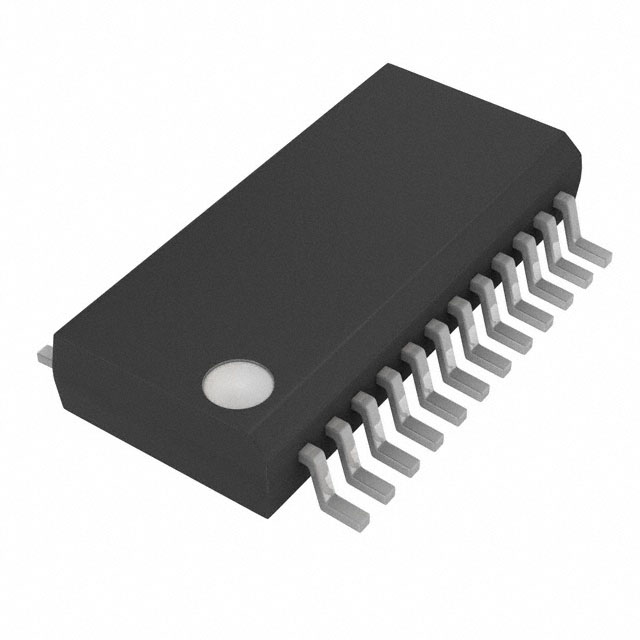
Package: The THS1206IDA uses 32-TSSOP; the ADS7863ADBQR uses 24-SSOP. Physical footprint and pin count differ, requiring PCB redesign.
Parameter Comparison
| Parameter | THS1206IDA | ADS7863ADBQR |
|---|---|---|
| Manufacturer | Texas Instruments | Texas Instruments |
| Resolution (Bits) | 12 | 12 |
| Sampling Rate (MHz) | 6 | 2 |
| Number of Inputs | 2, 4 | 4, 6 |
| Input Type | Differential, Single Ended | Differential, Pseudo-Differential |
| Architecture | Pipelined | SAR |
| Data Interface | Parallel | SPI |
| Number of A/D Converters | 1 | 2 |
| Analog Supply Voltage | 5V | 2.7V ~ 5.5V |
| Digital Supply Voltage | 3V ~ 5.25V | 2.7V ~ 5.5V |
| Operating Temperature Range | -40°C ~ 85°C | -40°C ~ 125°C |
| Package / Case | 32-TSSOP | 24-SSOP |
| Product Status | Last Time Buy | Active |
| RoHS Status | ROHS3 Compliant | ROHS3 Compliant |
| REACH Status | REACH Unaffected | REACH Unaffected |
Engineering Selection Recommendations
The ADS7863ADBQR is listed as the manufacturer-recommended substitute for the THS1206IDA. Both devices are ROHS3 compliant and REACH unaffected, meeting current environmental and regulatory requirements.
The ADS7863ADBQR offers the advantage of Active product status, ensuring long-term availability and continued manufacturer support, whereas the THS1206IDA is in Last Time Buy status with limited future supply.
Selection of the ADS7863ADBQR requires evaluation of the following system-level impacts:
Sampling rate reduction from 6 MHz to 2 MHz must be validated against application bandwidth requirements. Pipelined-to-SAR architecture transition affects latency characteristics and conversion timing. Parallel-to-SPI interface change requires firmware and PCB modifications. Package transition from 32-TSSOP to 24-SSOP necessitates PCB layout redesign. Extended operating temperature range (-40°C to 125°C versus -40°C to 85°C) provides additional thermal margin for the substitute.
Frequently Asked Questions (FAQ)
Q: Can the ADS7863ADBQR directly replace the THS1206IDA without design changes?
A: No. The devices differ in data interface (parallel versus SPI), package type (32-TSSOP versus 24-SSOP), sampling rate (6 MHz versus 2 MHz), and internal architecture (pipelined versus SAR). PCB redesign and firmware modification are required.
Q: What is the primary reason for substitution?
A: The THS1206IDA is in Last Time Buy status, indicating end-of-life production. The ADS7863ADBQR is an active product with ongoing manufacturer support and availability.
Q: Are both devices compliant with current environmental standards?
A: Yes. Both the THS1206IDA and ADS7863ADBQR are ROHS3 compliant and REACH unaffected.
Q: How does the sampling rate difference affect system performance?
A: The ADS7863ADBQR operates at 2 MHz versus the THS1206IDA at 6 MHz. Applications requiring sampling rates above 2 MHz cannot use the substitute without performance degradation. Applications with sampling requirements at or below 2 MHz are unaffected.
Q: What is the impact of the architecture change from pipelined to SAR?
A: Pipelined converters exhibit pipeline delay (latency) but support higher throughput. SAR converters have lower latency but reduced throughput. The ADS7863ADBQR with 2 MHz sampling and SAR architecture is suitable for applications where lower latency is beneficial and sampling rate requirements do not exceed 2 MHz.
Q: Does the ADS7863ADBQR support the same input configurations?
A: The ADS7863ADBQR supports 4 or 6 inputs with differential and pseudo-differential options, compared to the THS1206IDA's 2 or 4 inputs with differential and single-ended options. The substitute provides equal or greater input flexibility.
Q: What supply voltage considerations apply to substitution?
A: The THS1206IDA requires 5V analog supply and 3V–5.25V digital supply. The ADS7863ADBQR operates across 2.7V–5.5V for both supplies, offering broader voltage compatibility and reduced supply complexity.
Q: Is the SPI interface compatible with existing parallel output designs?
A: No. SPI is a serial protocol fundamentally different from parallel output. Interface redesign at both hardware and firmware levels is required.
Alternative Parts

SJ6012L2TP
Littelfuse Inc.
6 Alternative Parts

JMK107BBJ476MA-RE
Taiyo Yuden
10 Alternative Parts

GMK107BBJ475MA-T
Taiyo Yuden
5 Alternative Parts
SJ6020N2ARP
Littelfuse Inc.
3 Alternative Parts
SJ6025R2ATP
Littelfuse Inc.
4 Alternative Parts

2474-05L
API Delevan Inc.
1 Alternative Parts

4590R-684K
API Delevan Inc.
1 Alternative Parts

CM6560R-334
API Delevan Inc.
1 Alternative Parts

CM6460-104
API Delevan Inc.
1 Alternative Parts

5526-12
API Delevan Inc.
1 Alternative Parts