


Request Quote
(Ships tomorrow)
STK6712AMK4-C-E Equivalent & Substitute Parts
Part Overview
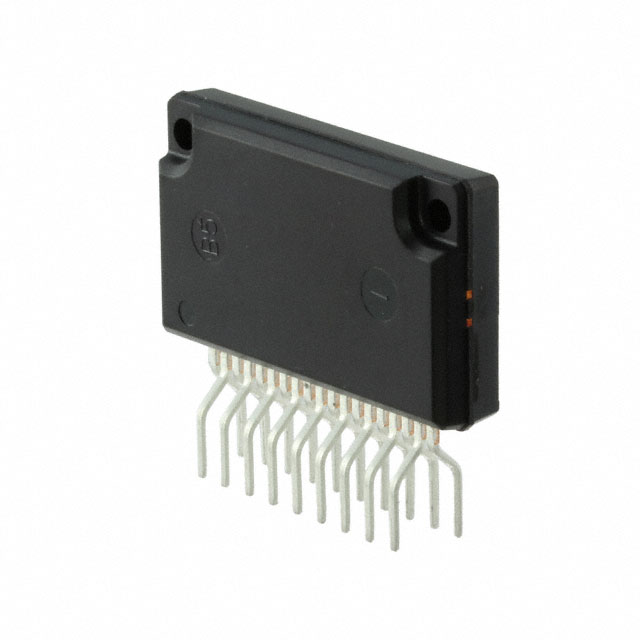
The STK6712AMK4-C-E is a unipolar motor driver IC manufactured by onsemi, designed for stepper motor control applications. It integrates a fully functional control and power stage with Power MOSFET technology in a 16-SIP package. The device operates with a 4.75V to 5.25V supply voltage and supports load voltages from 18V to 42V, delivering 1.7A output current with step resolution options of 1 and 1/2 steps.
This component is classified as obsolete. Locating equivalent or substitute parts is necessary to support legacy system maintenance, design updates, or production continuity when original inventory becomes unavailable.
Substiute Parts
Key Parameters
| Parameter | Value |
|---|---|
| Manufacturer Part Number | STK6712AMK4-C-E |
| Manufacturer | onsemi |
| Category | Power Management (PMIC) |
| Motor Type - Stepper | Unipolar |
| Function | Driver - Fully Integrated, Control and Power Stage |
| Output Configuration | Half Bridge (2) |
| Interface | Parallel |
| Technology | Power MOSFET |
| Step Resolution | 1, 1/2 |
| Current - Output | 1.7A |
| Voltage - Supply | 4.75V ~ 5.25V |
| Voltage - Load | 18V ~ 42V |
| Operating Temperature | -40°C ~ 150°C (TJ) |
| Package / Case | 16-SIP |
| Mounting Type | Through Hole |
| Product Status | Obsolete |
Substitute Part Grouping Explanation
Substitution eligibility for the STK6712AMK4-C-E is determined by the following critical parameters:
- Motor Type (Stepper): Unipolar operation required
- Function: Fully integrated control and power stage
- Output Configuration: Half Bridge (2) topology
- Interface: Parallel control interface
- Technology: Power MOSFET implementation
- Step Resolution: Support for 1 and 1/2 step modes
- Voltage - Supply: 4.75V to 5.25V operating range
- Voltage - Load: Minimum 18V capability required
- Current - Output: Minimum 1.7A capability
- Mounting Type: Through Hole package
The STK672-732AN-E meets these core substitution criteria. Both devices share identical stepper motor driver architecture, parallel interface control, half-bridge output configuration, and Power MOSFET technology. Both operate within the required 4.75V to 5.25V supply voltage range and support identical step resolution modes.
Parameter Comparison
| Parameter | STK6712AMK4-C-E | STK672-732AN-E | Compatibility Notes |
|---|---|---|---|
| Manufacturer | onsemi | onsemi | Same manufacturer |
| Motor Type - Stepper | Unipolar | Unipolar | Identical |
| Function | Driver - Fully Integrated, Control and Power Stage | Driver - Fully Integrated, Control and Power Stage | Identical |
| Output Configuration | Half Bridge (2) | Half Bridge (2) | Identical |
| Interface | Parallel | Parallel | Identical |
| Technology | Power MOSFET | Power MOSFET | Identical |
| Step Resolution | 1, 1/2 | 1, 1/2 | Identical |
| Current - Output | 1.7A | 2.2A | Substitute rated higher |
| Voltage - Supply | 4.75V ~ 5.25V | 4.75V ~ 5.25V | Identical |
| Voltage - Load | 18V ~ 42V | 0V ~ 42V | Substitute supports lower minimum |
| Operating Temperature | -40°C ~ 150°C (TJ) | 0°C ~ 105°C (TC) | Original supports wider range |
| Package / Case | 16-SIP | 19-SSIP Formed Leads | Different package form factor |
| Mounting Type | Through Hole | Through Hole | Identical |
| Product Status | Obsolete | Obsolete | Both obsolete |
Engineering Selection Recommendations
Both the STK6712AMK4-C-E and STK672-732AN-E are classified as obsolete products. Selection between these devices should be based on the following engineering considerations:
STK6712AMK4-C-E (Original): Maintains the original 16-SIP package form factor and supports the widest operating temperature range (-40°C to 150°C junction temperature). This device is suitable for applications requiring extended temperature performance or where PCB layout is optimized for the 16-pin configuration.
STK672-732AN-E (Substitute): Offers higher output current capability (2.2A versus 1.7A) and a lower minimum load voltage specification (0V versus 18V). The 19-SSIP package requires PCB redesign and different footprint implementation. This device is suitable for applications where higher current capacity is beneficial or where the lower load voltage minimum provides operational flexibility.
Both devices comply with REACH regulations and carry EAR99 ECCN classification. The STK672-732AN-E includes RoHS3 compliance certification, whereas the original part does not specify RoHS status.
Frequently Asked Questions (FAQ)
Q: Can the STK672-732AN-E directly replace the STK6712AMK4-C-E without PCB modification?
A: No. The STK672-732AN-E uses a 19-SSIP package with formed leads, while the original uses a 16-SIP package. PCB footprint redesign is required. Pin-to-pin functional compatibility exists for the control and power stage, but physical package dimensions differ.
Q: What is the impact of the different operating temperature ranges?
A: The STK6712AMK4-C-E supports -40°C to 150°C (junction temperature), while the STK672-732AN-E supports 0°C to 105°C (case temperature). Applications requiring operation below 0°C or above 105°C cannot use the substitute without thermal analysis and potential design modification.
Q: Does the higher current rating of the STK672-732AN-E (2.2A) create compatibility issues?
A: No. Higher current rating indicates greater capability and does not create incompatibility. The substitute can safely handle applications designed for 1.7A output current. Applications requiring current above 1.7A benefit from the substitute's higher rating.
Q: Are there pinout differences between these devices?
A: Functional pinout compatibility exists for control inputs and power outputs. However, the different package types (16-SIP versus 19-SSIP) result in different physical pin arrangements. Consult device datasheets for detailed pinout specifications before PCB layout.
Q: What compliance certifications apply to substitution decisions?
A: Both devices are REACH compliant and carry EAR99 ECCN classification. The STK672-732AN-E includes RoHS3 compliance. Regulatory requirements for your application determine whether RoHS compliance is mandatory for component selection.
Alternative Parts

SJ6012L2TP
Littelfuse Inc.
6 Alternative Parts

JMK107BBJ476MA-RE
Taiyo Yuden
10 Alternative Parts

GMK107BBJ475MA-T
Taiyo Yuden
5 Alternative Parts
SJ6020N2ARP
Littelfuse Inc.
3 Alternative Parts
SJ6025R2ATP
Littelfuse Inc.
4 Alternative Parts

2474-05L
API Delevan Inc.
1 Alternative Parts

4590R-684K
API Delevan Inc.
1 Alternative Parts

CM6560R-334
API Delevan Inc.
1 Alternative Parts

CM6460-104
API Delevan Inc.
1 Alternative Parts

5526-12
API Delevan Inc.
1 Alternative Parts