


Request Quote
(Ships tomorrow)
ST4P3TP0 Equivalent & Substitute Parts
Part Overview
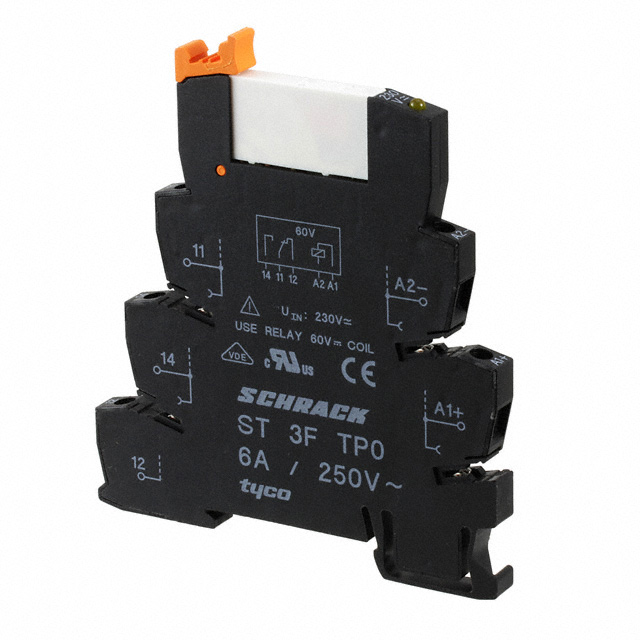
The ST4P3TP0 is a general purpose relay manufactured by TE Connectivity Potter & Brumfield Relays, configured as a Single Pole Double Throw (SPDT) contact form with a 230VAC/DC coil voltage and 6A contact rating. This relay is designed for DIN rail mounting applications and features a fully sealed construction with silver tin oxide contact material.
The ST4P3TP0 is classified as obsolete. Locating equivalent substitute parts is necessary to maintain system functionality and ensure continued availability for replacement and new installations. Active alternative models with identical electrical specifications are available from the same manufacturer series.
Substiute Parts
Key Parameters
| Parameter | Value |
|---|---|
| Contact Form | SPDT (1 Form C) |
| Coil Voltage | 230VAC/DC |
| Contact Rating (Current) | 6 A |
| Switching Voltage (Max) | 400VAC |
| Mounting Type | DIN Rail |
| Coil Current | 3.2 mA |
| Coil Type | Non Latching |
| Operating Temperature Range | -40°C ~ 55°C |
| Contact Material | Silver Tin Oxide (AgSnO) |
| Seal Rating | Sealed - Fully |
Substitute Part Grouping Explanation
Substitution of the ST4P3TP0 is based on electrical and mechanical parameter equivalence within the TE Connectivity Potter & Brumfield Relays SNR/SCHRACK series. The following parameters must remain identical for direct substitution:
- Contact form configuration (SPDT)
- Coil voltage rating (230VAC/DC)
- Contact current rating (6A)
- Maximum switching voltage (400VAC)
- Coil current draw (3.2 mA)
- Coil type (Non Latching)
- Operating temperature range (-40°C ~ 55°C)
- Contact material composition (Silver Tin Oxide)
- Mounting interface (DIN Rail)
- Seal rating (Fully Sealed)
The ST3P3TP0 meets all these electrical and mechanical requirements. The primary difference between the main part and its substitute is the termination style and product status. The ST4P3TP0 uses spring terminals, while the ST3P3TP0 uses screw terminals. Both configurations provide equivalent electrical performance and mechanical compatibility within DIN rail mounting systems.
Parameter Comparison
| Parameter | ST4P3TP0 (Main Part) | ST3P3TP0 (Substitute) |
|---|---|---|
| Manufacturer | TE Connectivity Potter & Brumfield Relays | TE Connectivity Potter & Brumfield Relays |
| Series | SNR, SCHRACK | SNR, SCHRACK |
| Contact Form | SPDT (1 Form C) | SPDT (1 Form C) |
| Coil Voltage | 230VAC/DC | 230VAC/DC |
| Contact Rating (Current) | 6 A | 6 A |
| Switching Voltage (Max) | 400VAC | 400VAC |
| Coil Current | 3.2 mA | 3.2 mA |
| Coil Type | Non Latching | Non Latching |
| Must Operate Voltage | 160 VAC/DC | 160 VAC/DC |
| Must Release Voltage | 15 VAC/DC | 15 VAC/DC |
| Operate Time | 12 ms | 12 ms |
| Release Time | 5 ms | 5 ms |
| Operating Temperature Range | -40°C ~ 55°C | -40°C ~ 55°C |
| Contact Material | Silver Tin Oxide (AgSnO) | Silver Tin Oxide (AgSnO) |
| Seal Rating | Sealed - Fully | Sealed - Fully |
| Mounting Type | DIN Rail | DIN Rail |
| Termination Style | Spring Terminal | Screw Terminal |
| Features | Socket Included | Socket Included |
| Product Status | Obsolete | Active |
| ECCN | EAR99 | EAR99 |
| HTSUS | 8536.49.0050 | 8536.49.0050 |
Engineering Selection Recommendations
The ST3P3TP0 is the direct substitute for the obsolete ST4P3TP0. Both relays are manufactured by TE Connectivity Potter & Brumfield Relays within the SNR/SCHRACK series and share identical electrical specifications and performance characteristics.
The ST3P3TP0 is classified as an active product, ensuring ongoing availability and supply chain continuity. The ST3P3TP0 carries RoHS3 compliance certification, meeting current environmental and regulatory standards for electronic components.
The primary distinction between these parts is the termination interface. The ST4P3TP0 employs spring terminals, while the ST3P3TP0 uses screw terminals. This difference affects only the connection method to the DIN rail mounting system and does not impact electrical performance or relay functionality. Selection between spring and screw terminal configurations depends on the specific installation requirements and wiring infrastructure of the target application.
Both relays are fully sealed, operate across the identical temperature range, and maintain equivalent timing characteristics (12 ms operate time, 5 ms release time). The contact material, coil specifications, and switching capabilities are identical across both models.
Frequently Asked Questions (FAQ)
Q: Can the ST3P3TP0 directly replace the ST4P3TP0 in existing installations?
A: The ST3P3TP0 provides electrical and functional equivalence to the ST4P3TP0. The primary consideration is the termination style difference. The ST4P3TP0 uses spring terminals while the ST3P3TP0 uses screw terminals. If the existing installation accommodates screw terminal connections to the DIN rail system, direct substitution is feasible. If the installation is configured exclusively for spring terminals, mechanical adaptation may be required.
Q: Are the coil specifications identical between ST4P3TP0 and ST3P3TP0?
A: Yes. Both relays operate at 230VAC/DC coil voltage with a coil current draw of 3.2 mA. The must-operate voltage is 160 VAC/DC and the must-release voltage is 15 VAC/DC for both models. Timing characteristics are also identical: 12 ms operate time and 5 ms release time.
Q: What is the significance of the product status difference?
A: The ST4P3TP0 is classified as obsolete, indicating it is no longer manufactured or actively supported. The ST3P3TP0 is classified as active, meaning it is currently in production and available through standard supply channels. For new designs and long-term availability, the ST3P3TP0 is the appropriate selection.
Q: Do both relays support the same contact current rating?
A: Yes. Both the ST4P3TP0 and ST3P3TP0 are rated for 6A contact current with a maximum switching voltage of 400VAC. The contact material is silver tin oxide (AgSnO) in both configurations.
Q: What is the difference between spring terminals and screw terminals?
A: Spring terminals provide quick-connect functionality suitable for applications requiring rapid installation or frequent disconnection. Screw terminals require manual fastening with a screwdriver but provide a fixed, secure connection. Both termination styles are compatible with DIN rail mounting systems; the choice depends on the specific installation methodology and maintenance requirements of the application.
Q: Are there any compliance or certification differences?
A: Both relays share the same ECCN (EAR99) and HTSUS (8536.49.0050) classifications. The ST3P3TP0 carries RoHS3 compliance certification. Both relays have a Moisture Sensitivity Level (MSL) of 1 (Unlimited).
Alternative Parts

SJ6012L2TP
Littelfuse Inc.
6 Alternative Parts

JMK107BBJ476MA-RE
Taiyo Yuden
10 Alternative Parts

GMK107BBJ475MA-T
Taiyo Yuden
5 Alternative Parts
SJ6020N2ARP
Littelfuse Inc.
3 Alternative Parts
SJ6025R2ATP
Littelfuse Inc.
4 Alternative Parts

2474-05L
API Delevan Inc.
1 Alternative Parts

4590R-684K
API Delevan Inc.
1 Alternative Parts

CM6560R-334
API Delevan Inc.
1 Alternative Parts

CM6460-104
API Delevan Inc.
1 Alternative Parts

5526-12
API Delevan Inc.
1 Alternative Parts